AFoCO Overview 2026
This leaflet provides an overview of AFoCO’s portfolio and the extent of operations in Member Countries. It also features the achievements of its capacity-building initiatives such as the establishment of the AFoCO RETC.
Knowledge | Publications

This leaflet provides an overview of AFoCO’s portfolio and the extent of operations in Member Countries. It also features the achievements of its capacity-building initiatives such as the establishment of the AFoCO RETC.

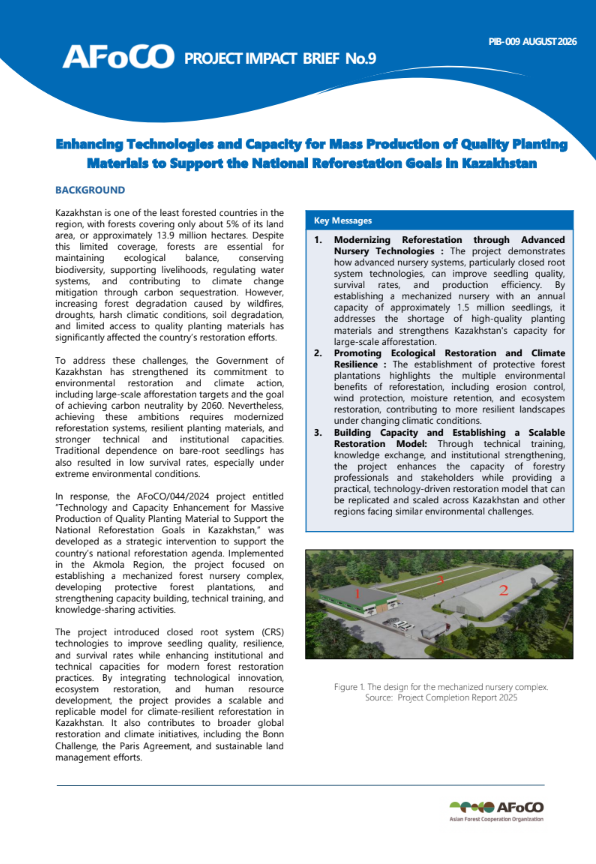
Forest fires continue to pose escalating risks to ecosystems, human health, and regional economies across Asia, with transboundary haze and biodiversity loss emerging as shared concerns among AFoCO Member Countries. In response, AFoCO, the French Ministry for Europe and Foreign

Viet Nam faces severe land degradation affecting over 12 million hectares, particularly in the northwest, central highlands, and coastal regions. To combat this, the project integrates scientific soil research with innovative forest restoration models, such as the Sloping Agricultural Land

Indonesia’s extensive tropical forests, mangroves, and peatlands make it one of the world’s most biodiverse nations and a crucial actor in climate change mitigation. The project can build on its solid foundation in ecosystem restoration and community empowerment by pursuing

The Philippines’ economy has traditionally relied on its wood industry, which ranges from logging to furniture exports. The project is scaling its successful vertical integration model to more Community-Based Forest Management areas to empower additional People’s Organizations nationwide. Priorities include

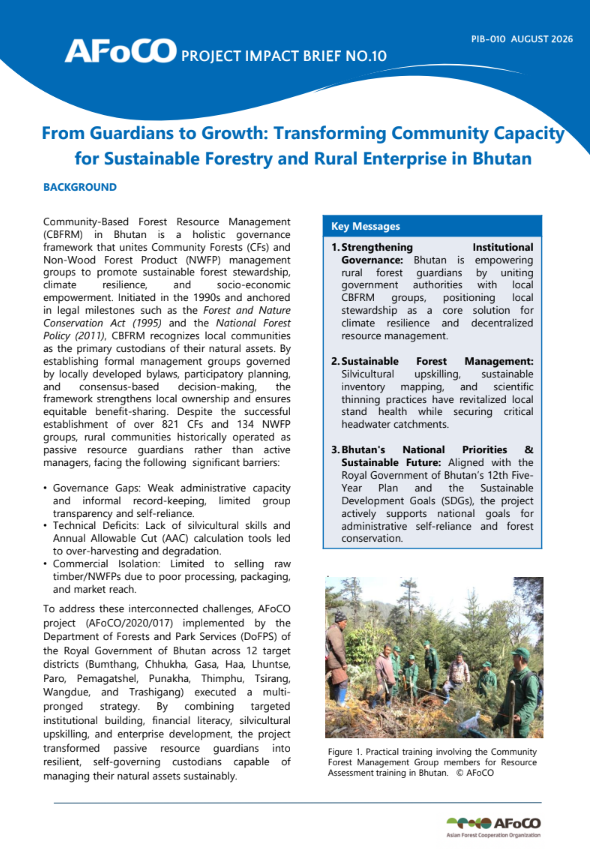
To address deforestation and forest degradation in Lao PDR, the path forward focuses on scaling up community-based forestry as a core pillar of national restoration strategies. AFoCO will continue to empower local communities by strengthening the capacity of government agencies,

The AFoCO project in Northern Viet Nam showcases a replicable model for tackling global mangrove degradation, demonstrating that lasting impact requires blending traditional knowledge with innovation and ensuring communities have a genuine stake in conservation. Scaling this approach can lead

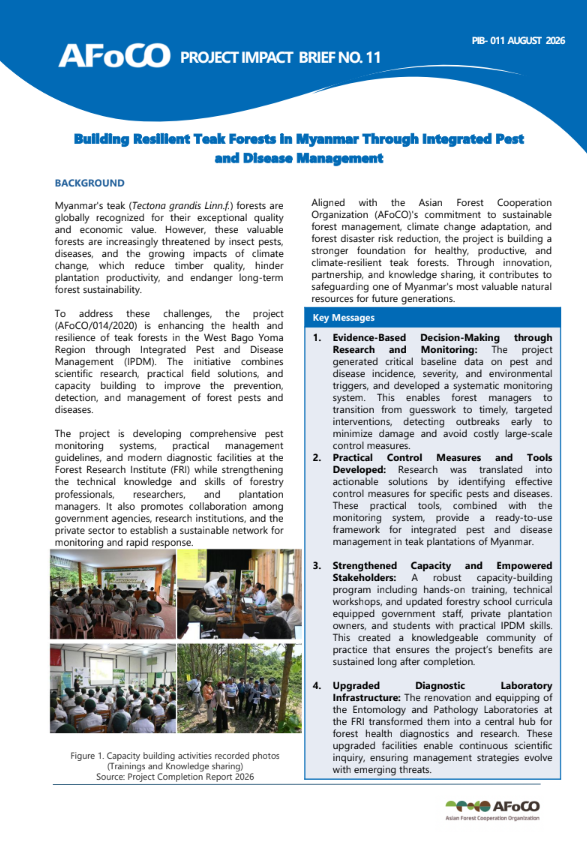
By maintaining strong links between operational seed orchard management and academic research, Cambodia can ensure its forest restoration efforts remain at the forefront of scientific knowledge, training the next generation of experts in the process. Building on the strong foundation

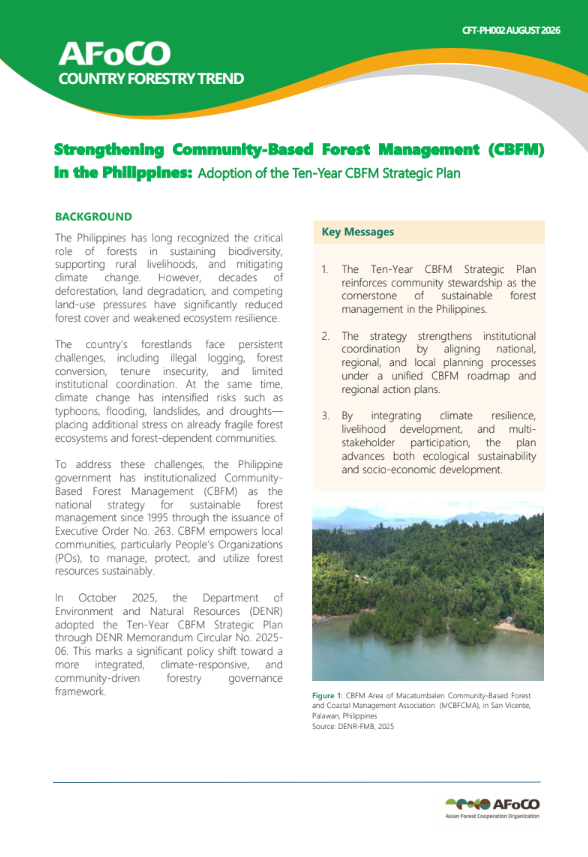
Philippines’s forestry sector is transitioning from a planting-focused approach toward a more ecosystem-based and resilience-oriented forest landscape restoration framework. Persistent forest degradation, fragmented watersheds, and high exposure to climate-related disasters such as typhoons, floods, and landslides are shaping national forestry

Thailand’s forestry sector is gradually shifting toward a more climate- and market-oriented management framework, as forests are increasingly positioned as strategic assets for carbon sequestration, climate mitigation, and green economic growth under the Bio-Circular-Green (BCG) Economy model. As Thailand advances