
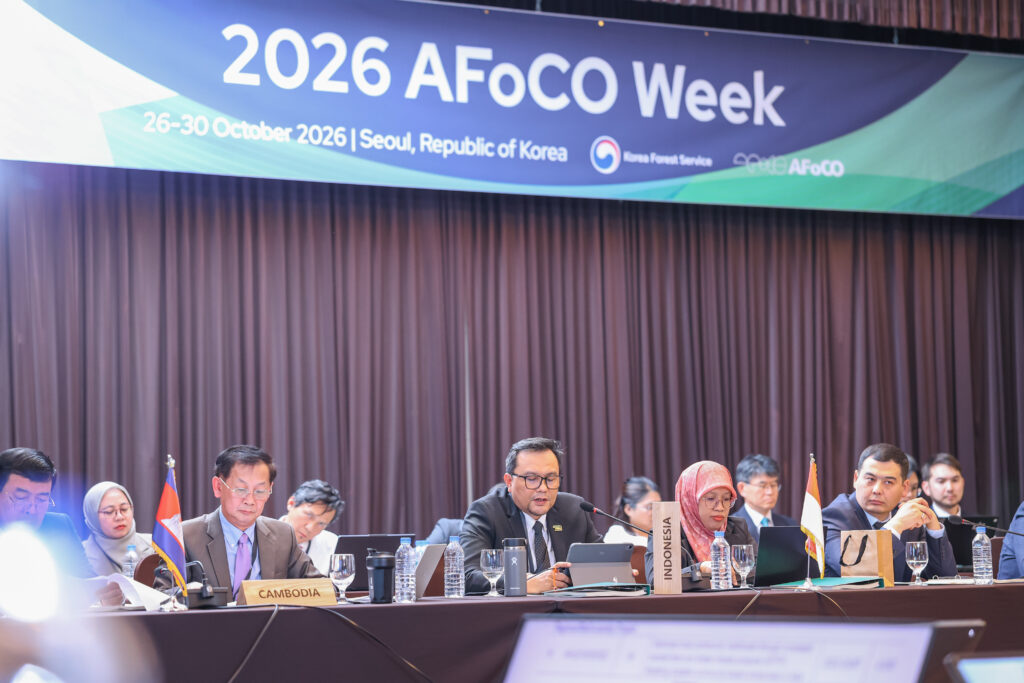
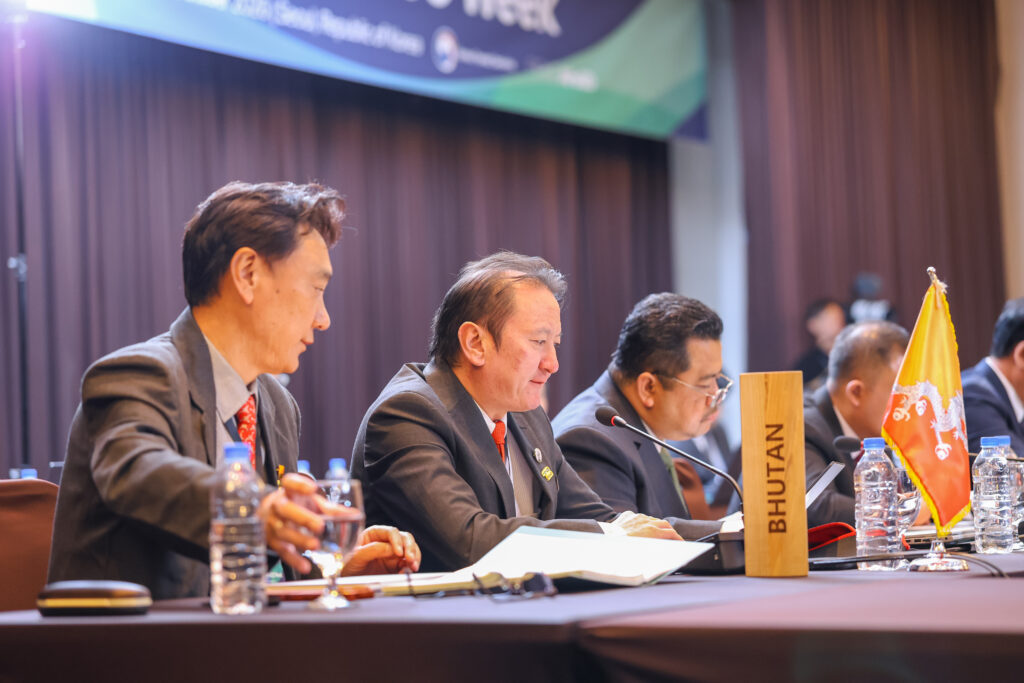
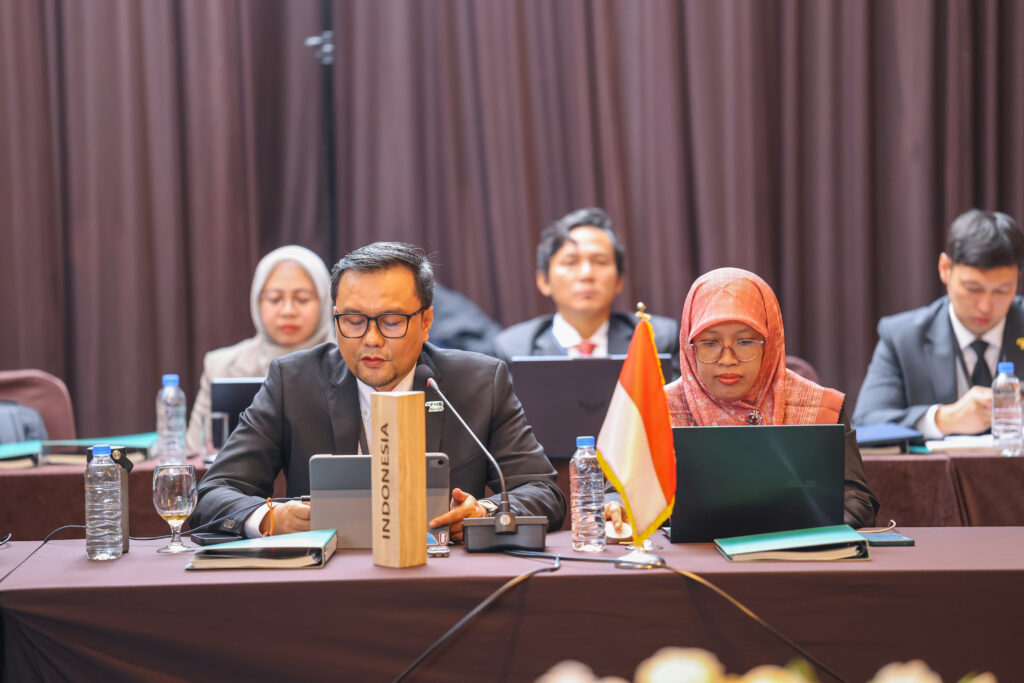
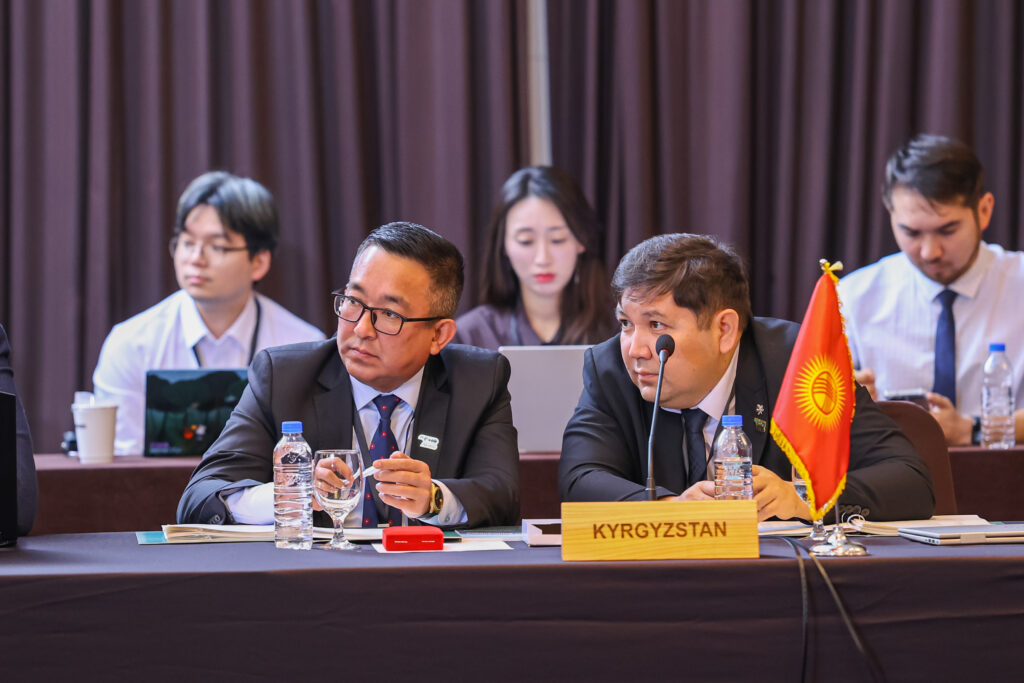
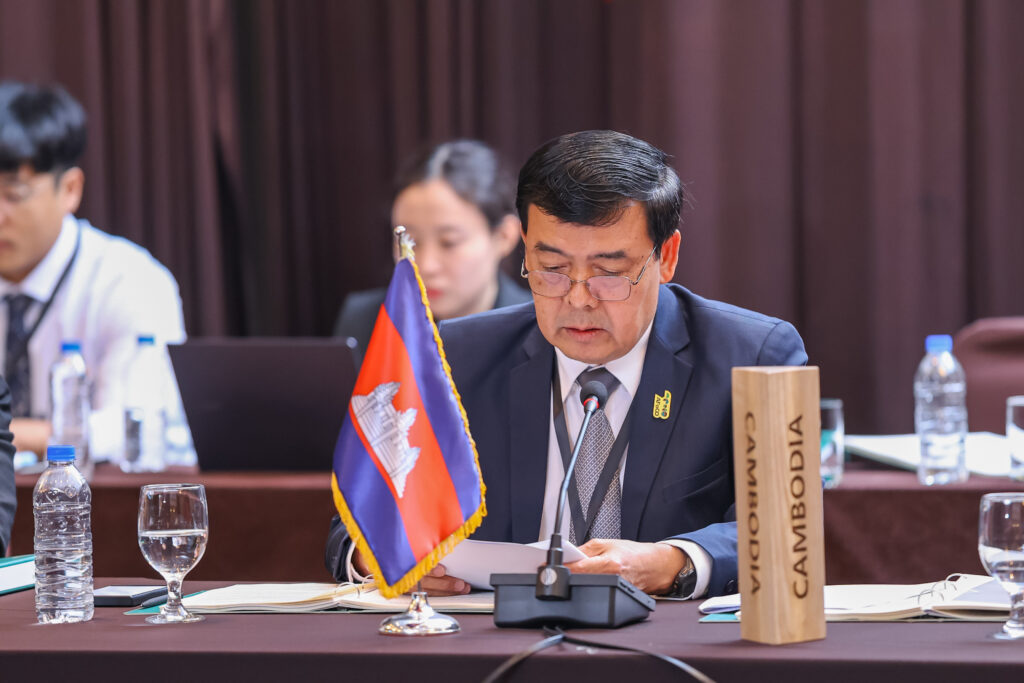
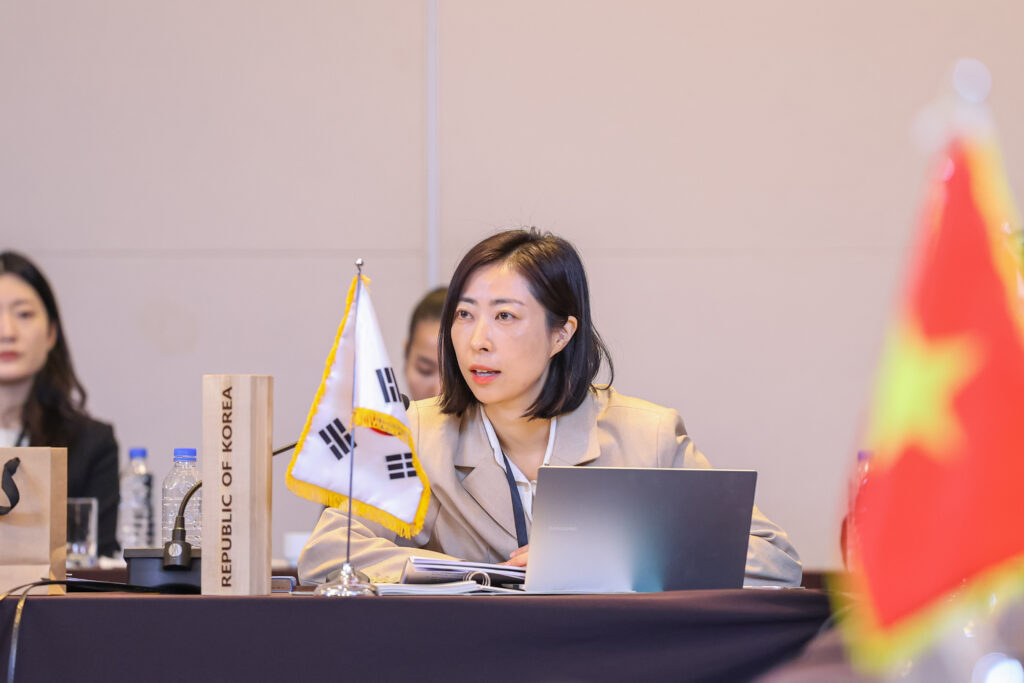
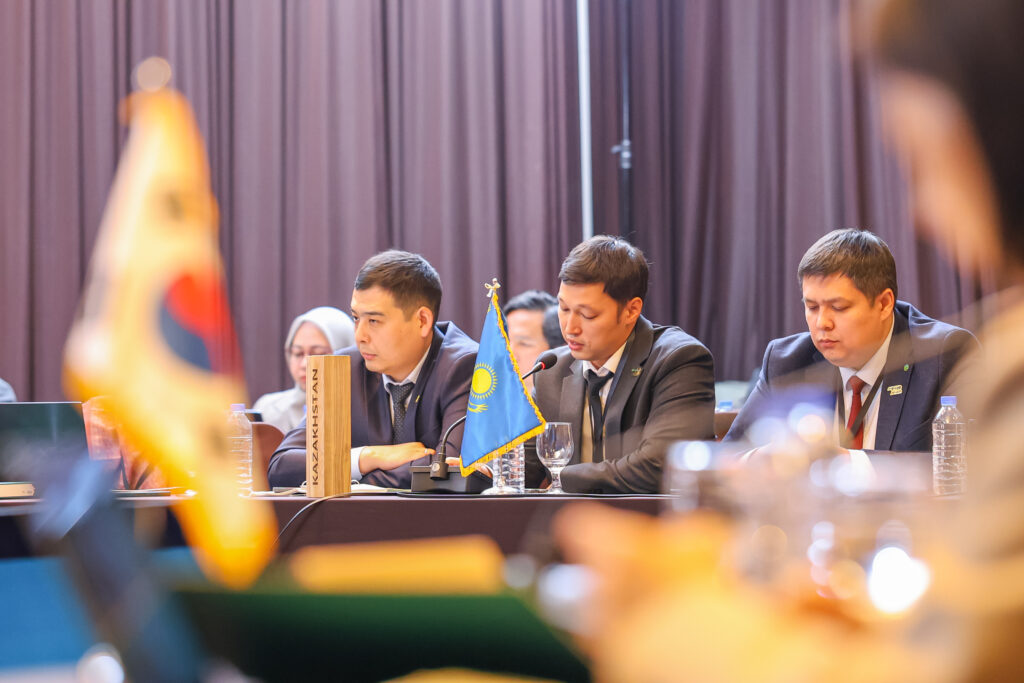
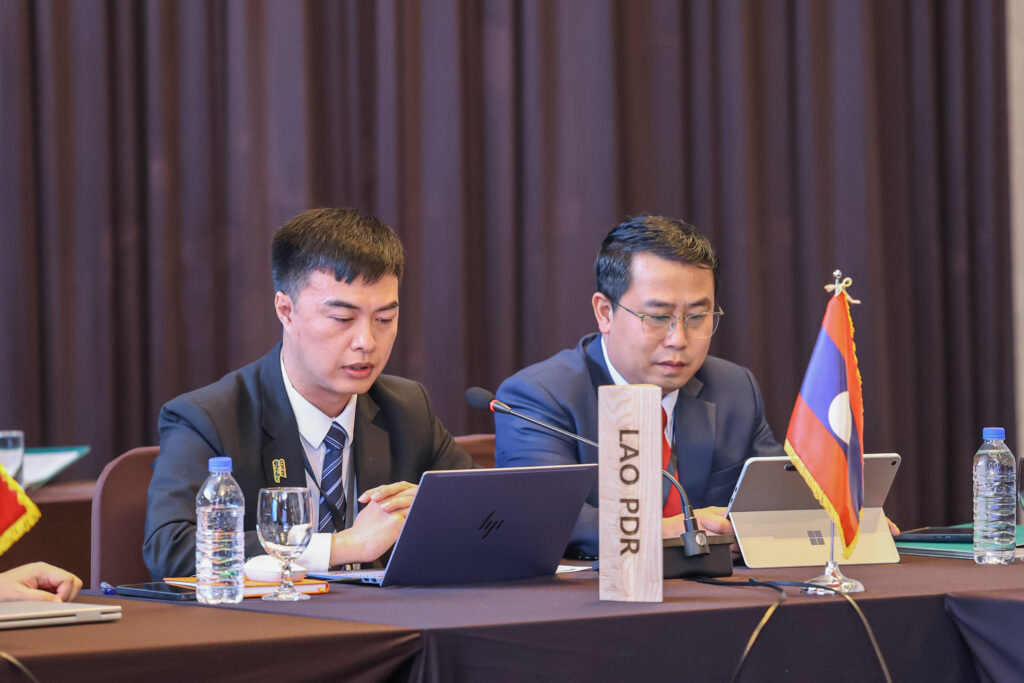
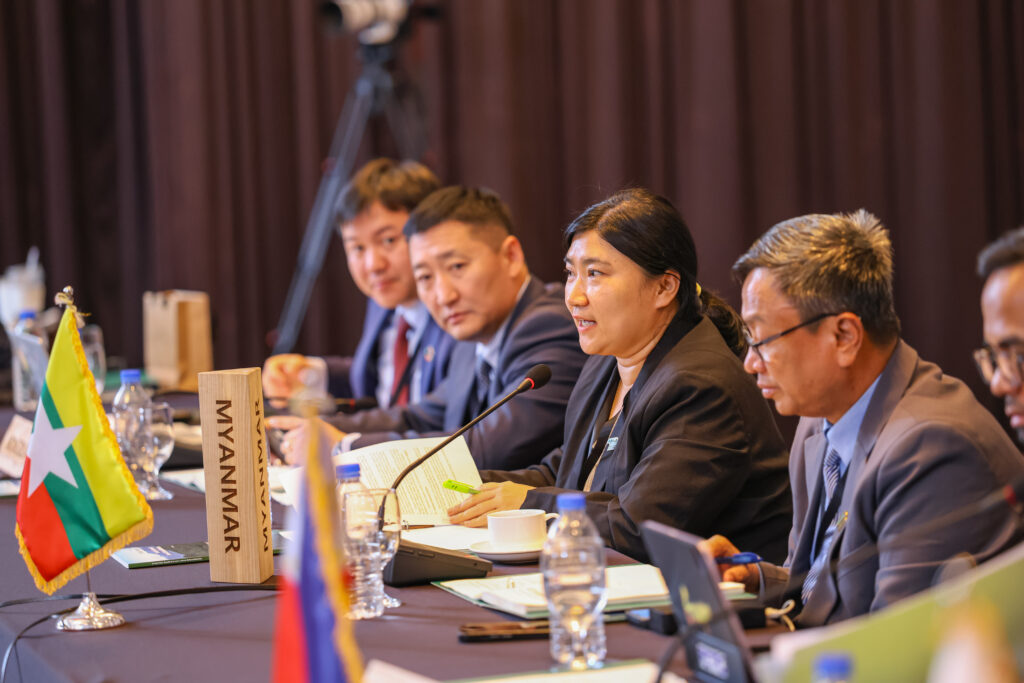
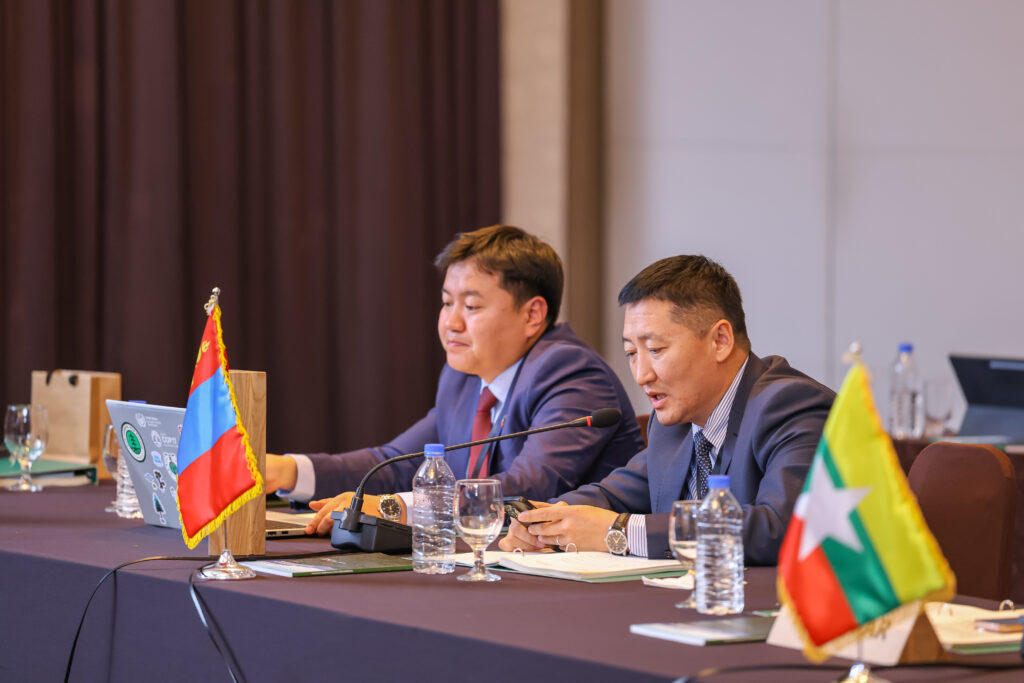
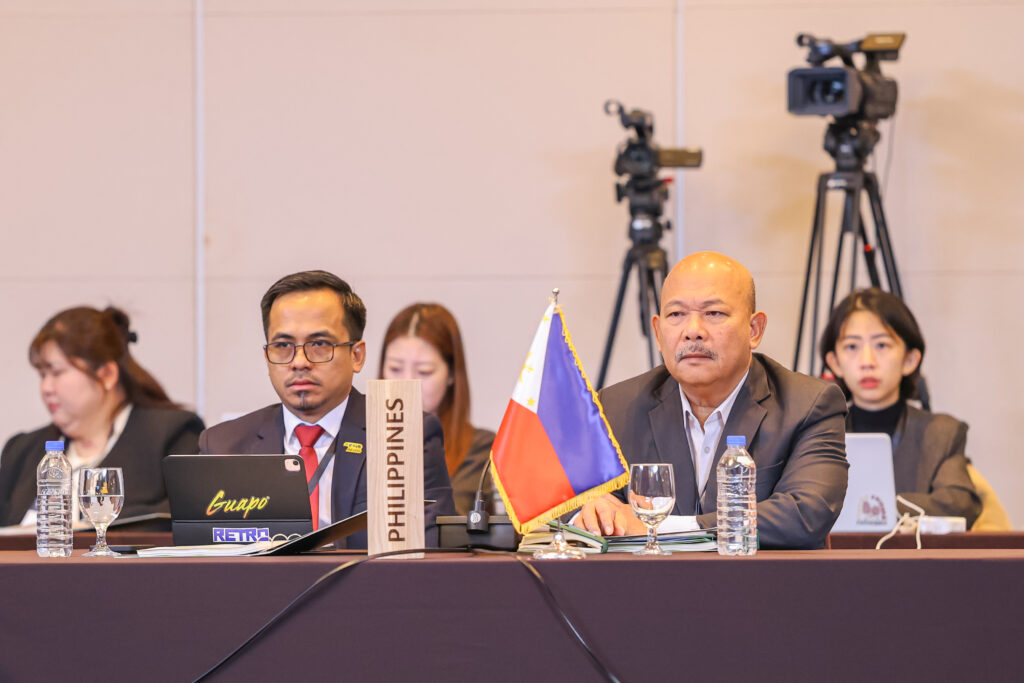
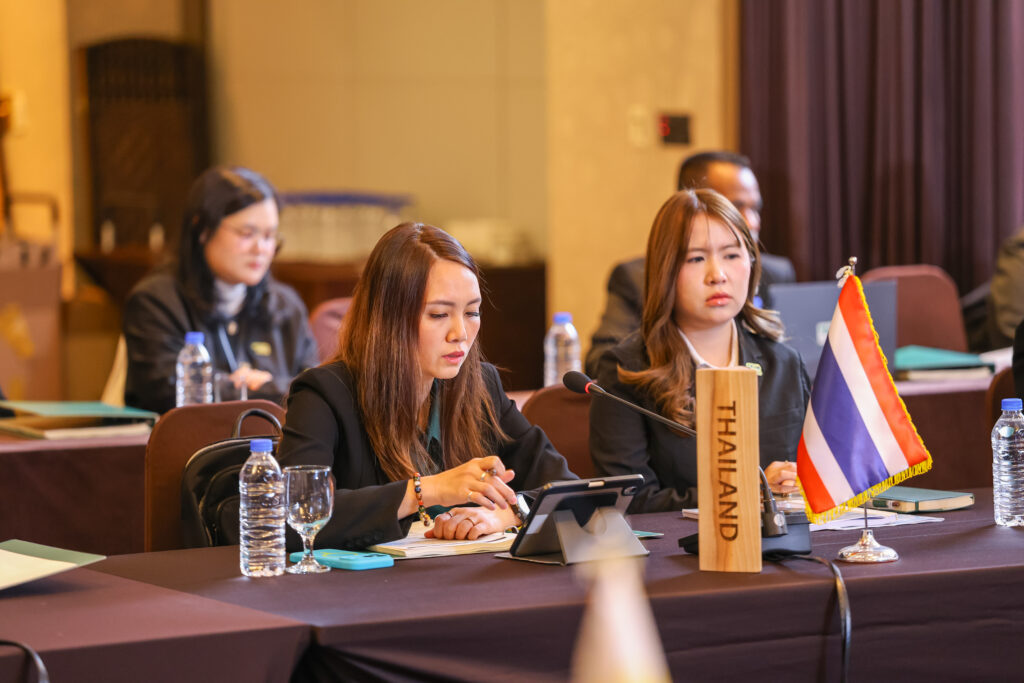
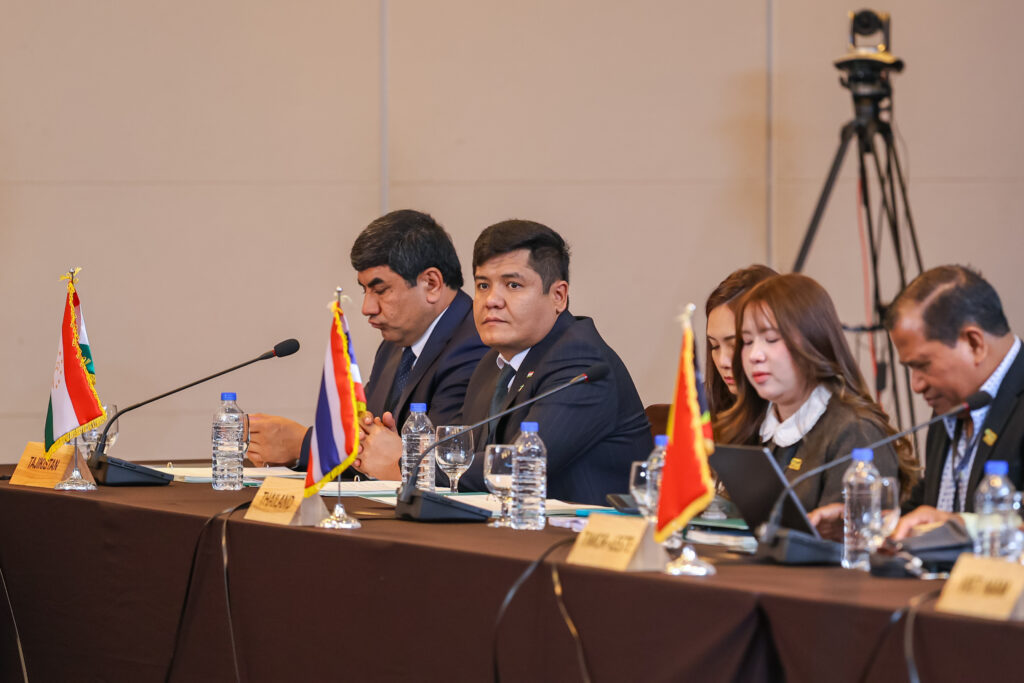
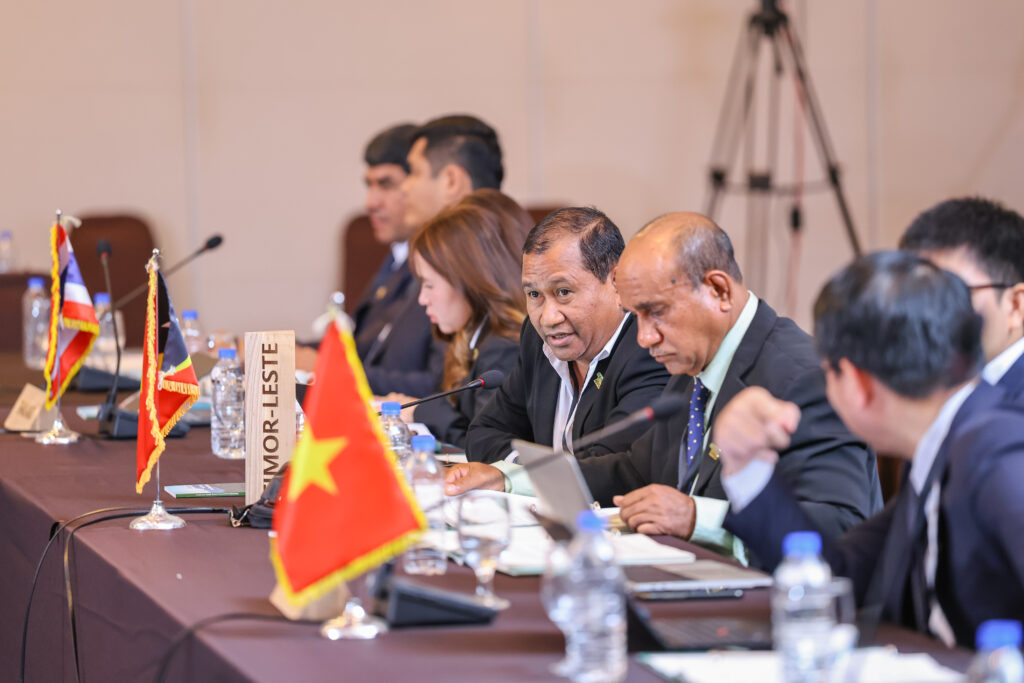
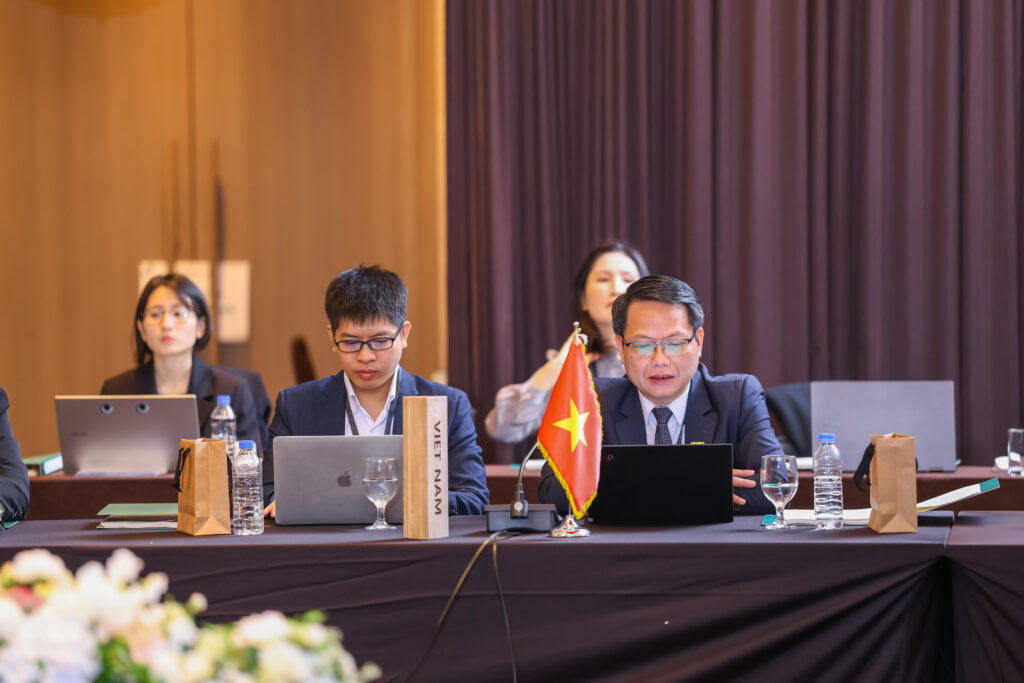
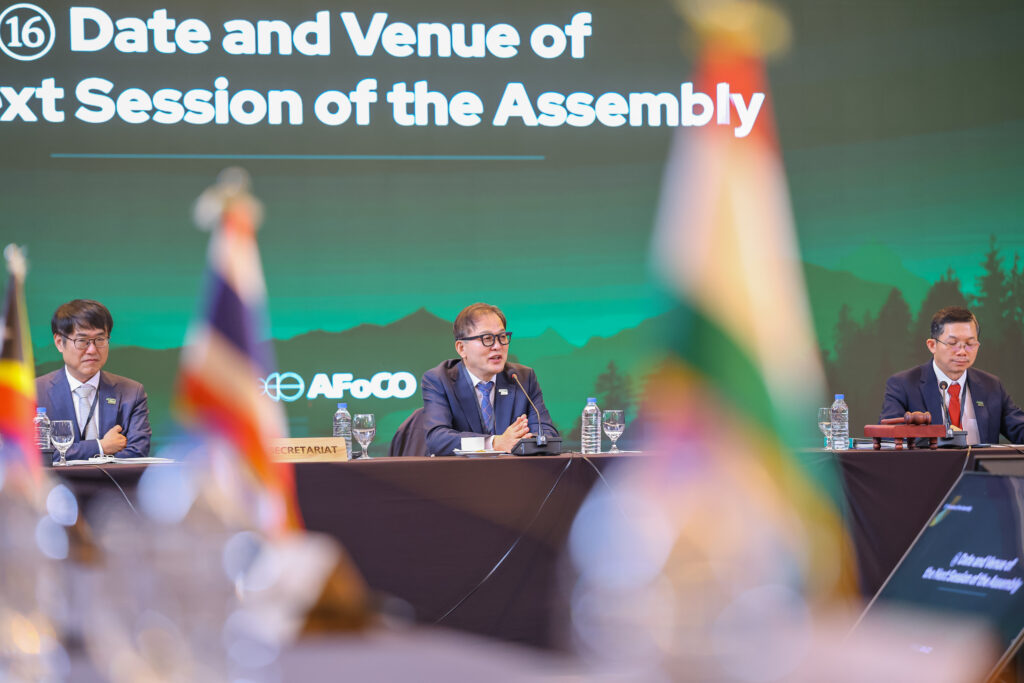
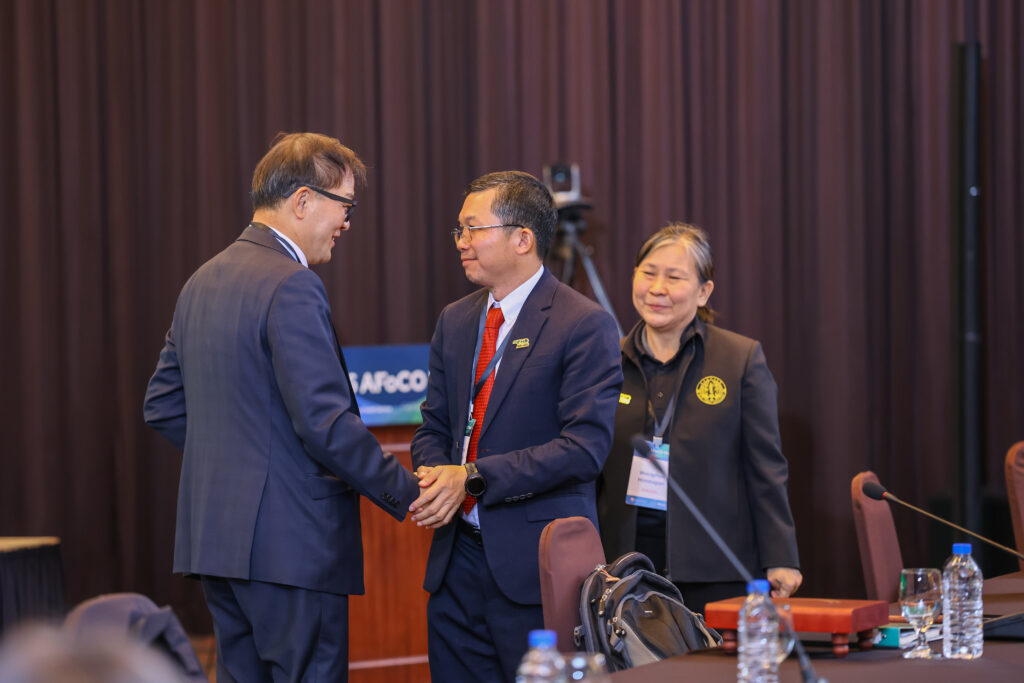
Seoul, Republic of Korea, 29–30 October 2026 — The Asian Forest Cooperation Organization (AFoCO) successfully convened its 15th Session of the Assembly at the Seoul Garden Hotel, bringing together representatives from all 15 Parties to review key organizational developments, strengthen regional cooperation, and make important decisions on AFoCO’s future direction.
Presided over by Lao PDR, the two-day session marked several significant milestones, including a progress toward expanding AFoCO’s Membership, the adoption of the Climate Forest Cooperation Framework (CFCF), the approval of new Regular Projects, and a leadership transition as AFoCO prepares to welcome its next Executive Director in 2027.
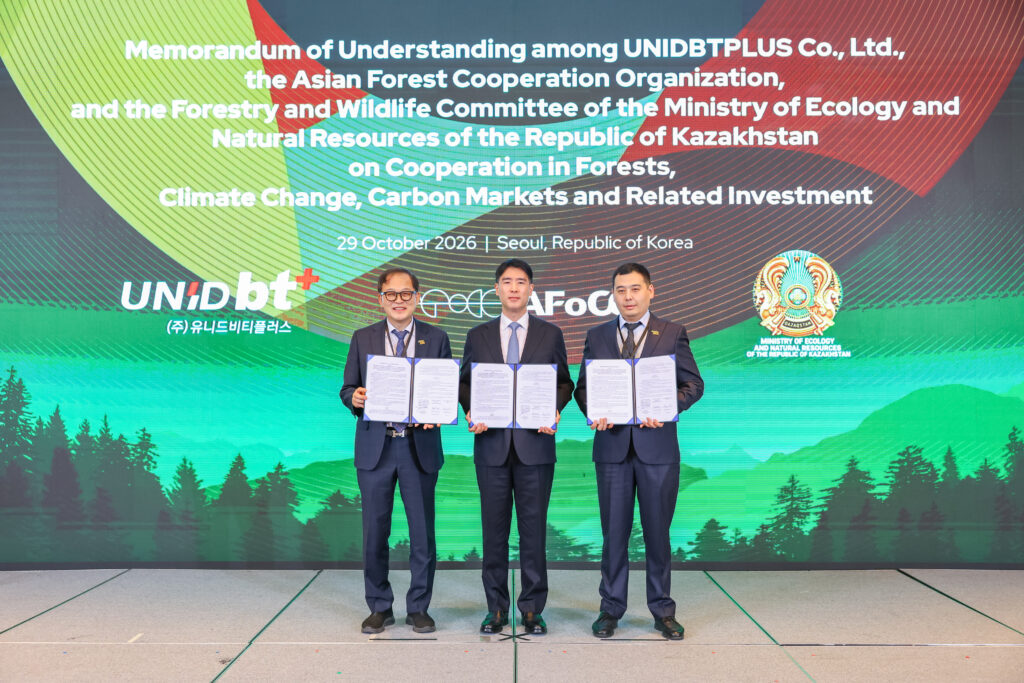
Strengthening Forest and Climate Cooperation through a New Partnership
The Assembly opened with a Memorandum of Understanding (MoU) signing ceremony among UNIDBTPLUS Co., Ltd., AFoCO, and the Forestry and Wildlife Committee of the Ministry of Ecology and Natural Resources of the Republic of Kazakhstan.
The MoU aims to strengthen cooperation in sustainable forest management, forest restoration, forest carbon project development, and carbon markets, including opportunities under Article 6 of the Paris Agreement.
By bringing together UNIDBTPLUS’s investment and financing capabilities, AFoCO’s technical expertise, and Kazakhstan’s government coordination role, the partnership seeks to develop forest-based climate projects and mobilize private-sector investment and blended finance.
The signing represents another step toward translating regional forest cooperation into practical climate action and sustainable investment opportunities.
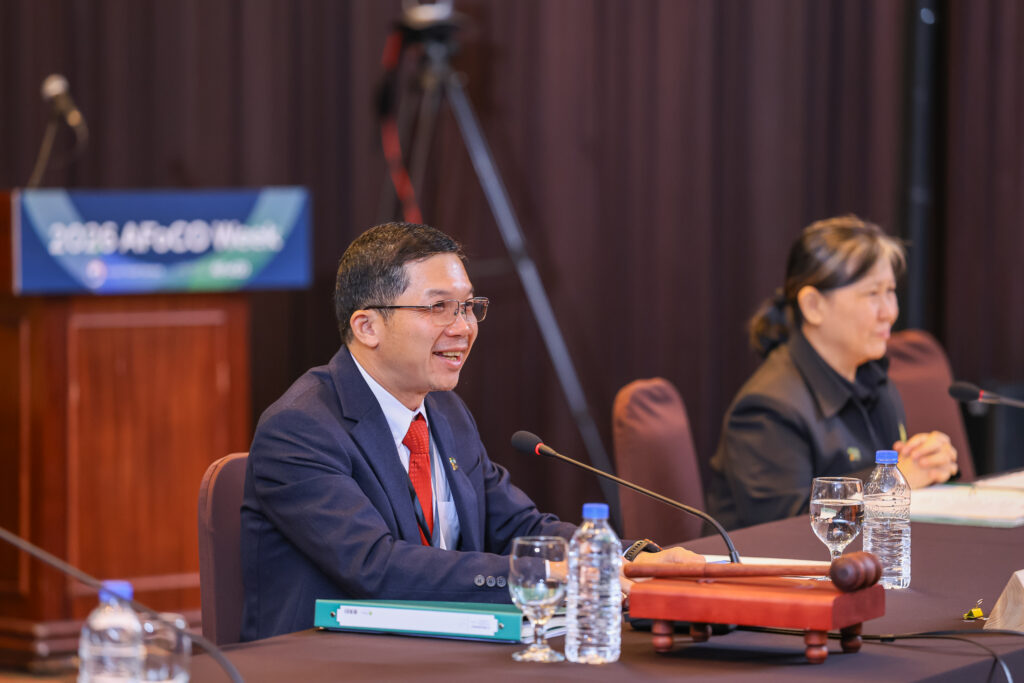
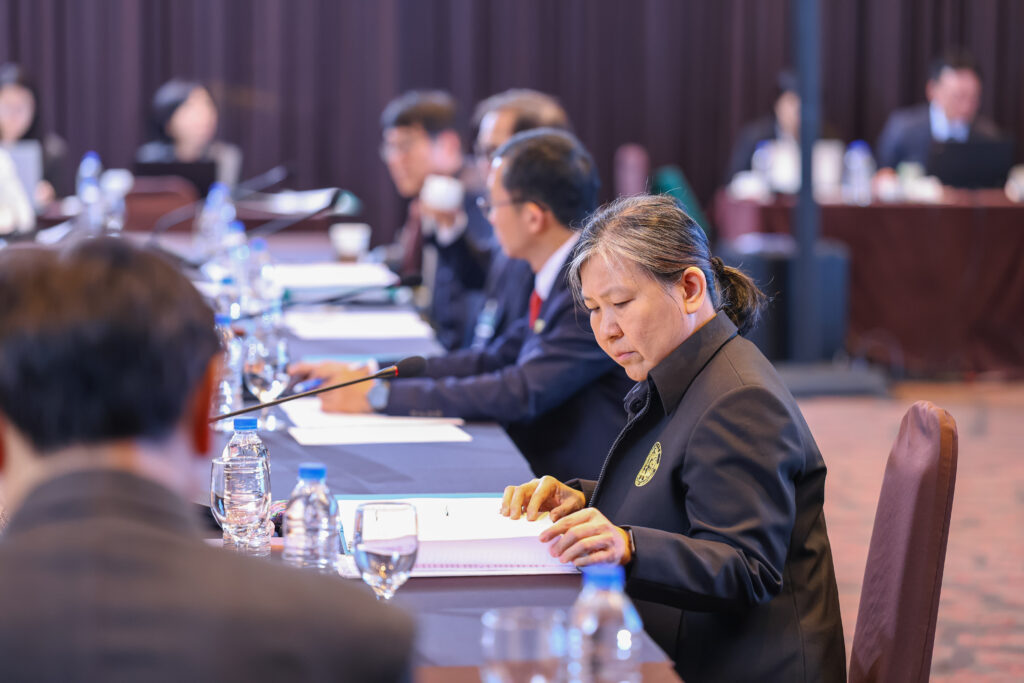
Welcoming Uzbekistan’s Interest in Joining AFoCO
Another important development was the Assembly’s consideration of the Republic of Uzbekistan’s expressed intention to become a Party to AFoCO.
Uzbekistan formally expressed its interest during the Korea–Central Asia Ministerial Forum on Forest and Climate Action, jointly organized by AFoCO, the Korea Forest Service (KFS), and the United Nations Convention to Combat Desertification (UNCCD) in Seoul on 14 September 2026.
The Assembly welcomed Uzbekistan’s intention and confirmed, on a no-objection basis, that none of the existing Parties objected to proceeding with the Membership application process.
Following this confirmation, the Secretariat was tasked with inviting Uzbekistan to submit its completed application form in accordance with AFoCO’s established Membership procedures.
This development marks a meaningful step toward broadening AFoCO’s regional cooperation network and strengthening its engagement with Central Asia.
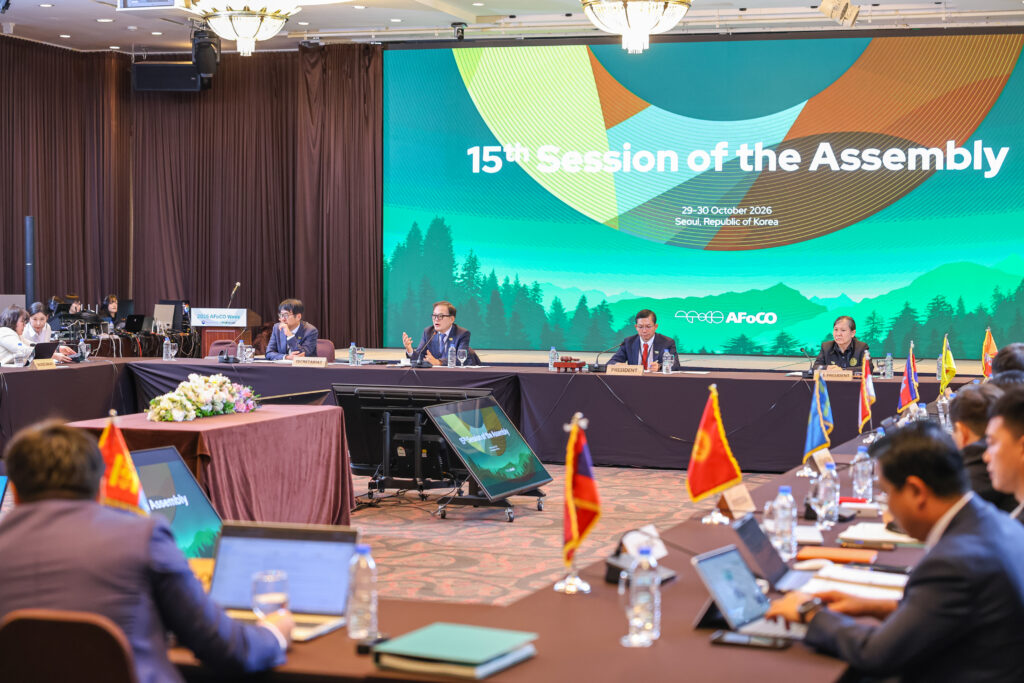
Adopting the Climate Forest Cooperation Framework
A major outcome of the session was the adoption of the Climate Forest Cooperation Framework (CFCF), an important step toward implementing the AFoCO Climate Action Plan (2025–2034).
The Framework introduces a long-term, country-led approach to forest and climate cooperation, connecting national priorities, successive projects, resource mobilization, and measurable outcomes within a coherent program structure.
A key feature is the development of approximately ten-year Landmark Province Program Plans, designed to integrate multiple Regular and Special Projects within designated priority areas.
The Assembly adopted the operationalization of the CFCF and agreed to initiate its application in two Member Countries beginning in 2027, subject to country agreement and available resources.
The Framework is expected to strengthen continuity among AFoCO projects, enhance country ownership, and support more sustainable and coordinated forest restoration and climate action.
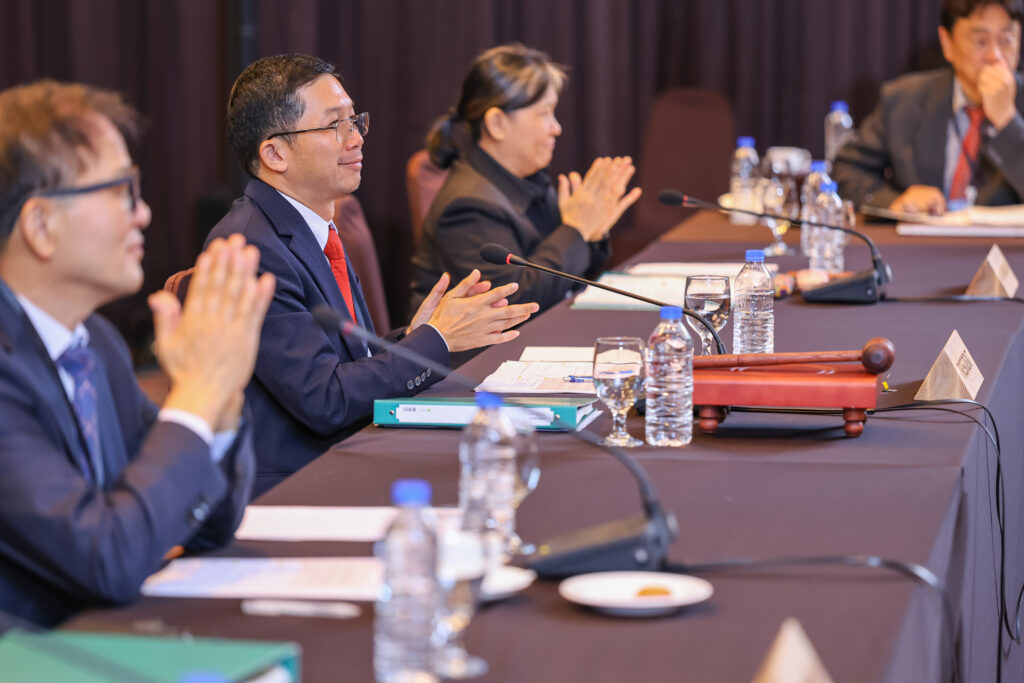
Expanding Regional Impact through New Regular Projects
The Assembly also approved new Regular Projects, reaffirming its commitment to translating regional cooperation into tangible actions across Member Countries.
The newly approved projects cover Kazakhstan, Mongolia, the Philippines, Thailand, Timor-Leste, and Viet Nam.
These projects will contribute to AFoCO’s strategic priorities, including forest landscape restoration and conservation, climate resilience, sustainable forest management, and the improvement of local community livelihoods.
The approval represents an important step in expanding AFoCO’s project portfolio and strengthening practical cooperation with Member Countries. The Secretariat will undertake the necessary follow-up procedures for project inception, including coordination with implementing agencies and resource mobilization.
Welcoming a New Executive Director and Honoring Four Years of Leadership
The Fifteenth Session also marked an important leadership transition for AFoCO.
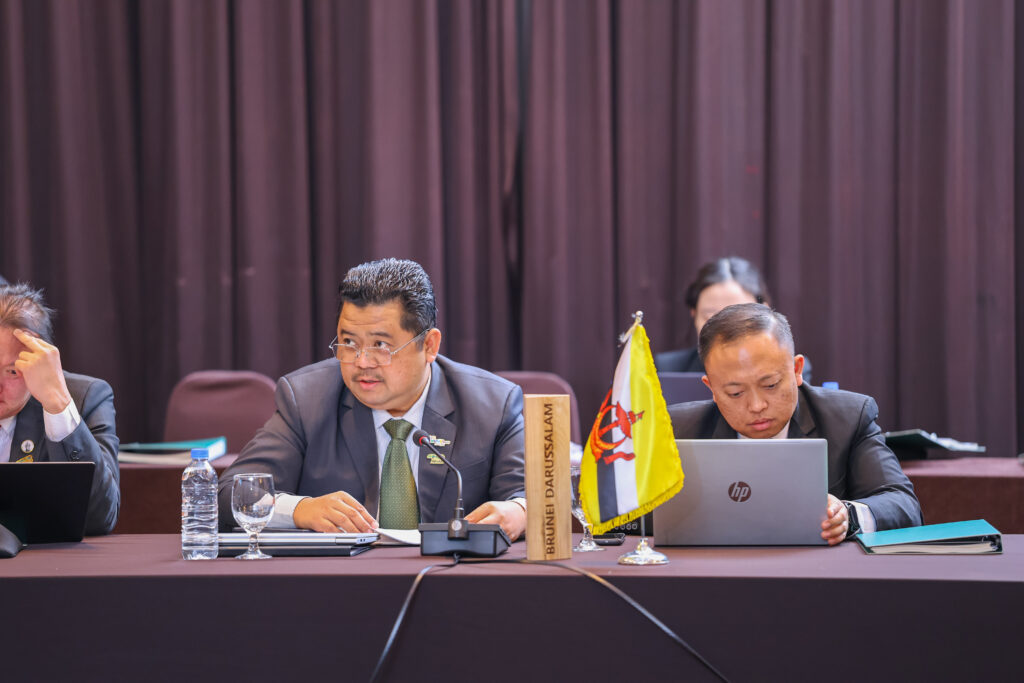
The Assembly welcomed Ms. Noralinda Ibrahim of Brunei Darussalam, who will assume office as AFoCO’s next Executive Director in January 2027. Ms. Ibrahim joined the session virtually via Zoom to greet the delegates and share her appreciation and greetings with the Assembly.
Her appointment marks the beginning of a new chapter for AFoCO, as the Organization looks forward to building on its achievements and further strengthening regional partnerships and forest cooperation under her leadership.
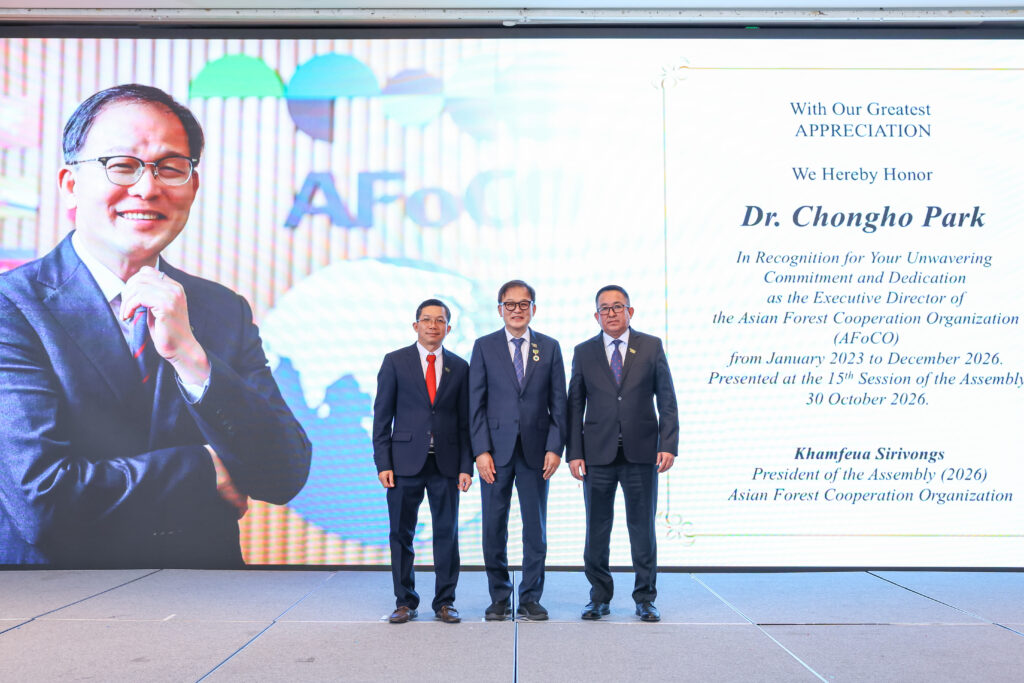
The Assembly also took the opportunity to express its heartfelt appreciation to Dr. Park Chongho, the incumbent Executive Director, who will complete his four-year term from January 2023 to December 2026.
In recognition of his dedication and contributions to the Organization, Dr. Park was presented with an appreciation plaque from the Secretariat. He also received a medal from the Kyrgyz Republic in recognition of his contributions to forestry cooperation.
Throughout his tenure, AFoCO has made significant progress in strengthening its institutional foundations, expanding partnerships, advancing forest restoration and climate initiatives, and enhancing access to international climate finance, including its accreditation to the Green Climate Fund (GCF) in 2026.
The Assembly was also briefed on Dr. Park Chongho’s potential roles as a founding member of Acorn Cooperative, an Advisory Board member of the Global Carbon Council (GCC), and AFoCO’s Forest Carbon Ambassador, through which he would continue contributing to international partnerships and forest carbon initiatives beyond his tenure as Executive Director.
The occasion provided a meaningful opportunity to celebrate the achievements of the past four years while looking ahead to AFoCO’s next chapter.
Sharing Cultural Experiences
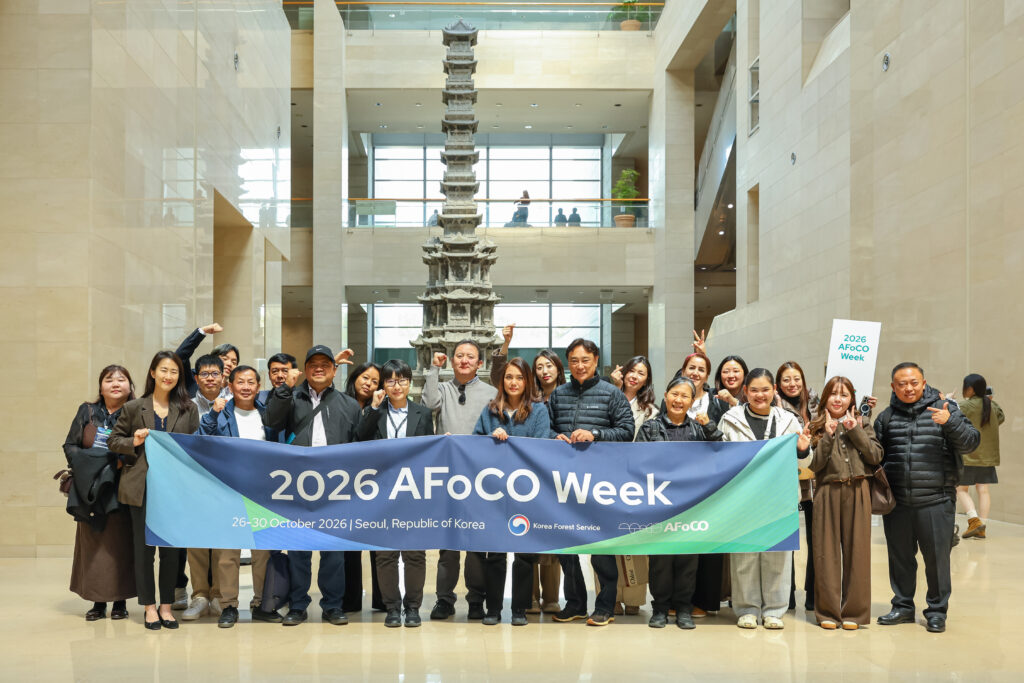
Following the conclusion of the official session on 30 October, delegates participated in a cultural field visit to the National Museum of Korea in Seoul.
During the visit, participants explored Korea’s rich cultural heritage, including the Room of Quiet Contemplation, which houses the renowned Pensive Bodhisattva statues. The visit offered an opportunity for delegates to experience Korean history, art, and culture while strengthening personal connections beyond the formal Assembly discussions.
Contributed by Ms. Yujeong Chang, Officer, Operations Division.