
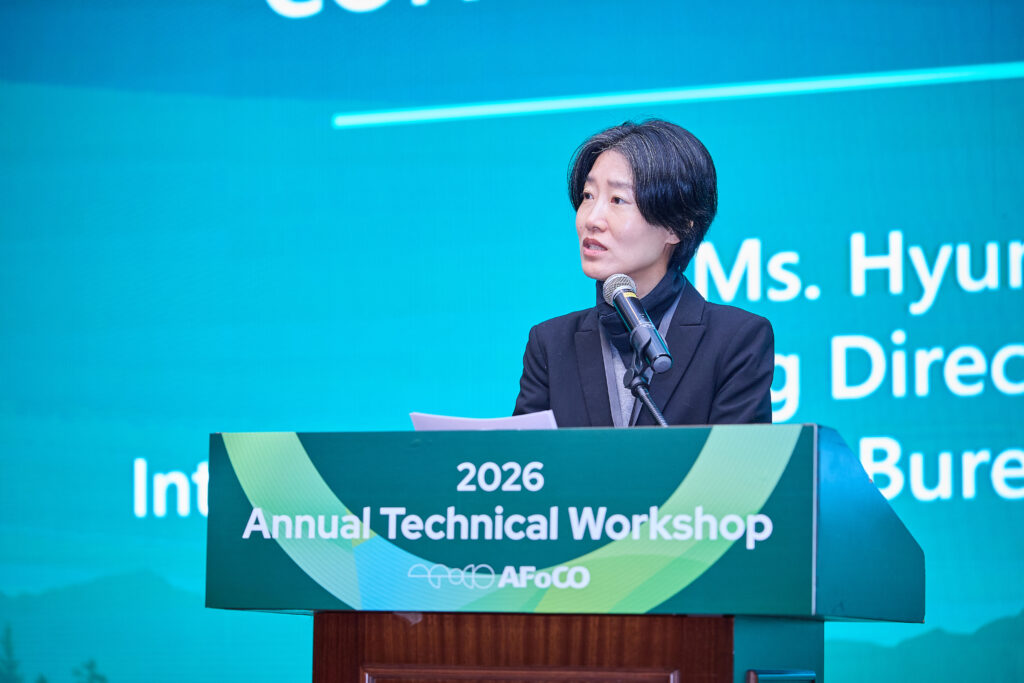
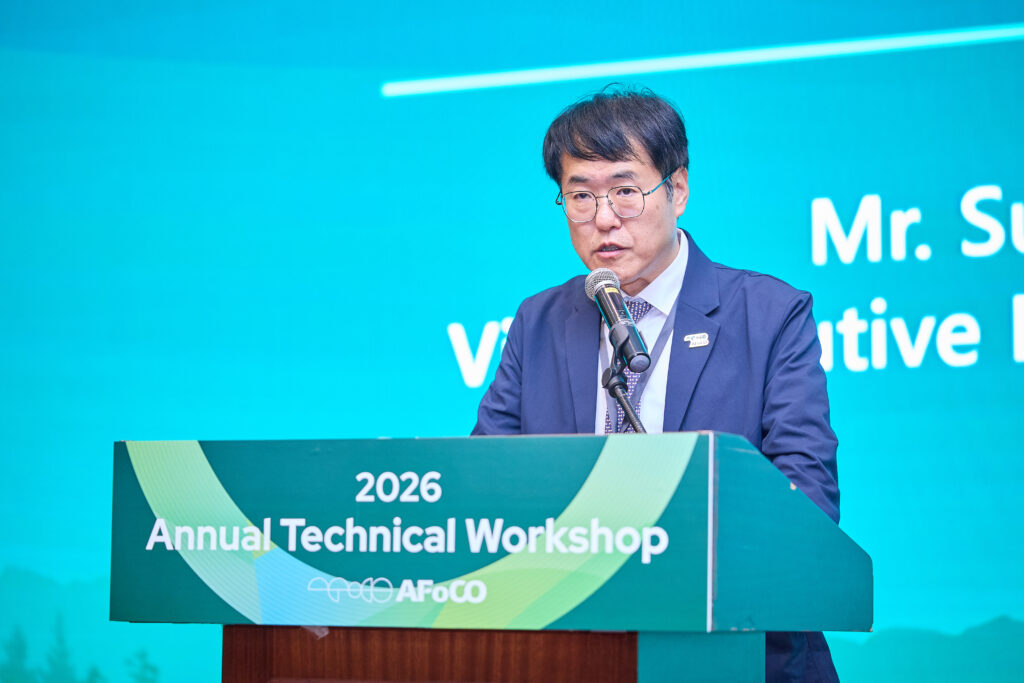
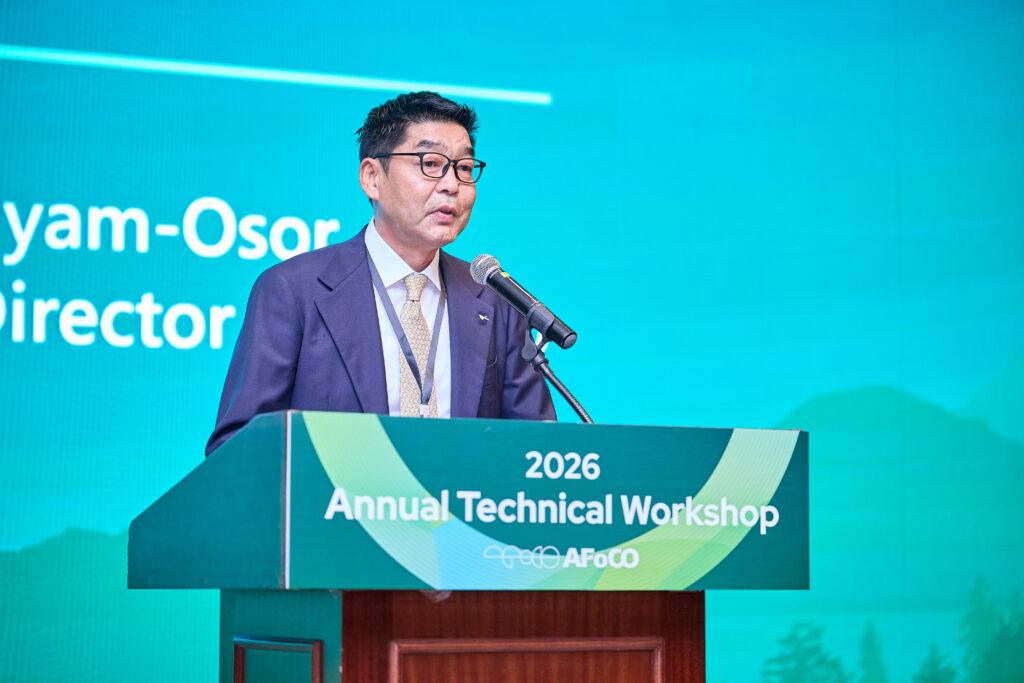
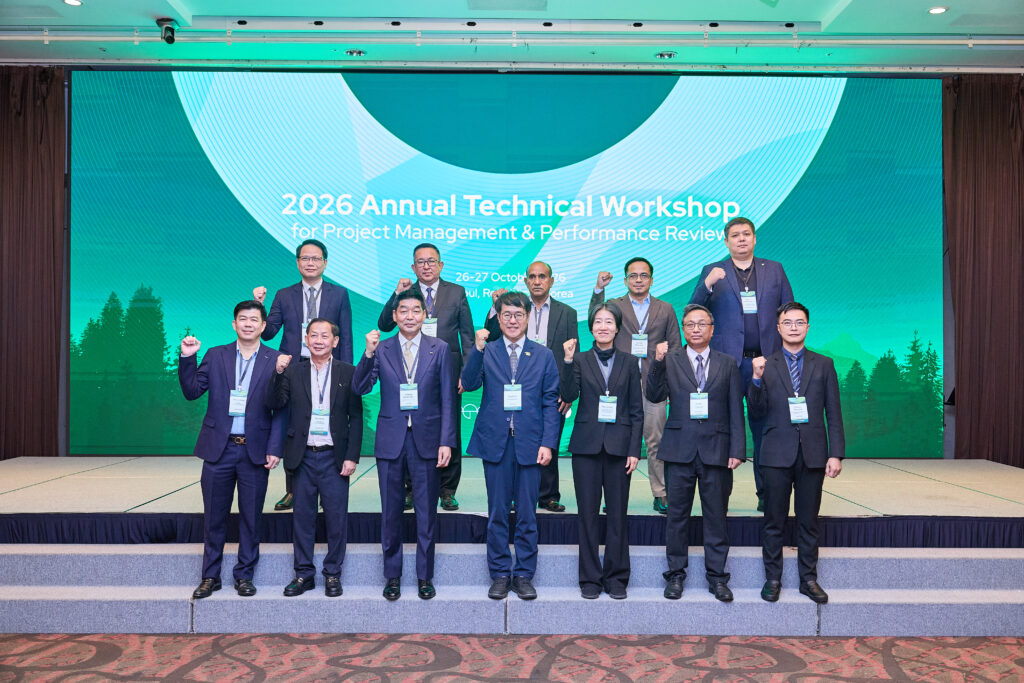
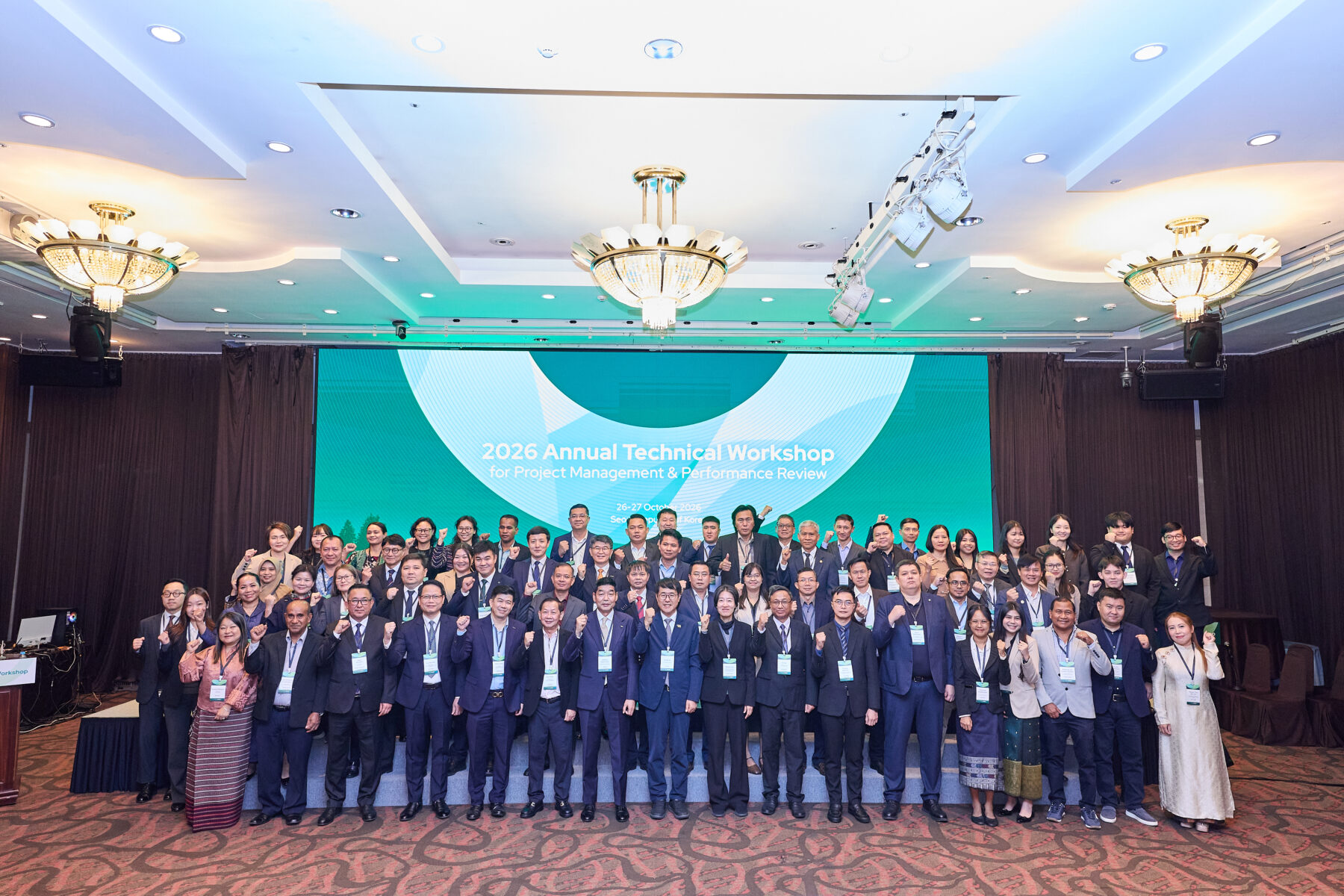
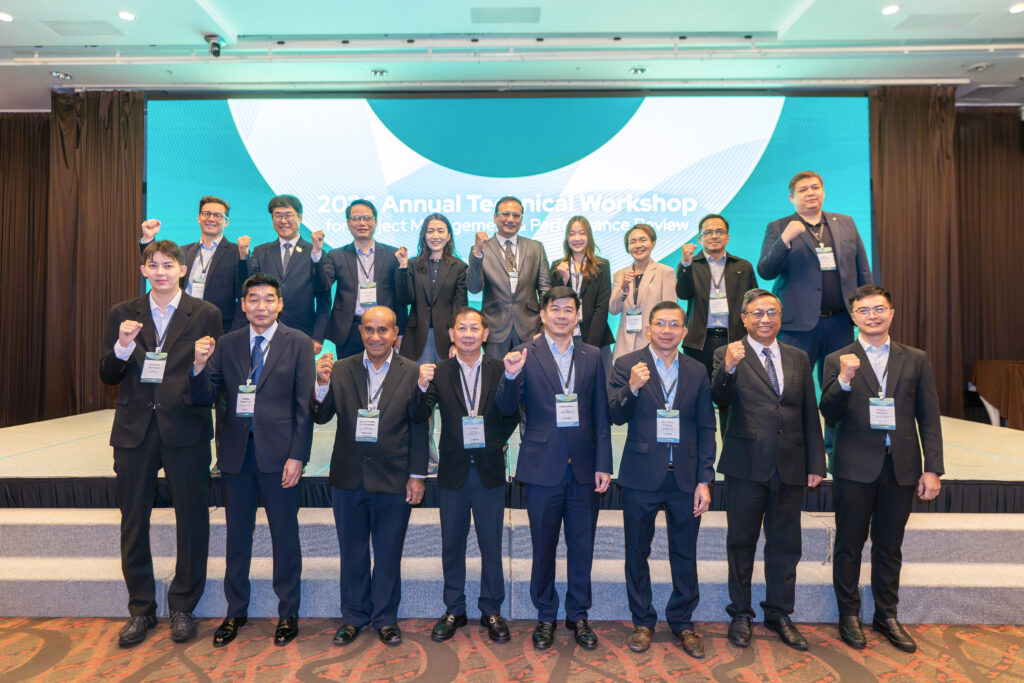
October 26-27, Seoul — As part of the 2026 AFoCO Week, the Asian Forest Cooperation Organization (AFoCO) convened its 2026 Annual Technical Workshop (ATW) for Project Management and Performance Review at the Seoul Garden Hotel, bringing together approximately 100 participants from 15 AFoCO Member Countries, alongside representatives of the Korea Forest Service (KFS), the AFoCO Secretariat, international organizations, research institutions, and the private sector. The workshop provided a platform to review progress across AFoCO-supported projects, exchange practical experiences, and explore opportunities to strengthen regional forest cooperation.
Organized over two days, the workshop featured two main sessions: I. Presentations on Project Progress and II. Thematic Sessions. The first day comprised five sub-sessions covering forest land restoration and conservation, community and circular bioeconomy, climate resilience and forest disaster risk management, gardens and biodiversity, and agroforestry. The second day focused on AFoCO’s Information and Data Center (IDC) and the pathway from forest-carbon readiness to project development. Session I reviewed 27 forest cooperation projects,comprised 20 Regular Projects and 7 Special Projects implemented across twelve (12) Member Countries, highlighting project implementation progress and country-level experiences while exploring how emerging technologies and innovative financing approaches can contribute to more effective forest management and climate action. Discussions also addressed opportunities to expand international forest cooperation through advanced technologies, including satellite data and artificial intelligence (AI), and to advance the development of forest carbon projects.
Day 1: Reviewing Project Progress and Sharing Implementation Experiences
The first main session provided a platform for project teams to present progress, key achievements, implementation challenges, lessons learned, and planned next steps. Discussions also offered opportunities to identify areas for coordination, collaboration, and technical support among participating countries and partners.
- Session 1.1: Forest Land Restoration and Conservation
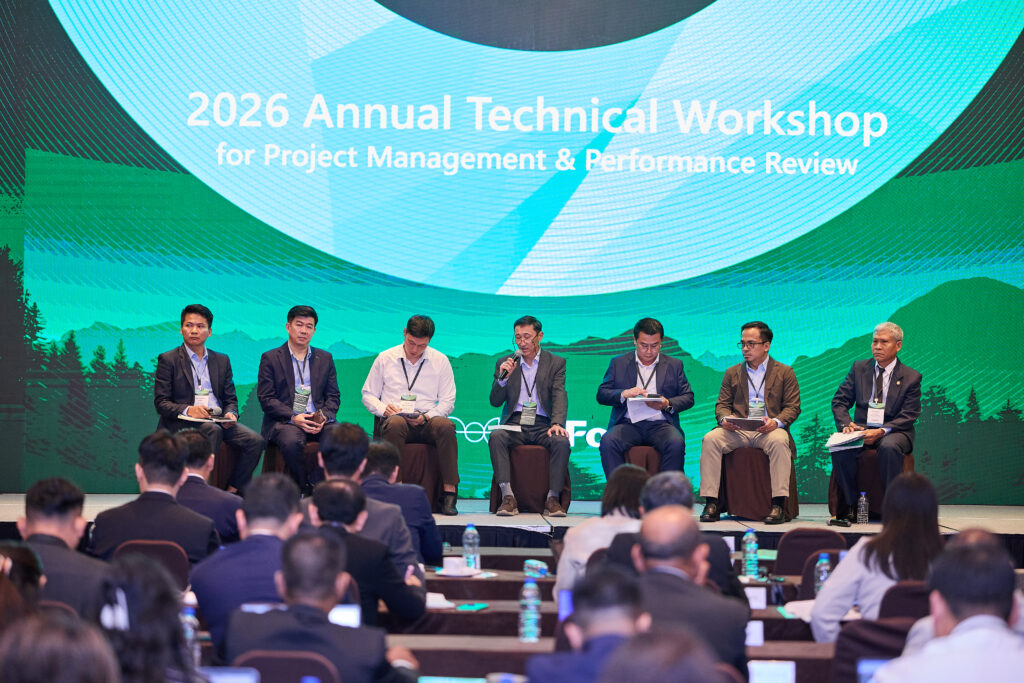
The opening sub-session explored the diverse approaches needed to support forest restoration, conservation, and sustainable management across AFoCO’s project portfolio. Presentations covered initiatives ranging from community-based forest management and wood processing in the Philippines, village-driven forest rehabilitation and livelihood improvement in Lao PDR, and community forest restoration and agroforestry in Cambodia, to the restoration and sustainable management of native agarwood species in southwestern Cambodia. The session also featured the Mekong REDD+ Project in Cambodia, as well as Kazakhstan’s efforts to improve forest inventory and information collection and strengthen the production of quality planting materials. Together, the presentations highlighted the connections between forest restoration, conservation, sustainable resource use, community livelihoods, and the technical capacities needed to support long-term forest management. A panel discussion provided an opportunity to exchange perspectives on implementation experiences and challenges.
- Session 1.2: Community & Circular Bioeconomy
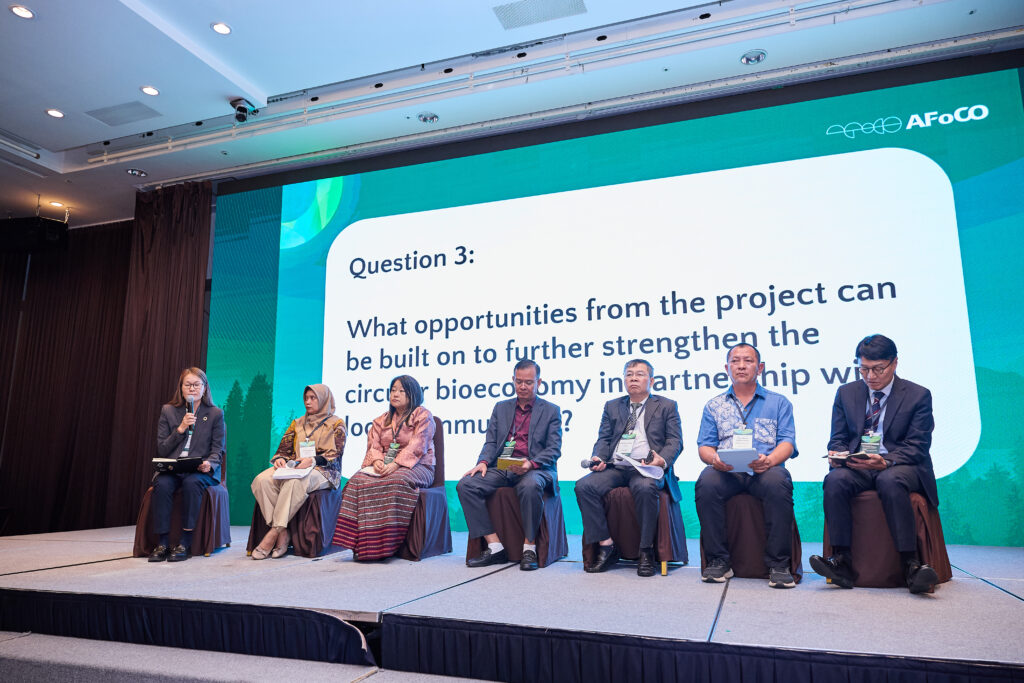
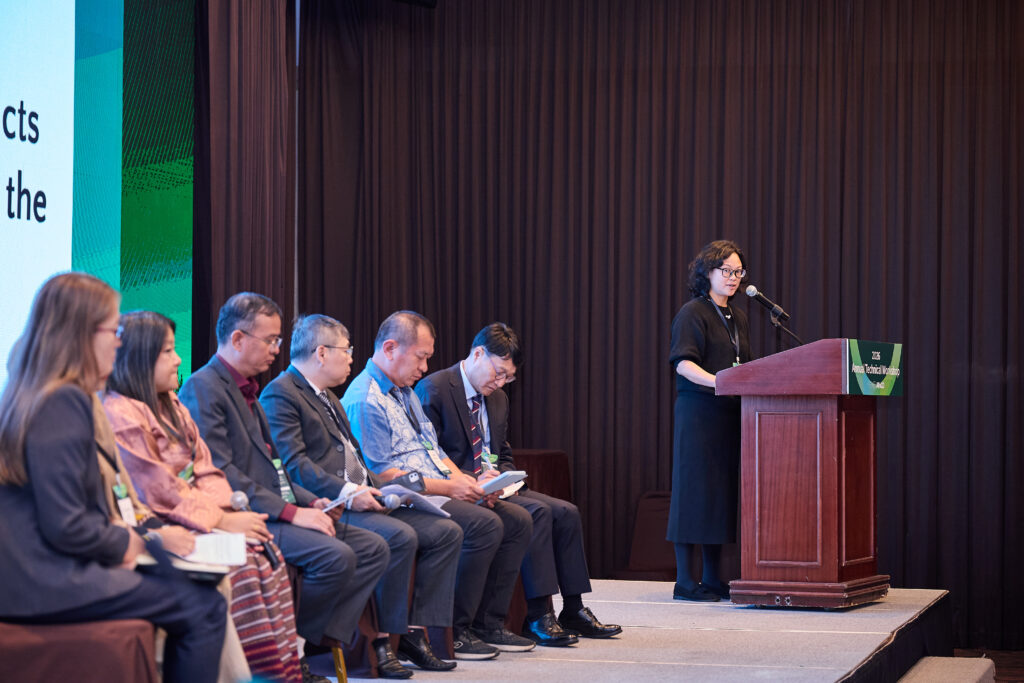
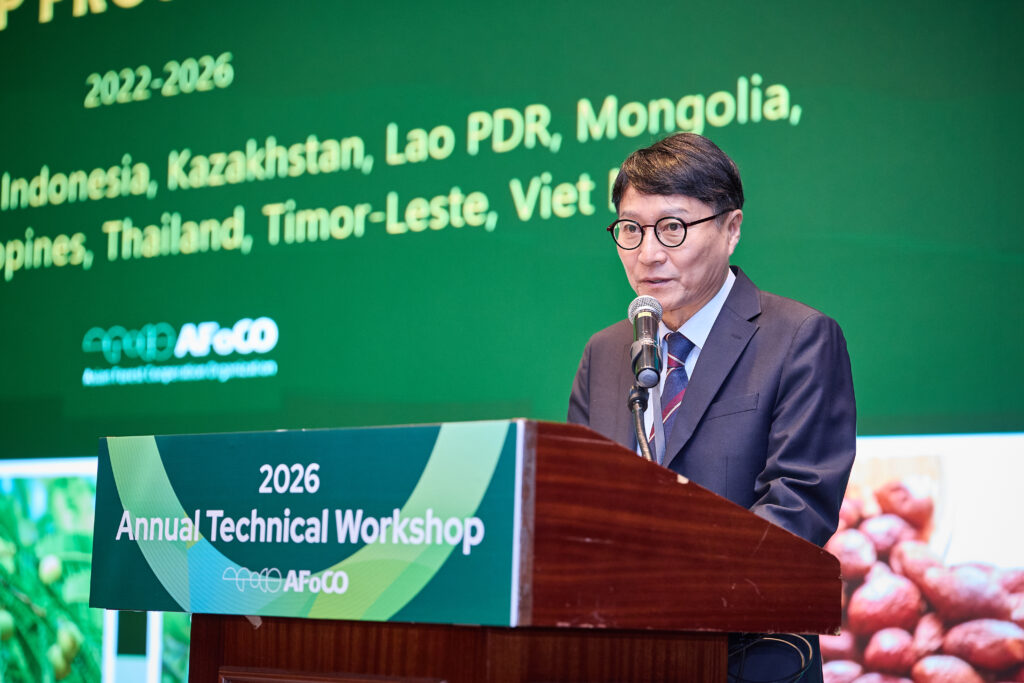
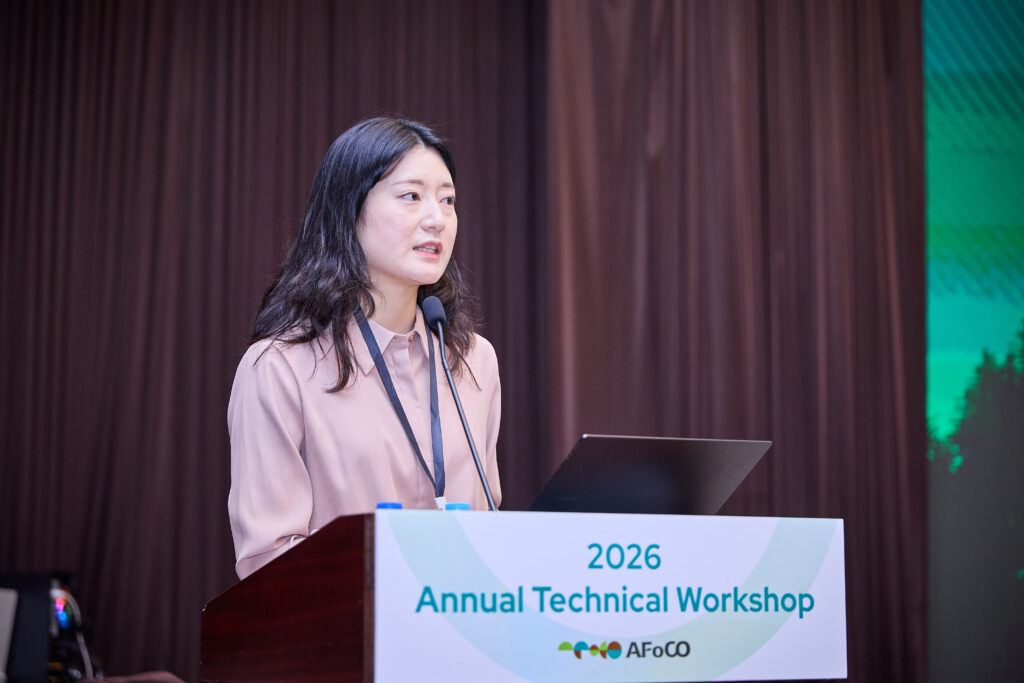
The second sub-session examined community-based enterprises and opportunities to strengthen local livelihoods through the sustainable use of forest resources. Under AFoCO/035, Improved Local Community Livelihoods through Increased Income from Non-Timber Forest Products: Modeling Scalable Community-Based Enterprises in Asia, participants received a regional overview of the initiative and heard country presentations featuring experiences from Bhutan, Cambodia, Indonesia, Mongolia, Viet Nam, and Thailand. The discussions considered how community-based enterprise models can support income generation through non-timber forest products (NTFPs), while providing lessons that may inform their adaptation and wider application across different national contexts. A panel discussion facilitated further exchange on implementation experiences and the potential for scaling community-based approaches.
- Session 1.3: Climate Resilience & Forest Disaster Risk Management
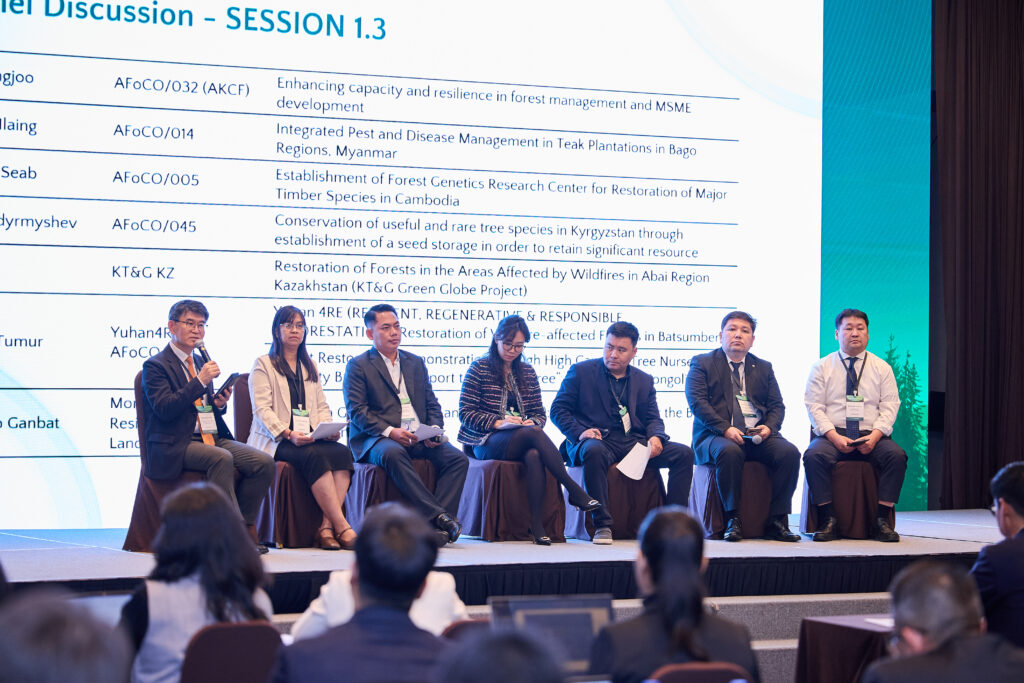
The third sub-session focused on approaches to strengthening forest resilience and addressing risks associated with forest fires, pests, diseases, and other pressures on forest ecosystems and local communities. Presentations featured AFoCO initiatives on forest-fire resilience and local livelihoods in CLMV countries, integrated pest and disease management in Myanmar’s teak plantations, forest genetics research for restoration in Cambodia, and conservation of useful and rare tree species in Kyrgyzstan. The session also covered wildfire-affected forest restoration in Kazakhstan and Mongolia, including the Yuhan4RE and AFoCO/039 initiatives supporting restoration and capacity building in Mongolia, alongside the Mongolia Green Resilient Landscapes technical assistance initiative. The presentations provided opportunities to share experiences from different forest and landscape contexts and discuss approaches to improving preparedness, strengthening technical capacity, and supporting forest recovery. The session concluded with a panel discussion on implementation challenges and relevant responses.
- Session 1.4: Special Session on Gardens & Biodiversity
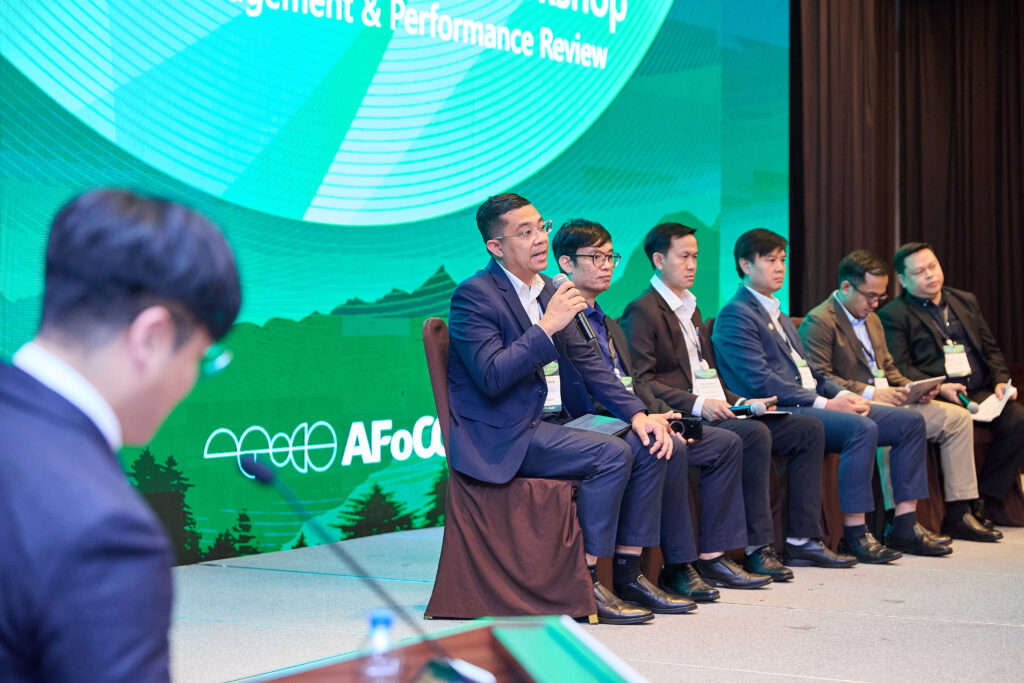
The fourth sub-session highlighted initiatives that connect biodiversity conservation, forest restoration, and the value of green spaces. Presentations included work on forest ecosystem biodiversity at Cat Tien National Park in Viet Nam; cultural ecosystem services, nature-based experiences, and forest healing in an urban setting in the Philippines; and restoration using threatened and endemic Philippine tree species. The session also featured the establishment of ASEAN-Korea Gardens in Cambodia, Viet Nam, and Lao PDR. The presentations illustrated the range of ways forest cooperation can contribute to biodiversity conservation and public engagement with nature, from protecting and restoring forest ecosystems to creating spaces that support cultural and educational experiences. A panel discussion enabled participants to exchange perspectives on these complementary approaches.
- Session 1.5: Special Session on Agroforestry
The final sub-session on Day 1 explored agroforestry as an approach to land rehabilitation, climate resilience, sustainable food production, and rural development.
Presentations covered the AFCLIM-TL initiative on agroforestry for climate resilience and sustainable development in Timor-Leste; AFoCO/026 on locally customized restoration models for bare lands in Timor-Leste; and AFoCO/031 on rehabilitating degraded and potentially abandoned forest land in northwestern Viet Nam. Participants also heard about the ACORN agroforestry initiative in Kyrgyzstan and Asian Development Bank technical assistance for climate-resilient rural development and food security in Lao PDR. The session provided a forum to discuss how agroforestry approaches can be adapted to different local conditions and contribute to land rehabilitation, agricultural productivity, and rural livelihoods. The day’s project-review programme concluded with a panel discussion and an exchange of experiences among participants.
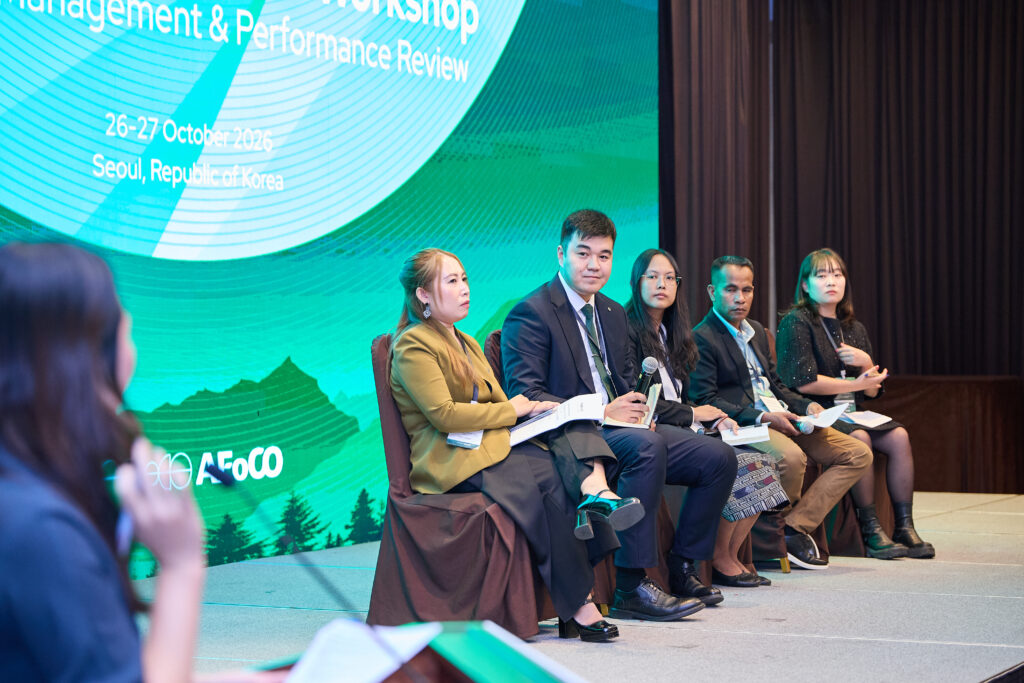
Day 2: Exploring Data Integration and Forest-Carbon Project Development
The second main session shifted from project-level progress reviews to thematic discussions on information management and forest-carbon development. The two sessions addressed complementary areas of AFoCO’s work: strengthening the information base for cooperation and exploring pathways to develop forest-carbon initiatives.
- Session 2.1: Introducing AFoCO’s Information and Data Center (IDC)
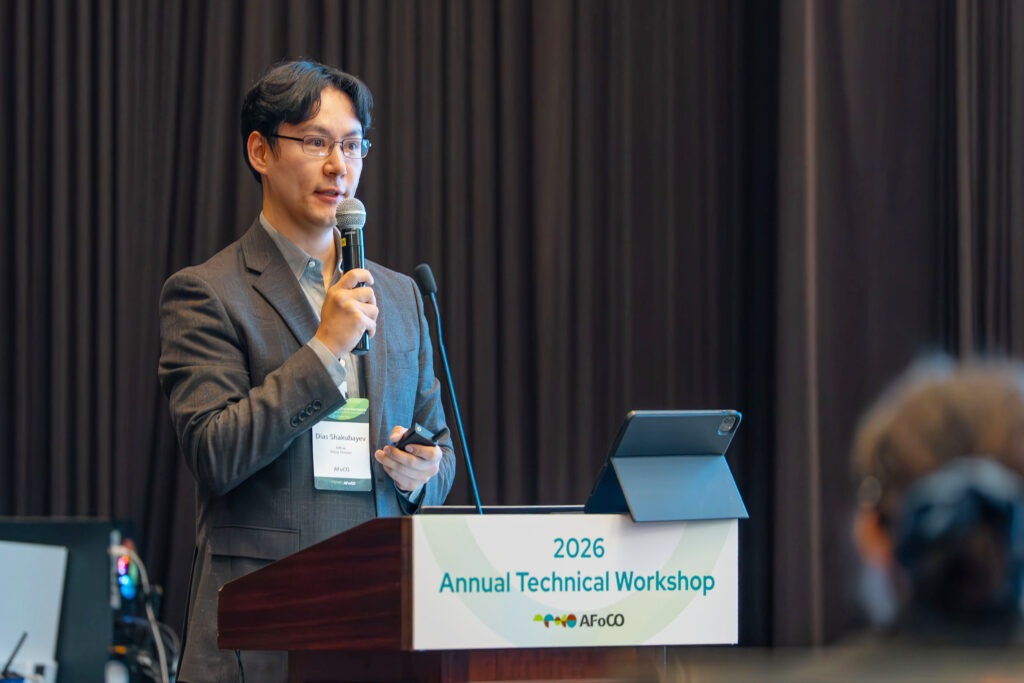
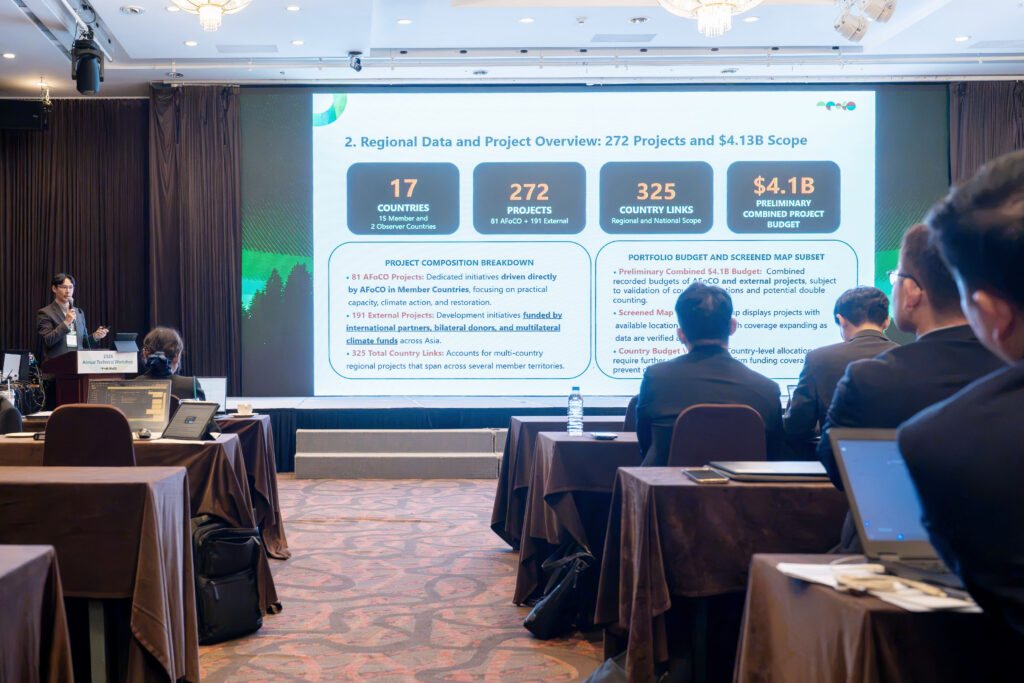
The first thematic session introduced AFoCO’s Information and Data Center (IDC), a shared knowledge and decision-support platform designed to bring together country-level forest information, ongoing and completed project portfolios, and related data in an integrated and accessible format. The presentation outlined how the IDC is intended to support coordination and project development by making relevant information more accessible. It also emphasized the importance of continued participation by AFoCO Member Countries in maintaining and improving the platform as a shared resource. The session highlighted the role of accessible, organized information in supporting cooperation and informing future project development.
- Session 2.2: From Forest Carbon Readiness to Project Development
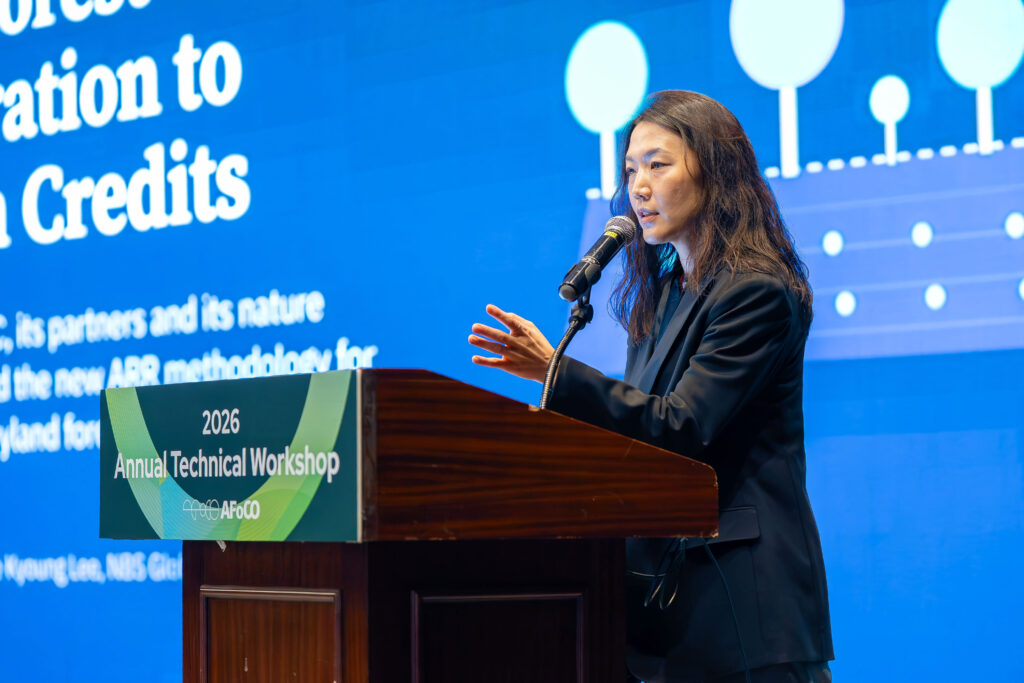
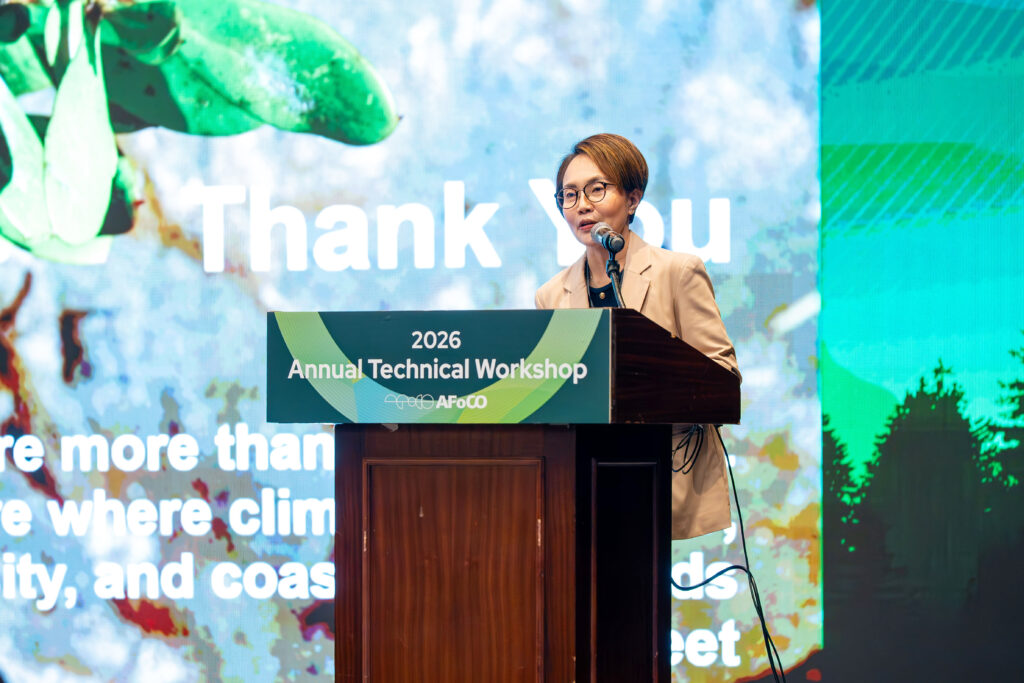
The final thematic session examined the pathway from forest-carbon readiness to project development, bringing together perspectives from AFoCO, technical institutions, and project-development partners. Presentations addressed REDD+ results-based payments under the Green Climate Fund (GCF), the overview and way forward of AFoCO’s REDD+ Readiness Initiative, and methodologies for afforestation, reforestation and revegetation (ARR) and mangrove projects under the Global Carbon Council. Further contributions introduced THANKS CARBON’s carbon platform and practical monitoring, reporting and verification (MRV) applications, potential applications of Korea’s agriculture and forestry satellite, and practical considerations for carbon project development. By bringing these topics together, the session provided Member Country representatives with an overview of relevant technical approaches, tools, and expertise for forest-carbon project development. It also encouraged participants to consider potential opportunities in their national contexts and explore future initiatives in collaboration with AFoCO and relevant partners.
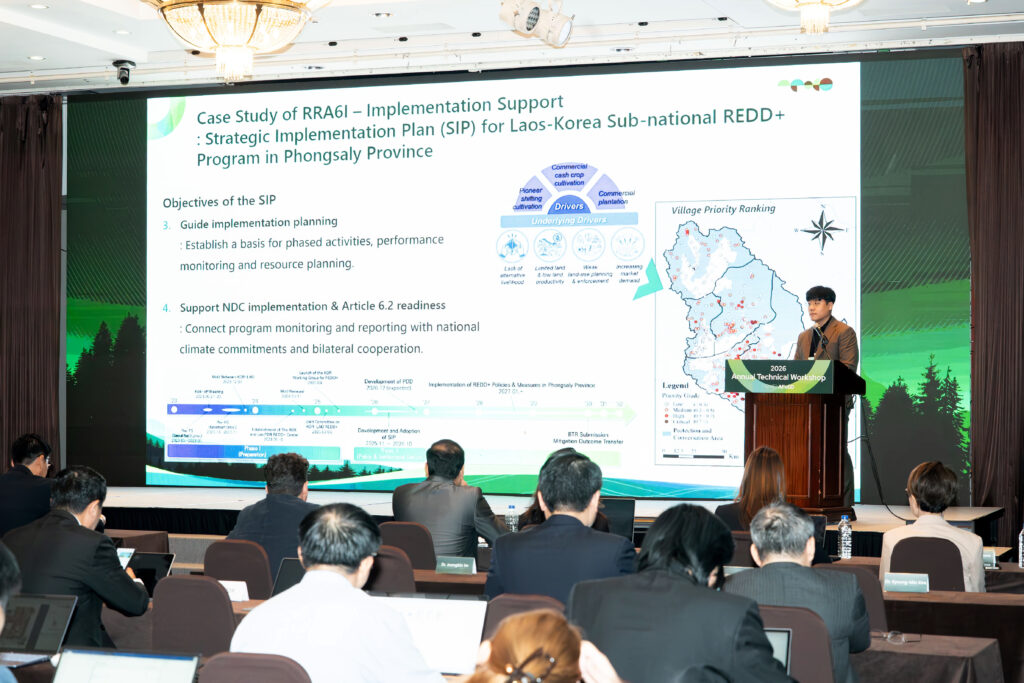
Forest Carbon Division of AFoCO, introducing the REDD+ Readiness Initiative
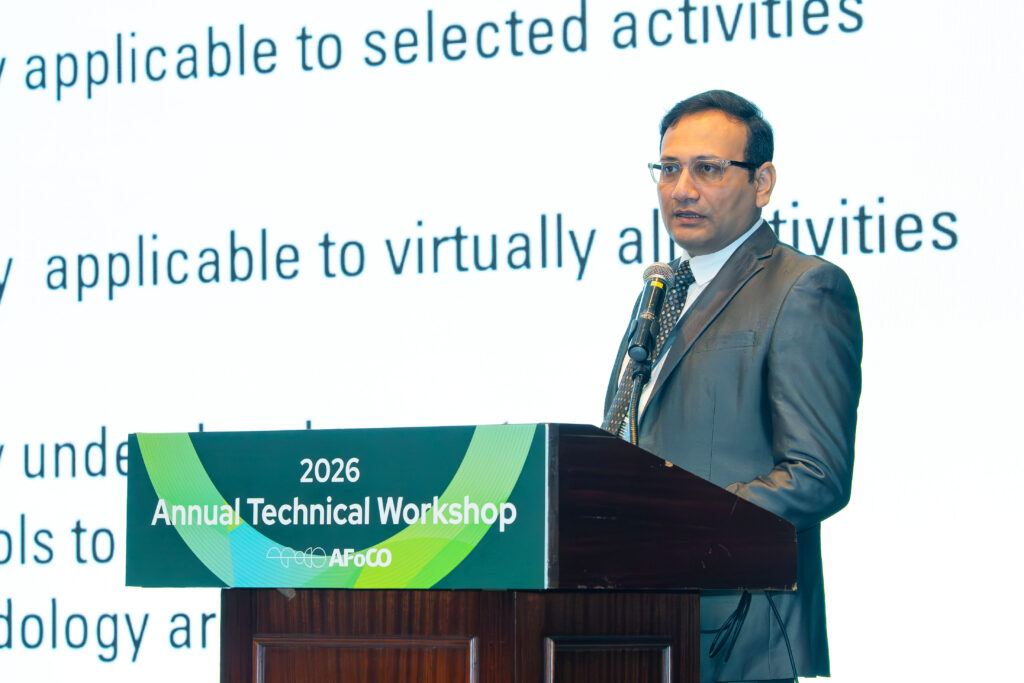
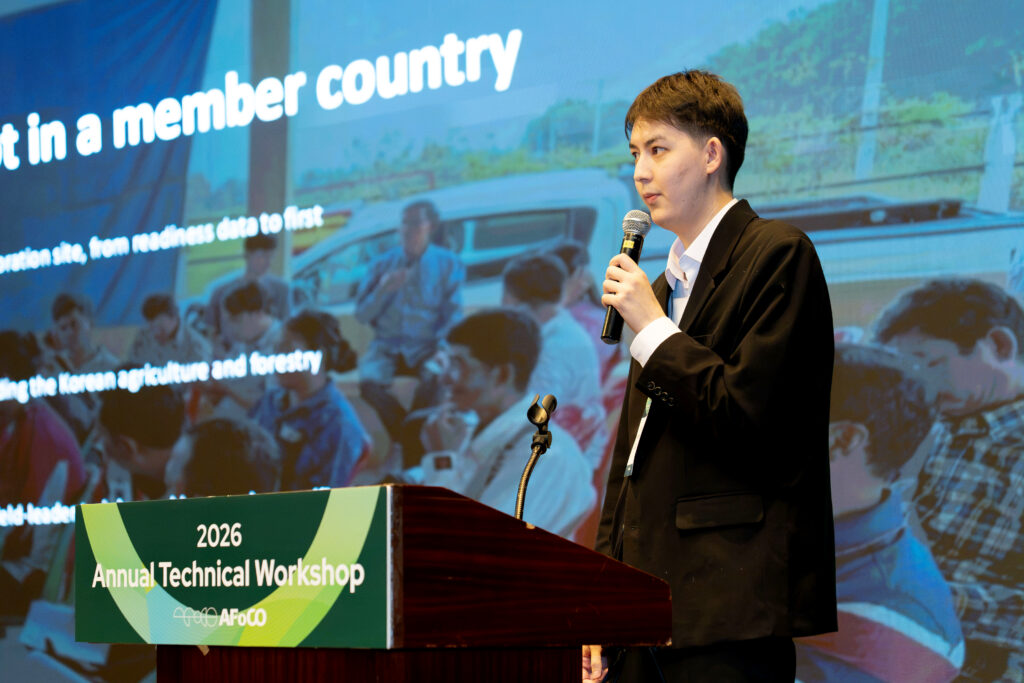
Mr. Batukhan Akhmetov, Tech Lead, THANKS CARBON
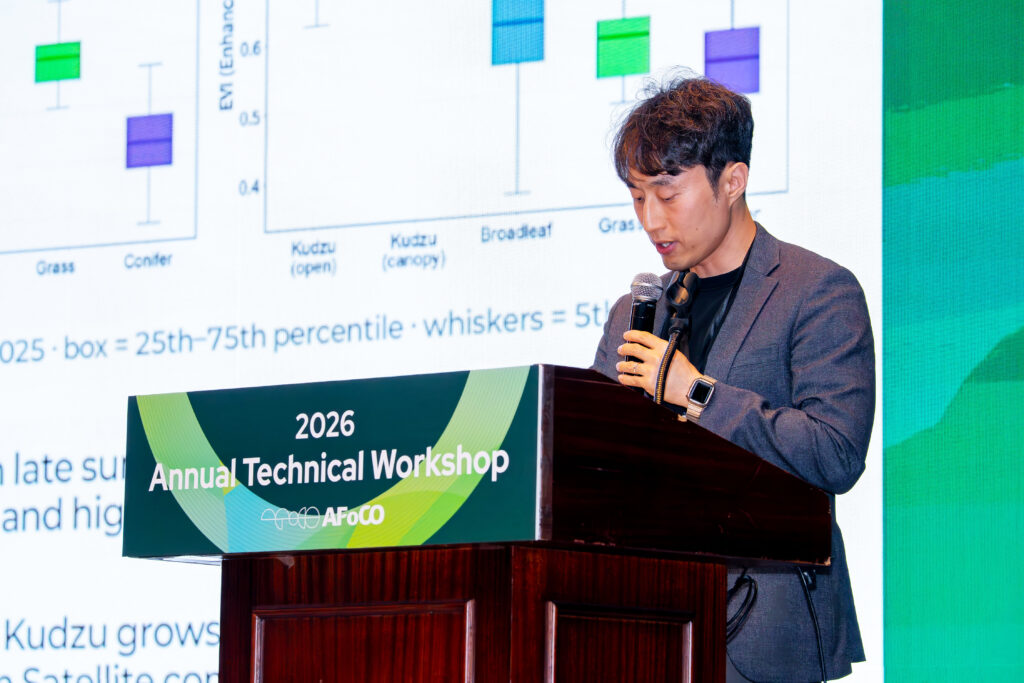
Dr. Joongbin Lim, Research Official, National Forest Satellite Information & Technology Center
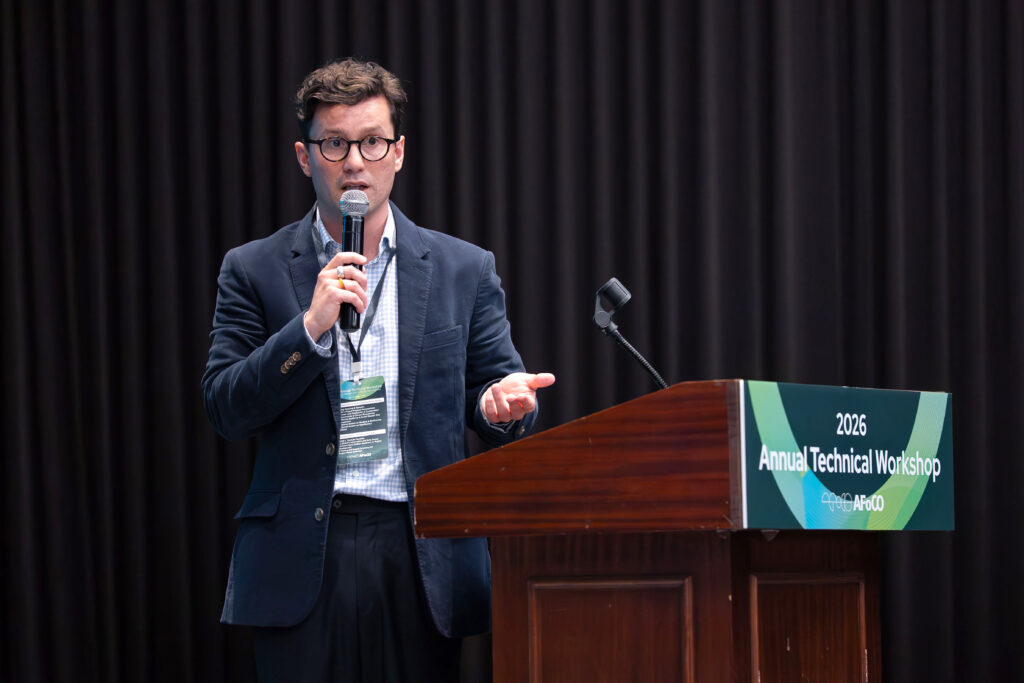
Mr. Willam Marshall, Development Manager, Pollination
3rd AFoCO Project Photo Exhibition
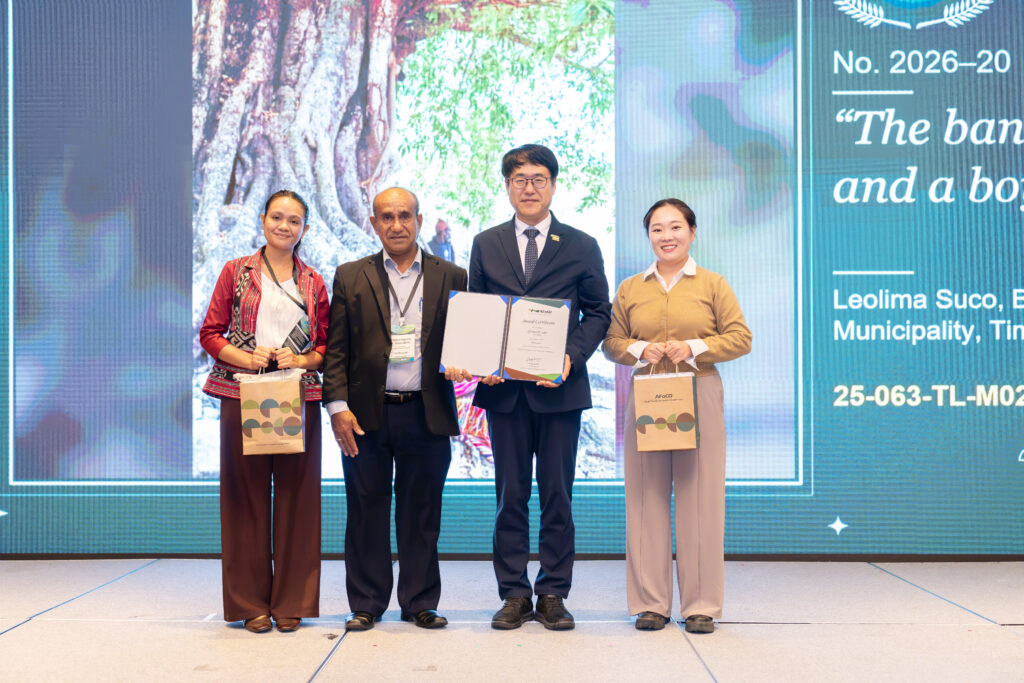
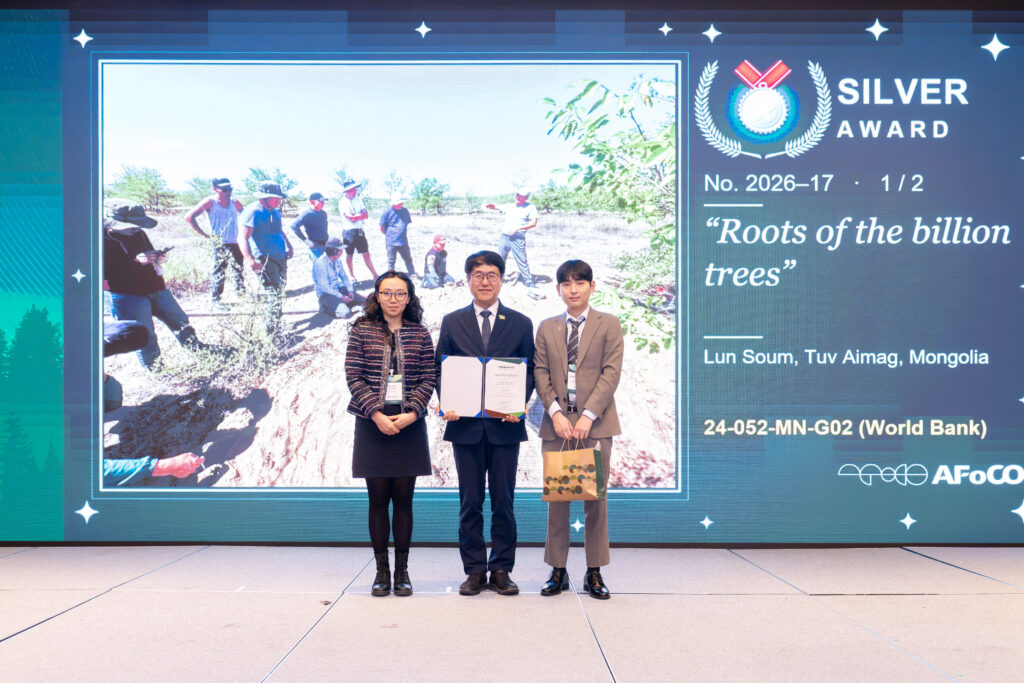
The 3rd AFoCO Project Photo Exhibition was held alongside the 2026 Annual Technical Workshop (ATW), offering participants a chance to celebrate achievements through visual storytelling. The exhibition culminated in an award ceremony on the second day of the workshop, 27 October 2026, where outstanding photographs were recognized for their creativity, impact, and ability to capture the spirit of AFoCO projects.
The ceremony was officiated by Mr. Sunpil Jin, Vice Executive Director of AFoCO, who presented certificates and prizes to the winners. The Gold Award was conferred to the project “Rehabilitation of degraded and potentially deserted forest land in the Northwest region of Viet Nam through application of integrated technical measures (AFoCO/031/2022).” The silver award was presented to two projects — “Mongolia Green Resilient Landscapes (World Bank Technical Assistance)” and ” Unlocking the potential of Agroforestry of climate resilience and sustainable development in Timor-Leste (European Union AFCLIM-TL).”
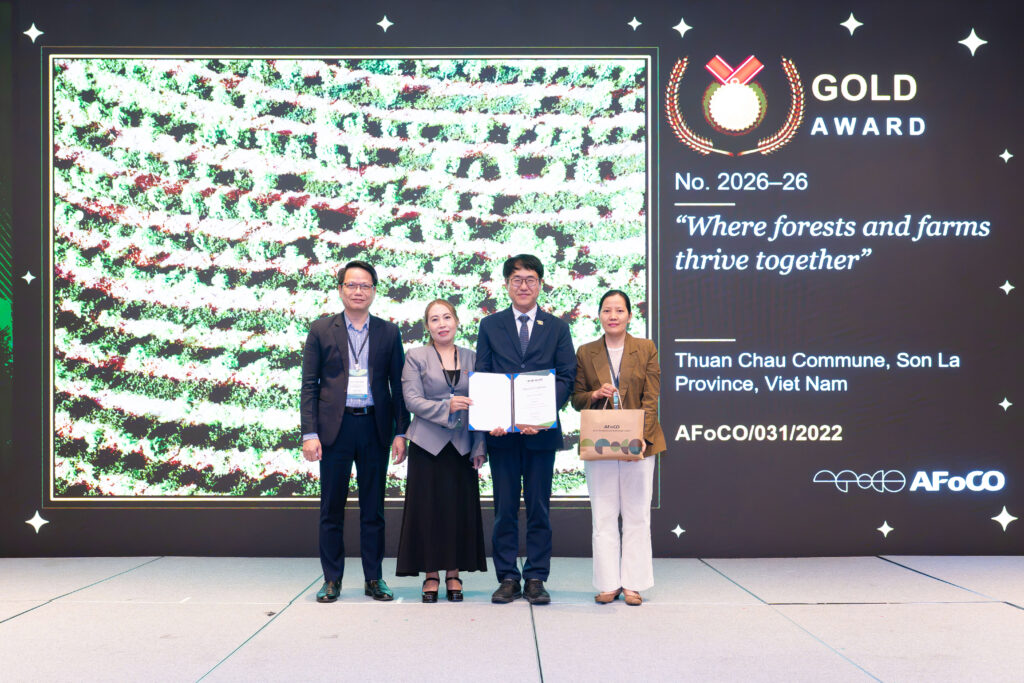
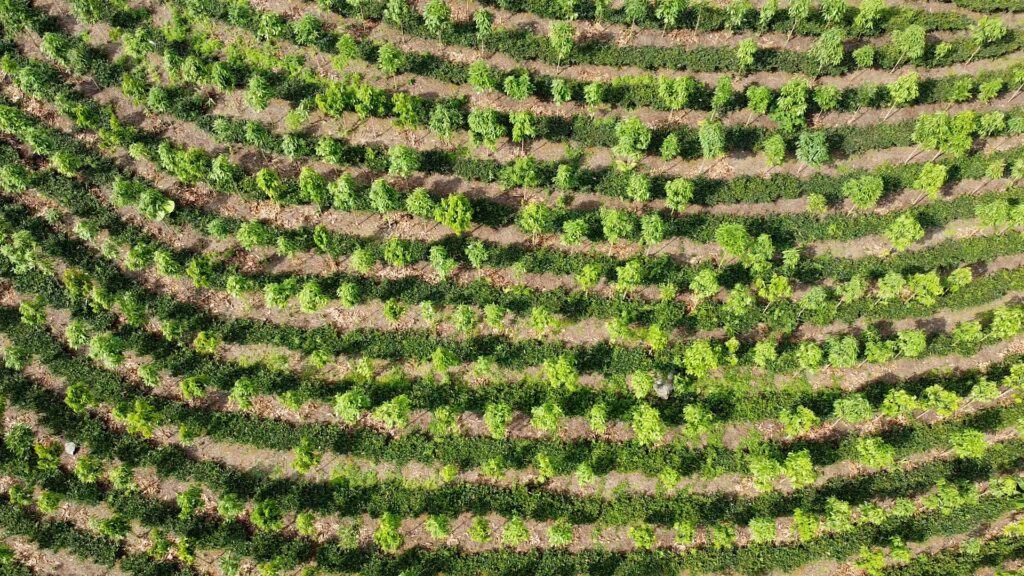
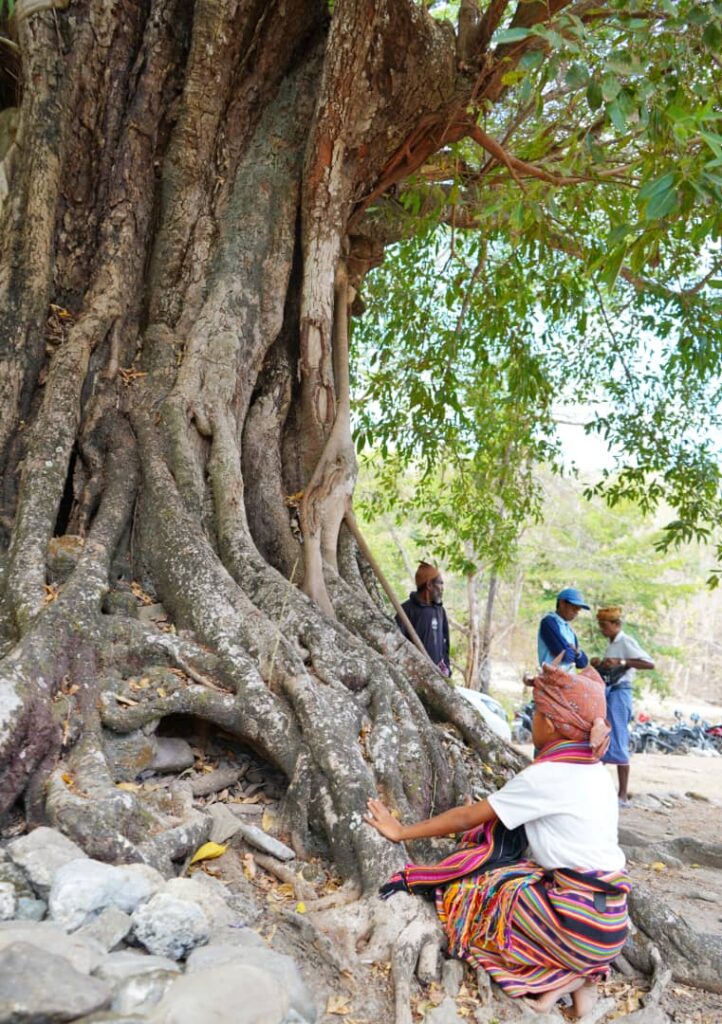
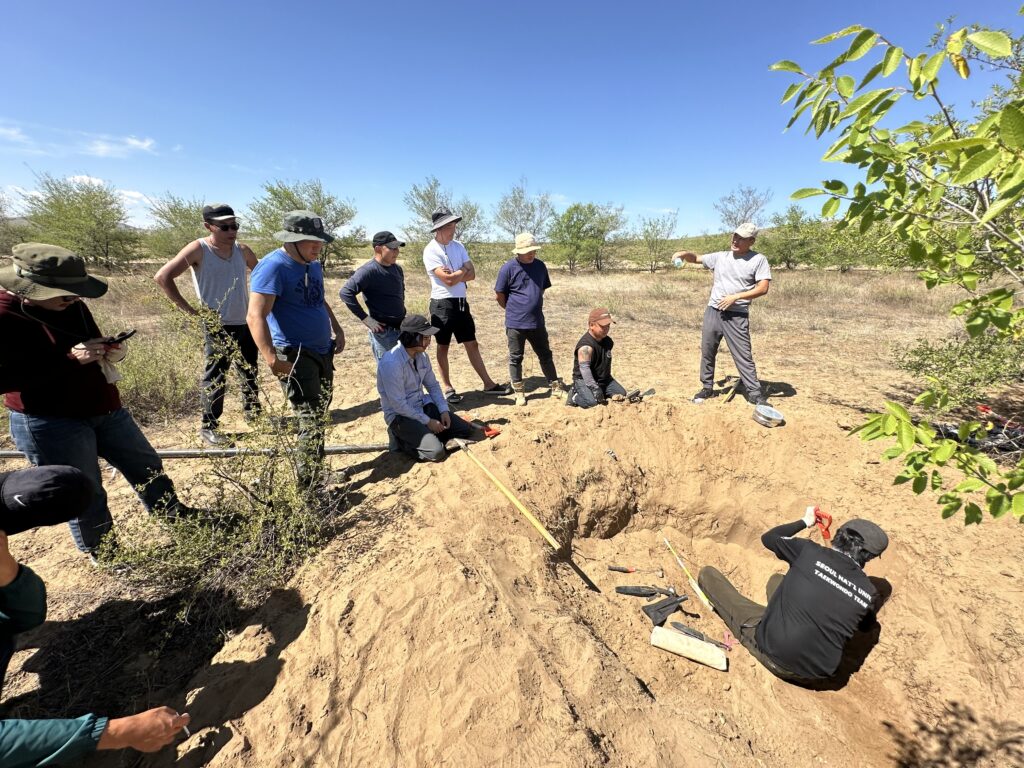
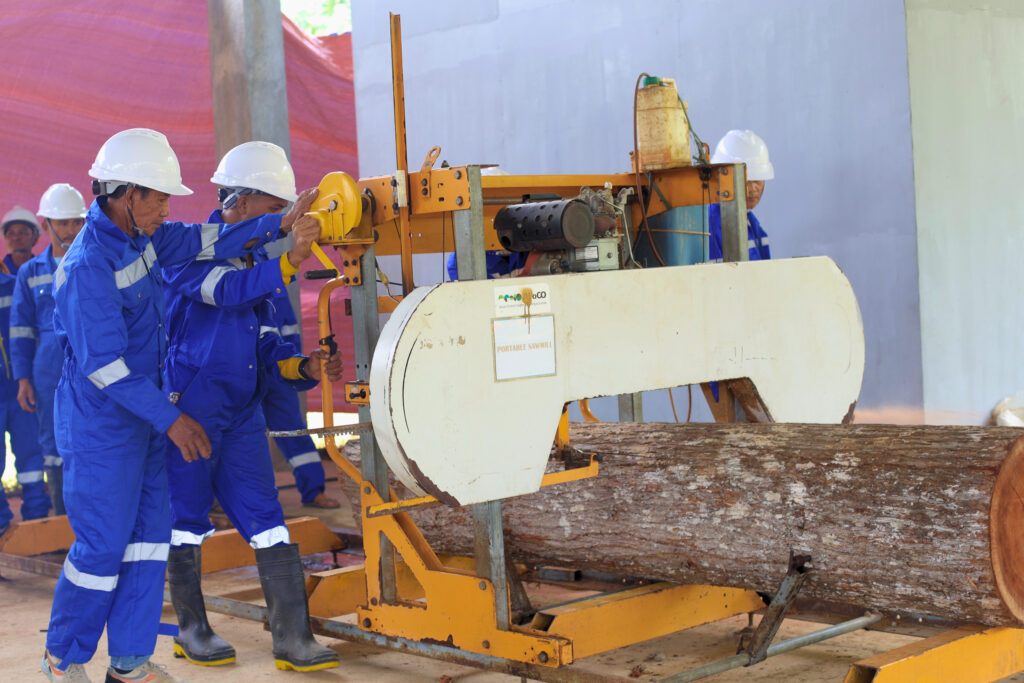
The bronze award was given to three countries: “Promotion of Vertical Integration in Wood Processing through People’s Organizations in Community Based Forest Management Areas in the Philippines (AFoCO/016/2020)“; “Improved Local Community Livelihoods through Increased Income from Non-timber Forest Products (NTFP): Modelling scalable community-based enterprises in Asia (AFoCO/035/2022)“; and “Enhancing sustainable food producivity and farmer incomes through agroforestry: advancing climate resilience and ecological-economic development (Acorn).”
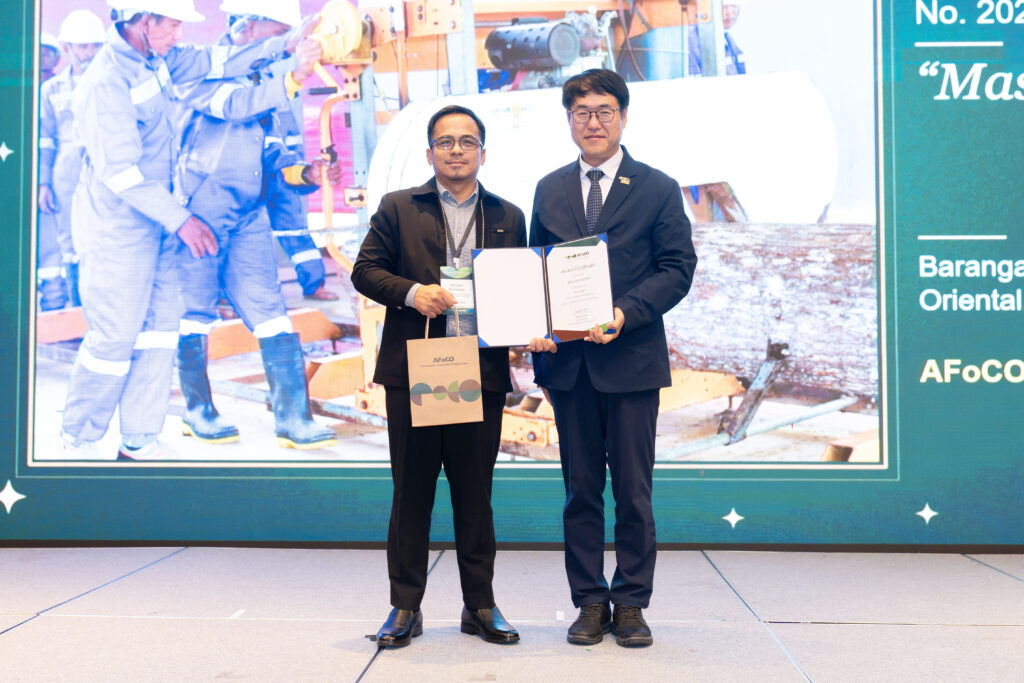
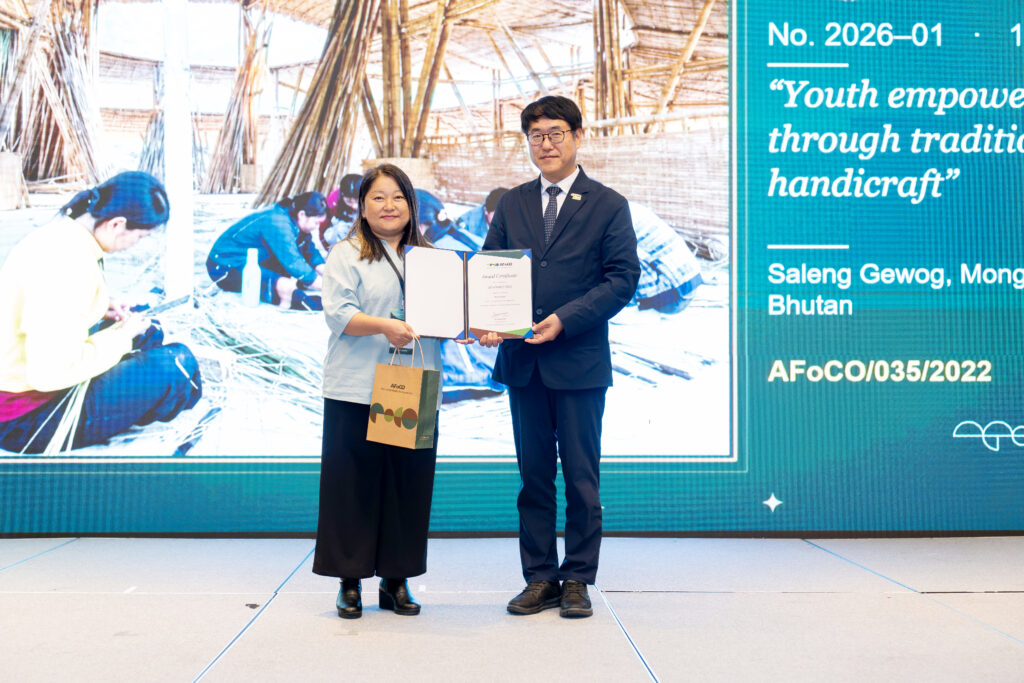
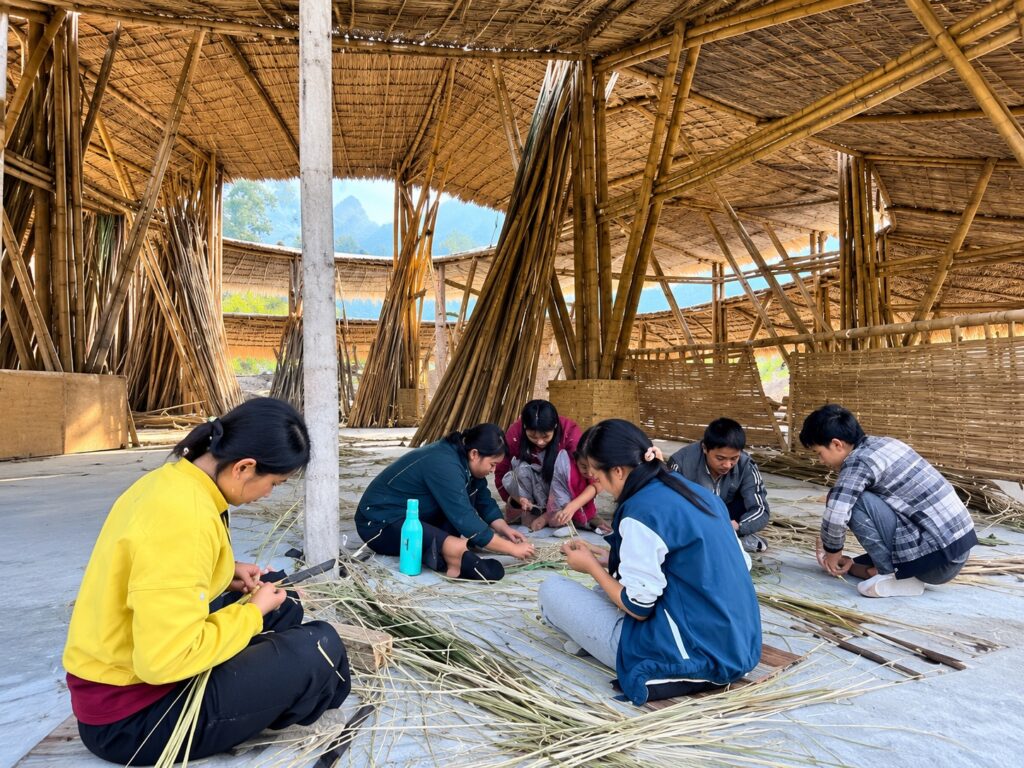
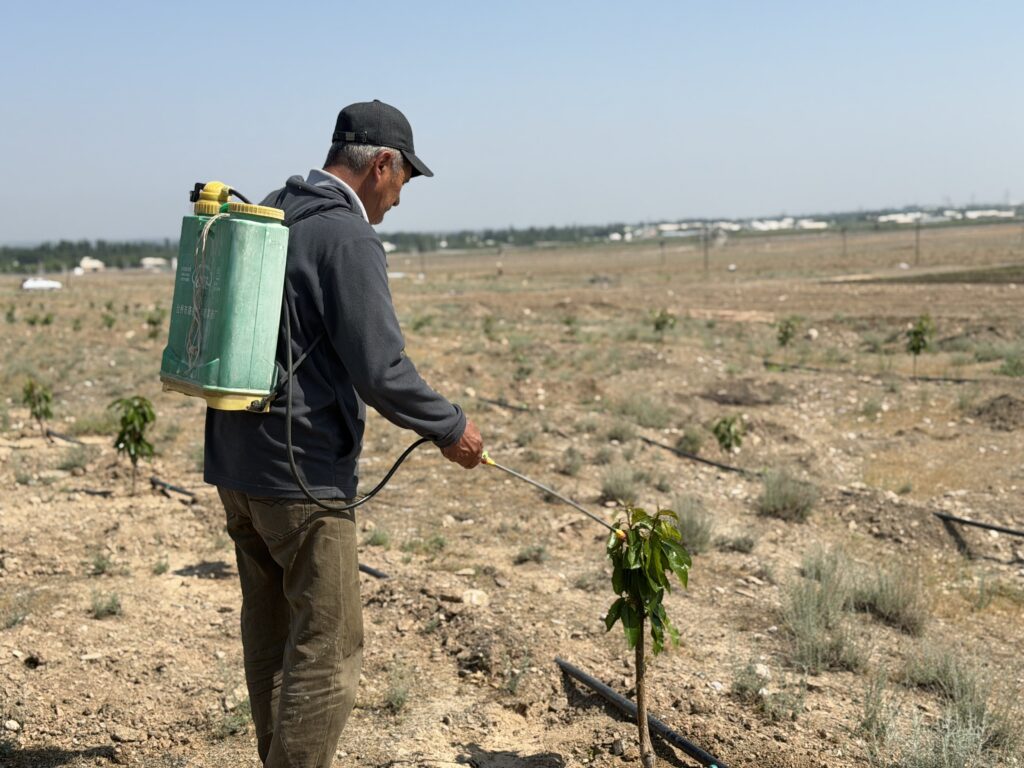
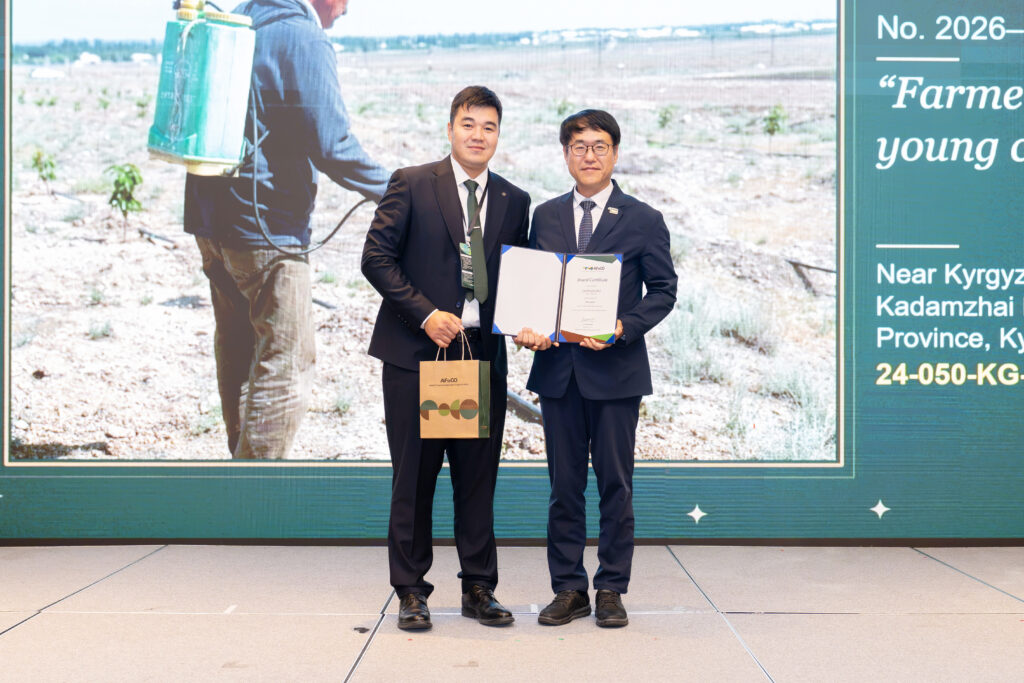
The exhibition provided an opportunity to showcase visual perspectives from AFoCO-supported projects and the forest-related work taking place across the region. Participants subsequently visited the Seoul International Garden Show at Seoul Forest, providing an opportunity to engage with an urban green space and conclude the two-day programme.