
As forest fires risks and response needs continue to evolve across, strengthening the capacity of forestry professionals has become an important part of regional cooperation. Effective forest fire management increasingly requires new skills, technologies and coordinated approaches to protect forests, communities and livelihoods.
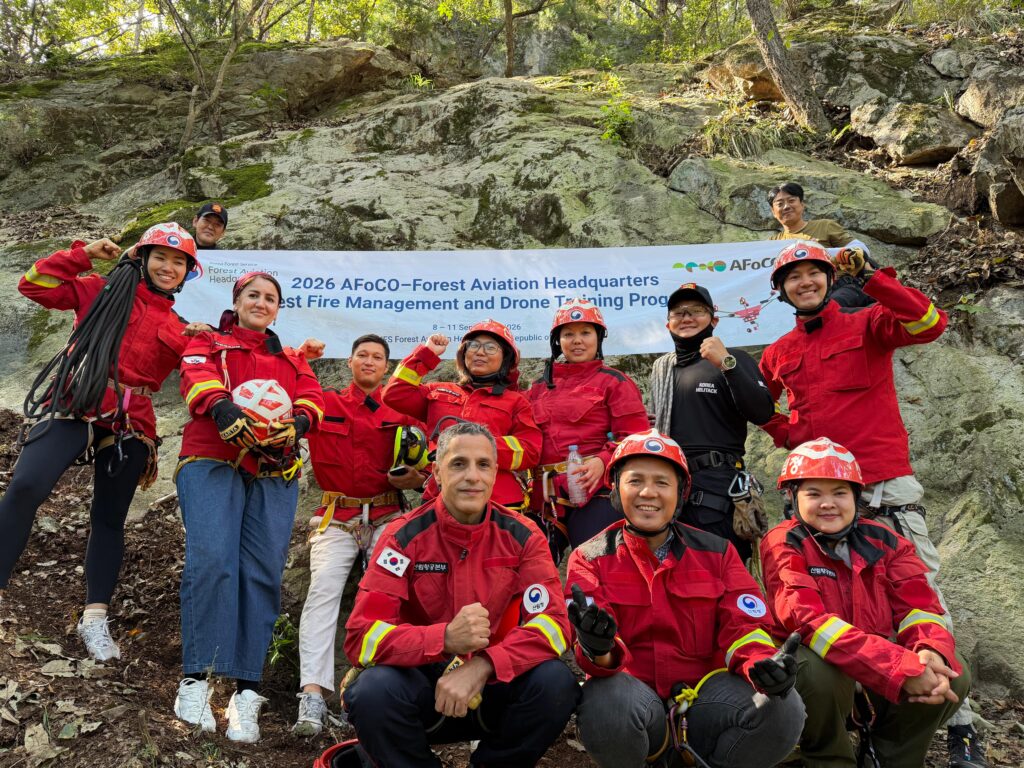
From 8 to 11 September 2026, the 2026 Fellowship Officials from Asian Forest Cooperation Organization (AFoCO) participated in the Forest Fire Management and Drone Operation Training at the Forest Aviation Headquarters (FAH) of the Korea Forest Service located in Wonju, Republic of Korea.
The four-day training was jointly organized by the AFoCO Secretariat and the FAH, under their ongoing cooperation established through the Memorandum of Understanding (MOU) signed on 29 January 2022. The partnership promotes knowledge and technology exchange in forest disaster response and provides public officials from the AFoCO member countries with the opportunities to learn from Korea’s experience in forest fire disaster management. As a part of the AFoCO Fellowship Program, the training allowed the participants to move beyond classroom learning and experience firsthand how specialized equipment, trained personnel, field safety measures, firefighting tactics, aviation resources and emerging technologies such as drones are integrated into forest fire response.
Learning from Korea’s Forest Fire Response System
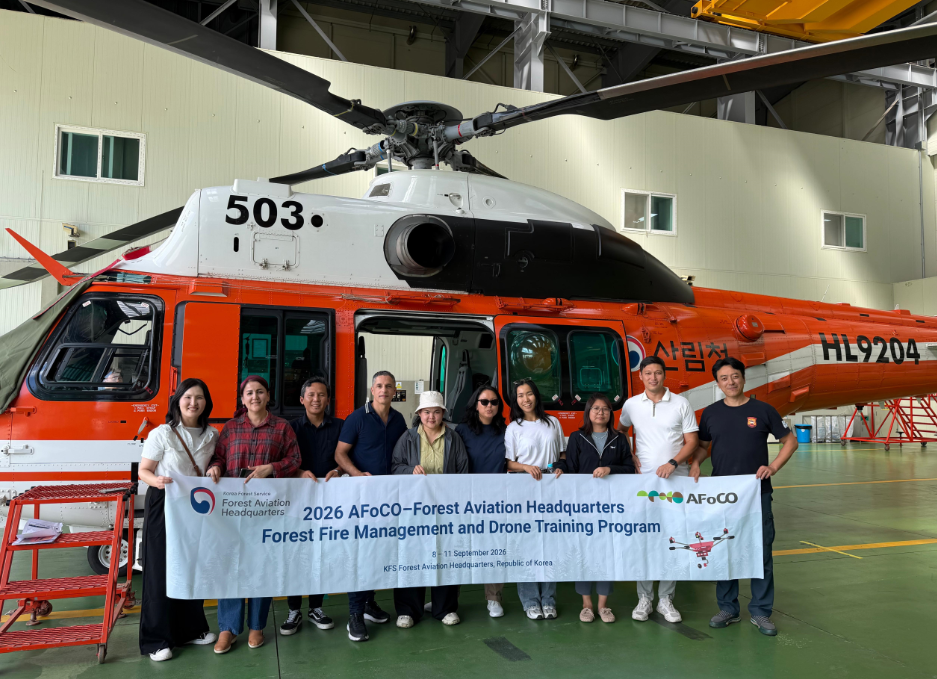
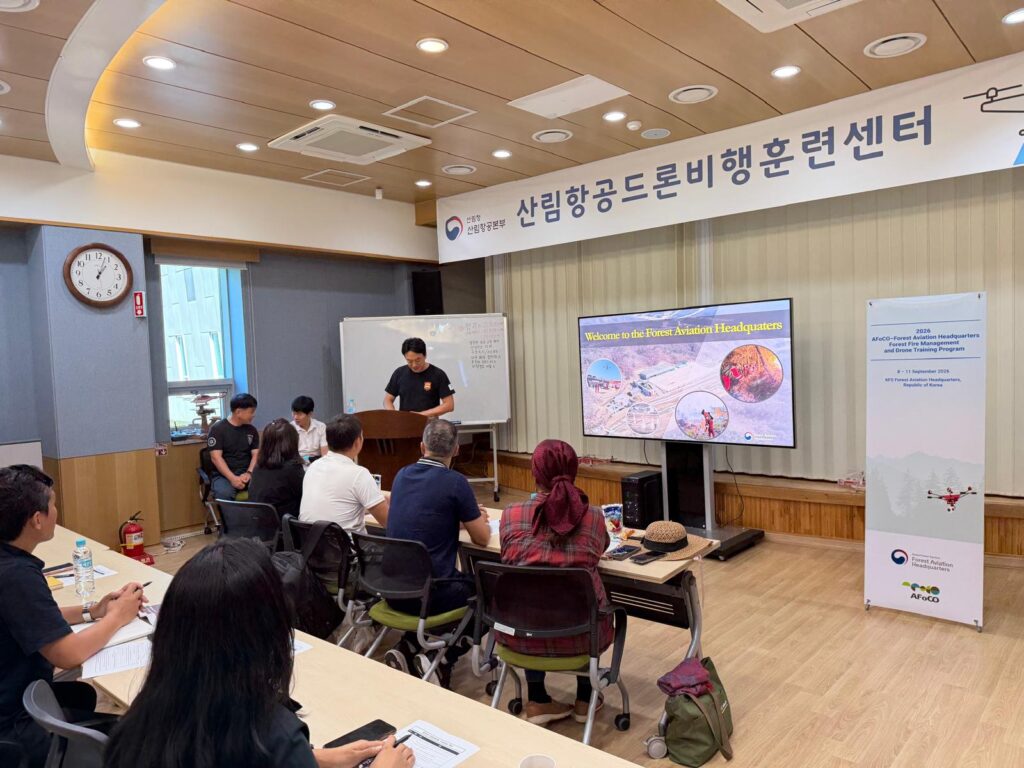
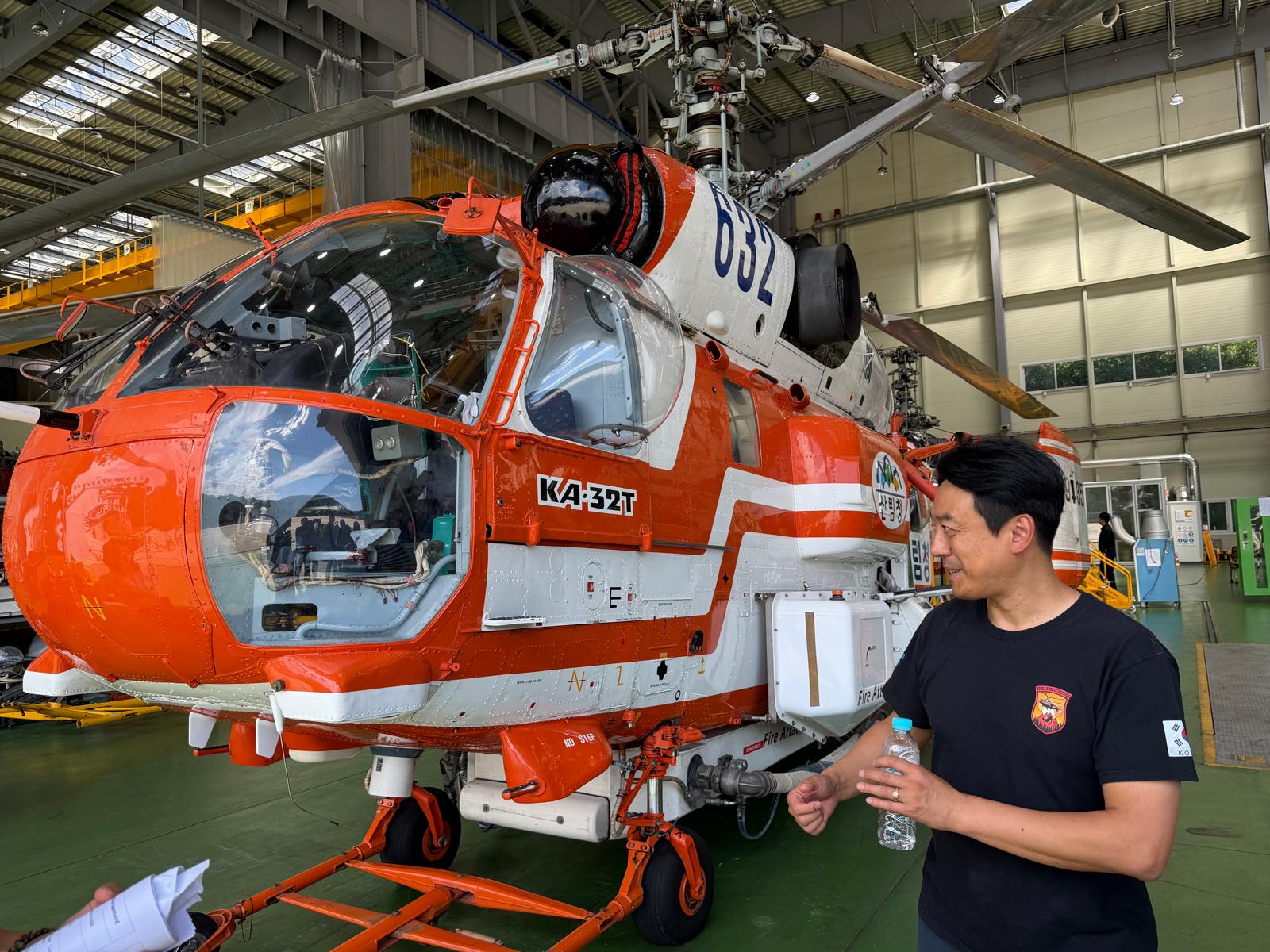
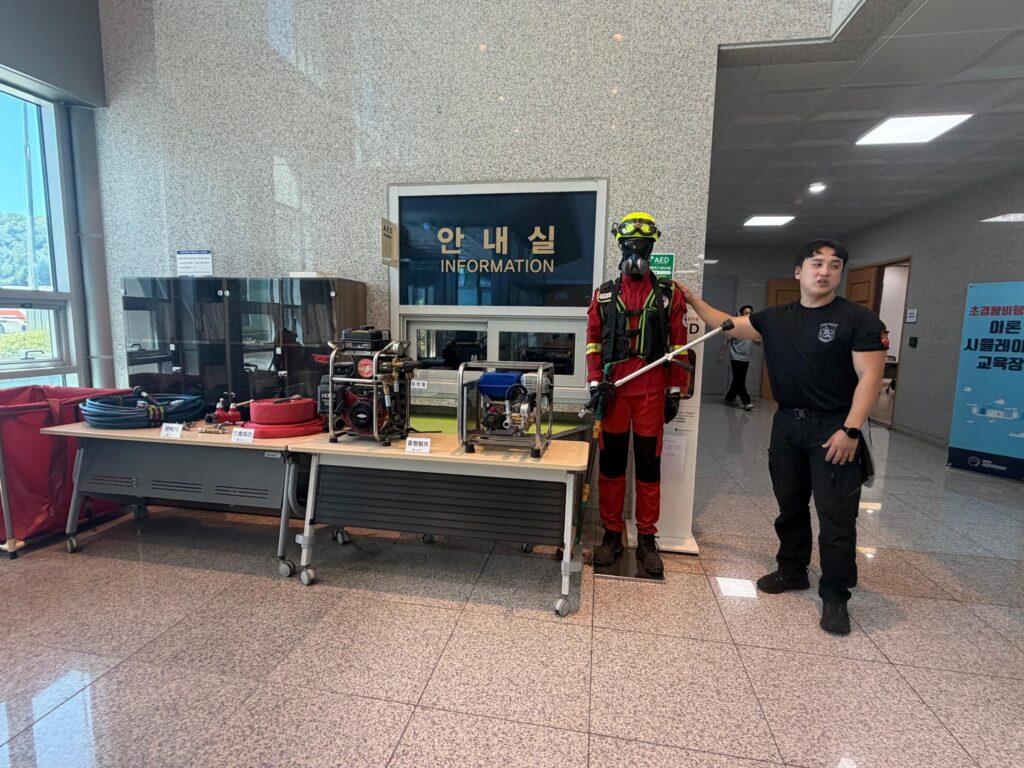
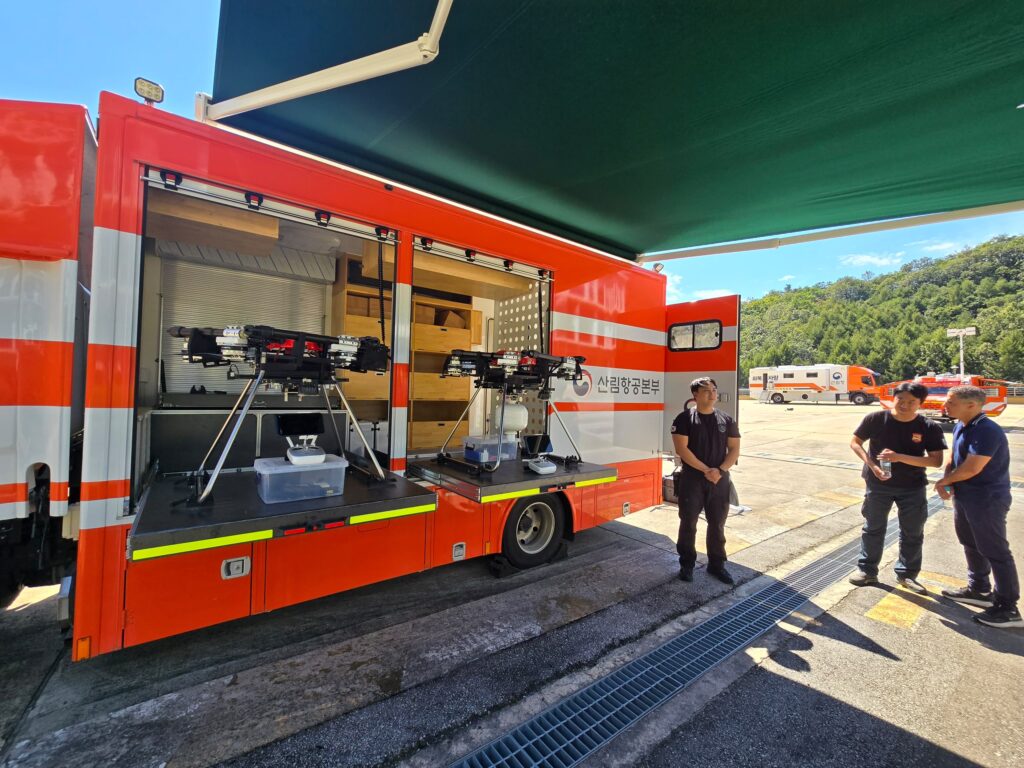
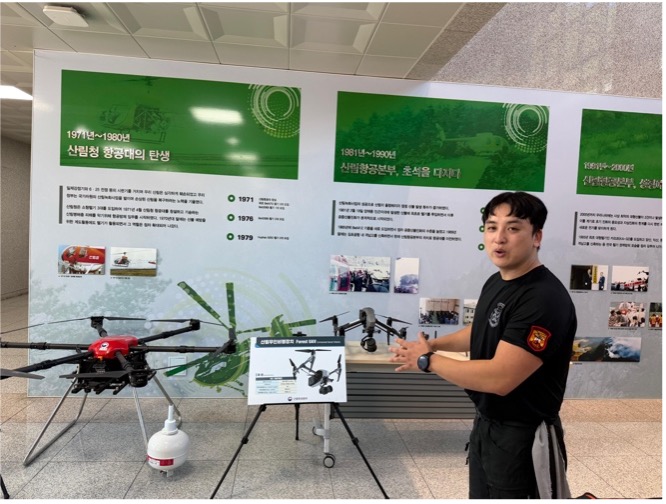
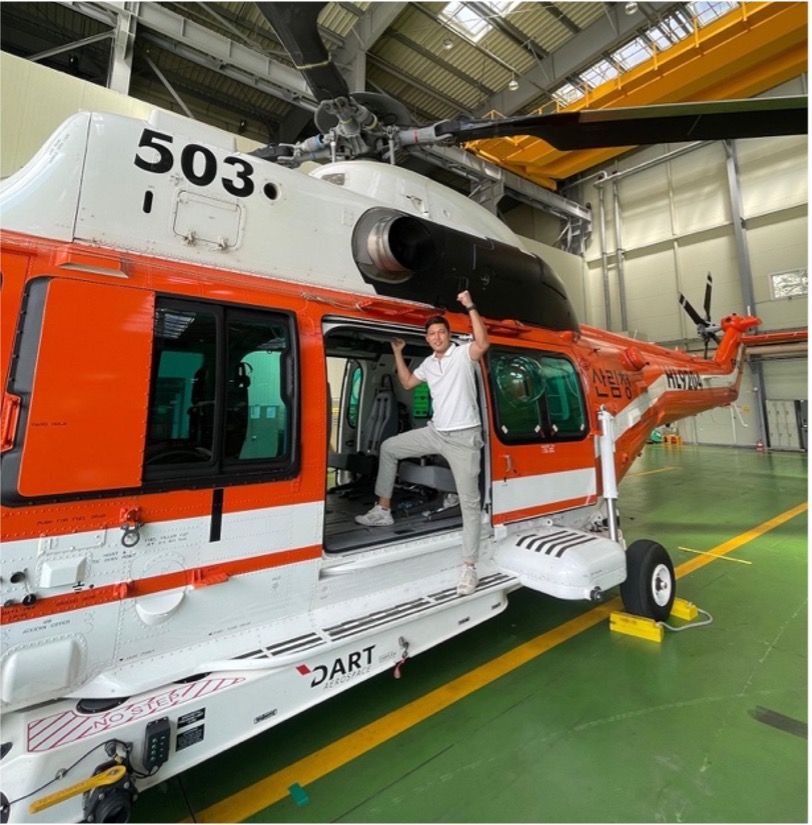
The four-day programme combined institutional orientation, technical sessions, demonstrations and hands-on exercises. It opened with welcome remarks by the Director General of the Forest Aviation Headquarters, Mr. Kim Manju followed by an introduction to the Forest Aviation Headquarters and a visit to the helicopter hangar. Participants were introduced to helicopters, firefighting vehicles, equipment and drones used in forest fire response, gaining an overview of the resources and operational systems supporting rapid disaster response.
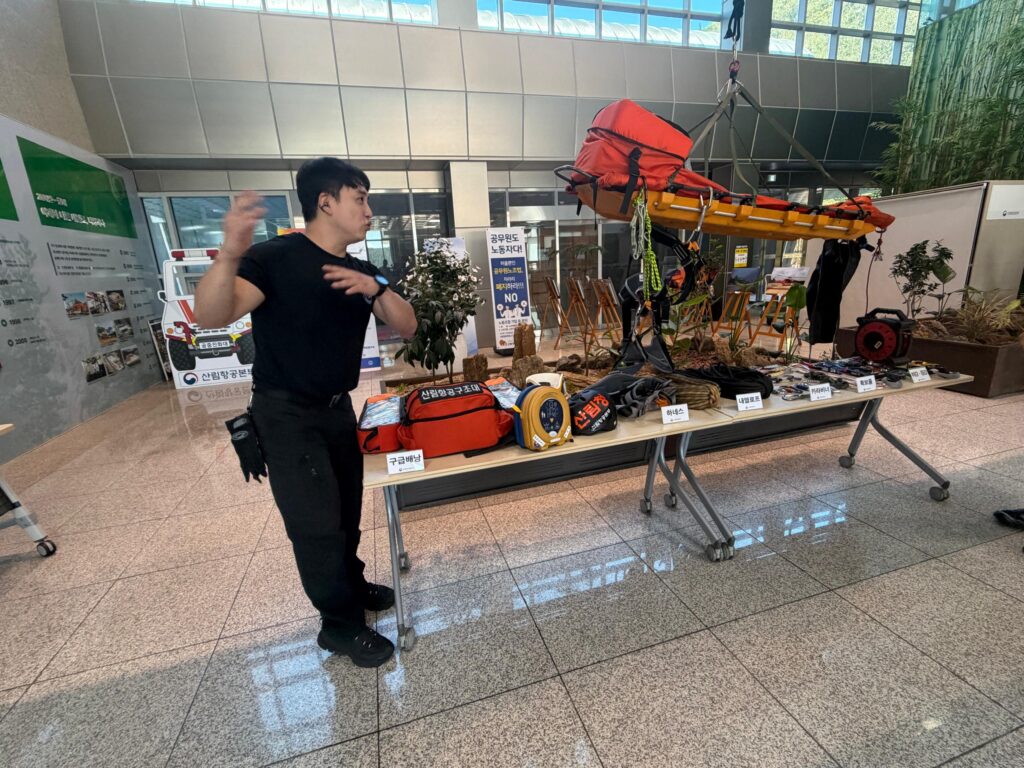
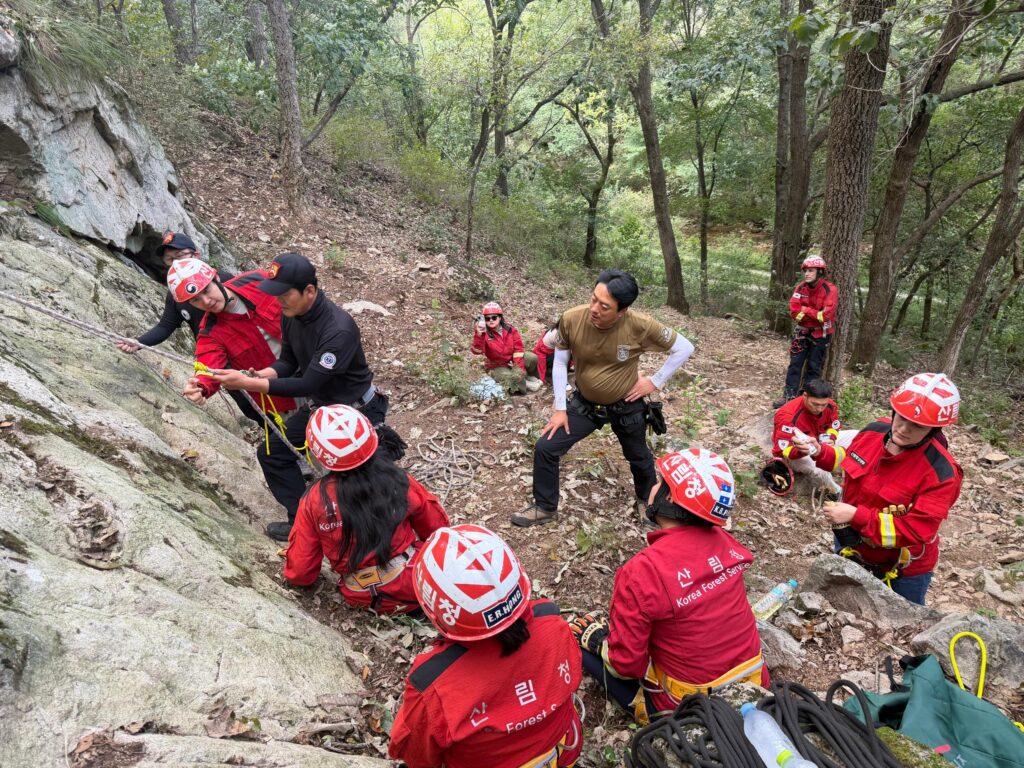
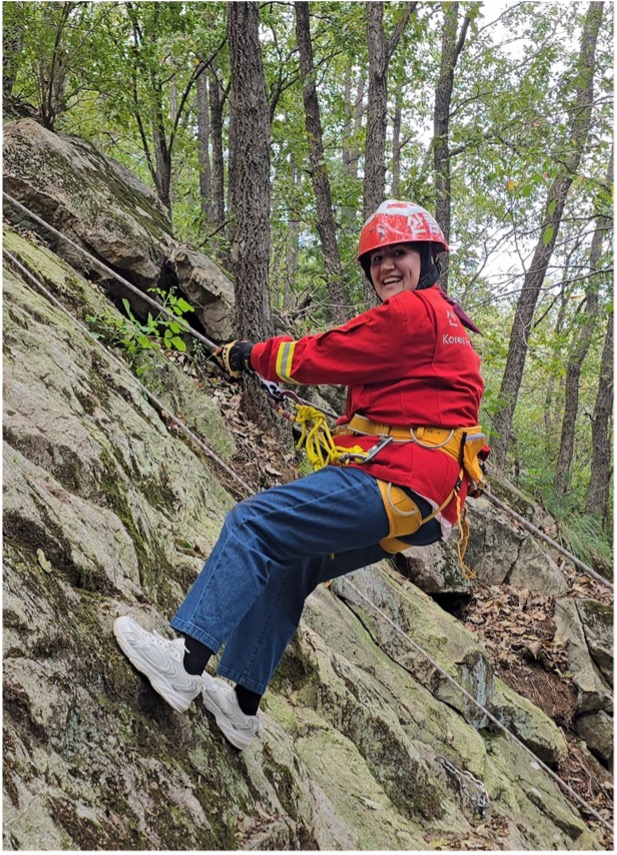
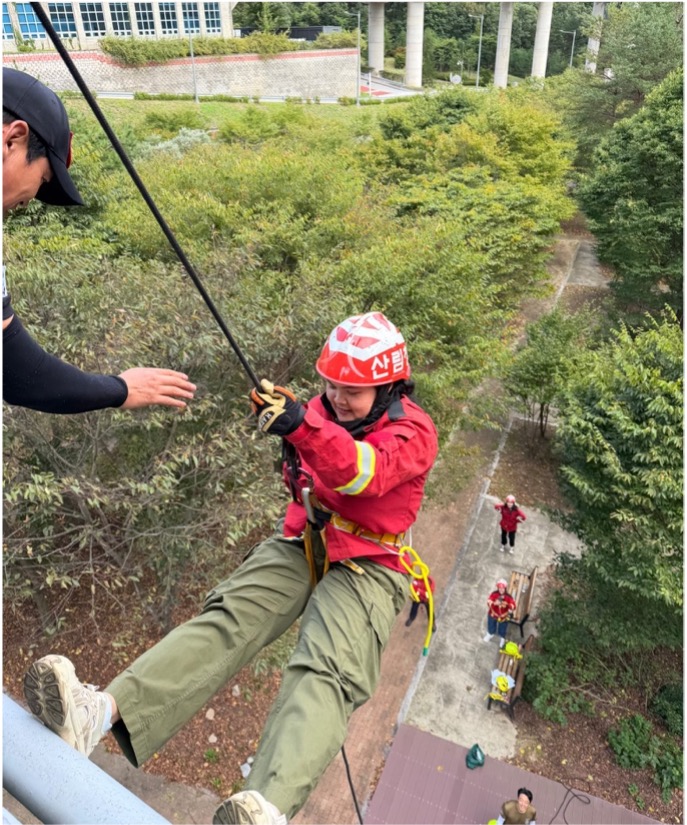
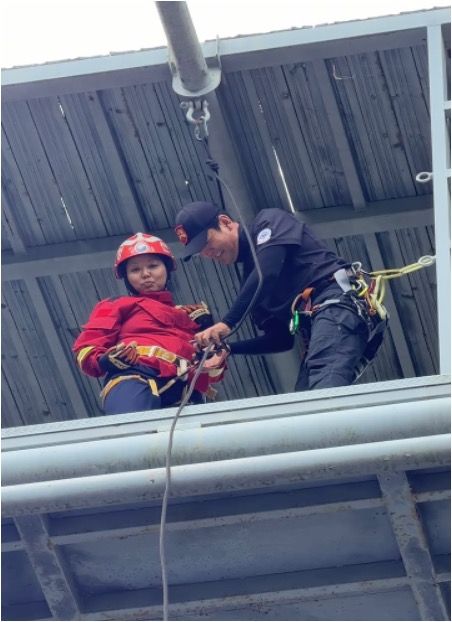
The second day focused on field safety and Personal Protective Equipment (PPE), followed by practical exercise in cliff fire suppression and rappelling. Fellowship Officials also took part in the tower rappelling practice, experiencing the skills and safety measures required when operating in steep and challenging terrain. The hands-on-nature of the training allowed the participants to directly experience the physical, technical and team work requirements
From Flight Simulation to the Fire Line Preparation
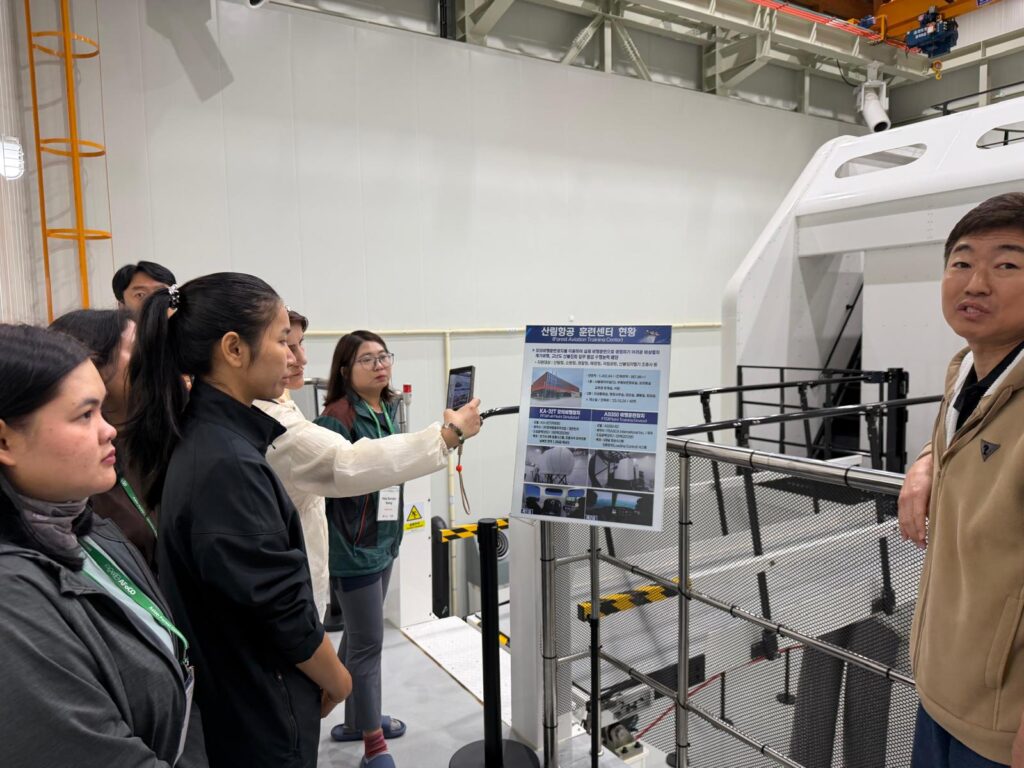
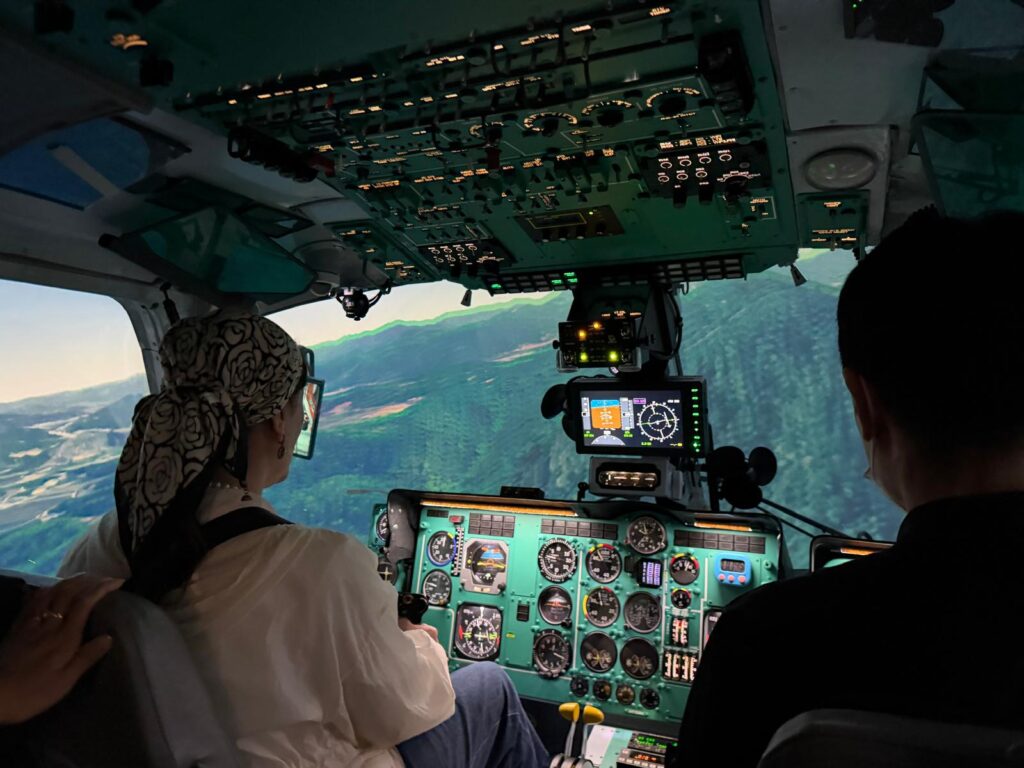
The participants also visited the Forest Aviation Center, where they experienced a flight simulation exercise and gained insights into the role of aviation in forest fire response.
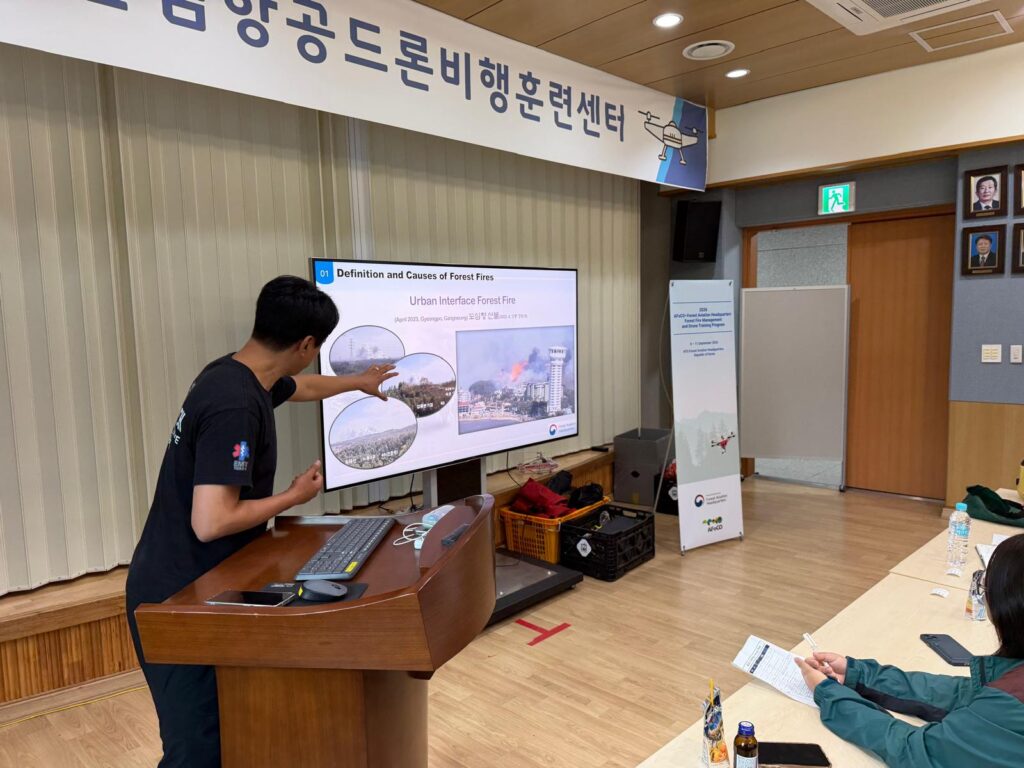
The programme then moved from theory to practice through a session on wildfire suppression tactics and equipment, supported by presentations and real-time video materials. The session provided participants with an understanding of how suppression strategies are applies in operational settings and how personnel and equipment are coordinated during fire response
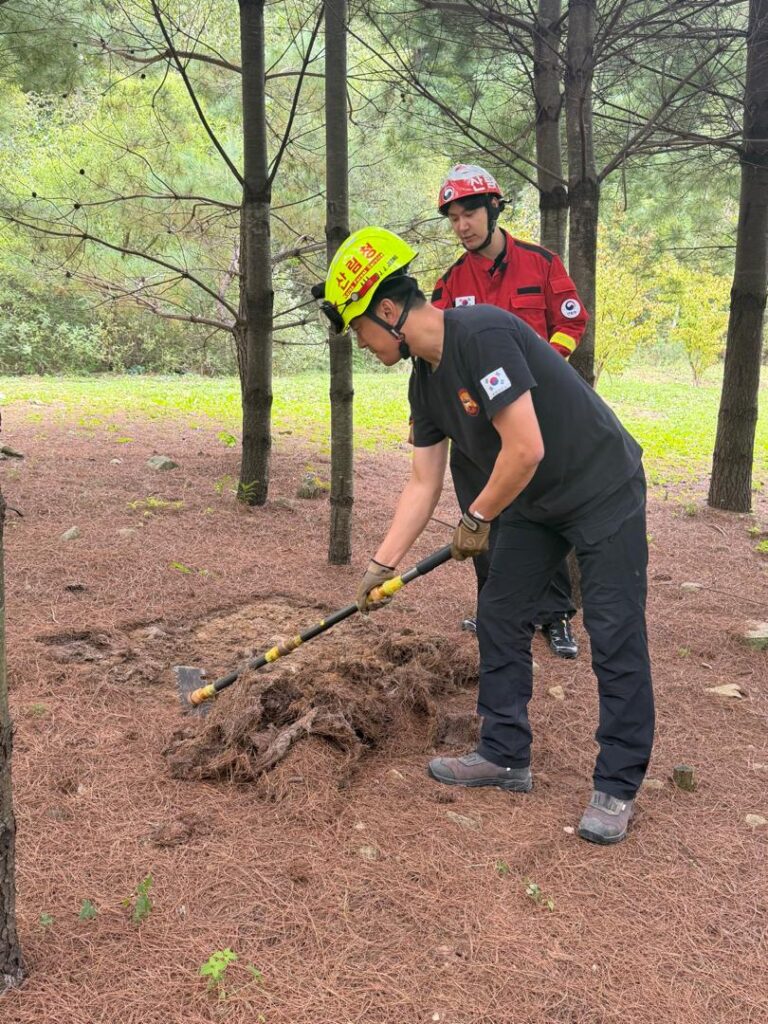
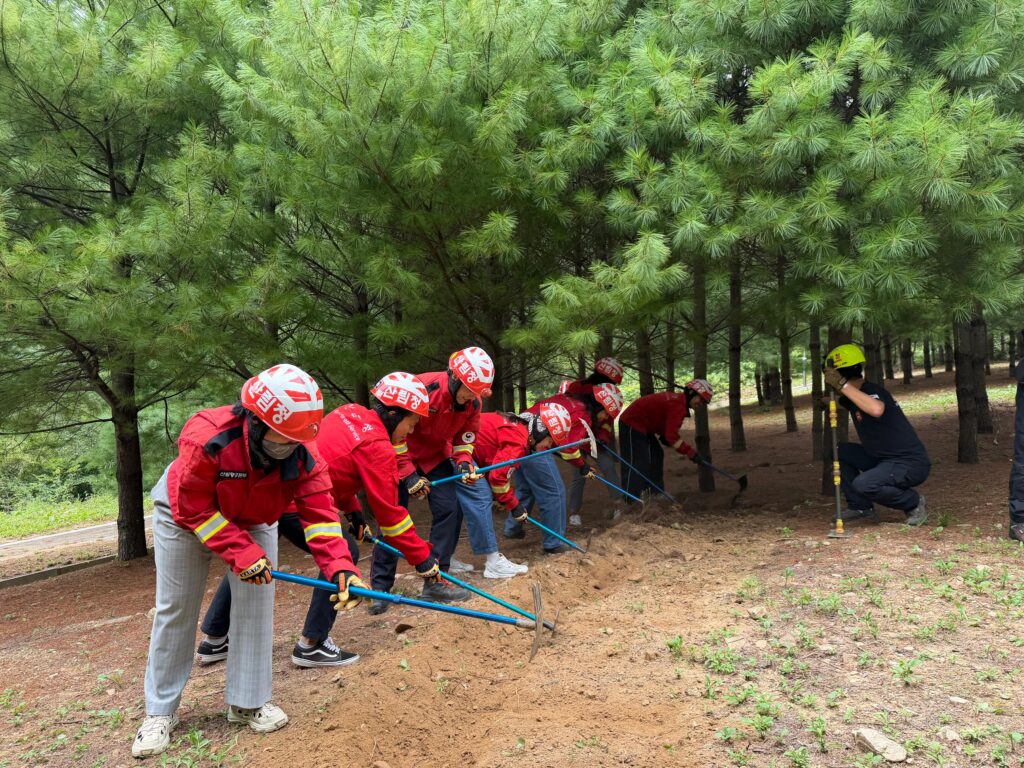
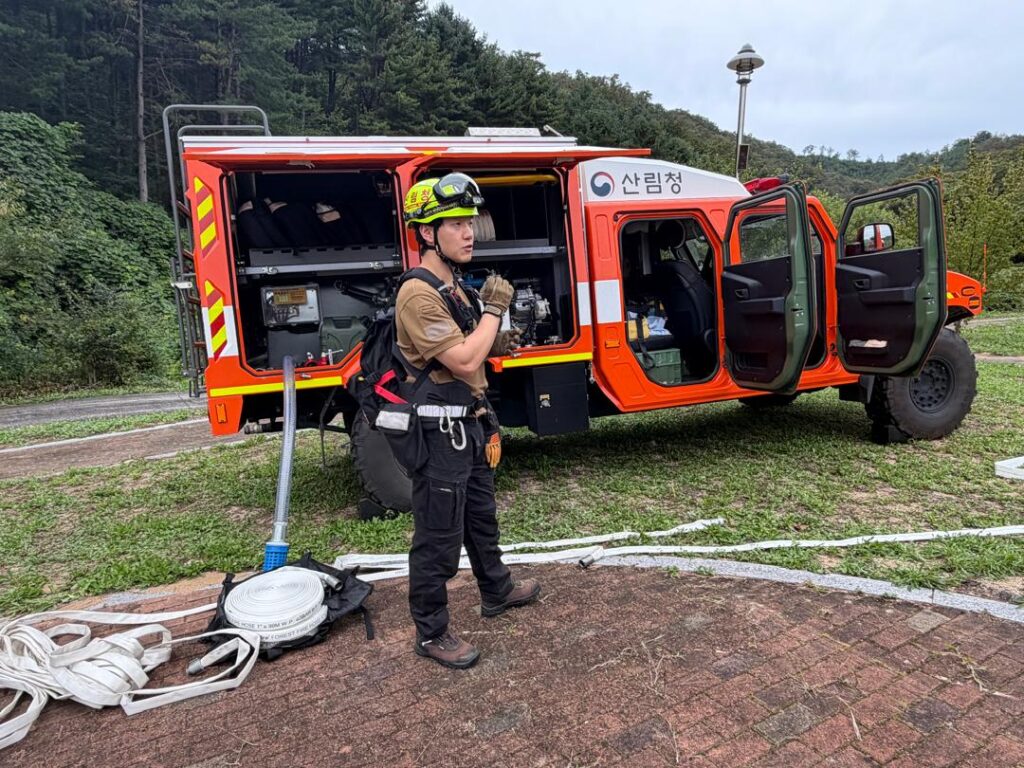
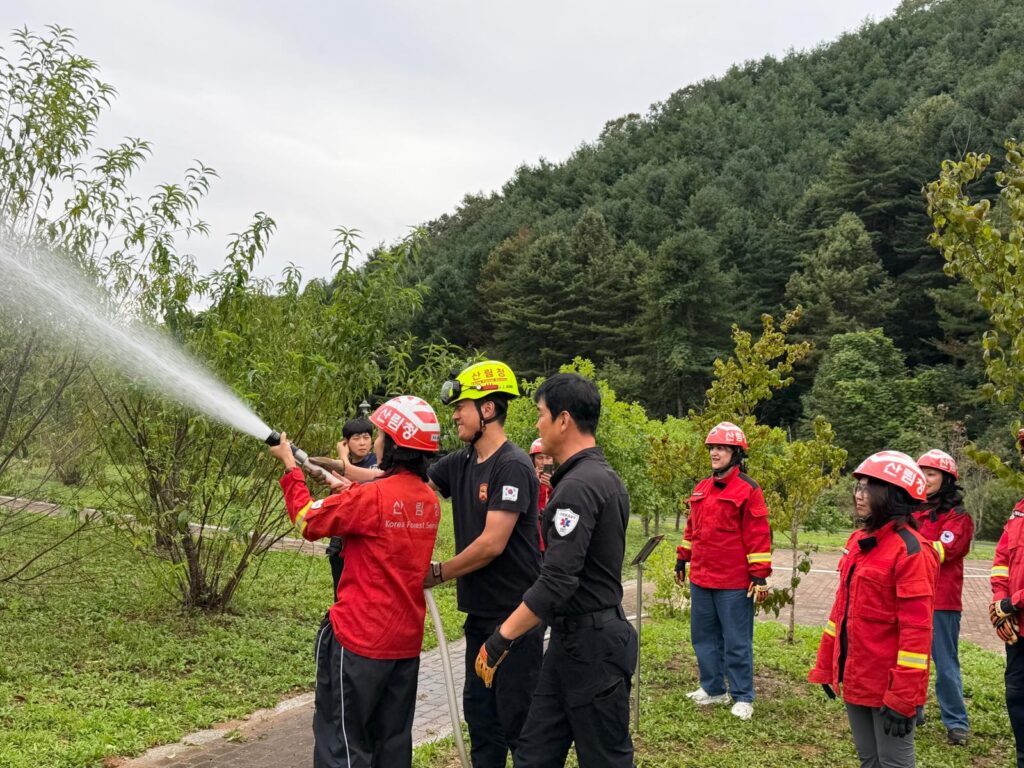
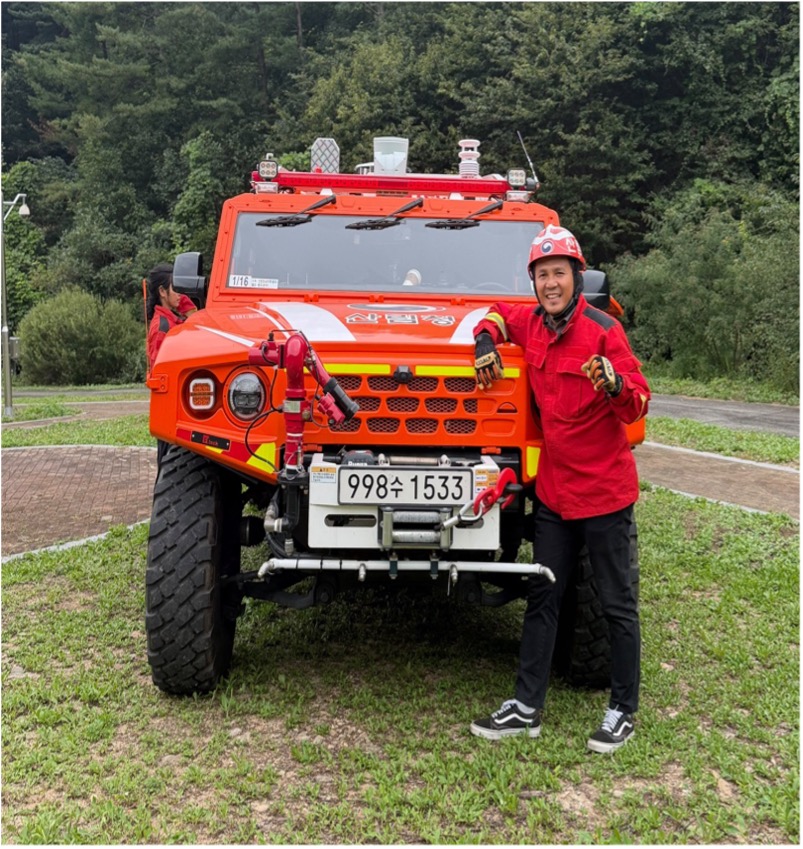
One of the key highlight was the practical session on fire line preparation, followed by a demonstration of the multipurpose fire vehicle designed in Korea to be used for firefighting. Participants also had the opportunity to handle different types of firefighting hoses and gain hands on experience in fires suppression using the vehicle’s equipment.
Exploring the Role of Drones in Forest Fire Management
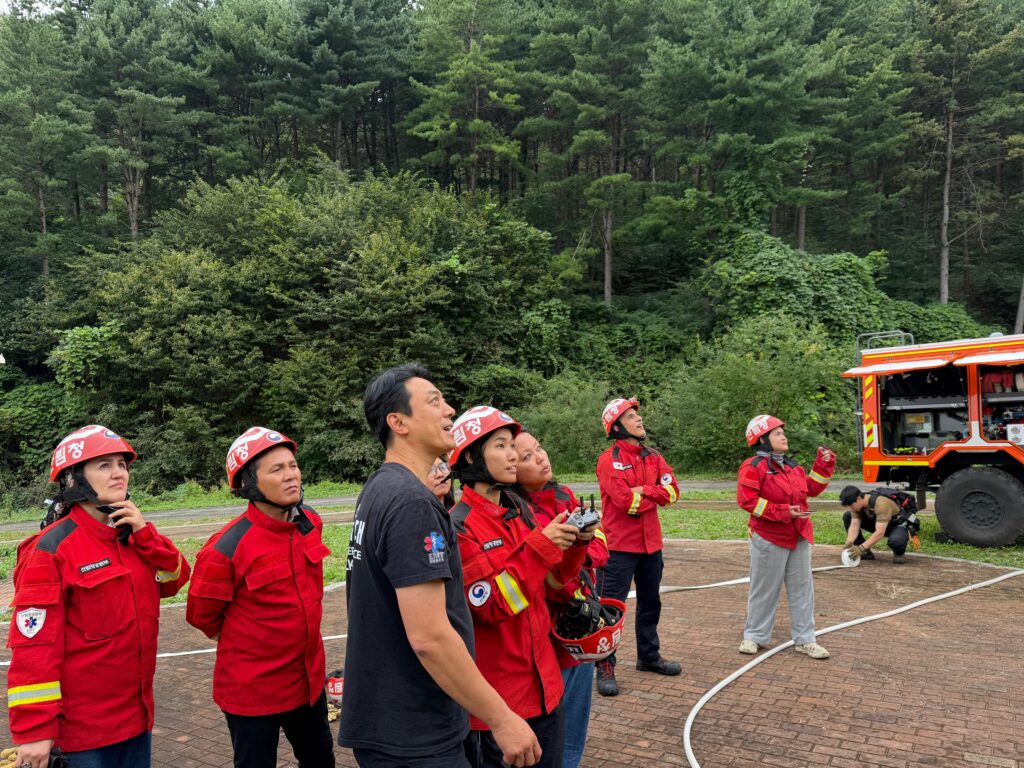
The training also introduced participants to drone operations, highlighting the potential application of unmanned aerial systems in forest fire management, including forest monitoring, situational awareness and disaster response. Although the practical drone session was brief due to limited time, it provided participants with an introduction to the growing role of drone technology in forest disaster management.
Building Capacity Through Practical Learning
Beyond individual technical skills, the training demonstrated the importance of integrating trained personnel, field safety, appropriate equipment, timely information and coordinated operations in effective forest fire management.
For the AFoCO Fellowship Officials, the program offered an opportunity to observe Korea’s forest disaster response system directly and reflect on approaches that could potentially be adapted to different national contexts. Such practical exchanges are particularly valuable for AFoCO member countries facing diverse forest fire risks and varying operational conditions. By bringing forestry professionals together to learn from Korea’s experience, the programme contributes to professional capacity development, knowledge exchange and stronger regional cooperation in forest disaster management.
Reflection from the Participants
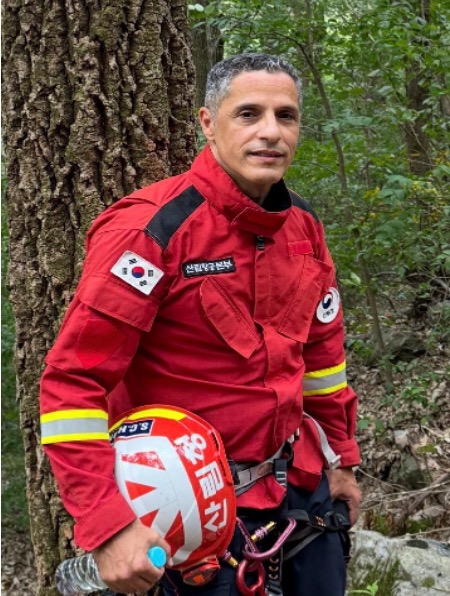
Captain Azzedine EL HAJJAMI, French International Expert
“I would like to thank AFoCO for giving us the opportunity to take part in this training, and in particular the organizers, who delivered an exceptional programme in terms of content, logistics, and spirit alike. I greatly appreciated the training, which provided valuable insight into the technical capabilities, equipment, and expertise of the Korea Forest Service (KFS). Through the remarkable Forest Aviation Headquarters (FAH), we were able to see first-hand the level of expertise South Korea has developed in civil protection and forest fire suppression. The courses, ably led by the KFS instructors, were of a very high standard, with a good balance between theory and practice. The hands-on experiences, including drones, the helicopter flight simulation center, aviation, and mountain rescue practice, enriched me both technically and personally. The training also gave me the opportunity to share a wonderful workshop experience with my colleagues from the Secretariat, further strengthening the bonds within our team.
Beyond the knowledge gained, it was the combination of world-class expertise and a warm, collaborative spirit that made this experience particularly valuable. It is a fine example of what international cooperation can achieve when knowledge and goodwill are shared. My sincere thanks once again to the KFS and AFoCO teams for organizing such a valuable and memorable training experience”.
Hafizova Firuza – Fellowship Official, Republic of Tajikistan
“The three-day wildfire response program was a valuable and meaningful learning experience. The combination of theoretical and practical training strengthened my understanding of wildfire suppression, field safety, equipment, fire-line construction, drone operations, and other essential response techniques. One of the most memorable experiences was the 11-meter rappelling exercise. Although standing at the top and looking down was challenging, the guidance of the instructors and support of the team gave me the confidence to take that step. It reminded me that courage is not the absence of fear, but the willingness to move forward despite it. The program also reinforced the importance of preparation, teamwork, communication, and trust in ensuring an effective wildfire response. I am grateful to the organizers, instructors, and fellow participants for making this an enriching international learning experience.
I will carry forward not only the knowledge and skills gained, but also the reminder that stepping beyond our comfort zone can be a step toward growth.”
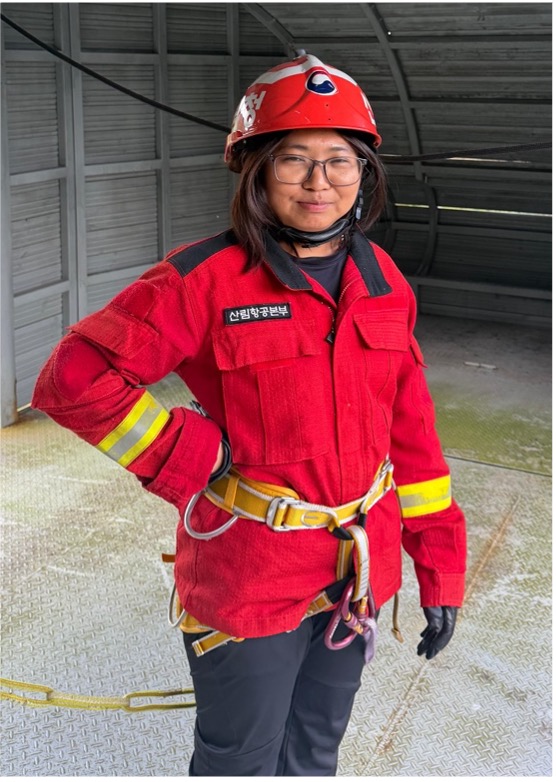
Hsu Sandar Aung (PhD) , Fellowship Official from Myanmar
“I would like to express my deep gratitude for the opportunity to join a training program at the Forest Aviation Headquarters (FAH). Participants took part in challenging practical activities such as field safety, cliff fire suppression, rappelling, drone training, fire line construction, and fire suppression vehicle practice. As an undergraduate student in my country, Myanmar, I had previously learned some basic theories and concepts related to forest fire management in the classroom. However, I had never had the opportunity to participate in practical exercises like these before. Therefore, this training program was a completely new and unforgettable experience for me. The trainers stood out as highly professional, enthusiastic, and patient, not only teaching skills but also sharing their experience and inspiring a sense of responsibility. Beyond technical skills, the program taught me teamwork, communication, safety, discipline, responsibility, courage, and perseverance.
I thank my fellow participants for the teamwork, friendships, and memories we created together. The program provided me with knowledge, practical experience, and unforgettable memories, making it a truly special and meaningful journey.”
Johansen Silalahi, Fellowship Official from the Republic of Indonesia
“Participating in the 2026 AFoCO–Forest Aviation Headquarters Forest Fire Management and Drone Training Program from September 8 to 11 in the Republic of Korea has been an exceptionally transformative milestone in my fellowship journey at the AFoCO Secretariat. Throughout the intensive four-day program, we gained valuable insights into aviation fleet operations, wildfire suppression tactics, field safety protocols, CPR, and emergency shelter deployment. The hands-on sessions, particularly cliff and tower rappelling, drone operations, fire-line construction, and the use of multipurpose suppression vehicles, provided an unparalleled learning experience in modern emergency response.
I am deeply grateful for the opportunity to broaden my professional horizons through firsthand exposure to the Republic of Korea’s advanced forestry technologies and operational practices in Forest Fire Management. My sincere appreciation goes to the leadership of the KFS Forest Aviation Headquarters and the AFoCO Secretariat for spearheading this valuable initiative and fostering regional cooperation, as well as to the dedicated instructors whose expertise, patience, and commitment to safety made the training both engaging and impactful. I look forward to applying these lessons to contribute meaningfully to forest fire resilience across Asia.”
Rujira Sassana, Fellowship Official from Thailand
“Regarding forest fire management, I have foundational knowledge and some experience from my bachelor’s degree, where every student was required to study and practice it. Although it has been several years since then, I currently work at the Reforestation Promotion Division. Forest fire management is a vital part of forest restoration, especially in planting and maintenance. Establishing firebreaks and managing fuel in planting plots are always mandatory parts of our work plan. As we know, wildfires pose a major risk to seedling growth and directly affect their survival rates. Over the past 3 days for the Forest Fire Management and Drone Training Program, I had the opportunity to review my past knowledge and learn many new lessons, including various theories, modern technologies, and systematic, efficient management practices.
“I would like to express my sincere gratitude to all the Instructors for dedicating your valuable time to share your precious knowledge and experiences with us, a diverse group of participants from many countries. If the opportunity arises, I hope to learn something new from all of you again. Thank you very much.”
Tshering Zam, Fellowship Official from Kingdom of Bhutan
“I am grateful to AFoCO Secretariat and the Forest Aviation Headquarters (FAH) for giving us the opportunity to take part in such an informative and hands-on training on forest fires management and drone operation. The training gave me a much better understanding of Korea’s approach to forest fire management, from fire suppression techniques and field safety to the use of specialized firefighting equipment. The practical sessions were especially valuable because they allowed us to experience and understand how these techniques are applied in real situations.
Overall, the training was a wonderful combination of learning, practical experience, teamwork and adventure. I truly appreciate the Forest Aviation headquarters and our instructors for sharing their knowledge and expertise with us”.
Wai Mon Thet, Fellowship Official from Myanmar
“I sincerely thank the Forest Aviation Headquarters, Korea Forest Service, AFoCO Secretariat, and all the instructors for this valuable opportunity. The training was an impressive and memorable experience, allowing me to learn about forest fire suppression, safety, teamwork, flight simulator, and drone technology through hands-on practice. The cliff training and rappelling exercise were especially memorable, as they pushed me beyond my comfort zone and showed me that I am more confident with heights and adventure than I had expected. I am taking home practical skills, new ideas for using technology in forest fire management. Above all, I have gained an even deeper respect for the foresters and firefighters who put themselves on the front line to protect forests, biodiversity, and communities from disasters.“
Yernar Sarsenbayev, Fellowship Official from Kazakhstan
“I would like to express my sincere gratitude to the AFoCO Secretariat and the trainers at Forest Aviation Headquarters for giving me the opportunity to participate in this valuable training program. During the training, I gained important knowledge about forest fire suppression methods and the modern technologies used in the Republic of Korea for wildfire management. The program provided both theoretical and practical learning experiences that significantly enhanced my professional skills. This was my first hands-on experience with rope access techniques, including ascending and descending cliffs using ropes, as well as rappelling. It was both challenging and exciting.
I also had the unique opportunity to operate a helicopter in a state-of-the-art flight simulator, which was an unforgettable experience. I firmly believe that the practical knowledge and skills I acquired during this training will contribute not only to my personal and professional development but will also be beneficial for strengthening forest fire management and prevention efforts in Kazakhstan. Once again, I would like to thank the AFoCO Secretariat and the Forest Aviation Headquarters team for their professionalism, dedication, and excellent organization of this training.”
Taking the Learning Forward
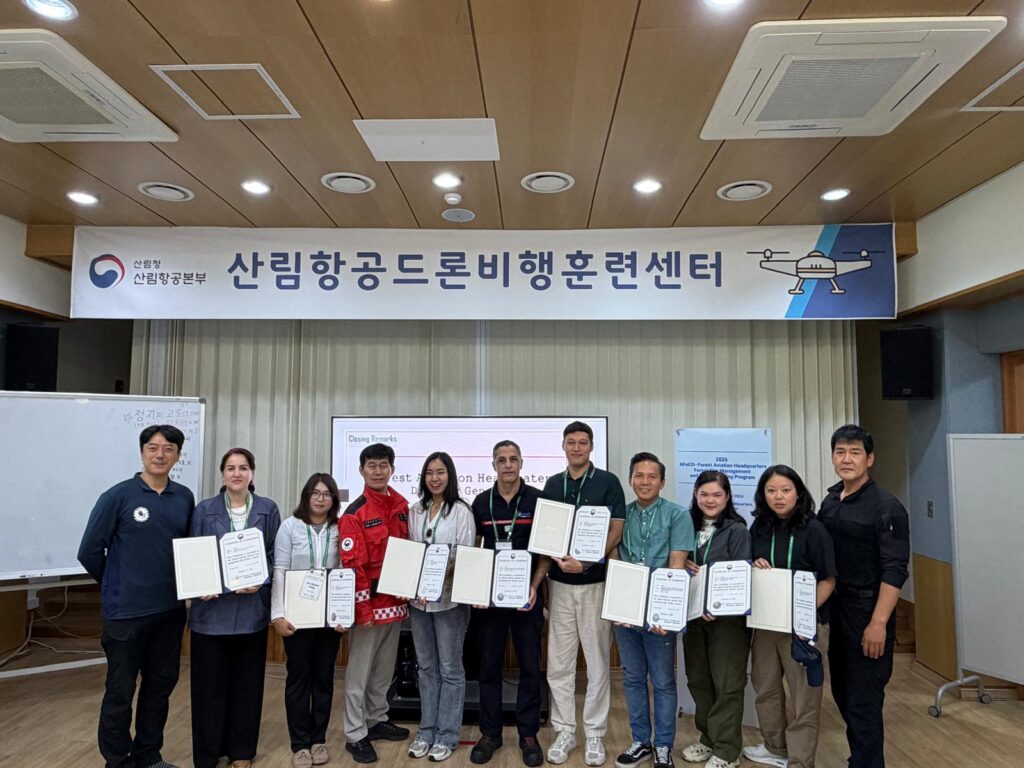
The training concluded with a completion ceremony, closing remarks by the Director General of the Forest Aviation Headquarters, and the presentation of training certificates. Fellowship Officials also shared their reflections and key lessons from the four-day training program. For the participants, the experience went beyond learning about firefighting equipment and drone operations. It provided an opportunity to see how people, technology and operational systems work together in forest fire response.
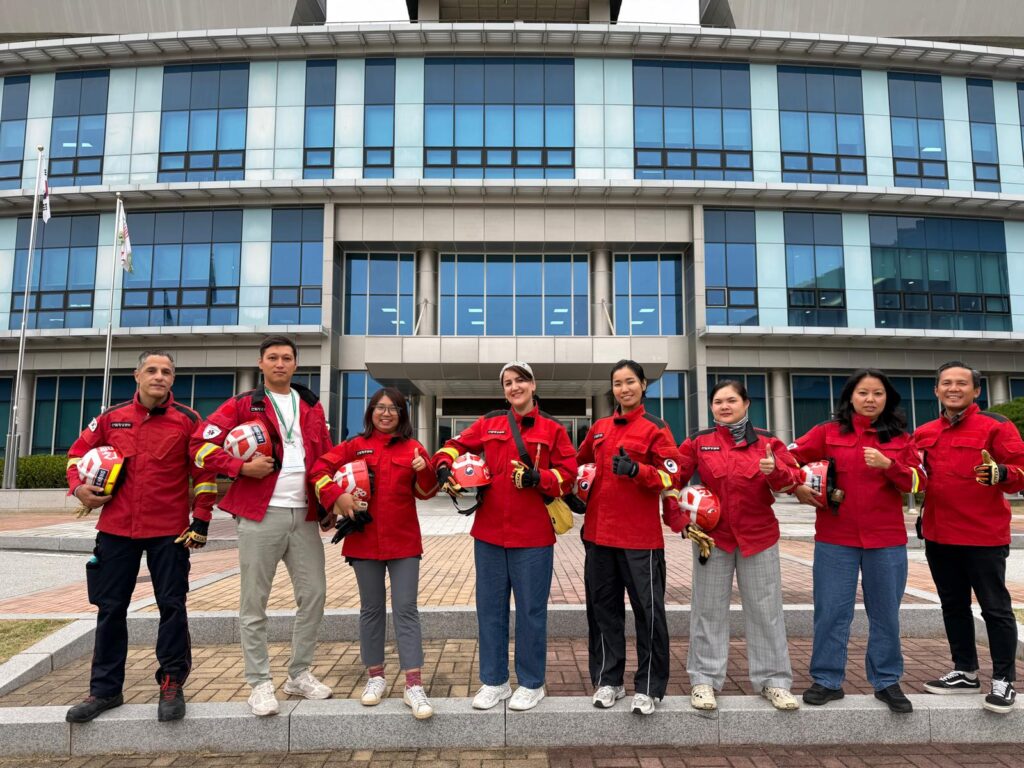
The AFoCO Fellowship Officials and the AFoCO Secretariat express their sincere appreciation to the Forest Aviation Headquarters, Korea Forest Service, its Director General Mr. Kim Manju and his dedicated team and instructors for their support, expertise and commitment throughout the training program. Through continued cooperation and practical knowledge exchange, AFoCO and its partners are contributing to stronger professional capacity and enhanced forest disaster response across the member countries
Contributed by the 2026 Cohort of AFoCO Fellowship Officials and a French International Expert.