
JEJU ISLAND, 21 July 2026 — To commemorate World Mangrove Day, the Asian Forest Cooperation Organization (AFoCO) officially launched the AFoCO Mangrove Initiative on Jeju Island.
The AFoCO Mangrove Initiative is a regional program aims to strengthen cooperation and knowledge development on mangrove ecosystem conservation and restoration across AFoCO Member Parties. Anchored in the AFoCO Strategic Plan 2024-2030, the initiative sets a target to restore 10,000 hectares of mangrove ecosystems across member countries. It addresses the urgency of mangrove conservation as these ecosystems face unprecedented threats due to climate change, extreme weather, and unsustainable land-use practices. The initiative focuses on two key objectives: (1) establishing a comprehensive regional mangrove mapping and monitoring system utilizing Korea’s specialized Agriculture and Forestry Satellite (CAS500-4), and (2) mobilizing private sector investment through blue carbon mechanisms, CSR, and public-private partnerships.
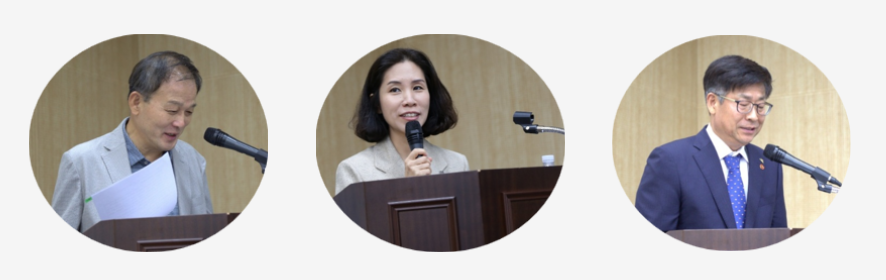
The launching ceremony was officially opened by Dr. Chongho Park, Executive Director of AFoCO, alongside congratulatory remark by Ms. Minhye Park, Executive Director of World Wide Fund Korea (WWF-Korea), and welcoming remark by Mr. Cheon-su Park, Vice Governor of Jeju Special Self-Governing Province.
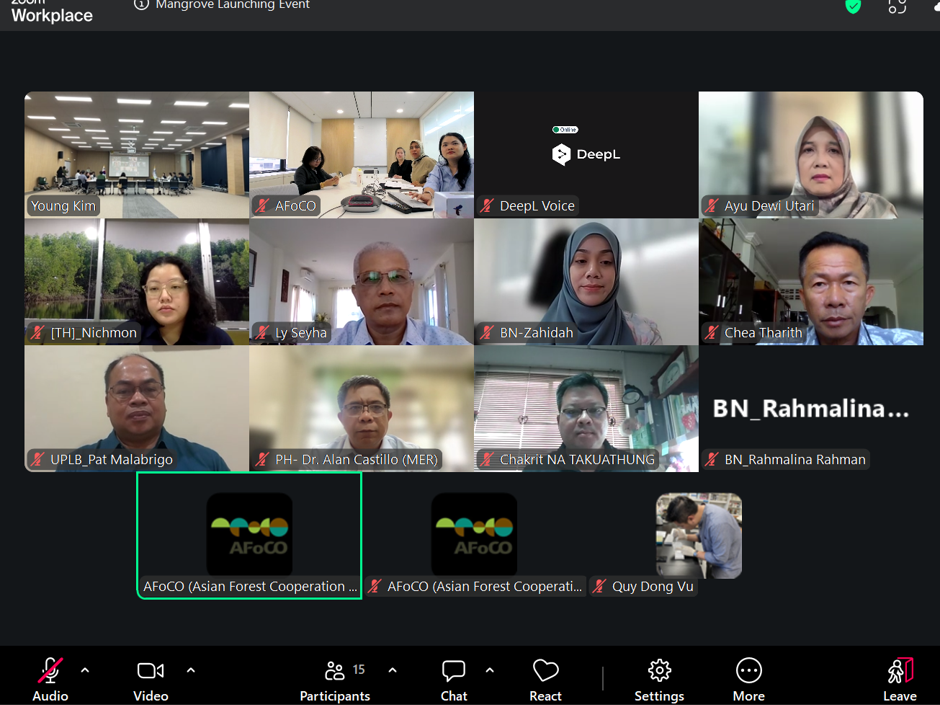
The Mangrove Initiative was officially launched together with regional experts from the AFoCO Mangrove Initiative and the expert group from the AFoCO Living Lab Mangrove Initiative. Dr. Chongho Park, Executive Director of AFoCO, formally declared the launch of the Initiative.
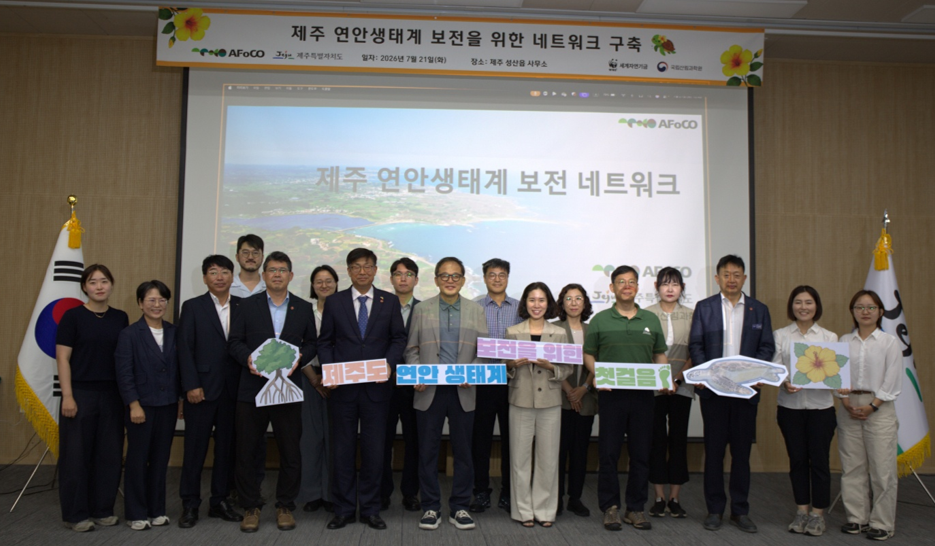
The event also served to build a conservation network with three different organizations. Jeju Island, WWF-Korea, and NIFoS (National Insititute of Forest Science) have agreed to form a network under the shared goal of conserving Jeju’s coastal areas, with each partner contributing through the mobilization of the private sector, the provision of sites for mangrove planting, and sea turtle conservation activities.
Following the formal launch, the event moved into a technical session featuring specialized presentations from key partner organizations, focusing on biodiversity and habitat preservation:
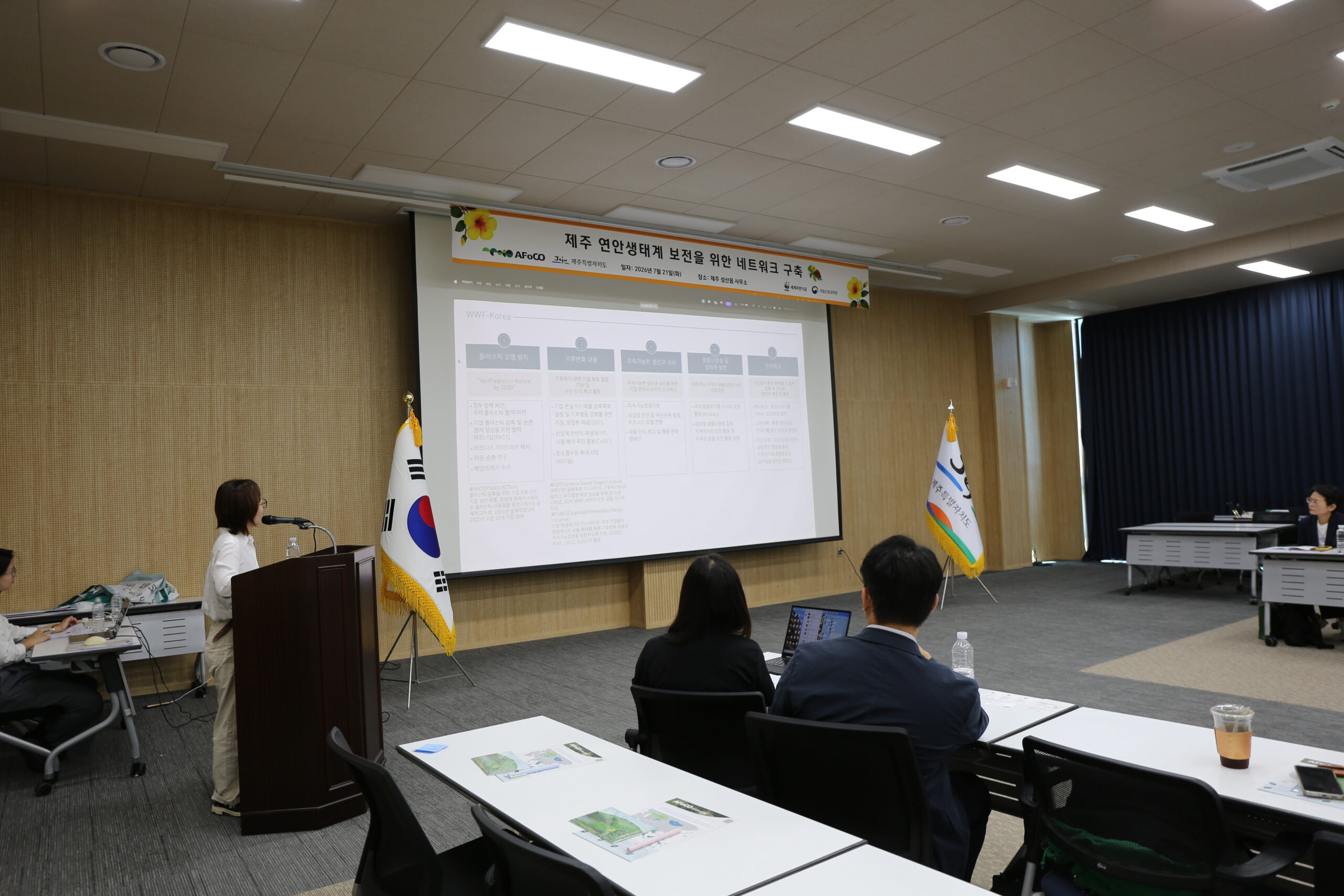
Sea Turtle Conservation (WWF-Korea)
Dr. Jiae An
WWF-Korea delivered a presentation highlighting sea turtle habitats and active conservation frameworks within the region.
Semi-Mangrove Research (NIFoS)
Dr. Dahyun Lee
The National Institute of Forest Science (NIFoS) presented critical findings on semi-mangrove species and their ecological significance.
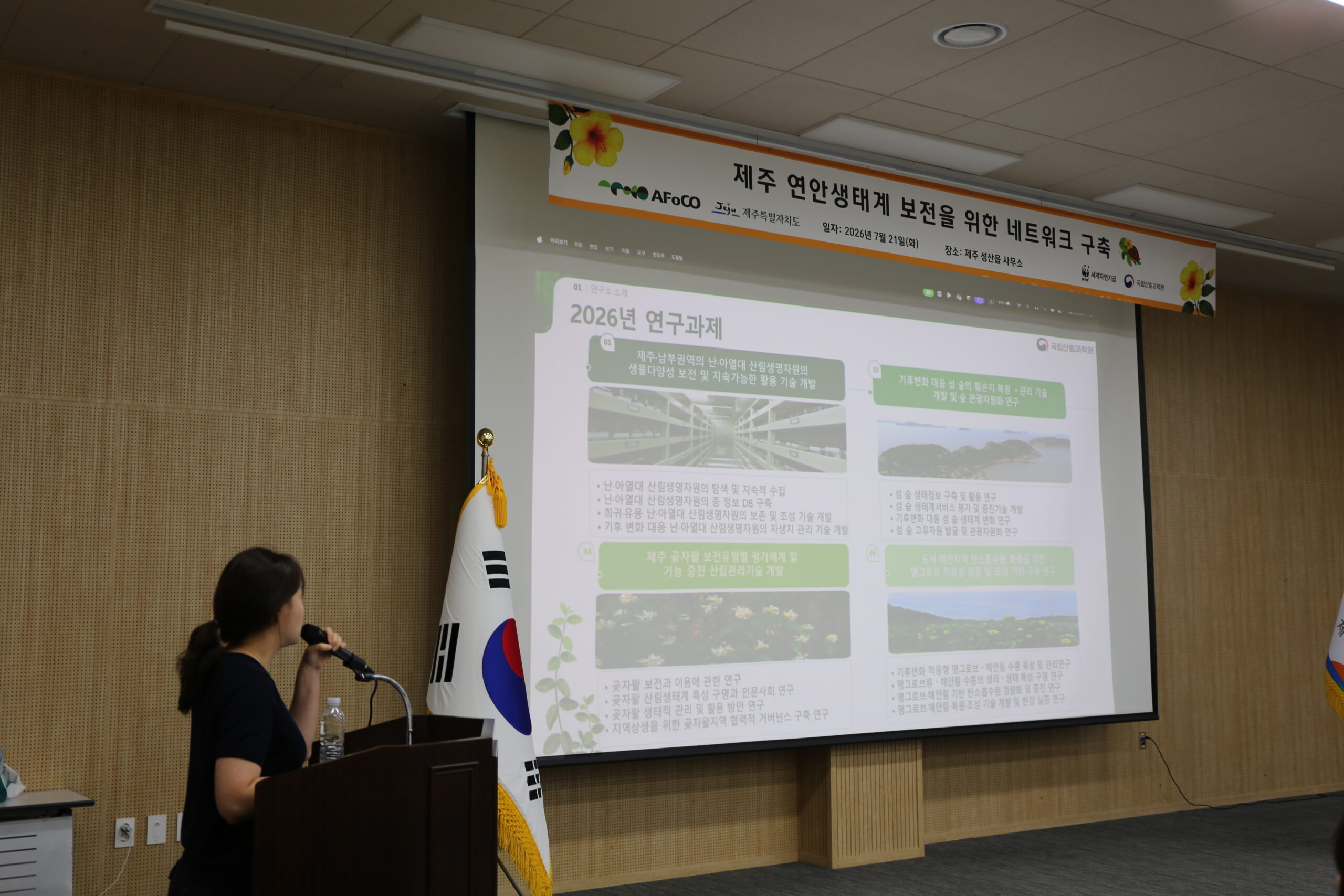
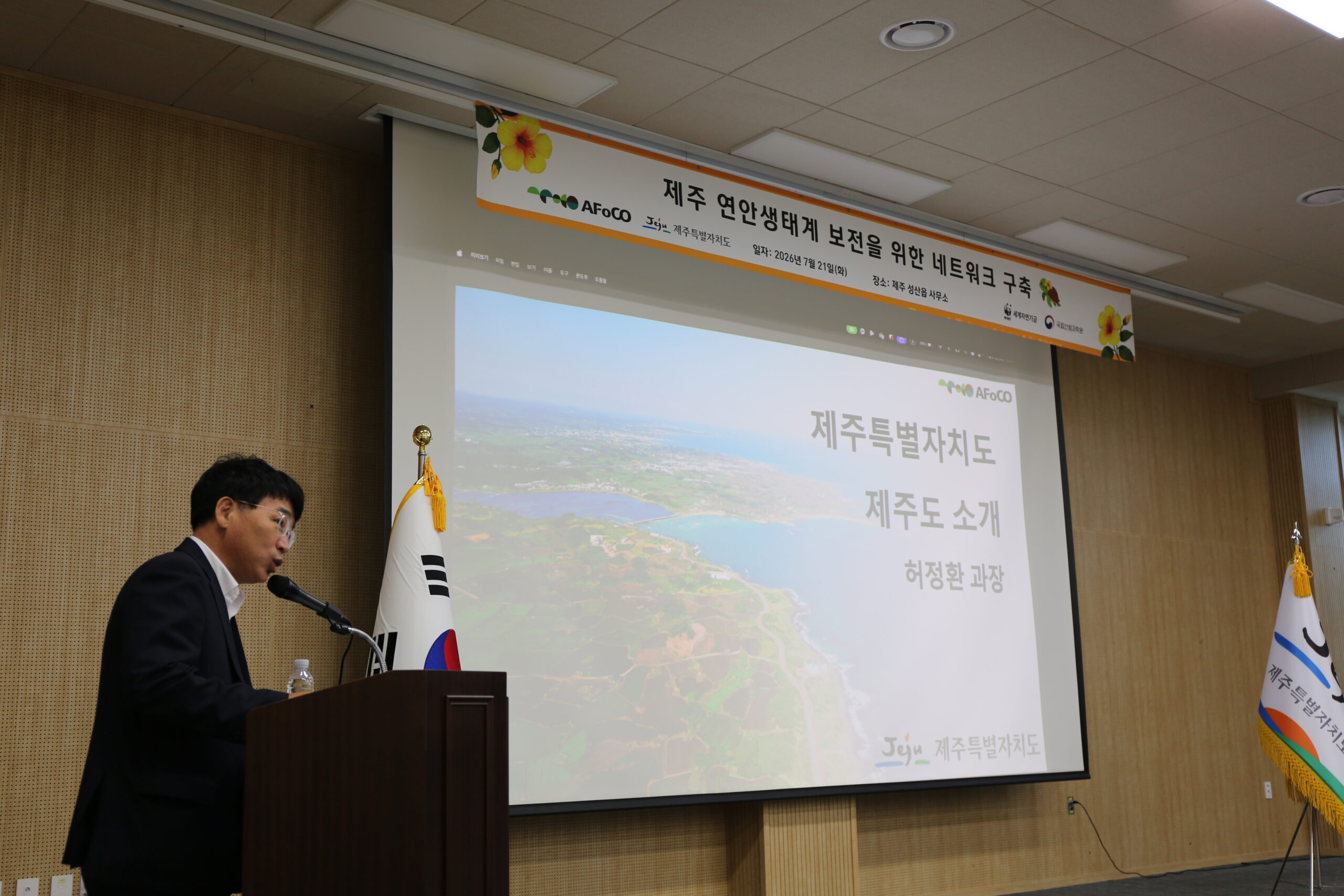
Jeju Coastal Infrastructure (Jeju Island)
Mr. Junghwan Hur
Representatives from Jeju Island shared insights into the island’s unique coastal ecosystem and its role in carbon-neutral initiatives.
Field Visit: ‘Hwanggeun Sunset Forest Carbon Walking’ Event
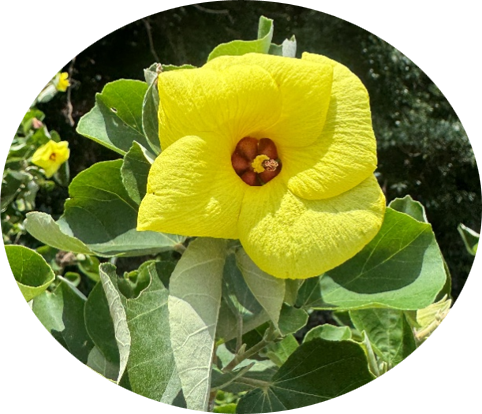
In the afternoon, delegates and citizens participated in a field visit and ecological experiential event held at Siksanbong, the largest natural habitat of Hwanggeun (Hibiscus hamabo) in Jeju.
The ‘Hwanggeun Sunset Forest Carbon Walking’ event operated as a citizen-participatory ecological conservation initiative, allowing participants to experience the tangible impacts of carbon absorption. The field visit included localized on-site interpretations conducted by expert organizations:
- Hwanggeun Ecology and Conservation Status: Conducted by the Warm-temperate and Subtropical Forest Research Center, detailing the protection of Jeju’s natural habitats.
- Sea Turtle Habitats: Managed by WWF-Korea, explaining coastal wildlife protection activities.
- CAMP Platform Operation: Facilitated by AFoCO, demonstrating the field deployment and utilization plans of the CAMP platform.
The joint event concluded with a unified commitment among AFoCO, member countries, and civil society to closely collaborate on cross-border blue carbon and coastal ecosystem management moving forward
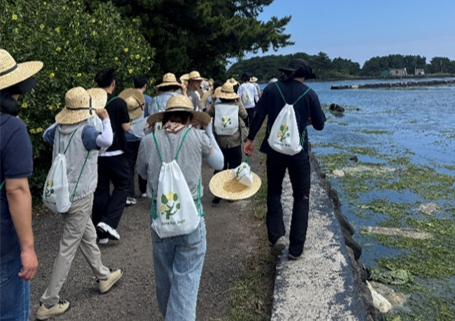
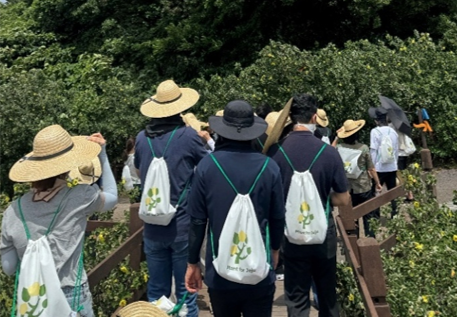
Field Visit: ‘Hwanggeun Sunset Forest Carbon Walking’ Event
Contributed by Dr. Hannah Suh (Program Officer) and Ms. Rujira Sassana (Fellowship Official)