
From 14 to 16 July 2026, the 2nd AFoCO–NIFoS Climate Change Adaptation (CCA) and Mangrove Ecosystem Restoration (MER) Living Lab Working Group Meetings were successfully held at the AFoCO Regional Education and Training Center (RETC) in Hmawbi Township, Yangon Region, Myanmar. Bringing together policymakers, researchers, and technical experts from across the region, the meetings provided an important platform to strengthen regional cooperation through technical dialogue, collaborative planning, and field-based learning.
Over the course of the two-day programme, participants advanced the objectives of both the CCA and MER Living Labs by translating the discussions initiated during the inaugural Working Group Meetings into concrete technical outputs and implementation plans. Through active knowledge exchange and collaborative discussions, Member Countries identified common priorities, strengthened regional partnerships, and established a clear roadmap for the next phase of cooperation.
Climate Change Adaptation (CCA) Living Lab
For the Climate Change Adaptation (CCA) Living Lab, participants advanced the preparation of the Regional Synthesis Report on Climate Change Adaptation in the Forestry Sector through focused technical discussions. To facilitate more in-depth collaboration, participants were divided into three thematic groups based on shared ecological characteristics and regional contexts:
- Group 1: Mountain Forest and Watershed Ecosystem Countries – Bhutan, Kyrgyz Republic, and Tajikistan.
- Group 2: Tropical Seasonal Forest Countries of the Greater Mekong Region – Cambodia, Lao PDR, Myanmar, Thailand, and Viet Nam.
- Group 3: Nations with Tropical Rainforests and Coastal Forest Ecosystems – Brunei Darussalam and Philippines.
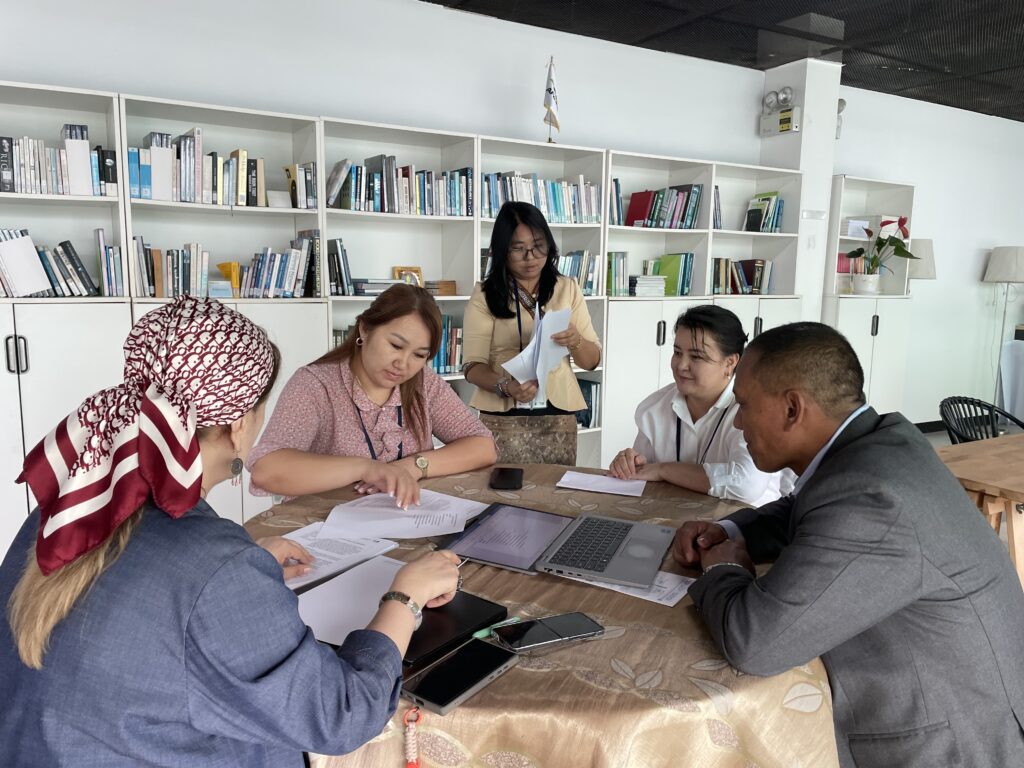
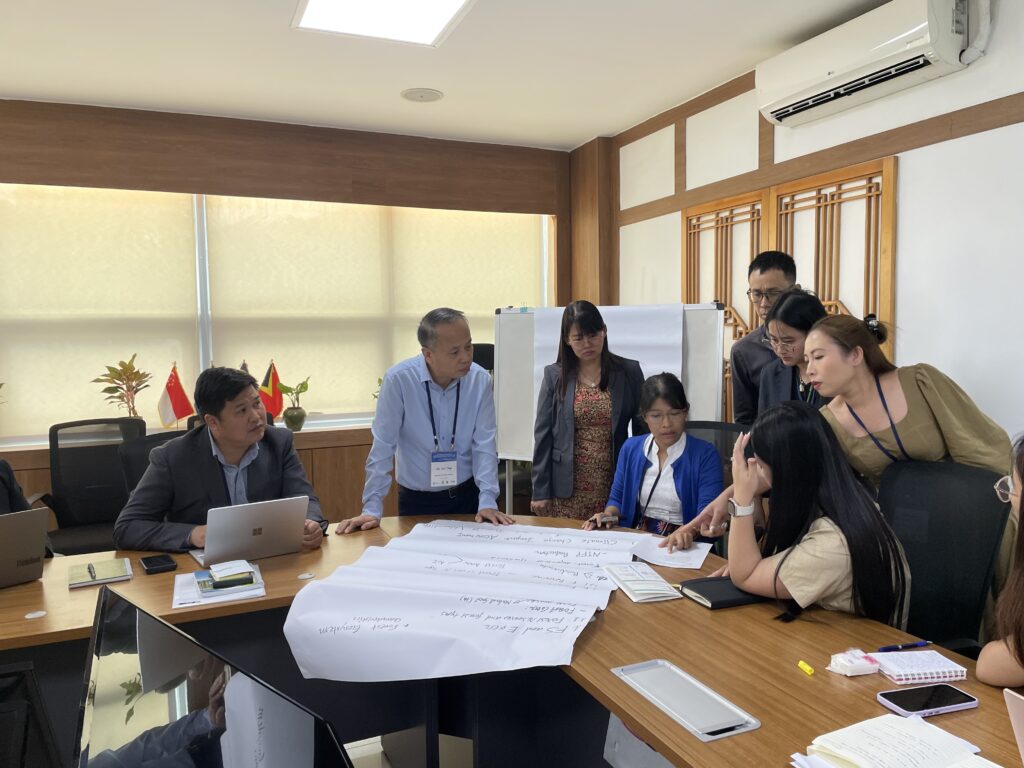
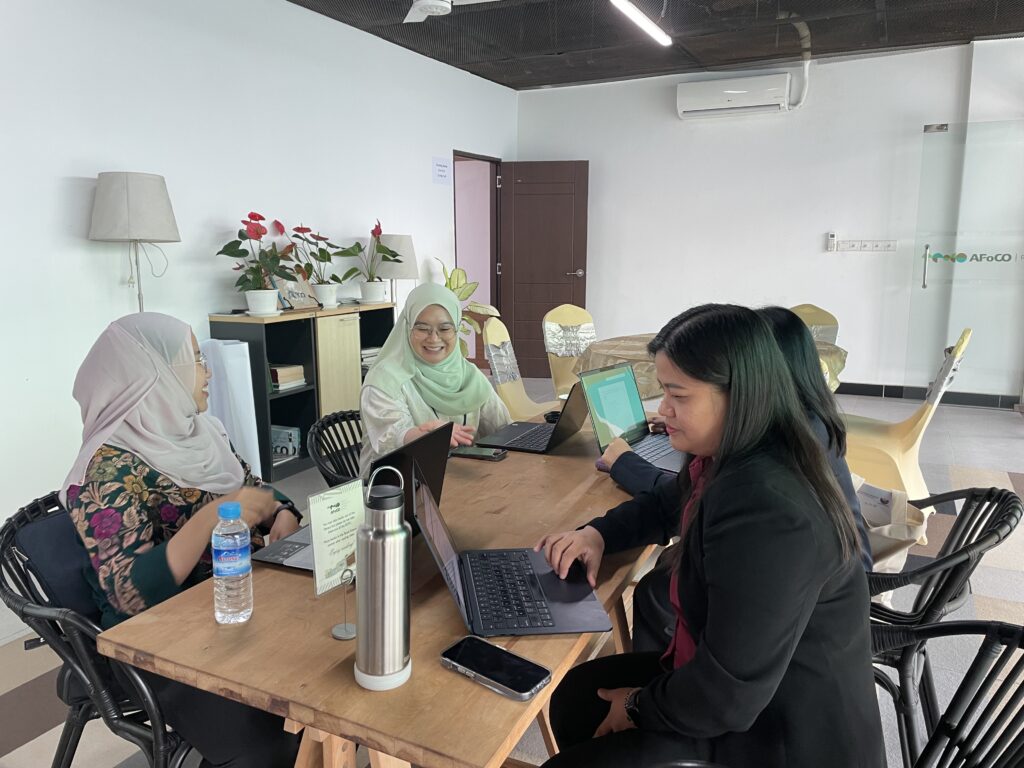
Working within their respective groups, participants reviewed and refined the proposed chapter outlines, identified key regional priorities, and discussed how the report should reflect the diverse forest ecosystems, climate change impacts, and adaptation efforts across Asia. Each group designated Lead Authors and contributing authors responsible for coordinating the preparation of their respective chapters.
Following the breakout discussions, the three groups presented their recommendations during a plenary session, allowing participants to exchange feedback, harmonize the report structure, and establish a common direction for future collaboration. Discussions also focused on the operational approach for establishing Living Lab field demonstration sites, including their objectives, implementation strategies, and opportunities for regional cooperation. The designated Lead Authors and contributing authors subsequently convened a dedicated coordination session to define responsibilities, discuss drafting schedules, and agree on the roadmap for completing the regional synthesis report.
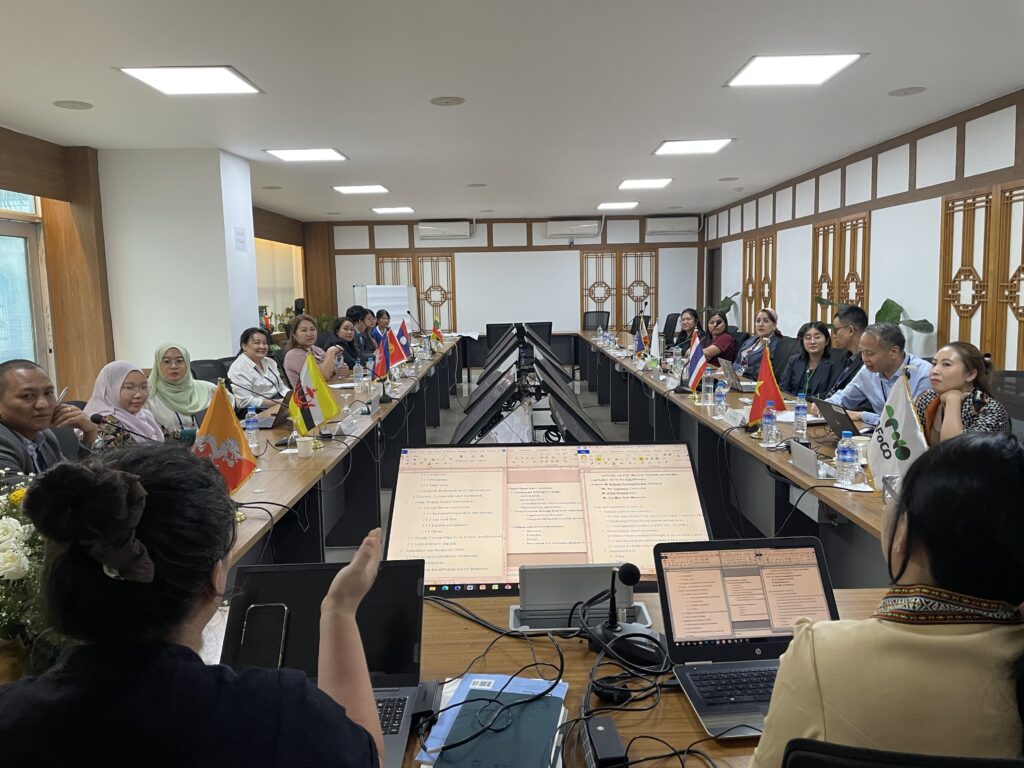
Throughout the discussions, Dr. Park from National Institute of Forest Science (NIFoS) highlighted that the Living Lab should serve as more than a knowledge-sharing platform by creating stronger links between scientific research, long-term monitoring, policy development, and field implementation. She emphasized that future collaboration should focus on developing regional guidance for climate change impact assessment, practical tools and methodologies for adaptation planning, field management manuals, and a monitoring framework to support evidence-based climate adaptation across Asia’s forests. Participants also reaffirmed their commitment to completing the Regional Synthesis Report by the end of the year as the foundation for future regional guidance and collaborative research under the CCA Living Lab.
Mangrove Ecosystem Restoration (MER) Living Lab
The Mangrove Ecosystem Restoration (MER) Living Lab sessions focused on defining the next phase of regional collaboration to advance science-based mangrove restoration across the AFoCO region. Building on the outcomes of the inaugural Working Group Meeting, participants discussed the implementation of the MER Living Lab, including the selection of representative Living Lab sites, the development of a regional information matrix, and collaborative approaches for collecting and managing scientific and ecological data.
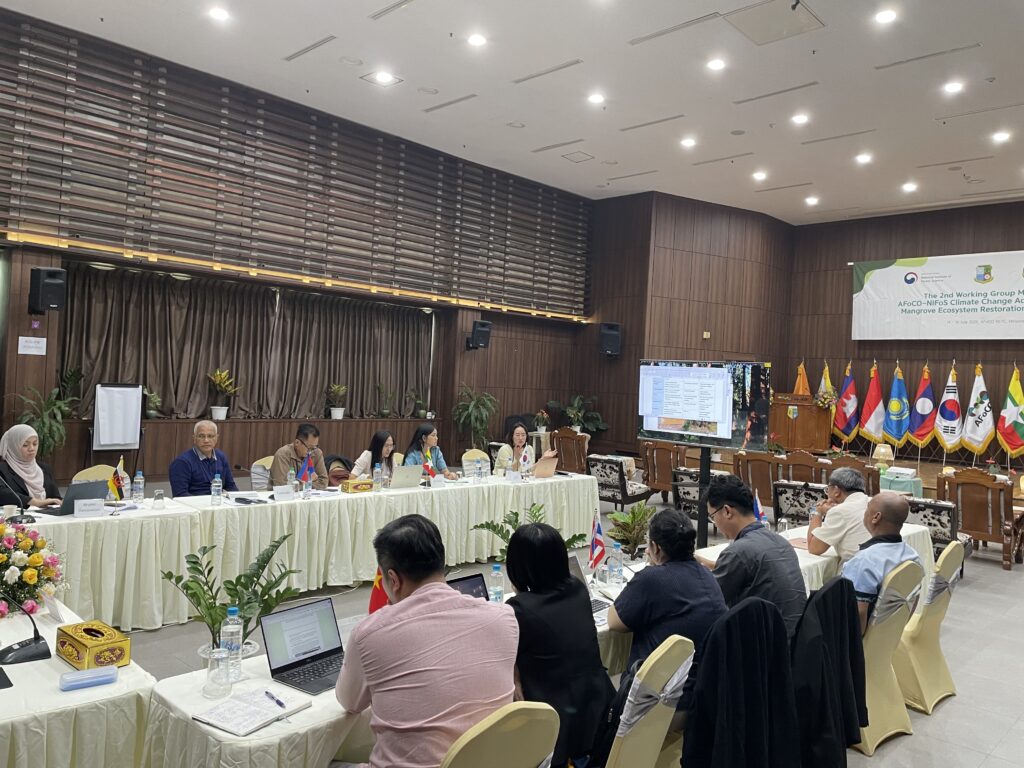
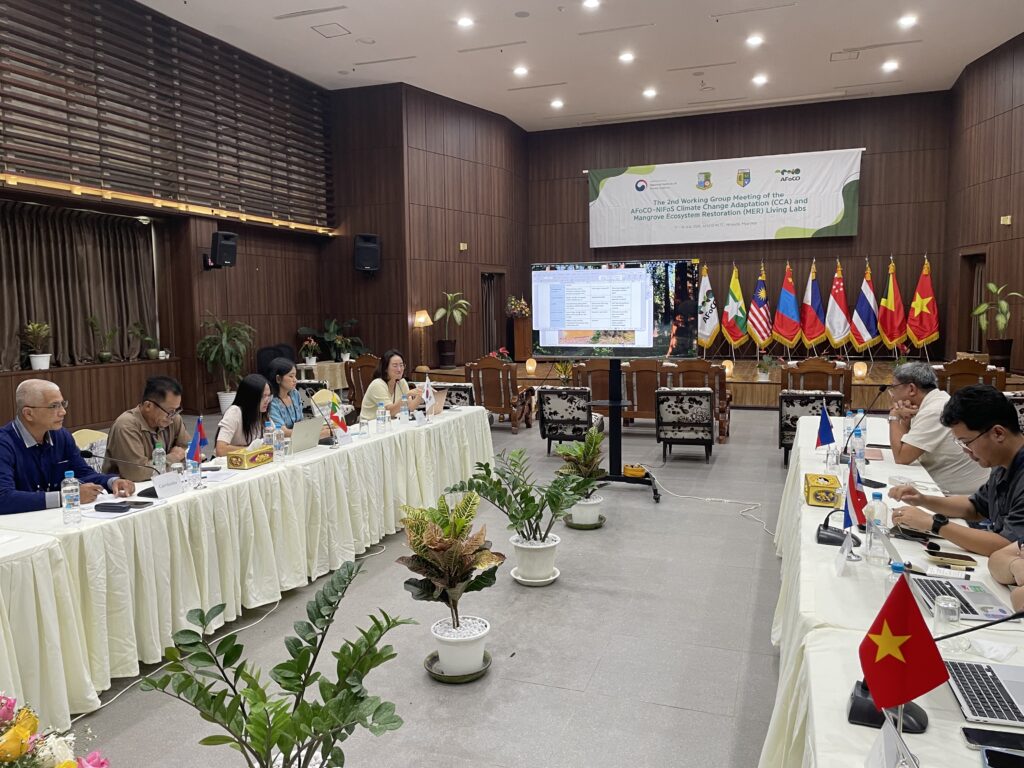
Participants agreed that the proposed MER research framework should remain flexible and evolve through continuous technical collaboration. Discussions emphasized the importance of selecting Living Lab sites based on countries’ capacity for long-term ecological monitoring and data management, while encouraging Member Countries to identify and confirm their sites and share site coordinates with NIFoS. The Working Group also highlighted the need to assess restoration success based on ecological suitability and ecosystem recovery rather than focusing solely on individual mangrove species.
To strengthen regional cooperation, Member Countries agreed to establish a shared online knowledge platform for exchanging data, technical information, and research outputs, while continuing technical consultations and country-specific discussions as the initiative progresses. AFoCO Secretariat will circulate proposal templates and submission forms to support the next phase of implementation. These collective efforts will provide a strong foundation for harmonized monitoring, collaborative research, and practical, evidence-based mangrove restoration across the region.
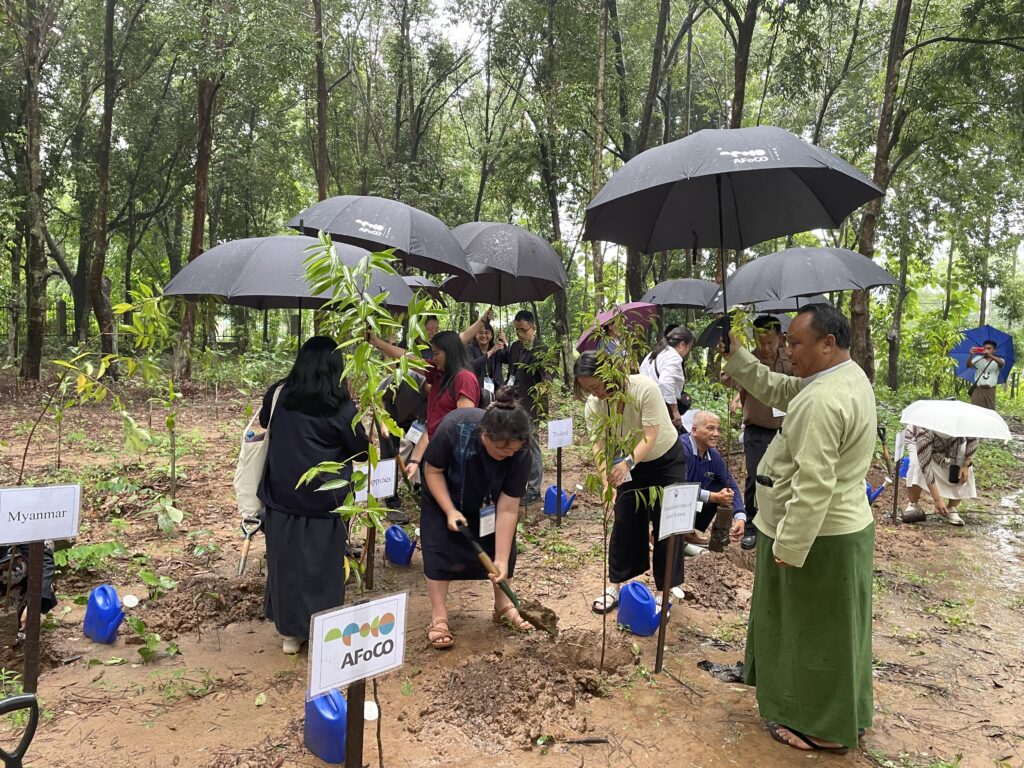
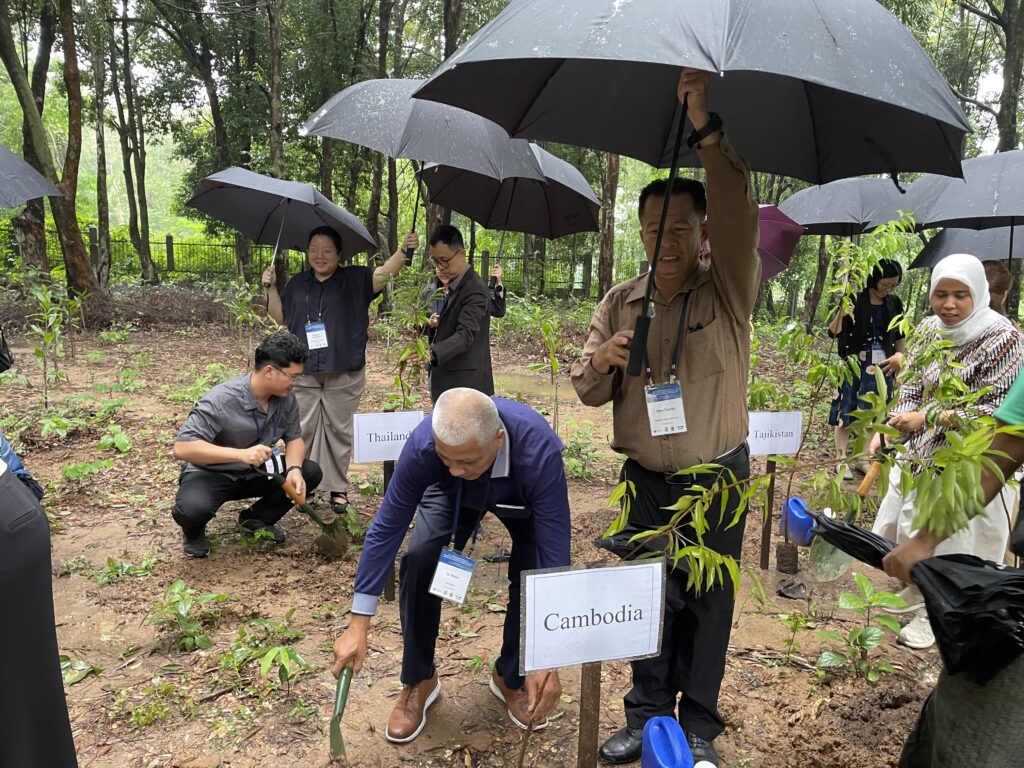
Following the conclusion of both Working Group Meetings, participants joined a commemorative tree planting ceremony, symbolizing their shared commitment to sustainable forest management and a greener Asia. The ceremony brought together representatives from the AFoCO Secretariat, NIFoS, the Forest Department of Myanmar, and Member Countries, reaffirming their collective dedication to strengthening regional cooperation and promoting resilient forest ecosystems.
Closing Ceremony and Field Visit
The Working Group Meetings concluded with a joint closing ceremony, where representatives from AFoCO, NIFoS, and the participating Member Countries reflected on the achievements of the three-day programme and reaffirmed their shared commitment to strengthening regional cooperation through the Living Lab framework.
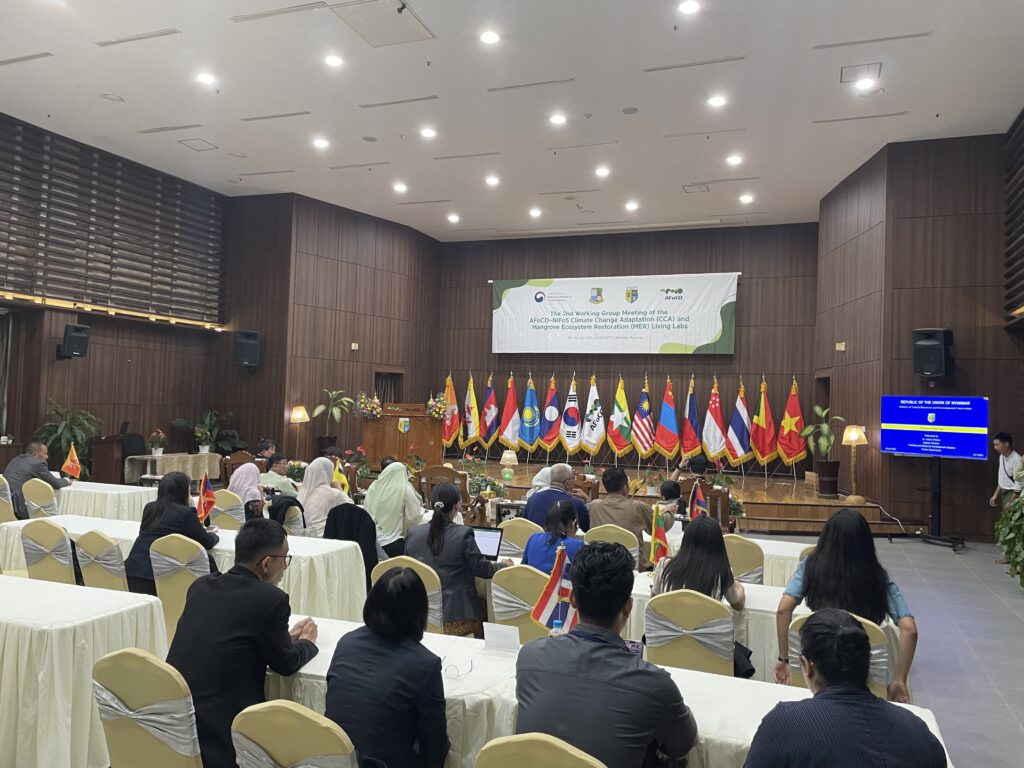
In the closing remarks, NIFoS researchers Dr. Goeun Park and Dr. Bora Lee emphasized that the discussions over the previous two days had established a clear direction for future regional collaboration. For the Climate Change Adaptation (CCA) Living Lab, they highlighted Member Countries’ shared commitment to jointly develop regional guidance for climate change impact assessment, practical adaptation planning tools and methodologies, field management manuals, and a monitoring framework to support evidence-based forest adaptation across Asia.
For the Mangrove Ecosystem Restoration (MER) Living Lab, they noted the significant progress made in strengthening the regional baseline by identifying priority research topics, harmonizing monitoring approaches, and discussing criteria for selecting future Living Lab sites. They also emphasized the importance of advancing science-based mangrove restoration through collaborative research, standardized methodologies, and long-term monitoring.
They concluded by underscoring that the Living Lab approach serves as a bridge between scientific research, policy development, and field implementation, enabling practical, evidence-based solutions to be applied across diverse forest and coastal ecosystems in the region.
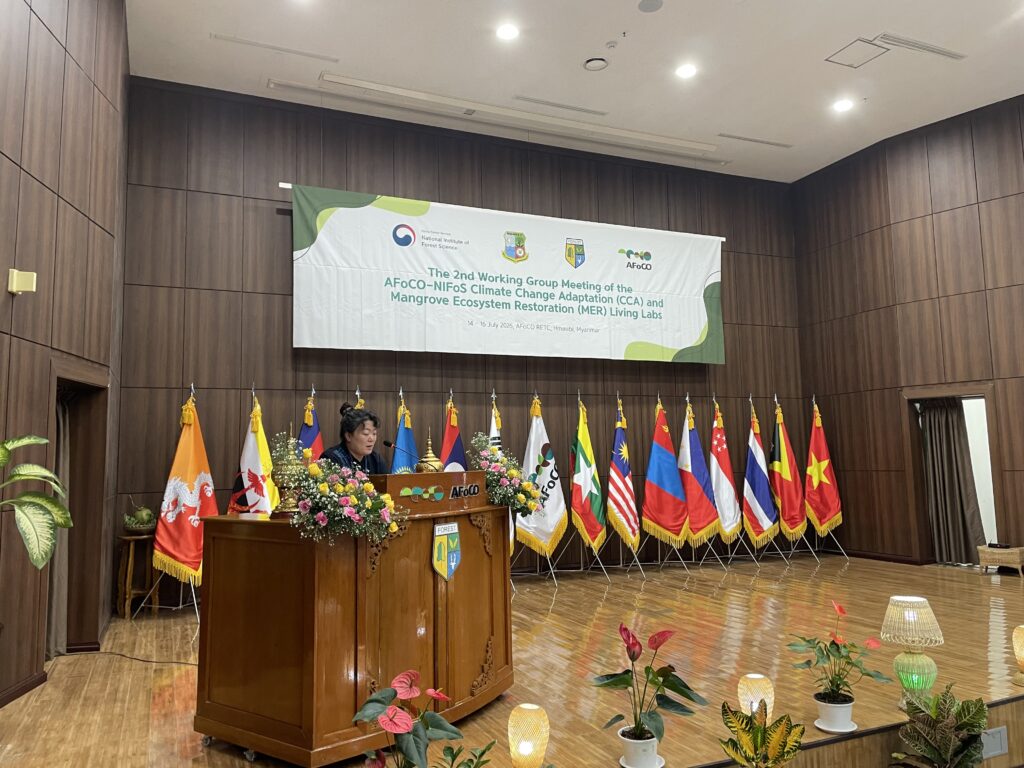
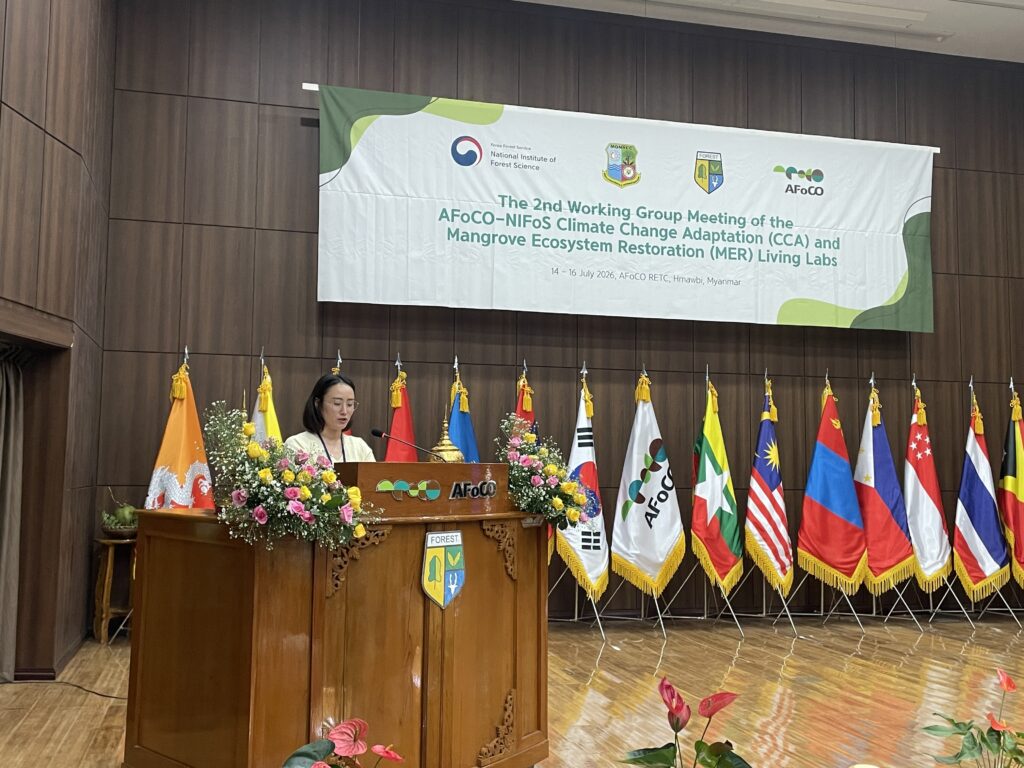
Next, closing remarks were addressed by the AFoCO Secretariat and the Forest Department of Myanmar.
In his closing remarks on behalf of the AFoCO Secretariat, Dr. Kiwon Kim expressed sincere appreciation to the AFoCO RETC team for their dedicated support in successfully organizing the Working Group Meetings, as well as to the National Institute of Forest Science (NIFoS), Republic of Korea, for its continued technical leadership in advancing the Living Lab initiative. He noted that the two-day meeting had strengthened regional cooperation through productive technical discussions and the exchange of national experiences. Dr. Kim highlighted the progress made by the Climate Change Adaptation (CCA) Working Group in advancing the regional synthesis report and future research collaboration, while the Mangrove Ecosystem Restoration (MER) Working Group further refined the regional baseline by identifying research priorities, monitoring approaches, and criteria for future Living Lab sites. He concluded by reaffirming AFoCO’s commitment to fostering science-based regional collaboration for more resilient forest ecosystems across Asia.
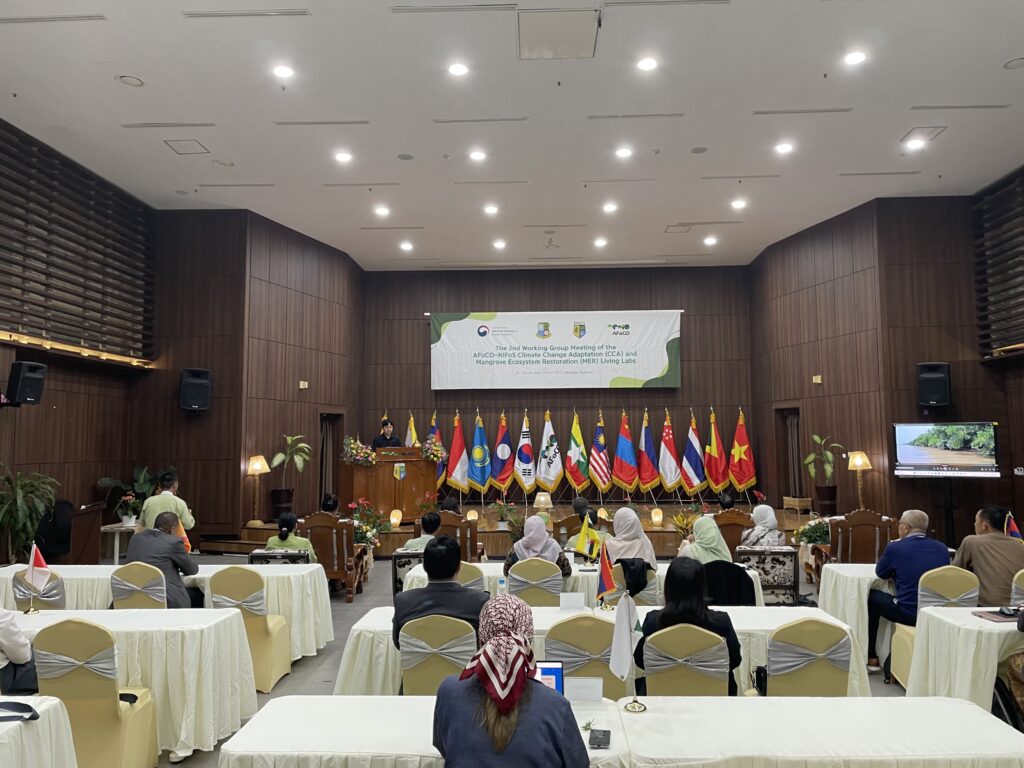
In his closing remarks, Mr. Phyo Zin Mon Naing, Director of the Training and Research Development Division of the Forest Department of Myanmar, expressed appreciation to all participants for their active engagement throughout the two-day meeting. He noted that the Working Group Meetings provided a valuable platform for exchanging knowledge, reviewing progress, and exploring innovative approaches to mangrove ecosystem restoration and climate change adaptation.
He also thanked AFoCO, NIFoS, partner institutions, scientists, and Member Country representatives for their strong collaboration, emphasizing that their collective commitment contributed to the successful outcome of the meeting and strengthened regional cooperation for resilient forest ecosystems.
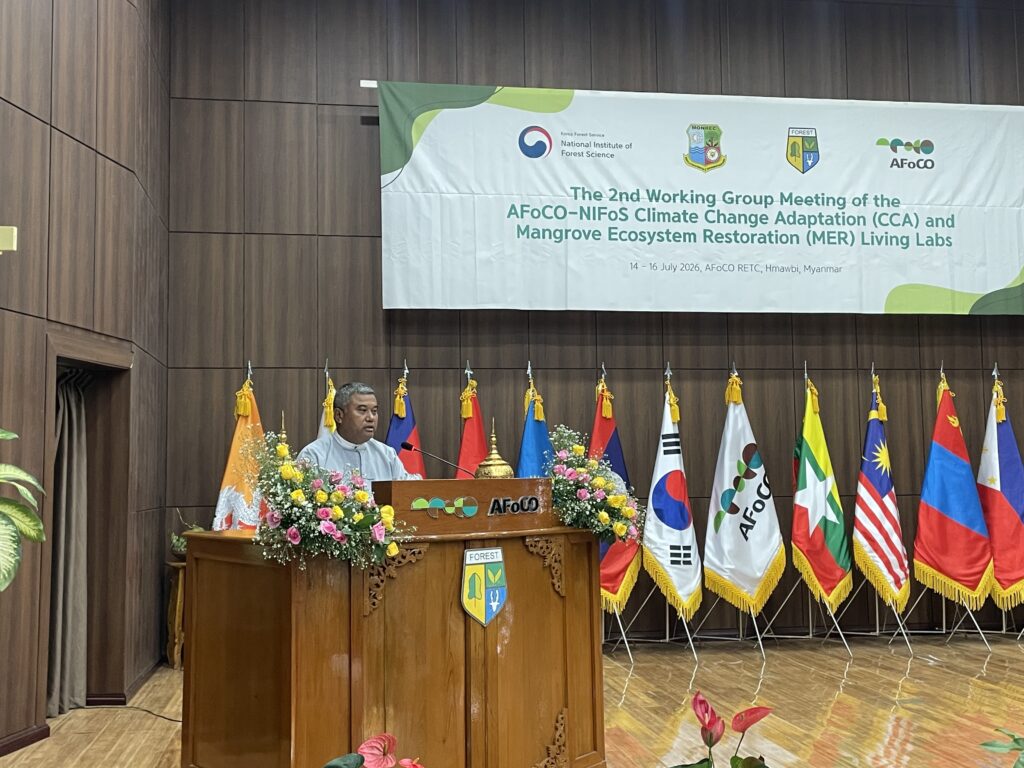
The speakers also noted that, while Member Countries possess diverse ecological conditions, capacities, and priorities, this diversity represents a valuable strength that will enrich future collaboration and knowledge exchange. Looking ahead, participants agreed to continue advancing joint research, field-based monitoring, and technical cooperation through the Living Lab network while working toward the completion of the Regional Synthesis Report and the development of future regional guidance for climate change adaptation.
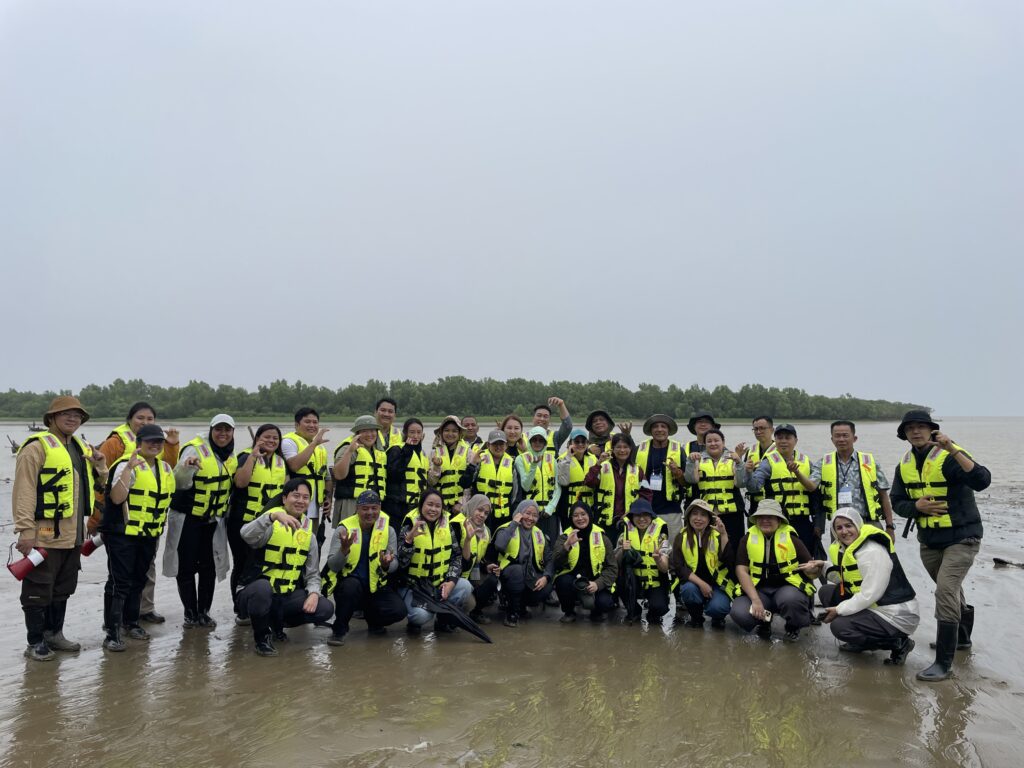
Following the successful conclusion of the Working Group Meetings and closing ceremony, participants undertook a motorboat field trip from Sae-Ein-Tan Village, Kawhmu Township, to the mangrove forests of the Mya Sein Thaung and Kan Lyar Shay Reserved Protected Forests in the Yangon Region. The field visit included a stop at Sae-Ein-Tan Beach, one of the public recreation areas and the nearest beach to Yangon, where participants observed mangrove ecosystems firsthand and connected the technical discussions from the meetings with ongoing restoration activities and research efforts on the ground.
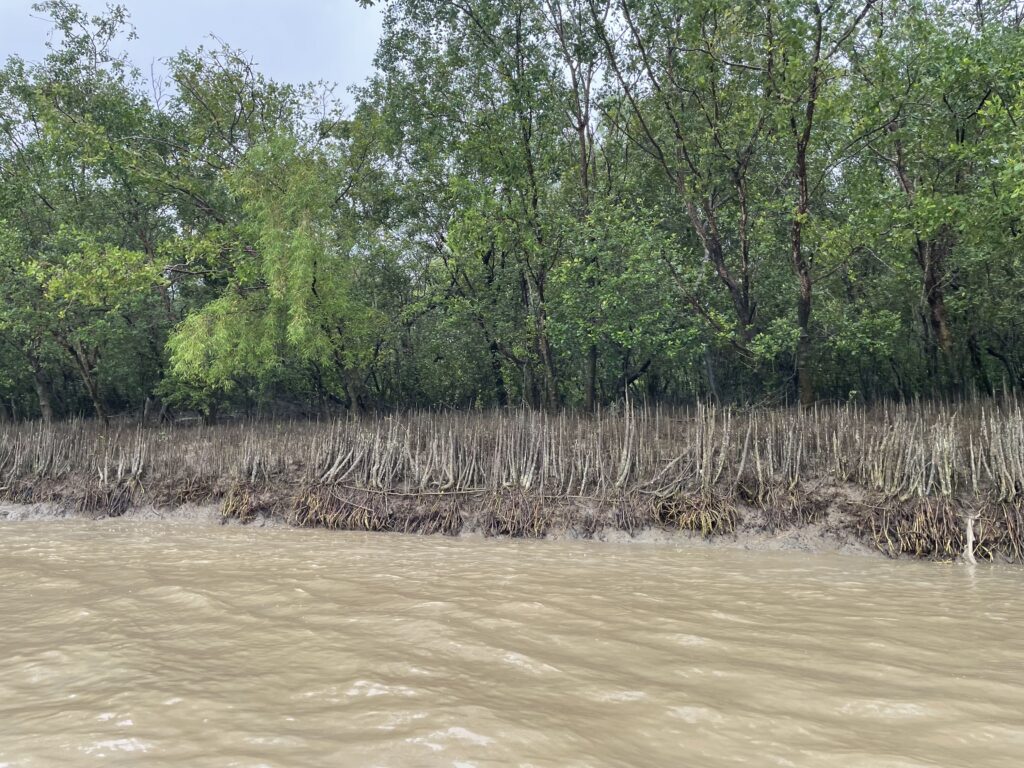
During the visit to the 489-acre (approximately 198-hectare) mangrove forest, participants observed mangrove pneumatophores (aerial roots), a distinctive adaptation that enables mangrove species to survive and thrive in waterlogged coastal environments. The field observations provided firsthand insights into mangrove ecology, site conditions, and restoration practices, reinforcing the importance of field-based assessments in supporting science-based mangrove ecosystem restoration. The surrounding mangrove forests serve as a vital natural barrier for local communities; although the Ayeyarwady Region was severely affected by Cyclone Nargis in 2008, these dense forests helped reduce the impact of destructive storm surges, protecting nearby villages and saving countless lives.
Beyond disaster risk reduction, mangroves provide critical habitats for biodiversity and support local fishing livelihoods by serving as natural breeding grounds for fish, shrimp, and crab species. However, these ecosystems continue to face significant threats from illegal logging, charcoal production, and land conversion for commercial aquaculture, prompting local communities and environmental organizations to collaborate on restoration and reforestation initiatives. Three major mangrove species observed in the area include Rhizophora mangle, Bruguiera gymnorrhiza, and Xylocarpus moluccensis.
Looking Ahead
The successful completion of the 2nd AFoCO–NIFoS Climate Change Adaptation (CCA) and Mangrove Ecosystem Restoration (MER) Living Lab Working Group Meetings marks another important milestone in strengthening regional collaboration on climate change adaptation and ecosystem restoration. By combining technical dialogue, collaborative planning, and field-based learning, the meetings established a strong foundation for the next phase of cooperation among AFoCO Member Countries.
Building on the outcomes achieved in Myanmar, AFoCO and NIFoS will continue working closely with Member Countries to finalize the Regional Synthesis Report on Climate Change Adaptation in the Forestry Sector, establish and operate Living Lab field demonstration sites, develop practical restoration tools under the MER Living Lab, and expand regional knowledge exchange. These collective efforts will contribute to more resilient forest and coastal ecosystems while promoting science-based forest management and sustainable climate adaptation across the AFoCO region.
Contributed by Dias Shakubayev, Assistant Program Officer, Capacity-Building and Evaluation Team