
Ulaanbaatar, Mongolia – 8 September 2026. – The Asian Forest Cooperation Organization (AFoCO) and the FAO Mongolia Office jointly organized the AFoCO–FAO Asia Forest Cooperation International Forum in Ulaanbaatar, Mongolia, on 8–9 September 2026. The forum brought together around 60 participants from Bhutan, China, Kazakhstan, Mongolia and Republic of Korea to share experiences on landscape restoration and land degradation in dryland and mountain ecosystems.
Across 12 presentations and discussions, participants examined how countries are addressing land degradation, monitoring changes in landscapes, involving communities, and mobilizing finance for restoration. The programme also included a dedicated presentation on 20 years of forest landscape restoration in the DPRK, bringing forest restoration on the Korean Peninsula into the wider regional discussion.
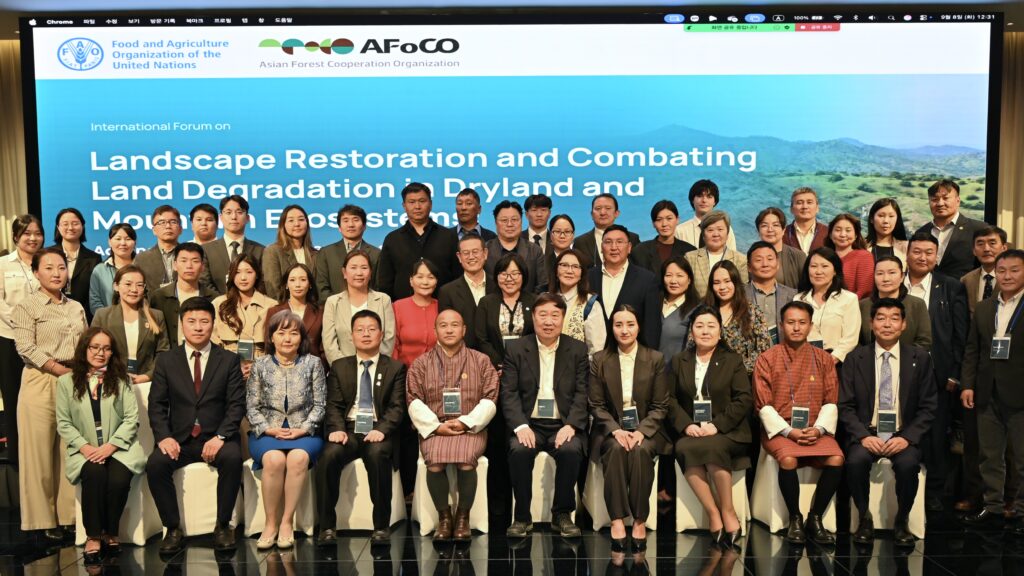
Participants of the AFoCO–FAO Asia Forest Cooperation International Forum in Ulaanbaatar, Mongolia.
Opening Session and Regional Cooperation on Landscape Restoration
Opening and Welcome Remarks
The forum opened with remarks from Enkhmanlai Anand, Head of Mongolia’s General Authority for Land Administration, Geodesy and Cartography (GALAMGaC), who highlighted the links between land degradation, food security, livelihoods, and climate change. Nyamjargal Gombo, Assistant FAO Representative of the FAO Mongolia Office, followed with welcome remarks on the importance of land restoration for agriculture, local development, and food security.
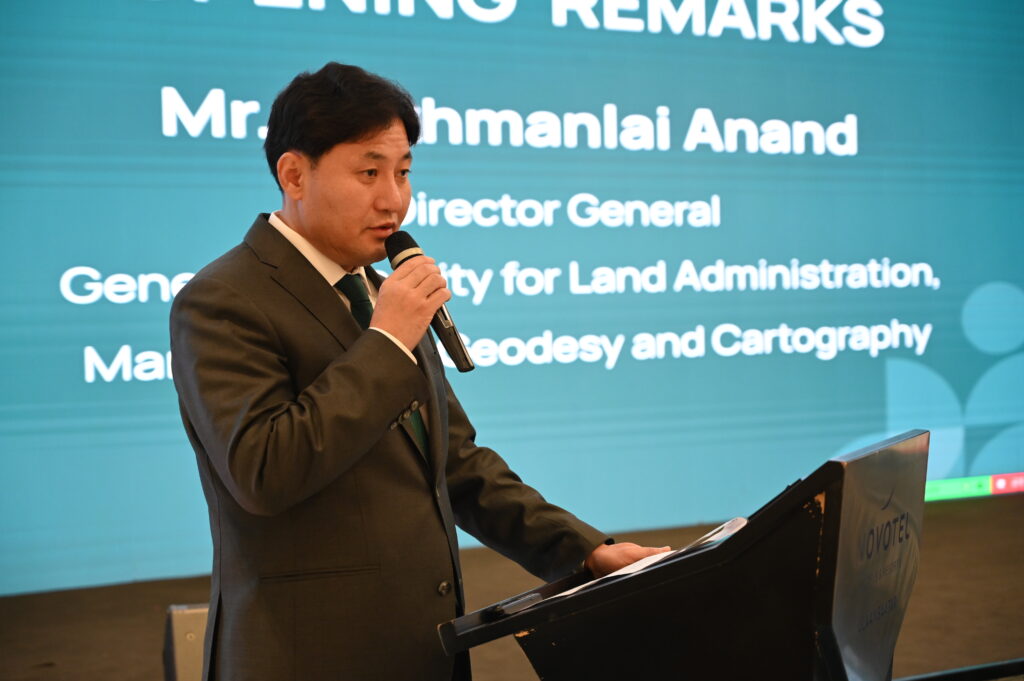
Head of Mongolia’s General Authority for Land Administration, Geodesy and Cartography (GALAMGaC)
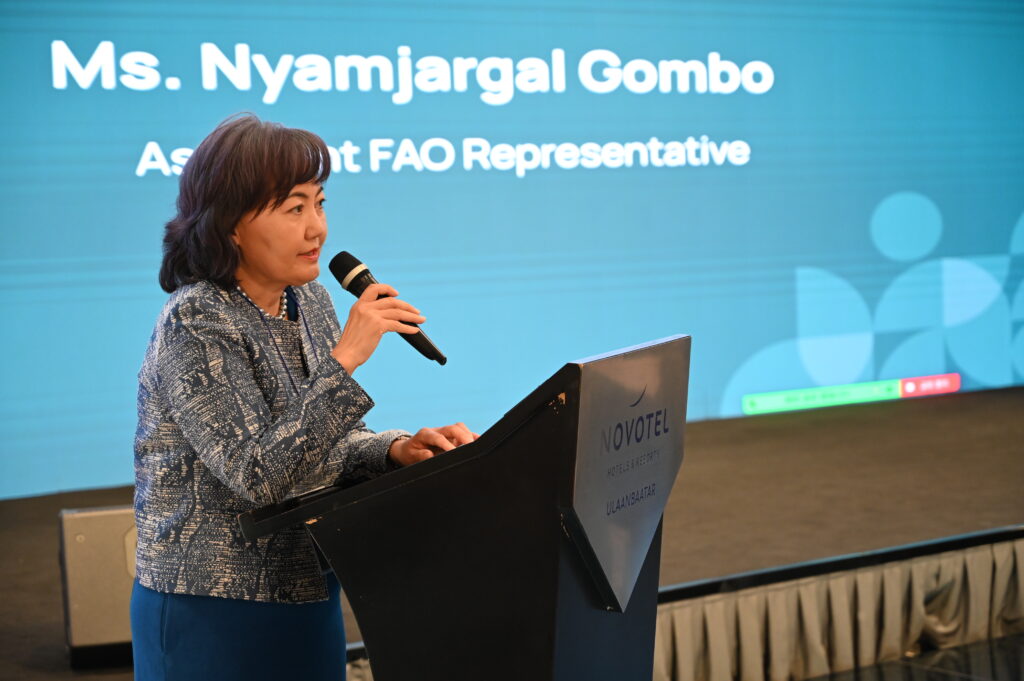
Assistant FAO Representative of the FAO Mongolia Office
Regional Regional Cooperation on Landscape Restoration in Asia and Mongolia
- Batkhuu Nyamosor, Assistant Executive Director, and Young Kim, Officer, from AFoCO delivered the keynote presentation, “Regional Cooperation on Landscape Restoration in Asia and Mongolia.” AFoCO highlighted its efforts in dryland restoration and introduced the Landscape Partnership Asia (LPA) as a regional initiative to strengthen cooperation on landscape restoration. AFoCO also shared its experience in supporting restoration through bilateral projects and regional cooperation, with examples from Mongolia and other Asian countries. The keynote highlighted Mongolia’s broader restoration efforts, including the Korea–Mongolia Green Belt project and the Billion Trees initiative, alongside AFoCO’s cooperation in Mongolia and its work on rangeland restoration. AFoCO further emphasized the role of regional cooperation in sharing technical knowledge, connecting national restoration priorities, and supporting long-term landscape restoration efforts.
- Amgalan Ariunbold, Program Specialist, STREAM+ Project Coordinator at the FAO Mongolia Office, introduced the concept of Land Degradation Neutrality (LDN) and emphasized that restoration needs to be accompanied by measures to prevent degradation and reduce existing pressures on land. FAO highlighted that around 1.6 billion hectares of land worldwide have been degraded by human activities, with more than 60 percent of human-induced degradation occurring on agricultural land. In Asia and the Pacific, around 500 million hectares are estimated to be degraded.
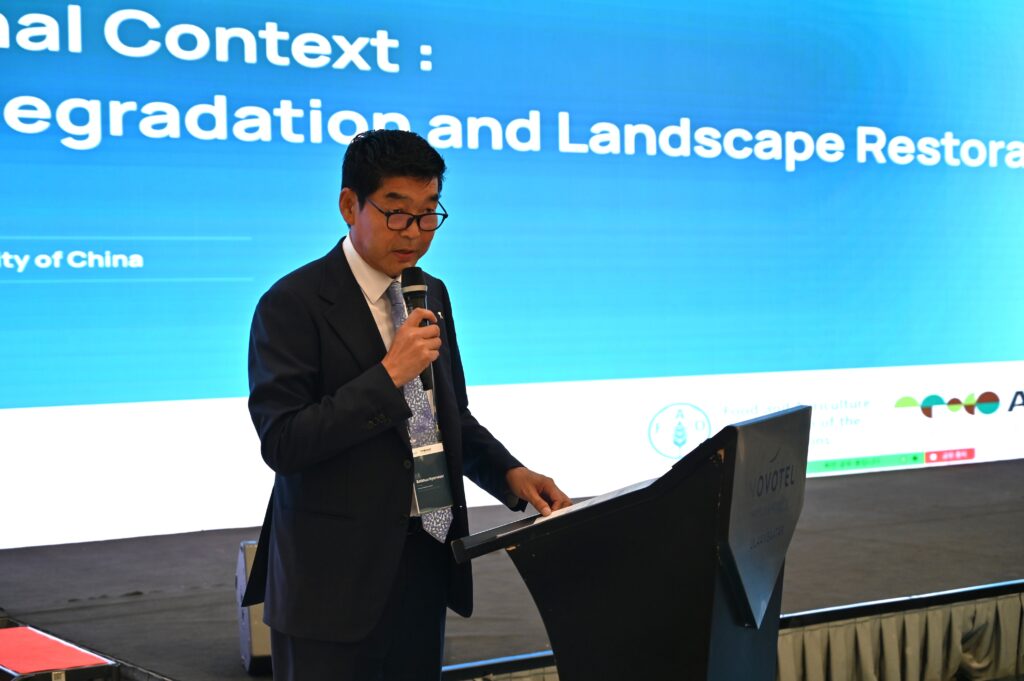
Assistant Executive Director, AFoCO
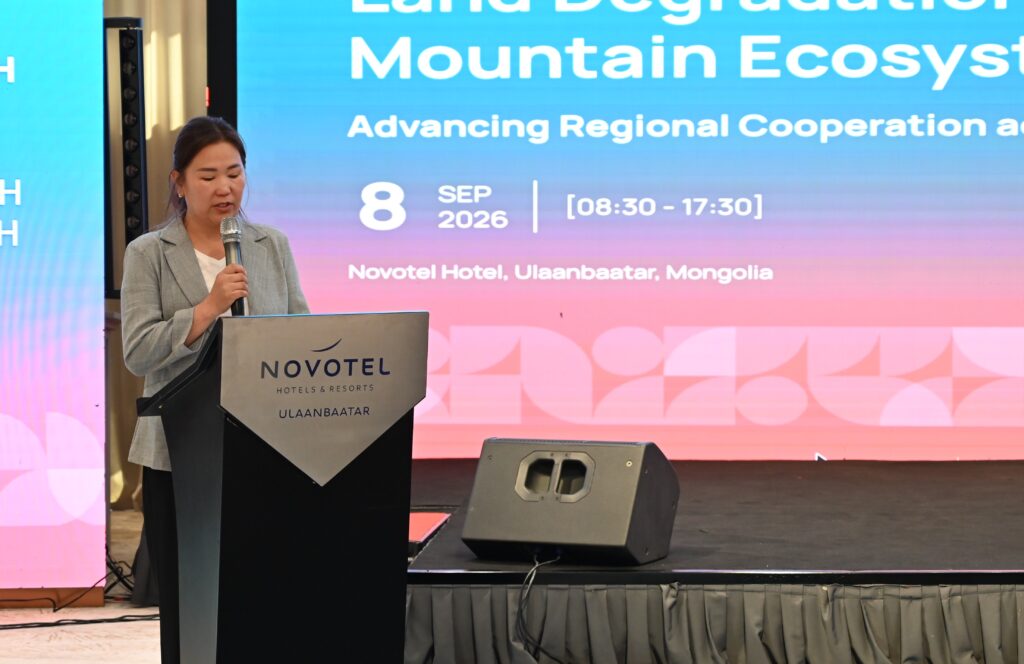
Program Specialist, STREAM+ Project Coordinator, FAO Mongolia Office
Country Experiences on Landscape Restoration
Mongolia: Landscape Restoration and Rangeland Management
- Mandakh Nyamtseren, Senior Researcher at the Institute of Geography and Geoecology of the Mongolian Academy of Sciences, presented Mongolia’s experience in addressing desertification and restoring degraded rangelands. A 2026 national assessment estimates that around 86 percent of Mongolia’s land is affected by degradation, while recent assessments also indicate gradual improvement in some areas. The presentation linked land degradation and desertification to both climate change and human activities, including pressures associated with agriculture, livestock, mining and infrastructure.
DPRK: 20 Years of Forest Landscape Restoration.
- Liu Jinlong, Professor at Renmin University of China, presented “20 Years of Forest Landscape Restoration in the DPRK (Democratic People’s Republic of Korea): Key Lessons and Implications.” The presentation reviewed the DPRK’s forest degradation since the 1990s, driven by food and energy shortages, dependence on forest resources, agricultural expansion, and natural disasters, as well as its subsequent efforts to expand forest restoration and seedling production. The presentation also highlighted the challenges of sustaining restoration under limited international support and constrained resources. It emphasized that long-term restoration requires more than planting trees, with greater attention to seedling quality and survival, local participation, and links between forest restoration, food security and livelihoods.
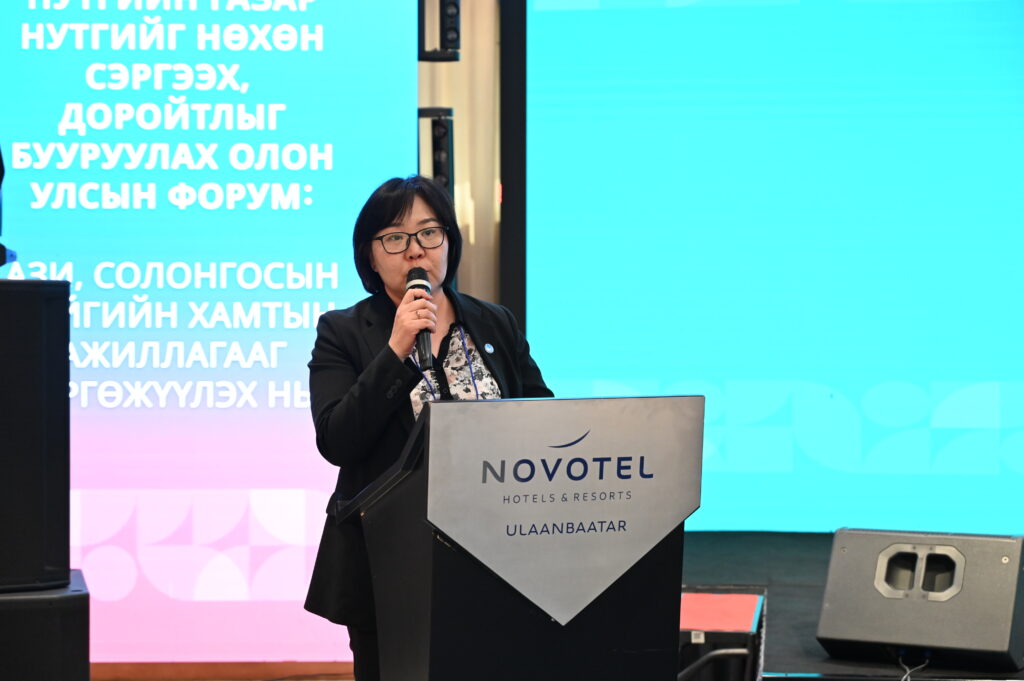
Senior Researcher at the Institute of Geography and Geoecology of the Mongolian Academy of Sciences
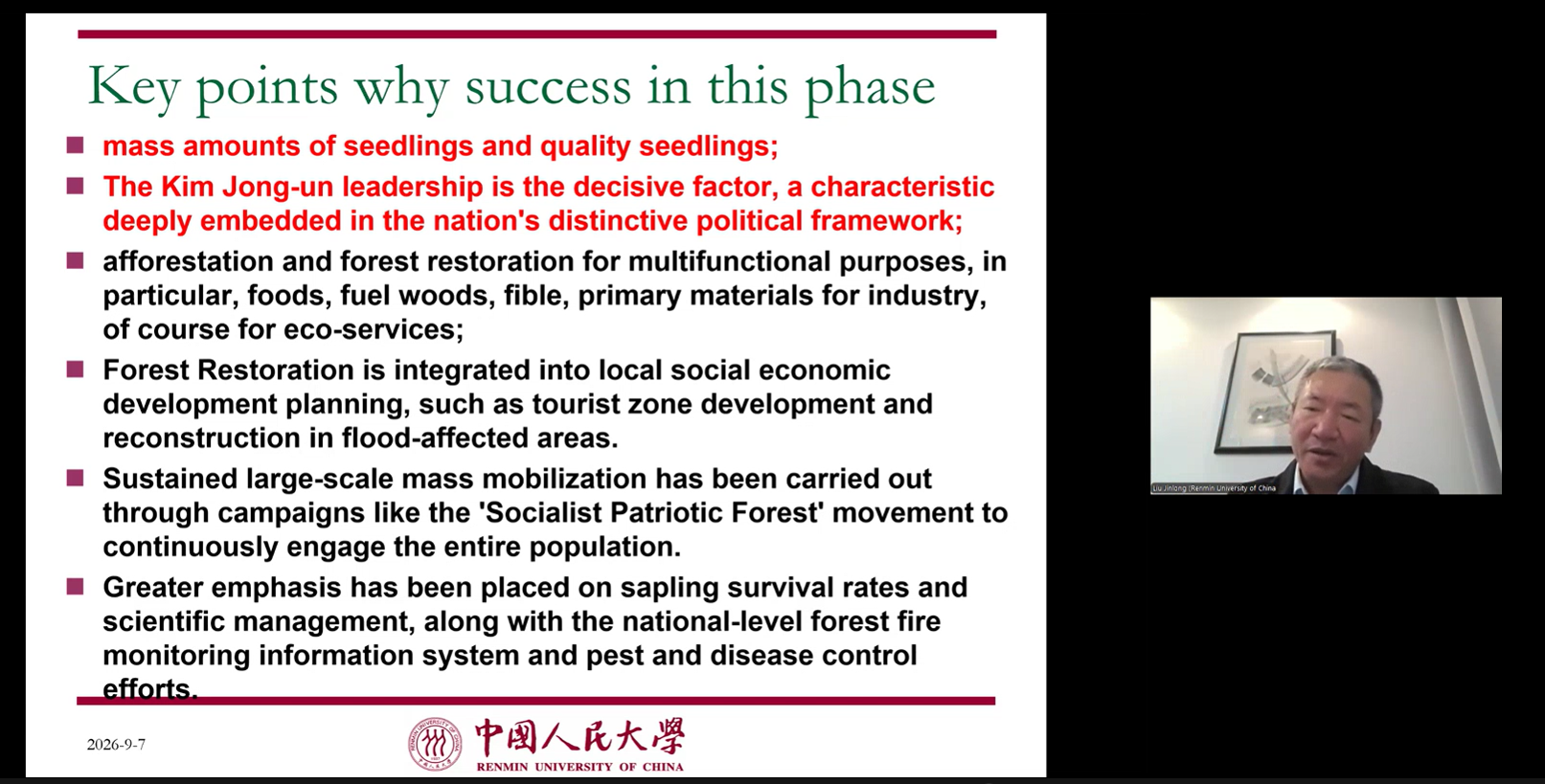
Professor at Renmin University of China
China: Large-Scale Ecological Restoration and Desertification Control
- Wang Feng, Professor at the Institute of Desertification Studies, Chinese Academy of Forestry (CAF) shared China’s experience in large-scale ecological restoration and desertification control, drawing on the Three-North Shelterbelt Program, which has been implemented since 1978 across approximately 4.5 million square kilometres. China has increasingly combined tree planting with natural regeneration, scientific monitoring and measures adapted to local conditions. The presentation also highlighted efforts to connect restoration with local livelihoods and economic activities, including agriculture, medicinal plants, solar power and tourism.
Kazakhstan: Sustainable Land Management and Soil Monitoring
- Meruyert Bakhtybayeva, Deputy Director of the State Institute for Land Survey Work, Land Resources Management Committee of the Ministry of Agriculture Kazakhstan presented the country’s approach to sustainable land management and restoration of degraded land. Kazakhstan has developed digital soil degradation maps covering more than 53.5 million hectares, identifying around 2.7 million hectares requiring priority action. The country is also developing a national soil organic carbon MRV system, combining soil surveys, satellite data, GIS and carbon modelling to strengthen land monitoring and guide restoration planning.
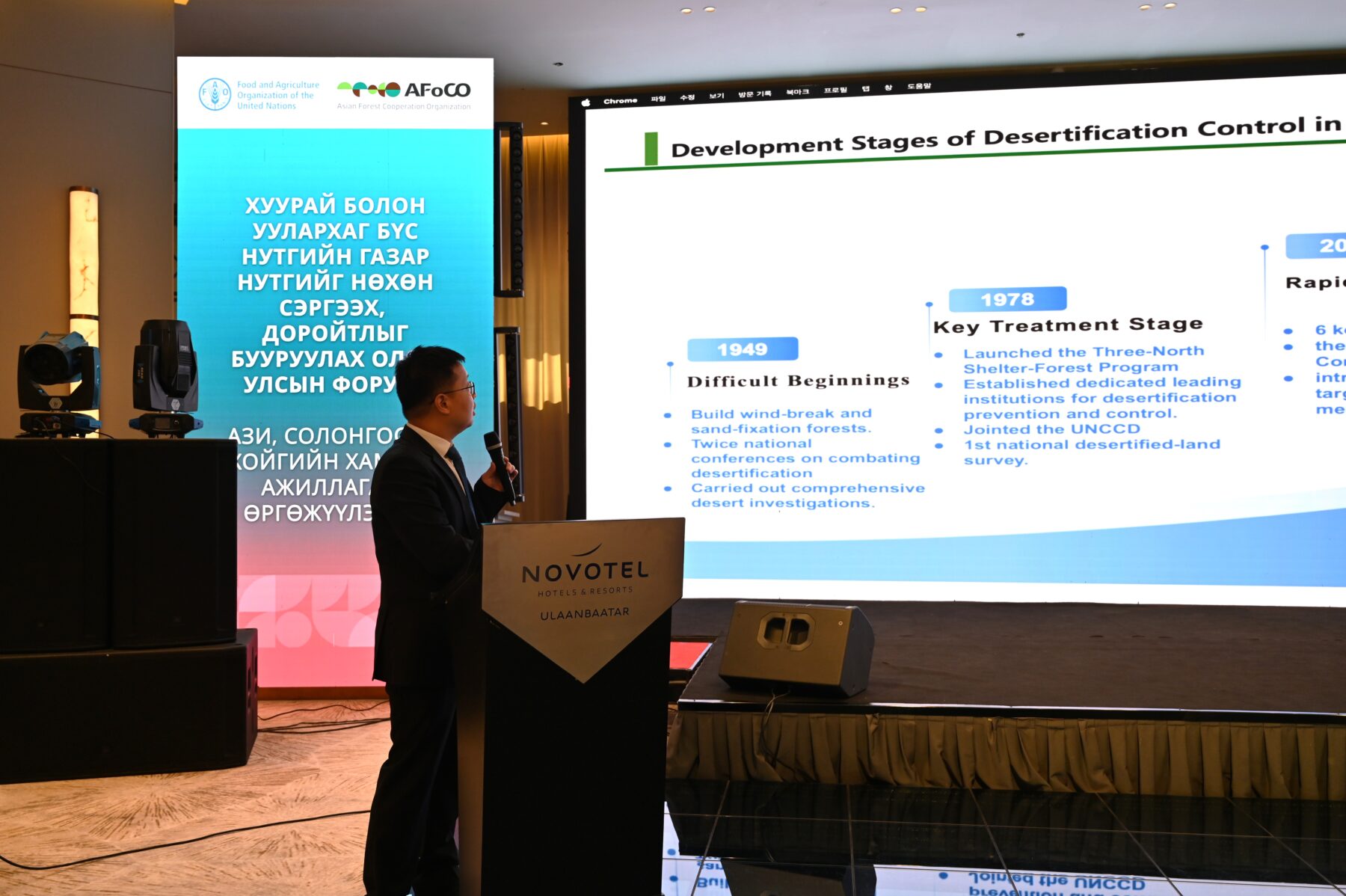
Professor at the Institute of the Desertification Studies,
Chinese Academy of Forestry (CAF)
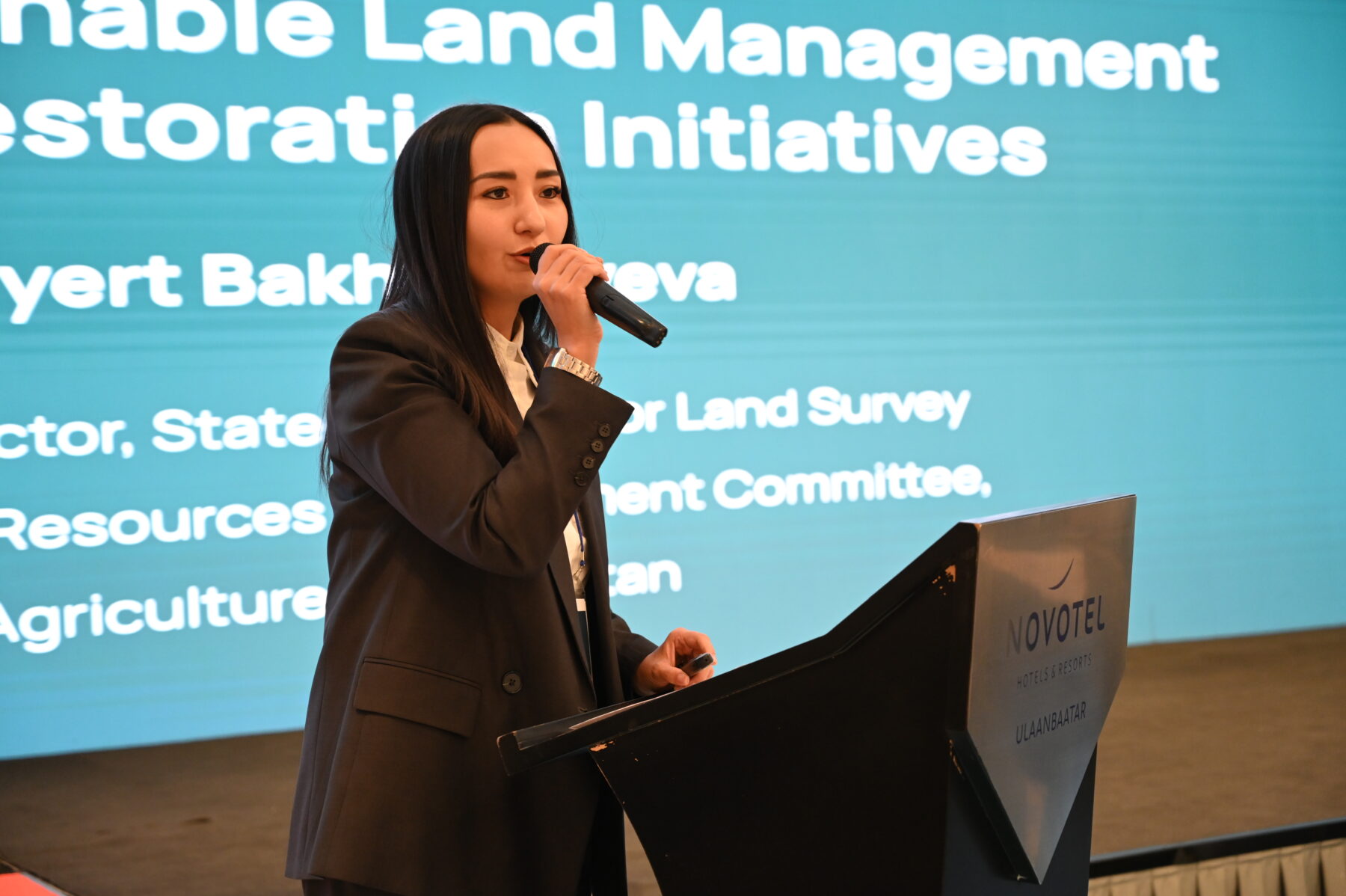
Deputy Director of the State Institute for Land Survey, Ministry of Agriculture of Kazakhstan
Bhutan: Integrated Mountain Landscape Management
- Sonam Tobgay, Chief Forestry Officer of Ministry of Energy and Natural Resources of Bhutan and Saha Bir Rai, Chief Agriculture Officer of the Ministry of Agriculture and Livestock (MoAL) of Bhutan presented Bhutan’s integrated approach to mountain ecosystem and landscape management. With forests covering around 70 percent of the country and protected areas covering about half of its territory, Bhutan places strong emphasis on protection and sustainable use before restoration. The presentation also shared lessons from the planting of around 4 million fruit trees between 2022 and 2025, with high mortality highlighting the importance of seedling quality, site selection and post-planting care. Bhutan is now developing further restoration efforts through the Restore Bhutan Initiative.
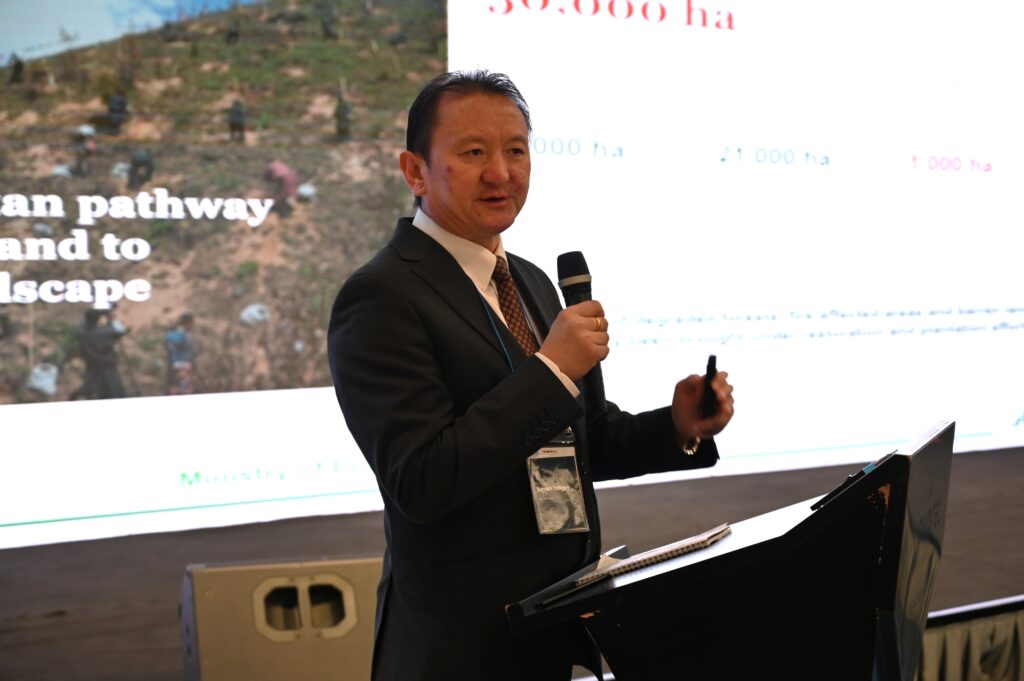
Chief Forestry Officer of the Ministry of Energy and Natural Resources of Bhutan
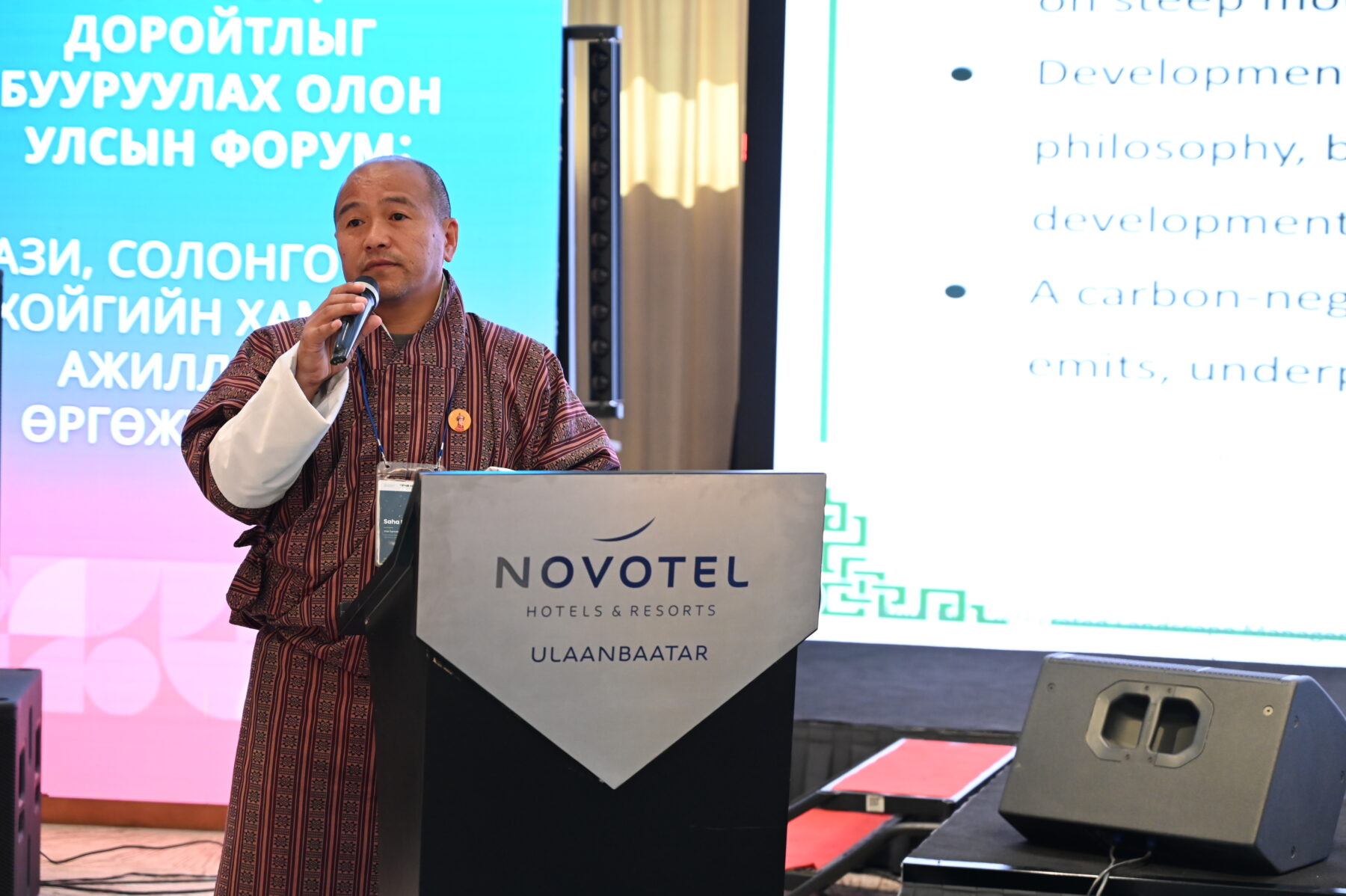
Chief Agriculture Officer of the Ministry of Agriculture and Livestock (MoAL) of Bhutan
Advancing Science, Technology and Community-Based Restoration
Remote Sensing and GIS for Monitoring Land Degradation and Ecosystem Recovery
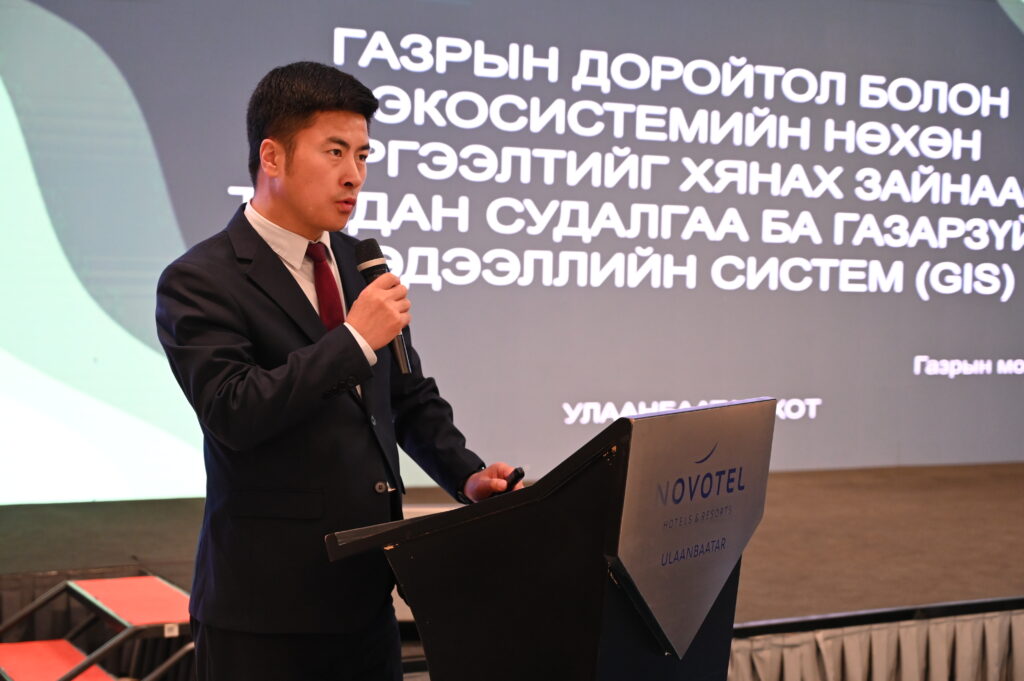
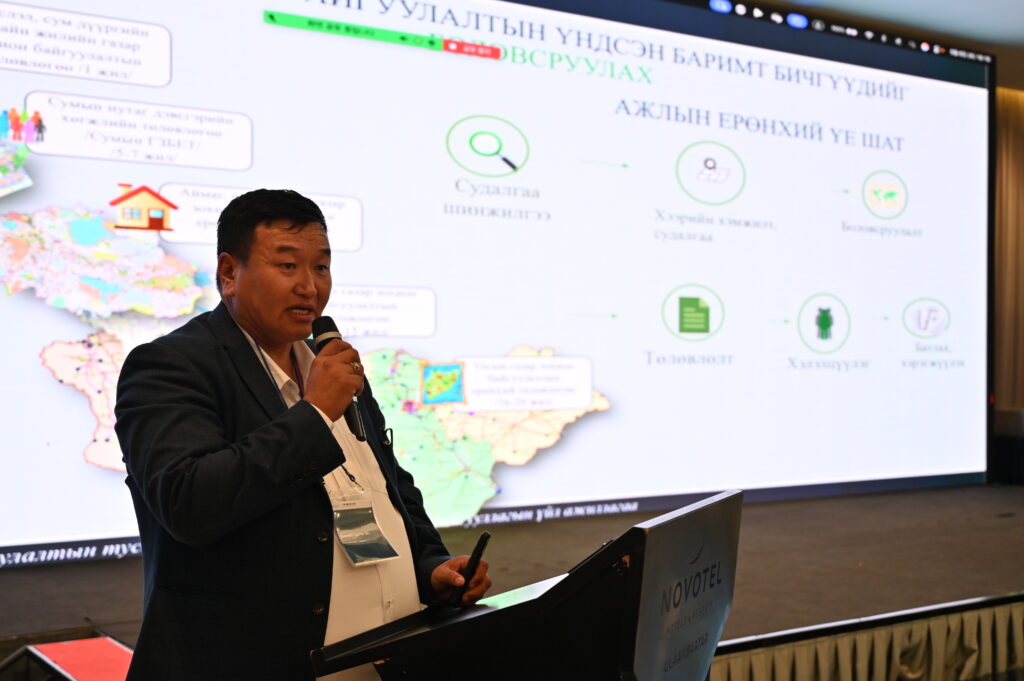
- Dul Baatar, Head of the Land Monitoring Department, General Authority for Land Administration, Geodesy and Cartography (GALAMGaC), Mongolia, presented Mongolia’s use of remote sensing and GIS for monitoring land degradation and ecosystem recovery. He highlighted the country’s integrated electronic land information system, which brings together cadastral, land management, environmental, geological and land monitoring data, including 75 spatial information layers. Mongolia currently maintains data from 6,994 survey areas, 12,646 survey points and more than 5,300 rangeland photo-monitoring sites, alongside land condition assessments covering approximately 67,300 parcels. He emphasized the importance of combining field surveys, remote sensing and rangeland photo monitoring to strengthen evidence-based land management and restoration planning.
Soil organic Carbon stock and changes in Mongolia
- Ganzorig Ulgiichimeg, Head of the Soil Research Division at the Institute of Geography and Geoecology, Mongolian Academy of Sciences, examined Mongolia’s soil organic carbon stocks and their changes over time. Drawing on Mongolia’s long history of soil surveys, including around 3,000 soil profiles and approximately 14,000 soil-related records collected since the 1920s, he presented the basis for assessing national soil organic carbon stocks. He emphasized that soil stores substantial amounts of carbon and that carbon losses associated with land degradation are directly linked to climate change. He also highlighted the need for a national soil monitoring system and stronger integration of soil conservation, sustainable grazing management and land restoration into national planning.
Community-based forest ecosystem conservation case in Khoid Mogoin gol Teel Local Protected Area
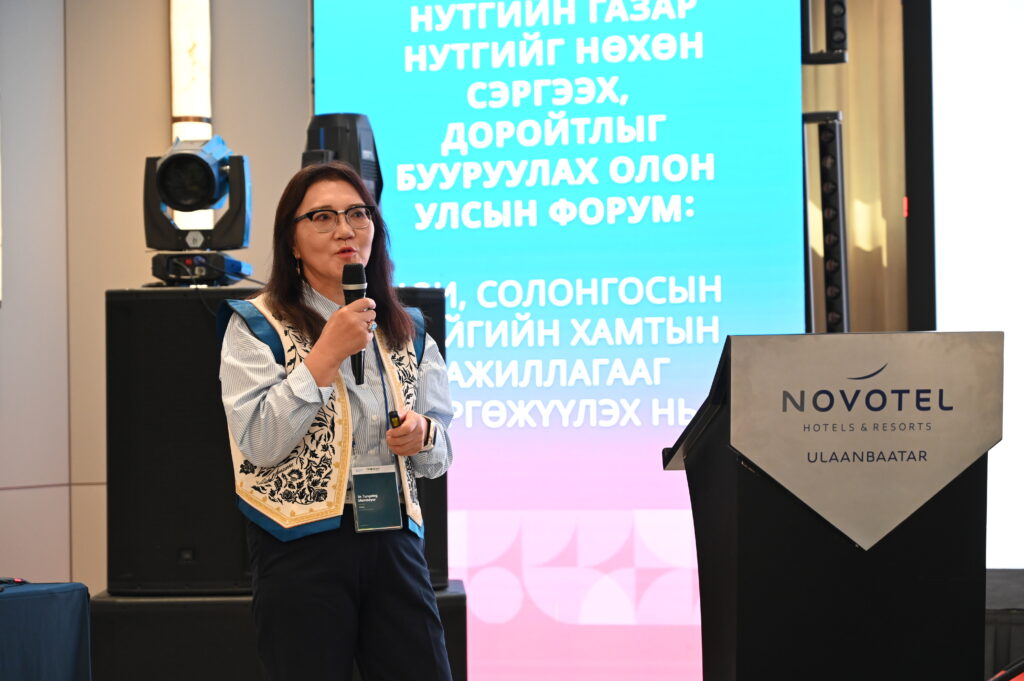
- Tungalag Ulambayar, Country Director of the Zoological Society of London (ZSL) Mongolia, shared the experience of community-based forest ecosystem management in the Khoid Mogoin Gol–Teel Protected Area, where conservation efforts have been implemented since 2018. Covering approximately 240,000 hectares of forest and mountain ecosystems, the area supports around 20 community-based organizations, 361 households and more than 30,000 livestock. She highlighted an integrated approach that links forest and wildlife conservation with local livelihoods, emphasizing community-based monitoring, enforcement and sustainable grazing management. The experience demonstrated that local communities can serve not only as beneficiaries but also as active stewards and partners in ecosystem conservation
Mobilizing Finance and Partnerships for Restoration
Climate Finance and Carbon Markets for Ecosystem Restoration
- Tuvshintungalag Boldbaatar, Senior Sustainability Specialist at URECA LLC, explored the potential of climate finance and carbon markets to support ecosystem restoration in Mongolia. She highlighted the growing role of voluntary carbon markets and nature-based solutions as potential sources of restoration finance, noting that substantially greater investment will be needed to meet the Paris Agreement’s climate goals. She also introduced ongoing efforts to develop carbon-related opportunities for forest and rangeland restoration, including potential projects in Arkhangai and Bulgan and the application of the Verra VM0047 methodology. The presentation underscored the importance of linking restoration investments with measurable climate and ecosystem outcomes.
Large-scale Ecosystem Restoration and Desertification Control
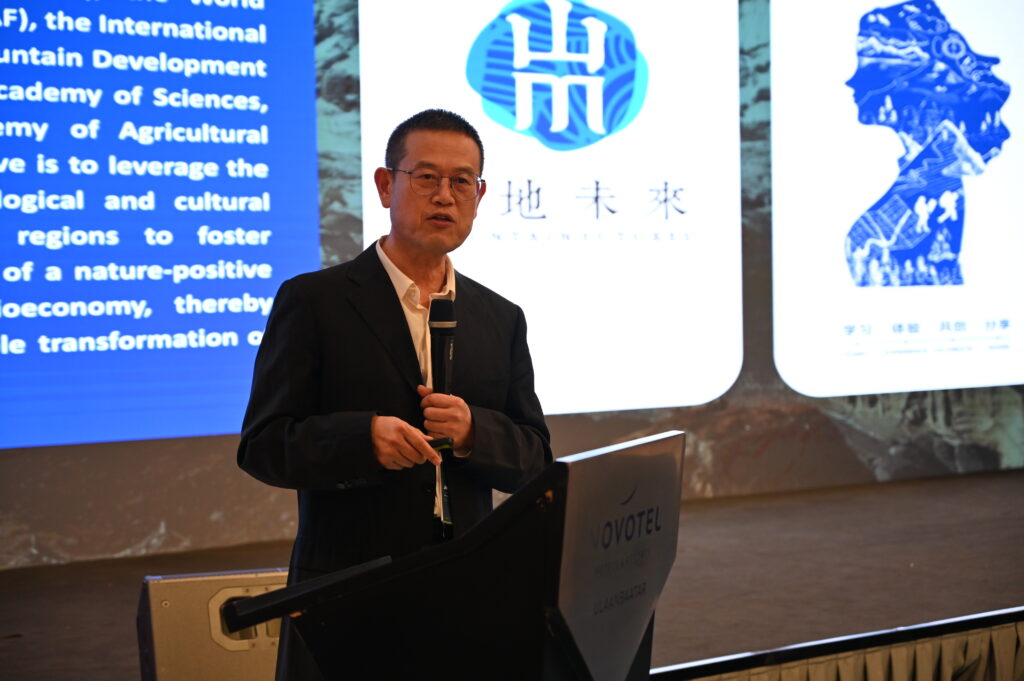
- Jianchu Xu, China Representative of the Landscape Alliance, presented a social-ecological approach to tropical savanna restoration, emphasizing that restoration should generate tangible economic and livelihood benefits for local communities. Rather than relying solely on large-scale restoration, he highlighted starting with smaller interventions centered on specific landscapes, species and local farmers, and then scaling up successful models. He stressed the importance of linking restoration with local value chains and an inclusive bioeconomy that makes use of biodiversity and biological resources. He also advocated diversified agroforestry systems combining trees, shrubs, grasses and soil organisms, rather than single-species planting, to build more resilient landscapes
Engagement of the Private Sector and Professional Institutions in Sustainable Land Management
- Naran-Ochir Sh., Secretary General of the Mongolian Land Management Association, highlighted the role of private-sector and professional institutions in supporting sustainable land management and restoration. Mongolia has more than 250 licensed professional land management organizations involved in land degradation monitoring, land-use planning, land condition assessment and restoration planning. He noted that these institutions increasingly provide land assessment and restoration planning services to private companies and land users, including for degraded agricultural and post-mining areas; since 2021, around 27,000 hectares of agricultural land have reportedly been restored, while a further 8,000 hectares remain in need of restoration. He emphasized that stronger links between scientific data, digital land information, continuous monitoring and restoration planning, together with collaboration among government, professional institutions, communities and the private sector, will be essential for scaling up restoration
In the field
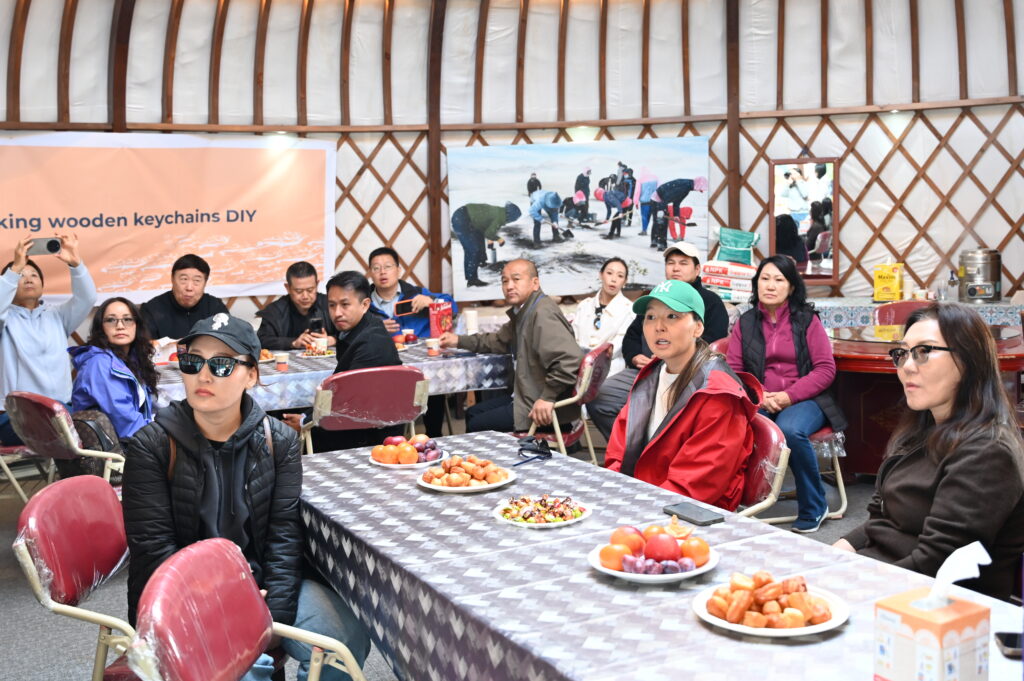
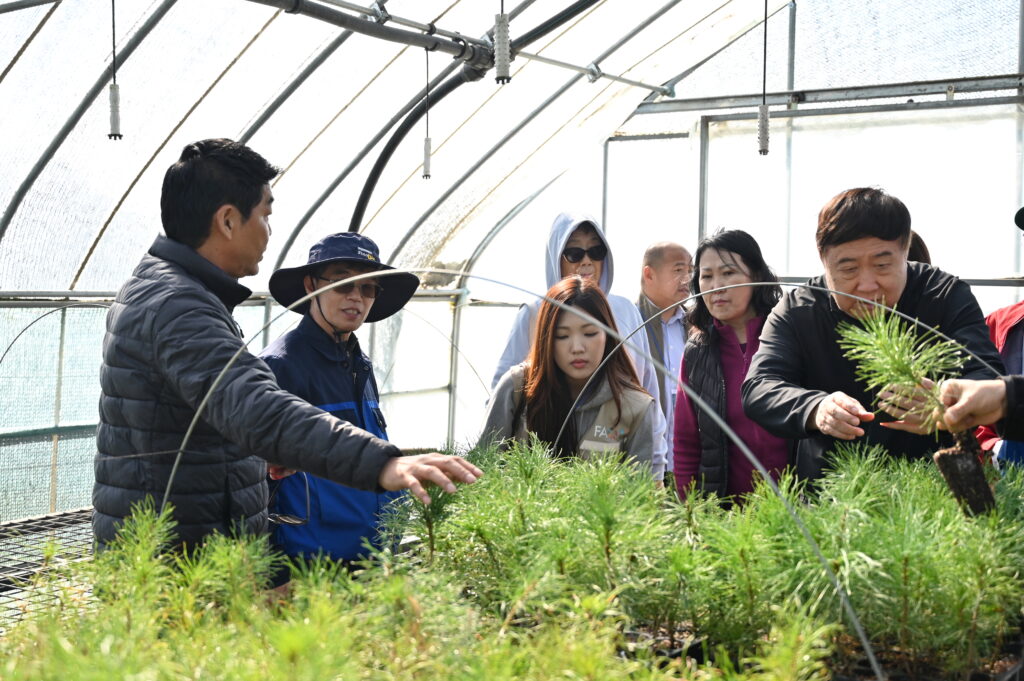
The second day of the forum featured a field visit to two sites highlighting Mongolia’s approaches to forest restoration, research and monitoring. At Mongolia’s Incheon Hope Forest, supported by Incheon city, Republic of Korea, participants observed restoration activities on a former landfill site covering approximately 100 hectares. Approximately 87 percent of the site has been planted with five tree species, including larch, Scots pine and elm, with survival rates exceeding 96 percent. Local staff shared practical experience in managing site conditions, including high soil pH, strong spring winds and low temperatures, while planting around 50,000 trees annually.
The participants subsequently visited the Forest Research and Training Center of the National University of Mongolia (NUM), including its seedling nursery and research forest. A carbon monitoring tower at the site supports observation of changes across the steppe forest transition zone, illustrating the importance of long-term monitoring in assessing ecosystem change and restoration outcomes.
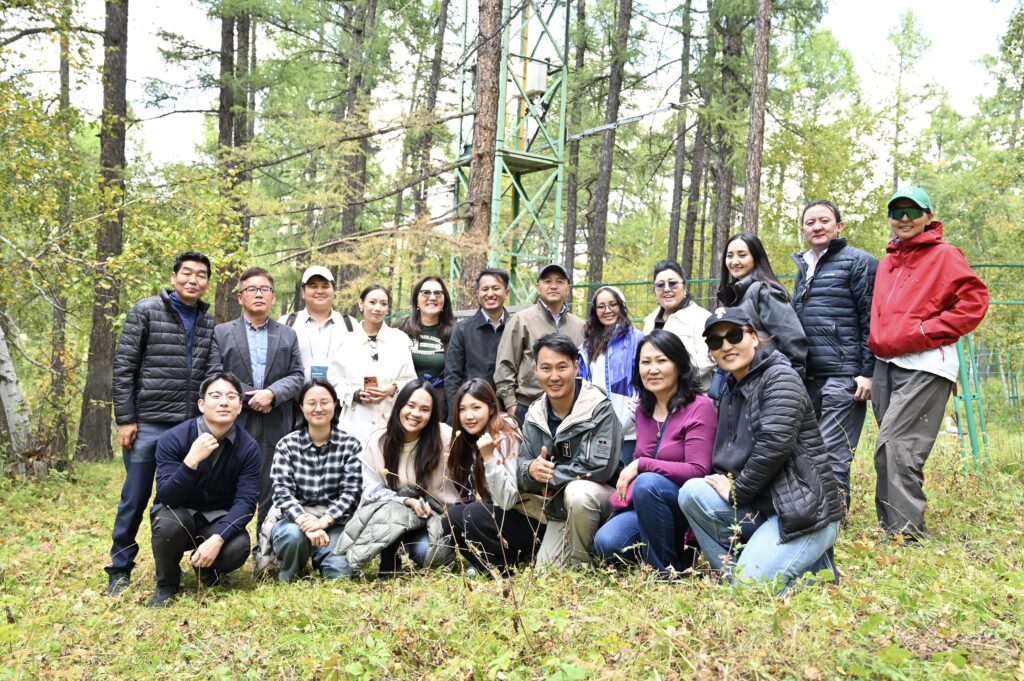
Participants in front of the carbon monitoring tower at the NUM research forest.
Contributed by Ms. Young Kim, Officer, Climate Cooperation Division