
AFoCO has been conducting the Training of Trainers on Forest Fire Suppression (TOTFFS) annually to strengthen the forest fire response capacity of Member Countries. Building on the 1st Training held last year at Kolsai Kolderi National Park, the 2nd Training of Trainers on Forest Fire Suppression in Dryland is now underway at Ile-Alatau National Park in Almaty Region, Kazakhstan, bringing together a total of 32 wildfire responders from Kazakhstan, the Kyrgyz Republic, Mongolia, and Tajikistan.
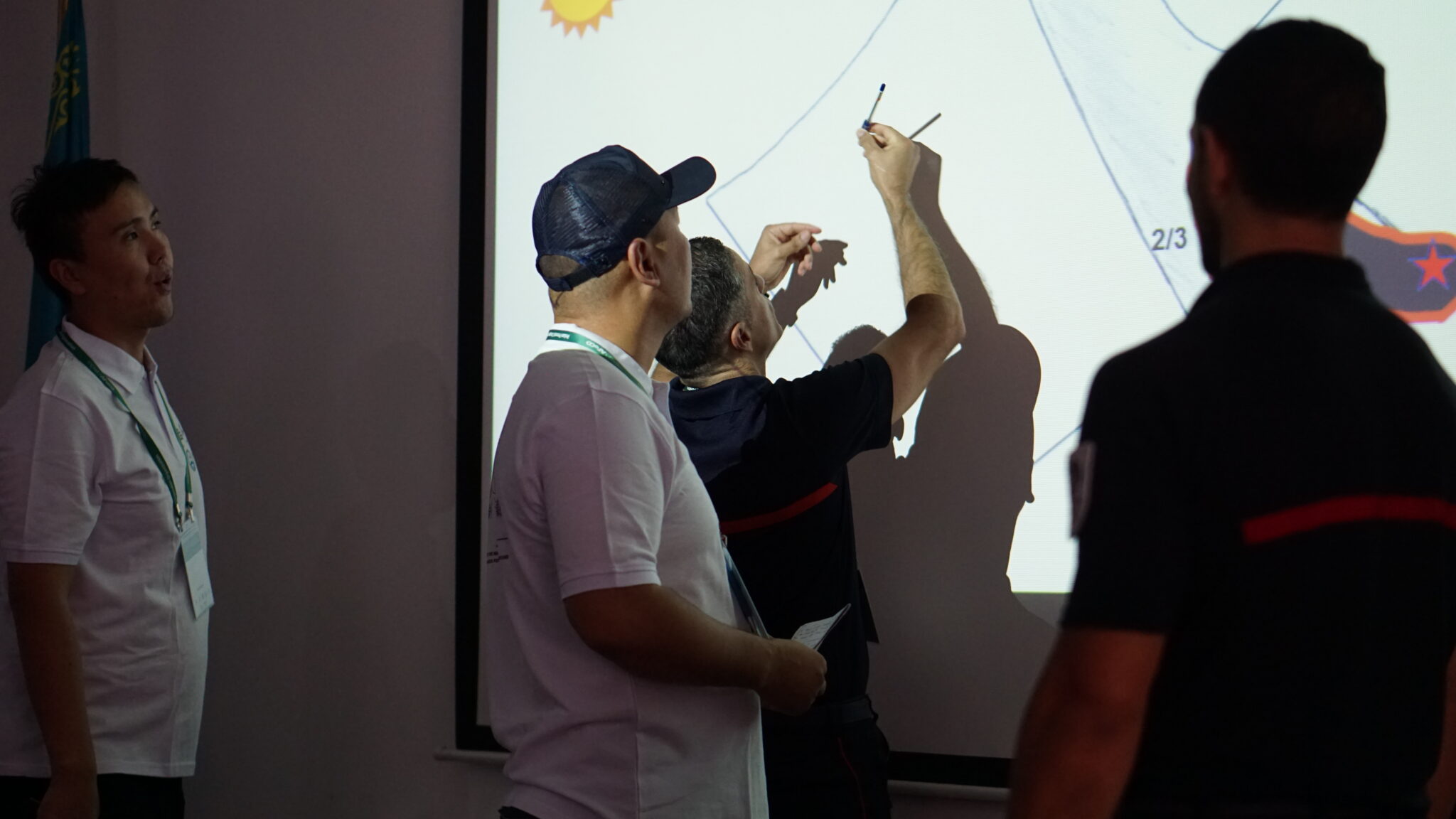
The program once again featured both French and Korean experts, offering a unique blend of scientific analysis and field-based tactical knowledge — this time further enriched by specialists from the Korea Institute for Forest Disaster Safety (KIFDS). This program focused on translating classroom lectures into practical strategies for fire suppression in dryland and mountainous terrain.
Unpacking Fire Behavior: Science in the Classroom
The training opened its technical program with French trainers Mr. Azzedine EL Hajjami and Lieutenant Lucas Tales, who introduced France’s national forest fire management strategy, regulations, and the DFCI (Défense des Forêts Contre l’Incendie) framework, before turning to the Forest Fire Analyst tool and its core assessment methods.
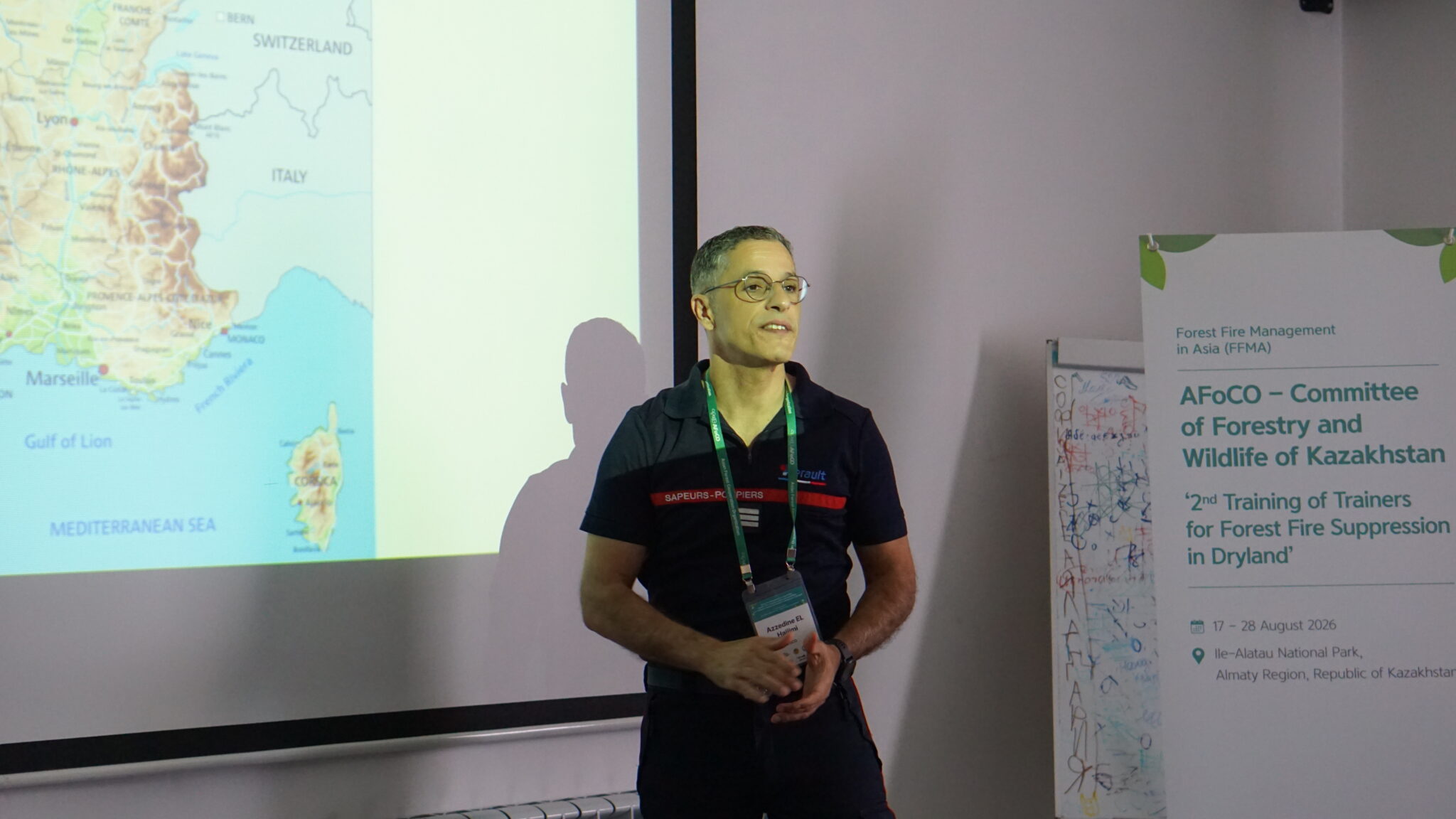
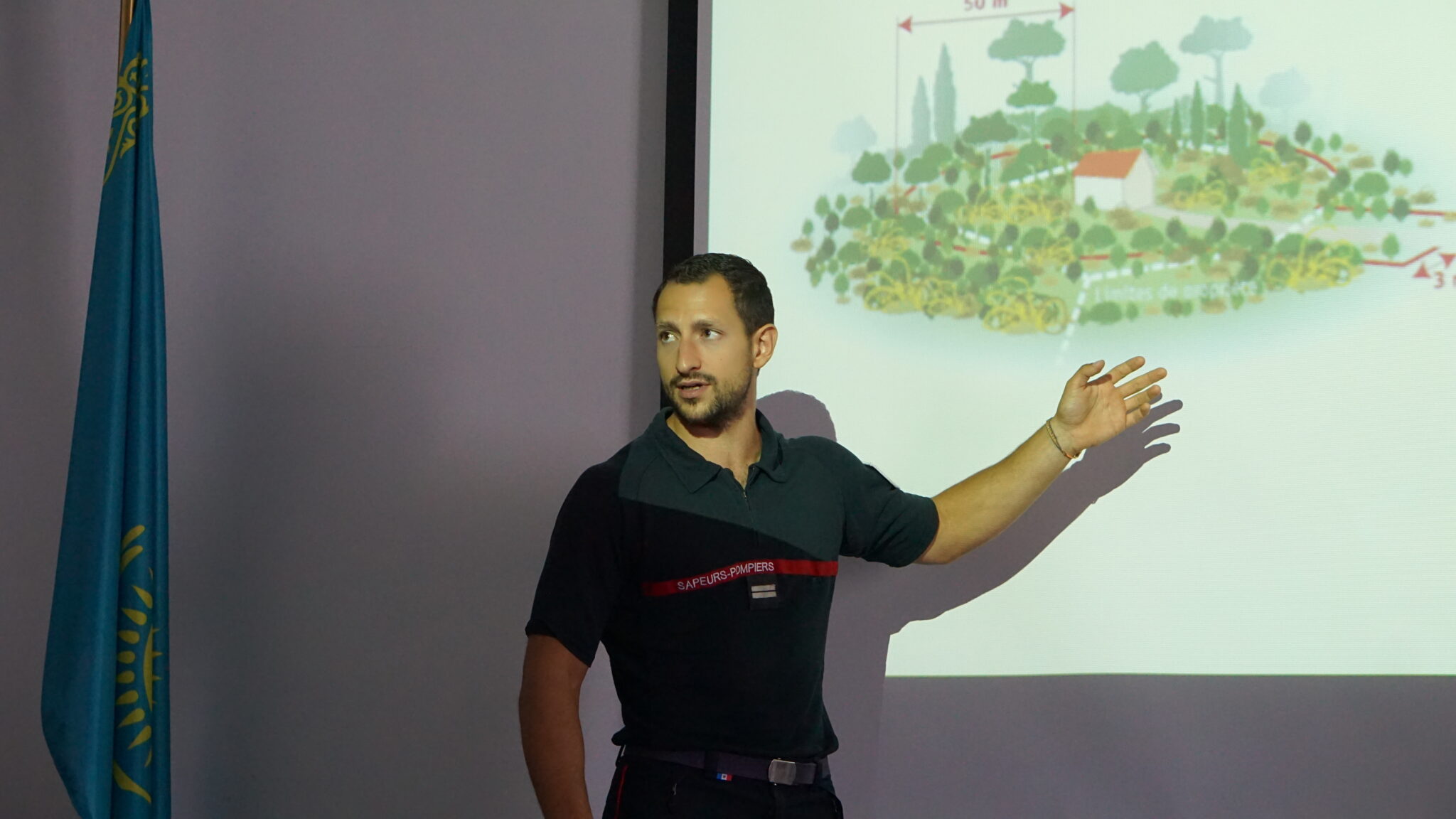
Central to the French sessions was the Fire Behavior Analysis module, built around the Fire Behavior Triangle — the interactions of Fuel, Weather, and Topography. Participants learned how steep slopes accelerate fire spread, how low humidity increases ignition probability, and how these factors combine to drive fire intensity and direction across dryland and steppe terrain. Fires were examined through the Campbell Prediction System (CPS), which anticipates rapid fire spread when wind, slope, and solar radiation align, while the Forest Fire Analyst’s data-for-forecast tools and fire spread modeling gave participants a data-driven framework for prediction rather than reliance on field intuition alone. Sessions on LCES (Lookouts, Communication, Escape routes, Safety zones), the 10 Standard Fire Orders, and the 18 Watch Out Situations grounded this analytical knowledge in operational safety.
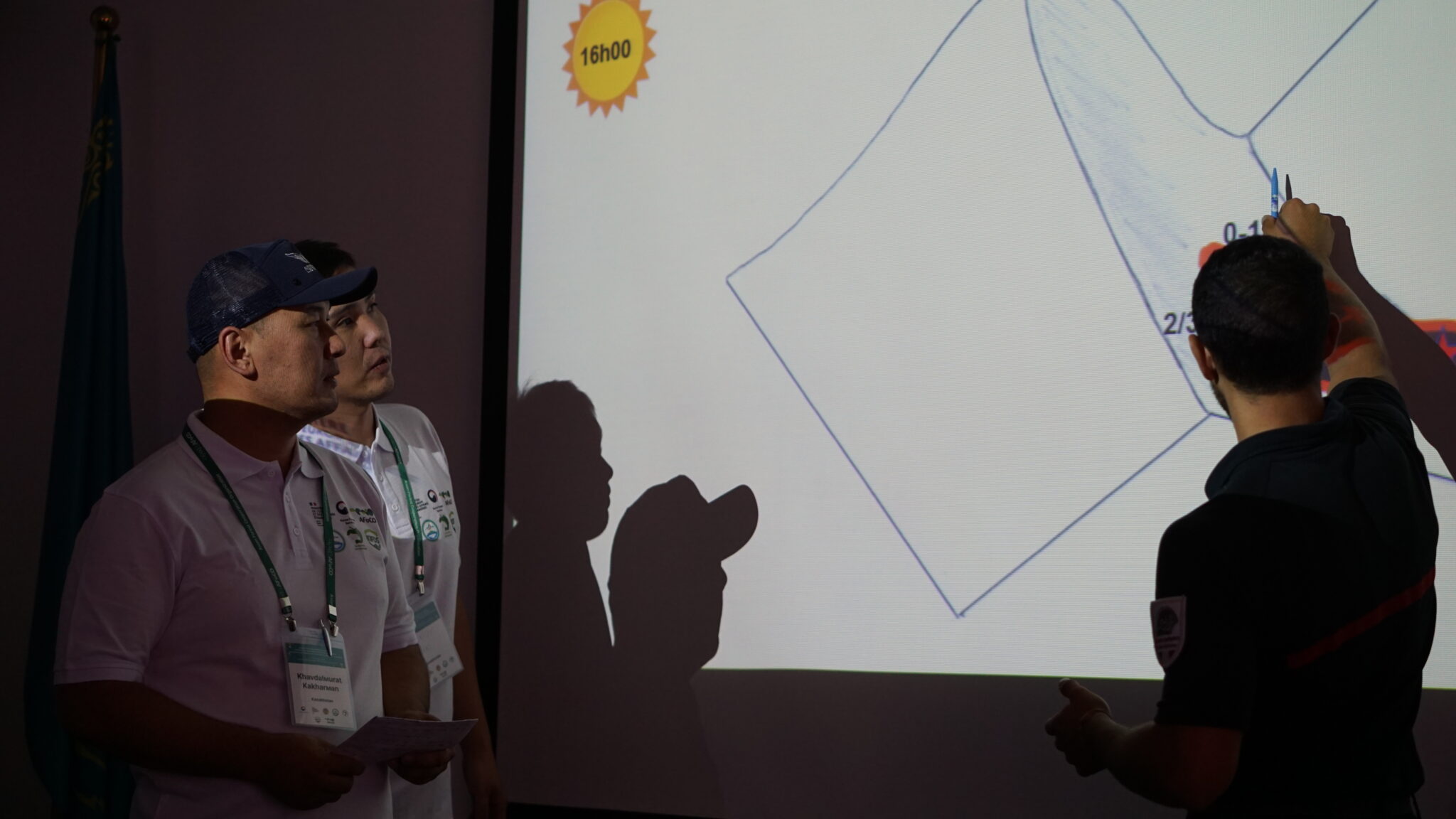
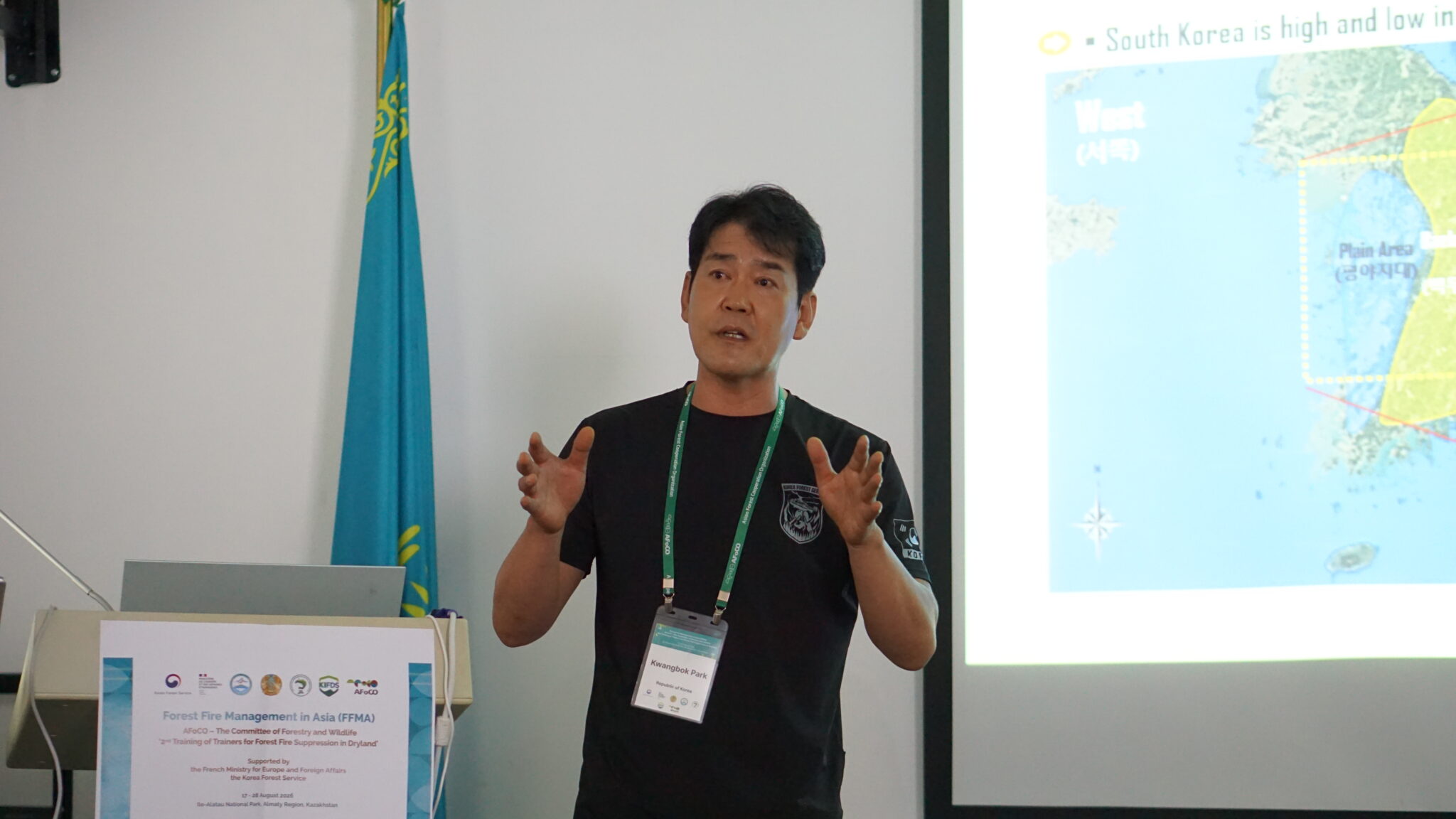
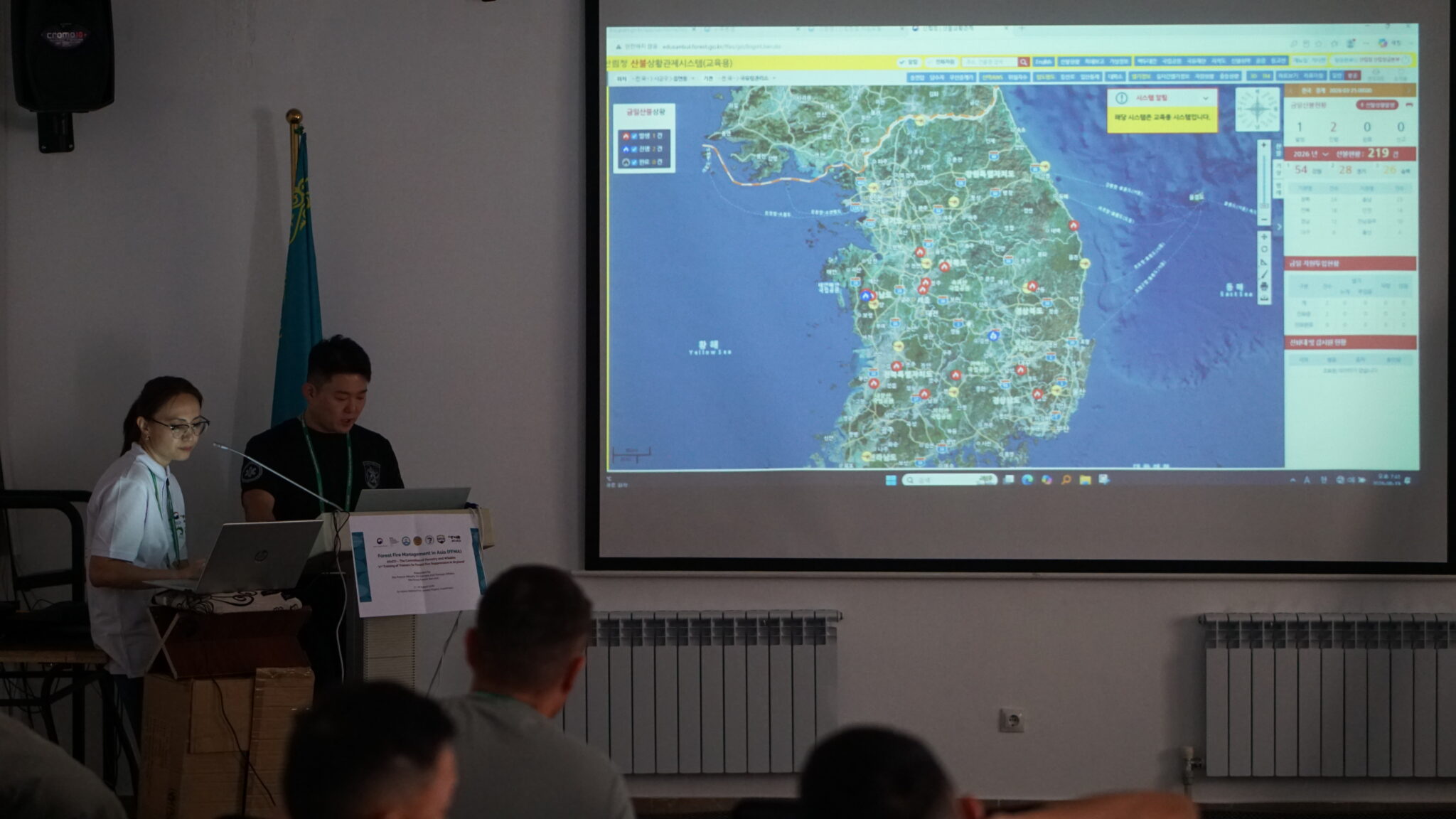
Participants also completed a practical mapping exercise combining DFCI cartography with use of the Fire Danger Ruler and Ignition Zone Analysis techniques, alongside training in reading topographic maps using a compass — translating classroom concepts on fuel, weather, and terrain into concrete map-reading and risk-zoning skills applicable to their own countries’ landscapes. Korea Forest Service (KFS) trainers — led by Mr. Park Kwangbok, Team Leader of the Forest Aviation Headquarters, together with Mr. Jeong Jongjin, Mr. Lee Sanggue, and Mr. Kim Hyun — then presented a practical perspective grounded in real-world operations. They introduced Korea’s nationwide forest fire suppression system and equipment and tactics, followed by a session on Korea’s Forest Fire Situation Monitoring System, before guiding participants through the development of suppression strategies.
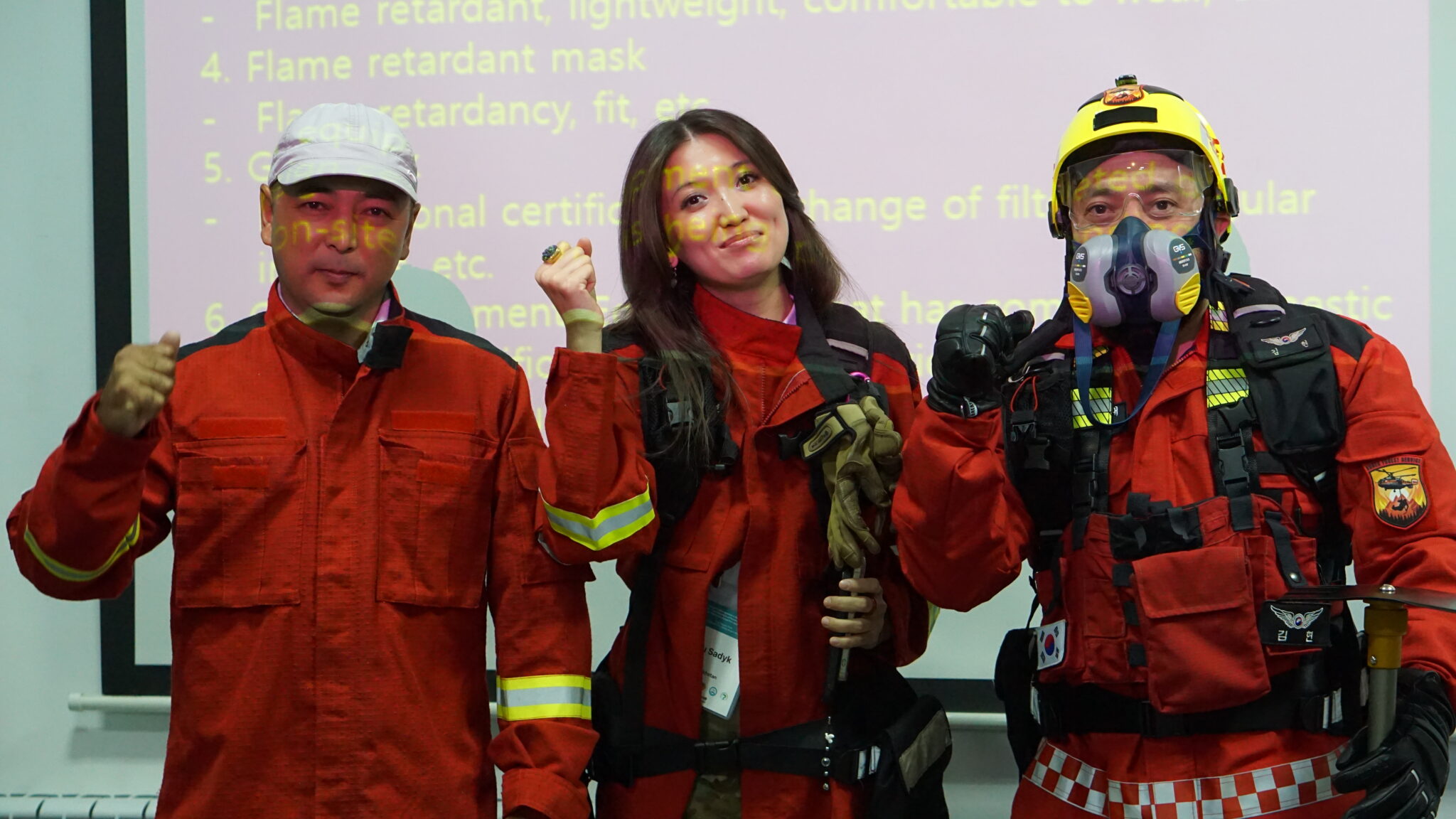
Field safety was addressed through a review of accident case studies, hands-on training in Personal Protective Equipment (PPE), and Fire Shelter Deployment training. Participants also completed First Aid training — including CPR, bandaging, and splinting — and practiced map reading and land navigation for remote mountainous terrain.
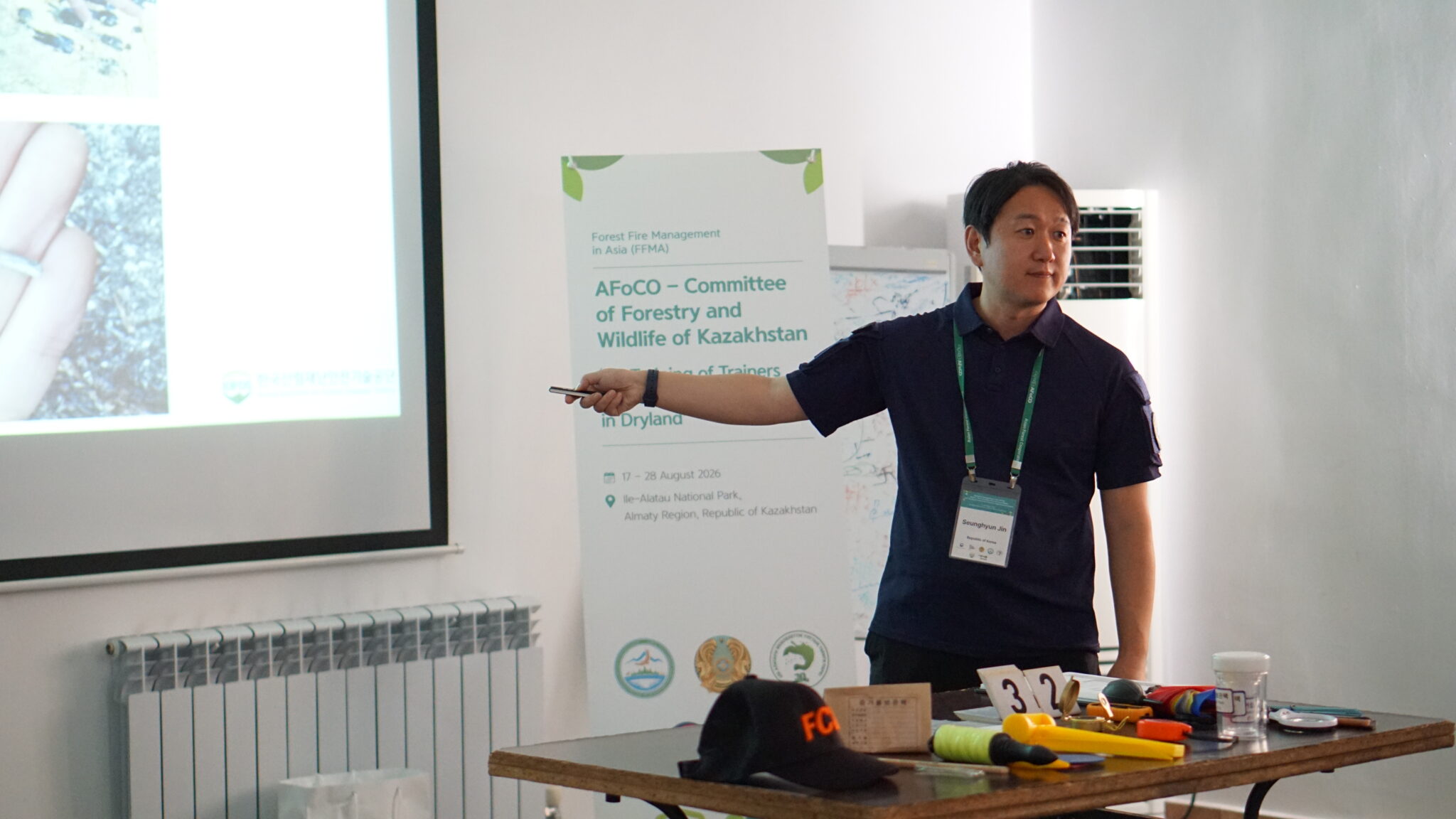
The training further benefited from the participation of Mr. Jin Seunghyun of the Korea Institute for Forest Disaster Safety (KIFDS), who led two modules on wildfire investigation: Fundamentals of Wildfire Investigation, introducing systematic methods for identifying ignition points and determining fire causes through real Korean case studies, and Wildfire Investigation Report Writing, followed by a practical exercise applying these methods.
By combining scientific modeling from France with Korea’s tactical expertise and KIFDS’s investigative methodology, the lectures gave participants a comprehensive foundation that merged theory, field-tested tactics, and analytical tools for dryland fire suppression.
Turning Theory into Action: Sand Table Simulations
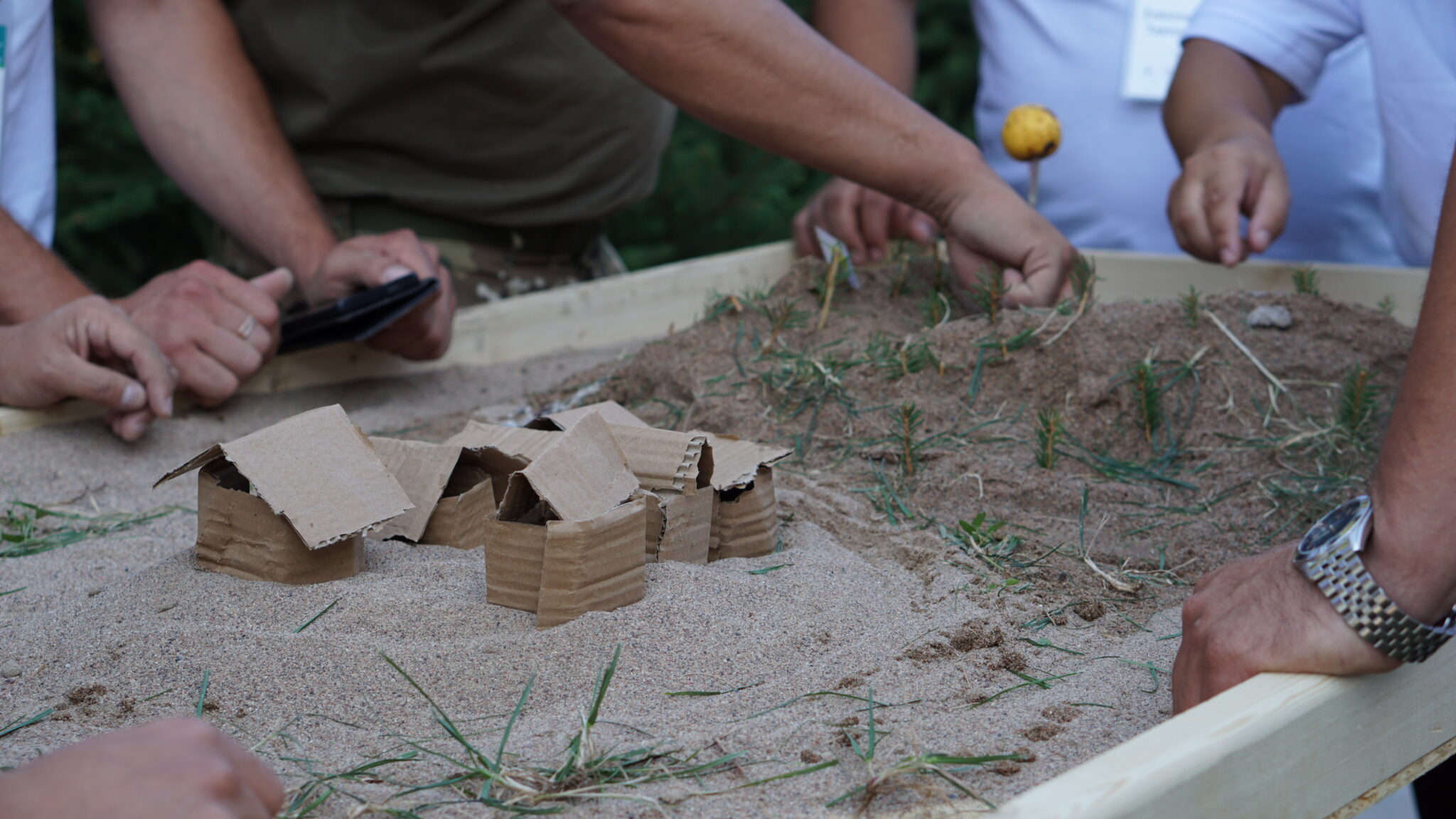
Following the classroom sessions, participants engaged in the Sand Table Exercise, jointly delivered by French and Korean trainers to compare their strategic approaches side by side. Using terrain models to recreate the mountainous landscape of Almaty Region, teams simulated forest fire spread under different wind and topographic conditions, mapping potential fire paths and designing firebreaks and evacuation routes in a safe, controlled environment.
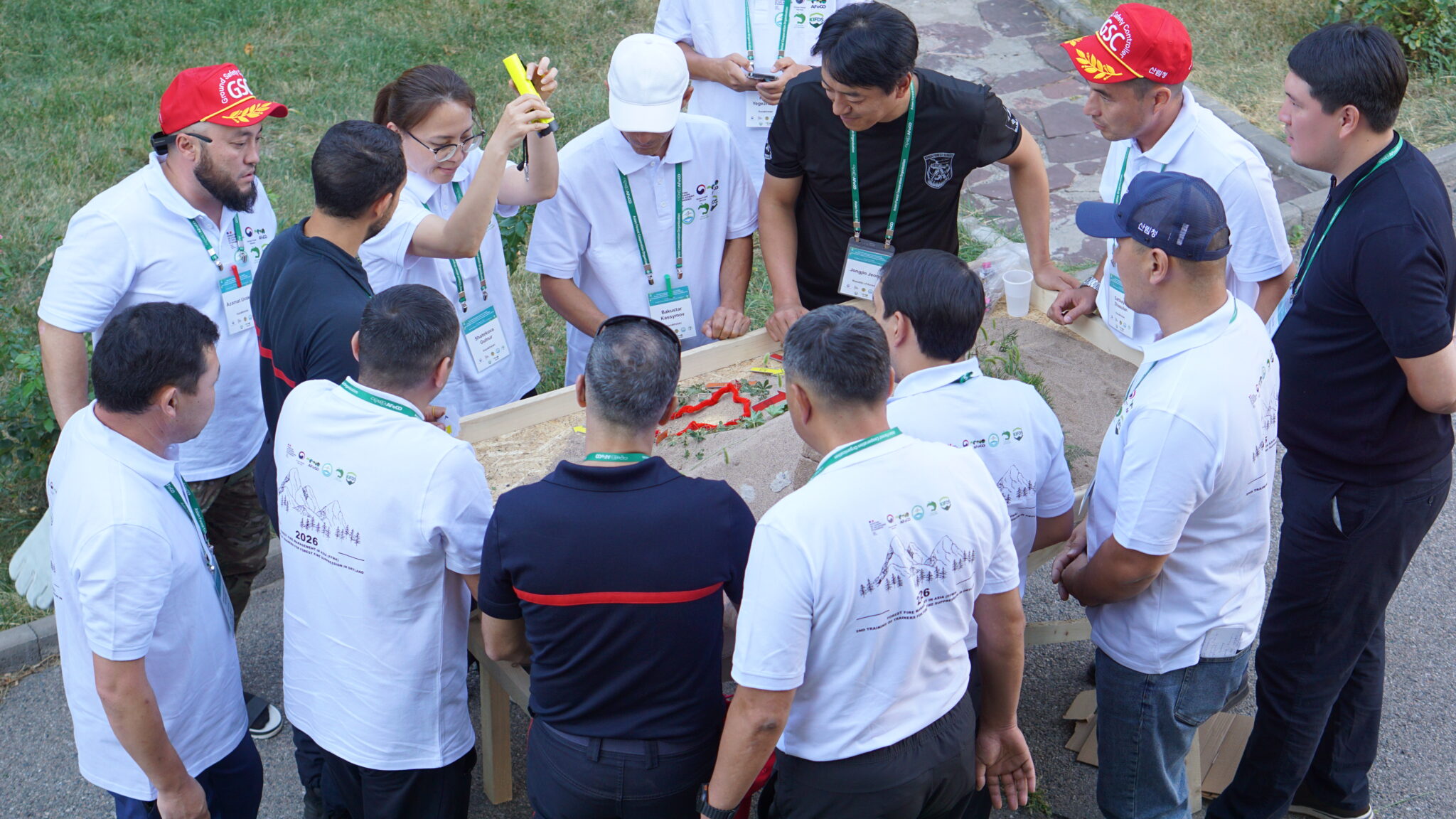
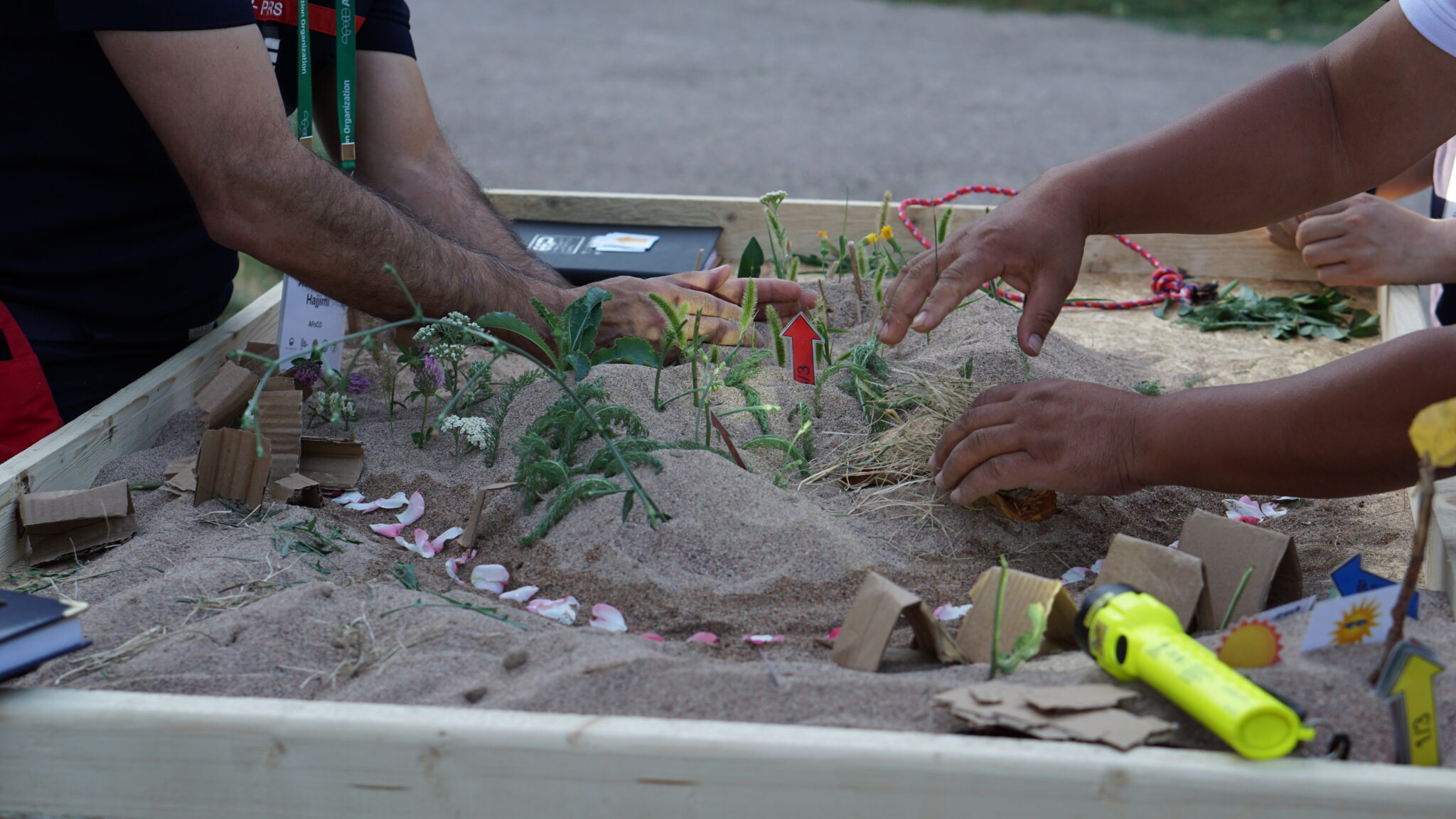
Trainers reviewed and discussed each team’s strategy, helping participants connect the Campbell Prediction System and other analytical tools to practical scenarios. As one of the core modules of TOTFFS, the sand table exercise consistently ranks among the most highly rated by participants, developing strategic thinking, teamwork, and command skills while allowing room to experiment and compare tactics without risk.
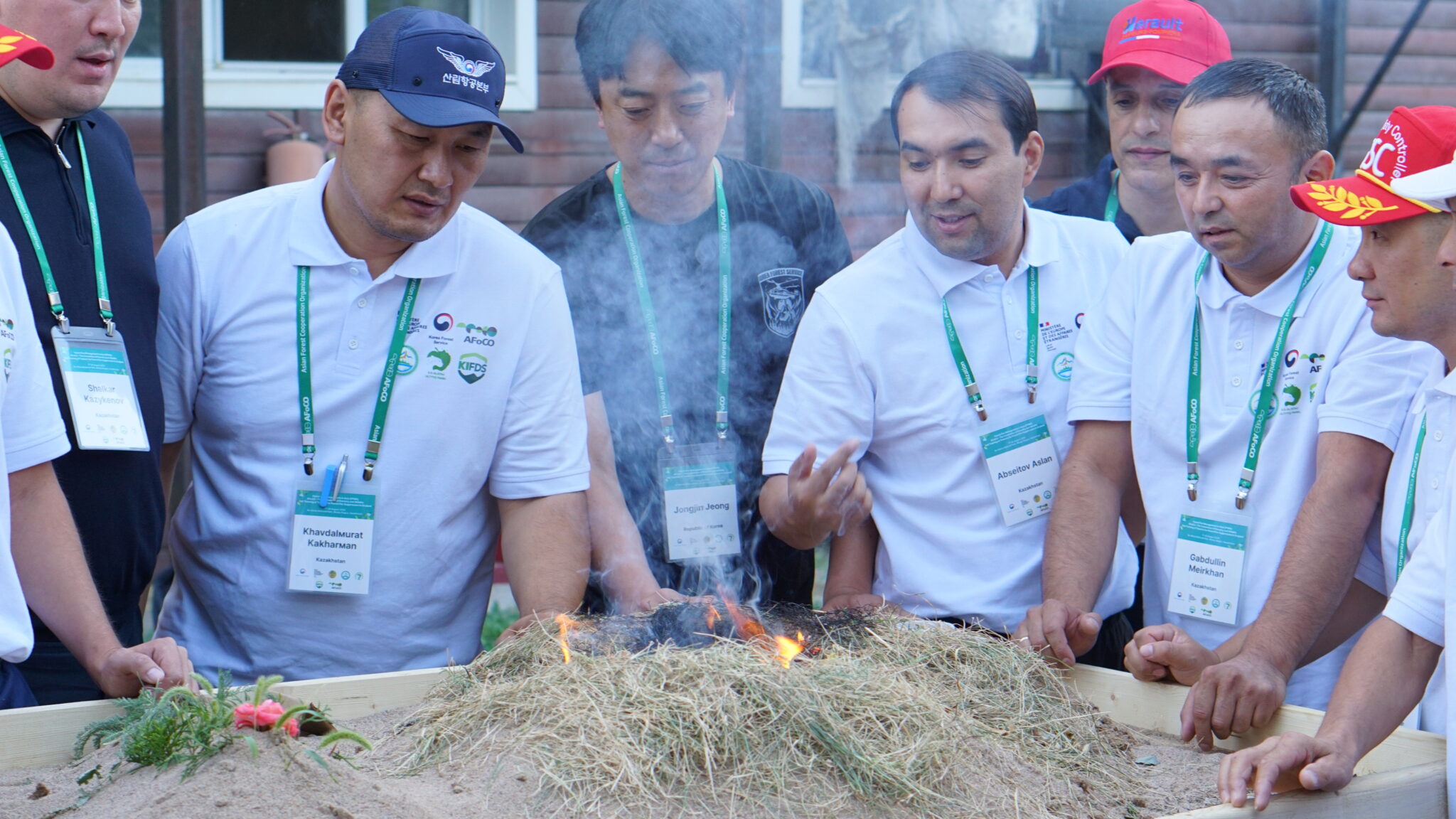
Having built this scientific and strategic foundation, participants are now preparing to put it to the test in the Fire Cross Exercise — bringing them face-to-face with live flames for the first time.
Submitted by Kiwon Kim, Program Officer, Policy Division