
Cambodia — The Mekong REDD+ Project Phase 1 (MRP-P1) is implemented with financial and technical support from Woori Bank (Republic of Korea) and AFoCO in collaboration with Forestry Administration of Cambodia. Covering 14 Community Forestry sites (CFs), the project is expected to sequester carbon dioxide each year, contributing to climate change mitigation efforts. MRP-P1 provides comprehensive support to local communities through forest protection, livelihood enhancement, and the development of sustainable income-generating opportunities.
The project also promotes environmental awareness, strengthens local capacity, supports forest and wildlife conservation, and assists communities in developing REDD+ and carbon initiatives aimed at preventing deforestation and forest degradation.
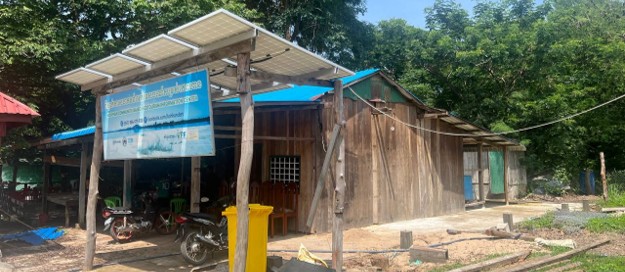
The COVID-19 pandemic in 2020 and 2021 had a severe impact on rural communities in Stung Treng province. In Koh Han Community Based Ecotourism (CBET) and surrounding areas, household incomes declined sharply, community infrastructure deteriorated, and capacity-building activities were suspended. Demand for key forest-based products, particularly resin, dropped significantly. At the same time, CBET almost collapsed due to the absence of visitors, including domestic tourists.
These challenges left communities struggling to maintain their businesses and facilities. In the absence of alternative income sources, some community members increased pressure on forest resources, including selling resin trees to middlemen and clearing forest land for cassava cultivation, contributing to forest degradation and undermining conservation efforts.
Although the public health situation improved in 2022 and 2023, economic recovery remained slow. Families continued to face low resin prices, while Koh Han CBET encountered internal challenges such as outdated tourism services, weak governance structures, and a lack of essential equipment. These constraints limited the community’s ability to restart income-generating activities and respond to changing market demand
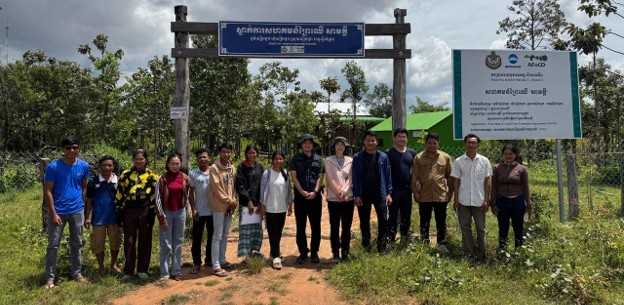
In 2024, the Mekong REDD+ Project1, with technical support from CEPA, began addressing these challenges through targeted interventions aimed at strengthening community resilience while promoting forest conservation. The project supported capacity building, strengthened CBET governance and management systems, upgraded tourism services, and provided essential materials and equipment. These efforts helped reconnect sustainable livelihoods with forest protection—central to the REDD+ approach.
Mr.Kimly, chief of Samaki CF said ““Before the project, we collected and sold resin individually with no materials, storage, or capital, and prices were controlled by middlemen. With support from the REDD+ project—such as a resin warehouse, equipment, and a revolving fund—we can now work collectively, store our resin properly, and negotiate better prices, resulting in more stable incomes and reduced pressure on the forest.”
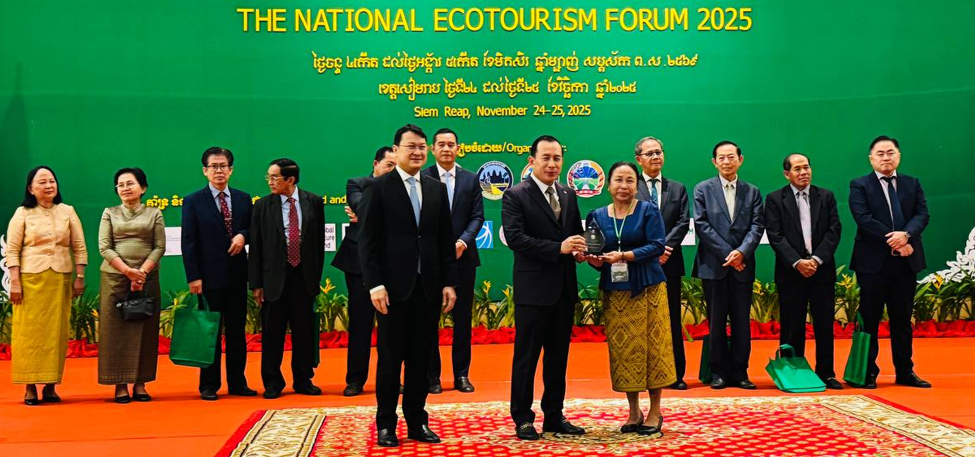
By early 2025, tangible results had emerged. Koh Han CBET, led by a strong women’s group, received the ASEAN Champion Award and recognition from the Ministry of Tourism, highlighting both women’s leadership and improved service quality. In parallel, a livelihood group in Samaki Community Forestry strengthened its operations through facility upgrades, resin warehouse installation, and formal group establishment.
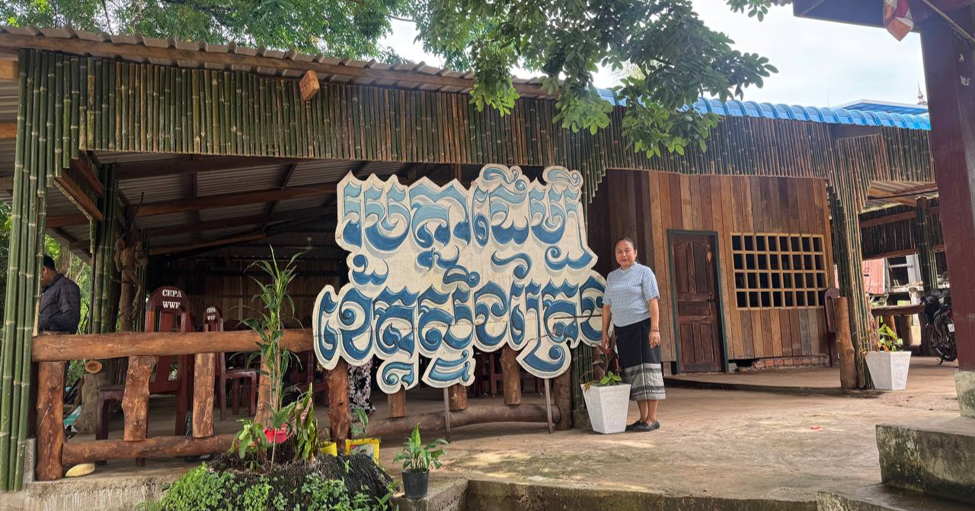
Ms. Bun Sampan, Chief of Koh Han CBET, reflected: “The project’s timely support strengthened our governance structure, enhanced CBET product and services, and improved the CBET center, including the installation of solar water pump system. This support has been very meaningful for our community to recover and revitalize the CBET center, improve service quality, and reinforce effective governance. For 2025 we received 14,572 visitors, including 9,087 women and 370 international visitors compared to the previous year 2022 and 2023 we only received 1825 visitors. This sharp growth reflects the successful recovery and revitalization of CBET operations, driven by improved governance, upgraded facilities, and enhanced tourism products and services.”
Submitted by Minkyu Cha, Assistant Program Officer, Project Team 2