
AFoCO Explores Blended Finance Pathways through Living Labs and Partnerships
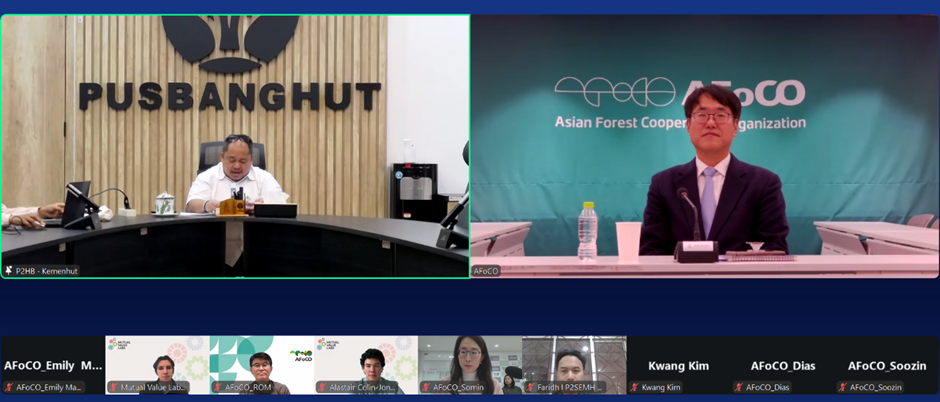
The Asian Forest Cooperation Organization (AFoCO) recently convened a webinar on Advancing the Forest-Positive Economy in Asia, bringing together representatives from the Ministry of Forestry of Indonesia, Mutual Value Labs (MVL), private-sector partners, and technical experts. The webinar explored how blended finance and Living Lab approaches can help scale sustainable forest management while strengthening community livelihoods and private-sector engagement in Indonesia.
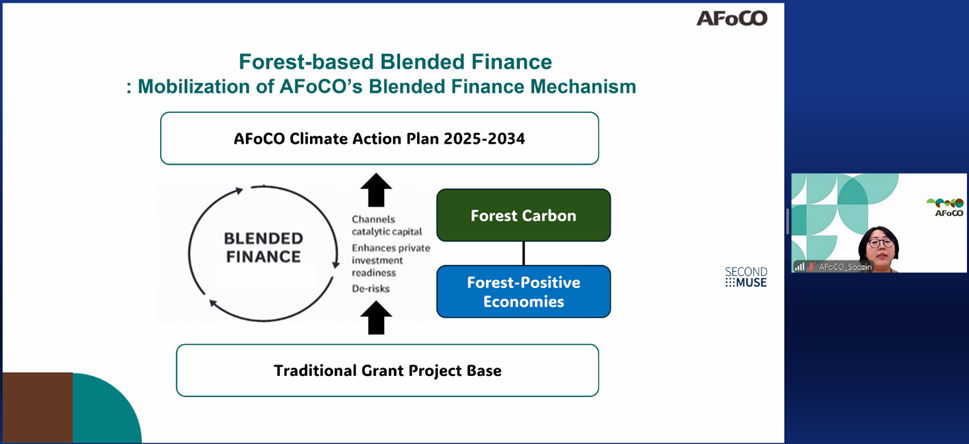
The discussion forms part of AFoCO’s broader efforts under its Climate Action Plan 2025–2034, which seeks to mobilize innovative financing mechanisms and partnerships to support forest-positive growth across its 17 Member Countries.
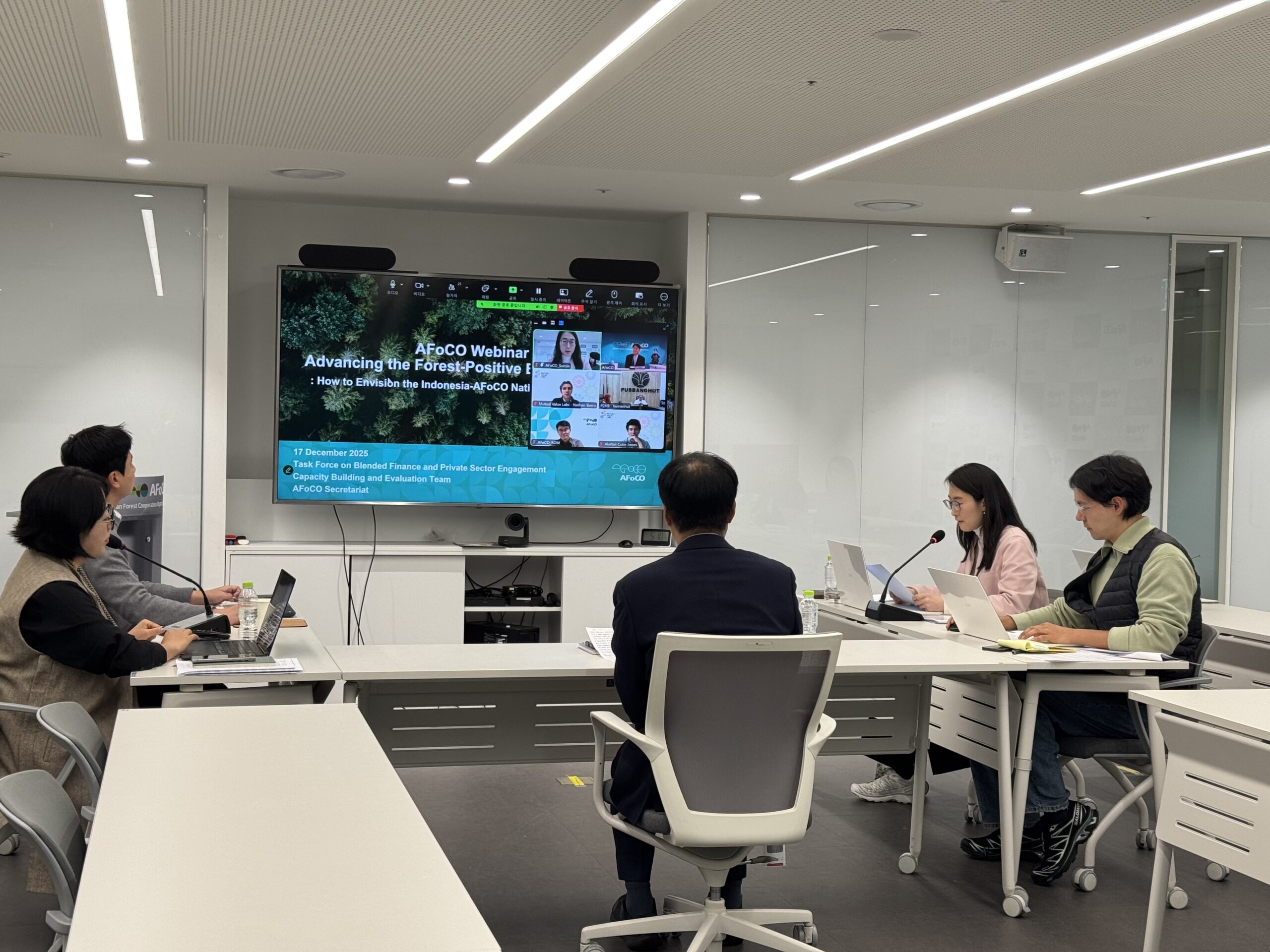
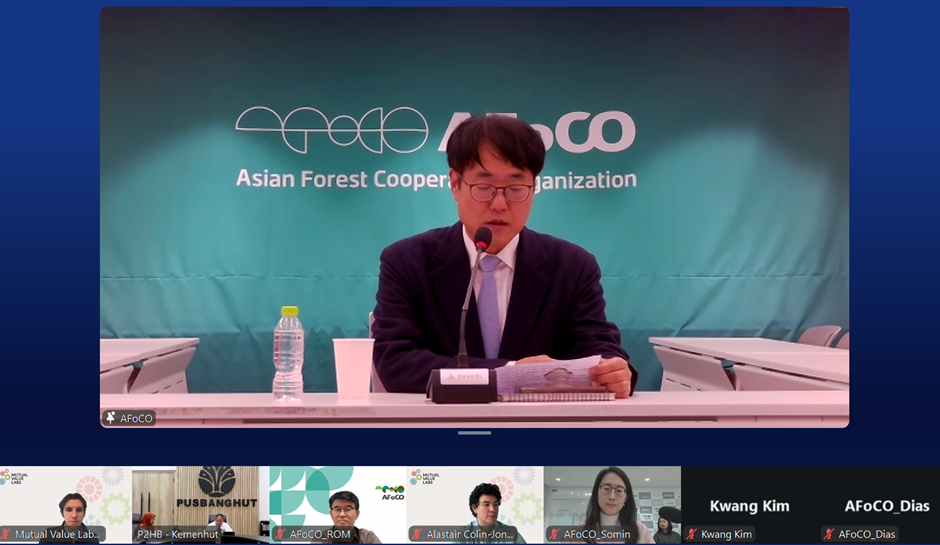
In opening remarks, Sunpil Jin, Vice Executive Director of the AFoCO Secretariat, underscored the growing demand for field-based models that connect climate goals, forest protection, and local livelihoods. He highlighted that at UNFCCC COP30, AFoCO hosted two side events, one on blended finance for community-based carbon programs and another on the ASEAN–AFoCO Living Lab Initiative.
He also noted that Leaders at the 26th ASEAN–Republic of Korea Summit on 27 October 2025 encouraged both sides to respond jointly to the climate crisis through science-based forest restoration and to further explore cooperation through existing mechanisms such as AFoCO, alongside efforts on poverty eradication and rural development.
Why the Forest-Positive Economy Matters
Forests are central to climate action, biodiversity conservation, and rural livelihoods. Yet traditional public funding, including Official Development Assistance (ODA), is no longer sufficient to meet the scale of investment required to protect and restore forest landscapes. At the same time, private capital for nature-based solutions is growing rapidly.
The challenge is not the lack of capital, but the lack of bankable, investable models that can connect public priorities with private investment on a scale. The Forest-Positive Economy addresses this gap by combining public finance, private capital, and community action to create shared value for forests, farmers, governments, and businesses. Through blended finance, public resources can be used strategically to de-risk projects, attract private investors, and scale impact beyond single projects and toward scalable portfolios.
Asian Forest Living Labs as Platforms for Scalable Impact
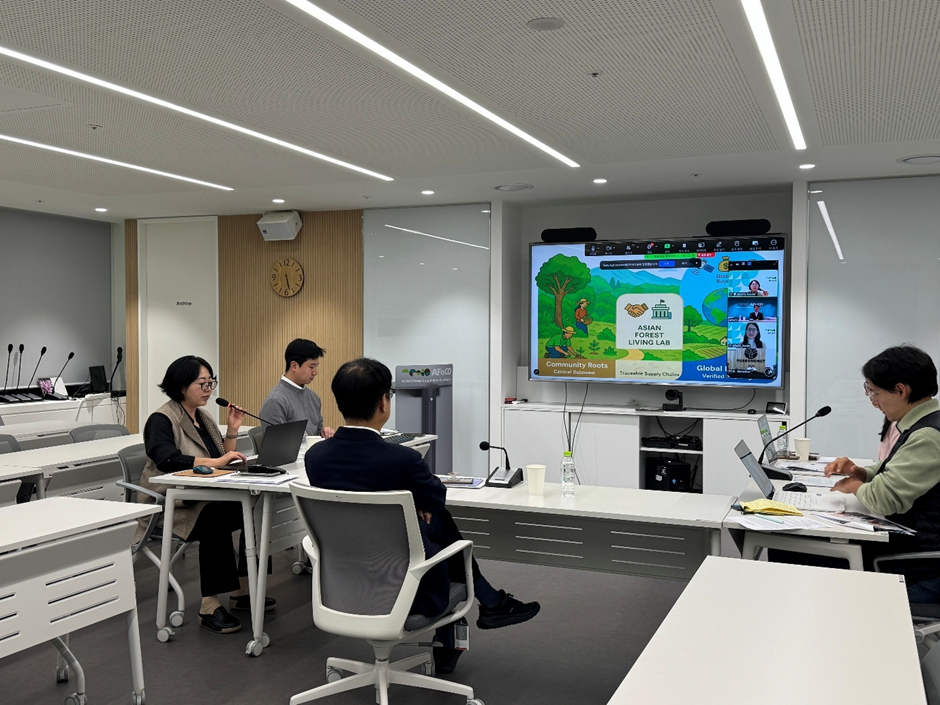
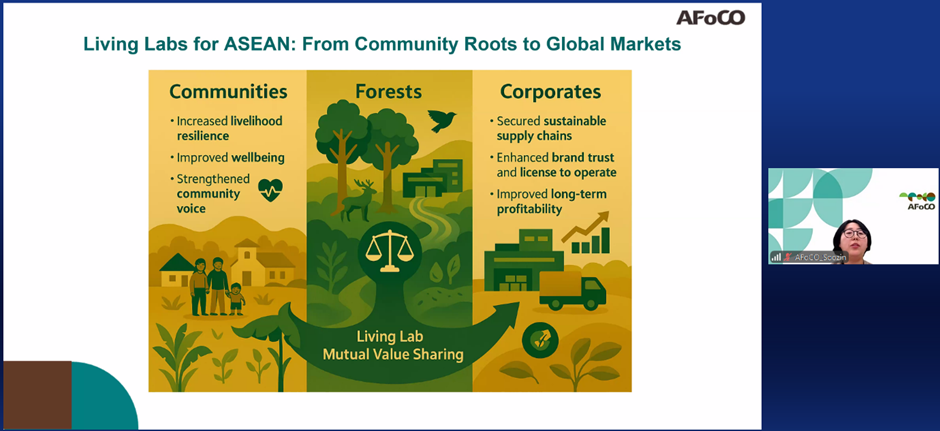
A key focus of the webinar was the Asian Forest Living Lab Initiative, one of AFoCO’s flagship approaches under the Forest-Positive Economy Initiatives. Asian Living Labs transform selected project landscapes into real-world testing environments where innovation, research, technology, and policy can be applied together.
Two complementary Living Lab models were introduced in the webinar: Inclusive Forest Enterprise (IFE) and Responsible Digital Supply Chains (RDSC). IFE focuses on strengthening community-based enterprises and livelihood outcomes aligned with forest stewardship. RDSC supports responsible sourcing and transparency aligned with relevant policy and market expectations, at a scale beyond individual sites. These models move beyond isolated investments toward more coherent, landscape-level portfolios that can strengthen investment readiness and measurable results.
Indonesia’s Social Forestry System: A Strong Foundation
Dr. Gun Gun Hidayat from Indonesia’s Ministry of Forestry highlighted the country’s social forestry system as a strong platform for Living Lab implementation. The Ministry highlighted that Indonesia’s social forestry framework provides legal clarity and institutional grounding that can support community-based forest management and responsible partner engagement.
Government representatives noted that social forestry groups in selected landscapes are already advancing livelihood activities alongside forest stewardship, making them promising candidates for forest-positive pilots. Government officials emphasized that these groups operate under established legal arrangements within forest areas and are supported through relevant government functions that enable implementation, enterprise development, and capacity building. This institutional backing positions Indonesia as a potential flagship country for demonstrating how forest-positive economy models can work in practice.
Bridging Public and Private Capital
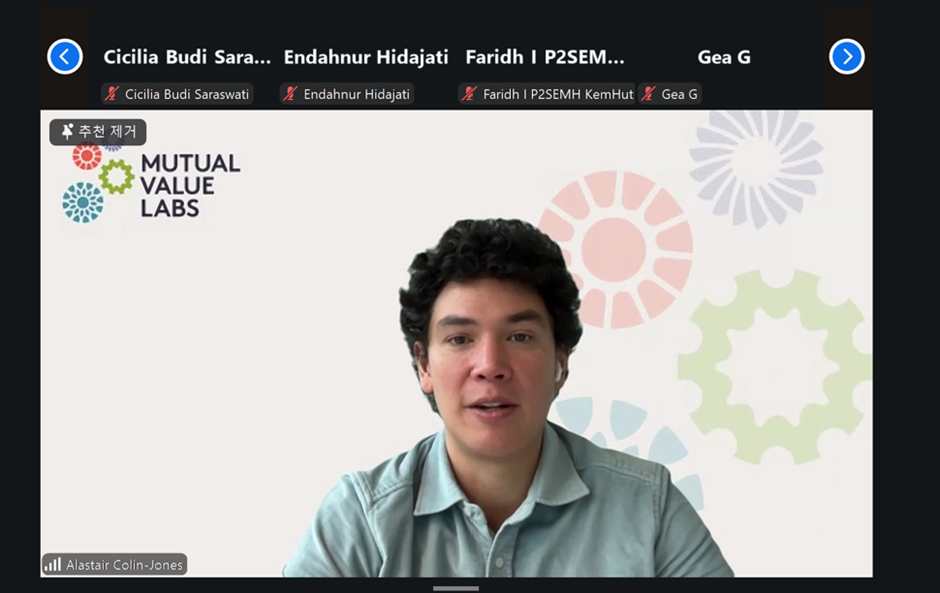
Alastair Colin-Jones from the MVL shared insights on the role of intermediaries in unlocking blended finance. From an investor perspective, forestry projects are often perceived as too small, risky, or complex. MVL emphasized the importance of strengthening investment readiness and stakeholder confidence to enable corporates and investors to engage with greater clarity.
MVL emphasized that blended finance allows each actor to contribute according to their comparative advantage, with public and catalytic resources helping to reduce early-stage risk and anchor commitments, and private capital helping to scale approaches once performance is demonstrated.
MVL noted that many corporates have reached a “glass ceiling” in what they can achieve on their own. While company-led sustainability initiatives are important, they are rarely sufficient to address systemic challenges such as deforestation, farmer livelihoods, and landscape resilience. Blended finance creates the conditions for corporates, investors, governments, and communities to work together—each reinforcing the other.
Indonesia as a Flagship for Forest-Positive Growth
Indonesia was highlighted as a particularly compelling context to demonstrate this approach. Its social forestry system offers an enabling setting and an existing base of community-linked forest and livelihood practices that can be strengthened and scaled through investment.
AFoCO and MVL highlighted that a Living Lab pilot is being explored in Indonesia under the social forestry context, illustrating how this approach can be tested and refined with partners in practice. The pilot is being framed through a phased approach that prioritizes joint assessment, co-design, and evidence-based learning, with the aim of strengthening investment readiness and measurable outcomes.
Operating as a Living Lab, the initiative serves as a real-world testing ground—generating data, reducing uncertainty, and refining models with the potential to inform replication across other landscapes and AFoCO Member Countries, subject to partner alignment and feasibility.
MVL emphasized that progress in Indonesia can help build practical evidence for scaling forest-positive economy models regionally, by demonstrating that public priorities and private sector participation can be aligned toward measurable, landscape-level outcomes.
From Dialogue to Action
The webinar underscored the importance of trusted partnerships to move from forest-positive ambition to action. Blended finance and Living Labs were recognized as practical tools to align governments, communities, and the private sector around shared outcomes.
Building on this dialogue, AFoCO will continue technical collaboration with the Government of Indonesia, Mutual Value Labs, and private-sector partners to advance the Indonesia pilot toward implementation in 2026—demonstrating how Asia’s forests can be protected while remaining productive, inclusive, and resilient.
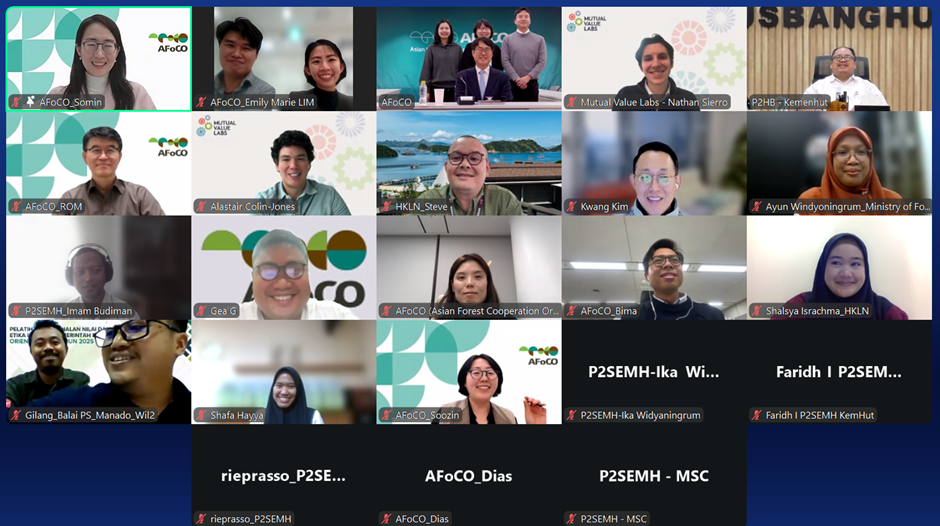
Submitted by Somin Oh, Program Officer, Capacity-Building and Evaluation Team