
Under the changing global climate, forest fire is significantly aggressive by increasing fire frequency, size, and intensity. Without proper prevention and management, while also exacerbating human-driven deforestation and degradation that further increase fire risk, the annual forest fires destroy million hectares of forest lands and cause forest degradation by destroying vegetation and impacting soil, water, and biodiversity. It is exceptional in the tropical region that the climate change, driven by higher temperatures and longer drought season, is significantly altering forest fire regimes, leading to more severe environmental, social and economic consequences.
The Forestry Administration (FA) of Cambodia is joining efforts with the AFoCO Secretariat implementing a regional project titled “Capacity Building on Enhancing Resilience to Forest Fire, and Local Livelihood and Market Linkages (AFoCO/032/2022)” aiming to enhance the capacities of Cambodia, Lao PDR, Myanmar and Viet Name (CLMV countries) on the integrated management of forest fires for the conservation of natural resources, enhancement of local livelihood and, promotion of NTFP-based MSMEs. Among other things, “Restoration of Forest Land Disturbed by Fires” is one of the project outputs which the FA is taking its attempt in restoring forest land after fires, while at the same time, conducting the experiment to demonstrate restoration technique options and fire resilience models for post forest fire recovery.
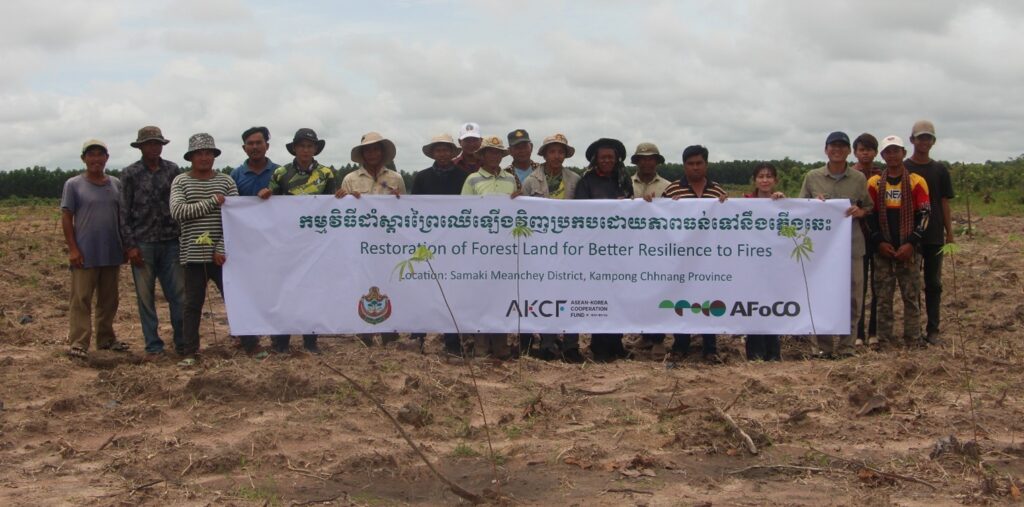
The forest rehabilitation demonstration site was established in August 2024 located Samaki Meanchey district, Kampong Chhnang province. The establishment of the rehabilitation site aimed to develop a forest rehabilitation demonstration plot for testing the proposed intervention and restoration technique as well as a candidate tree species, then identify which species could resilience to the forest fire.
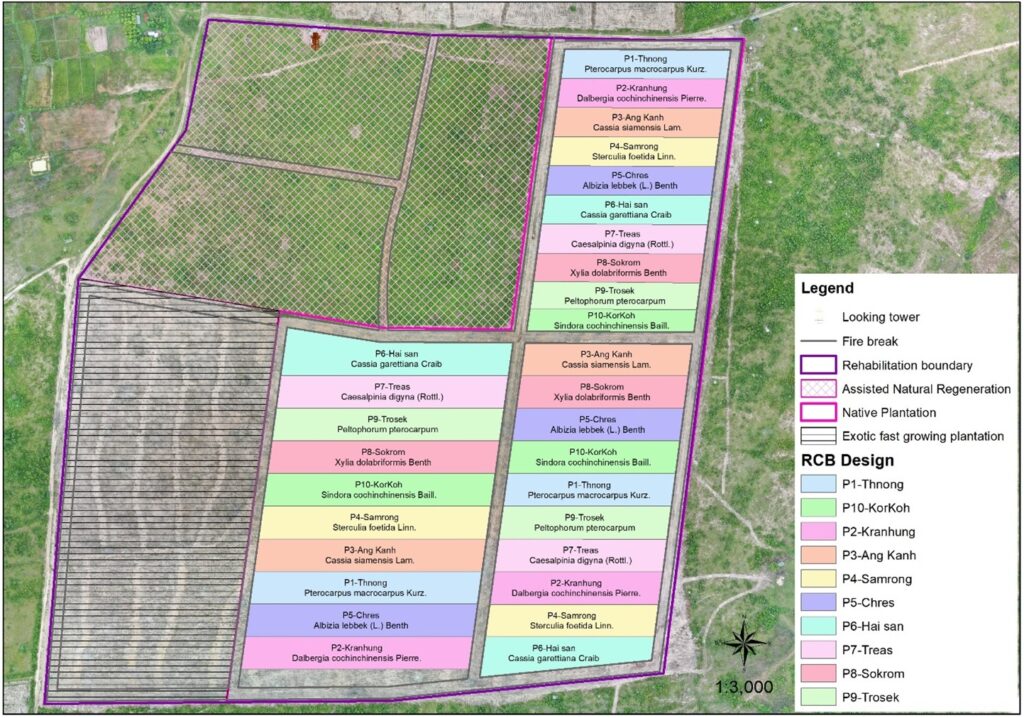
Based on the stakeholder consultation and feasibility study, the area designated for the demonstration site is 27 hectares, of which 7 hectares is regrowth forest with deciduous saplings, while the other 20 hectares consists of severely degraded land with no significant vegetation. The site was designed to establish experiments on the rehabilitation of a degraded forest, divided into two models: i) assisted natural regeneration (ANR) and enrichment plantation (within the area of 7 hectares), and ii) native tree plantation to test their resilience to forest fires (within the area of 20 hectares).
Fire roads were constructed within the forest rehabilitation areas to prevent the spread of wildfires. These roads also serve as the main and secondary routes for dividing the planting blocks. The 10-meters-wide main fire roads were built along the dividing line between the ANR and tree planting experimental areas. Meanwhile, the 7-meter-wide secondary fire roads were constructed around the tree planting area and within the ANR experimental areas.
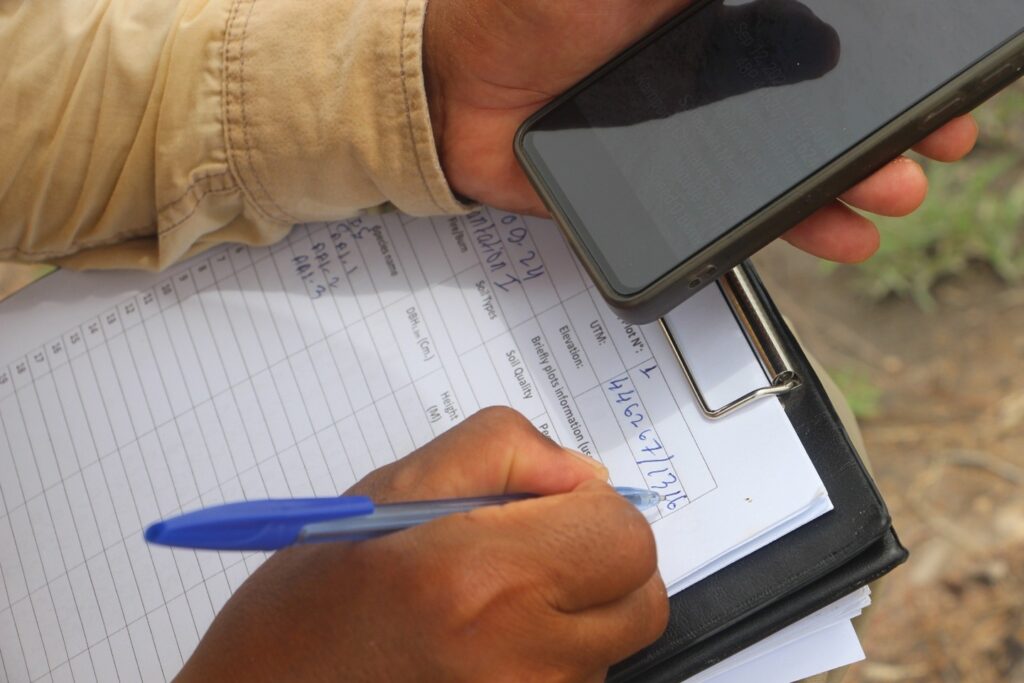
The ANR area has high-density flora vegetation, dominated by a variety of species including Xylia xylocarpa, Cratoxylum formosum, Shorea obtusa Wall. ex blume, Acacia intsii, Careya arborea Roxb., Cassia garettiana Craib, and Phyllantus emblica L. etc. To study this, twelve circular plots with a 5-meter radius were established, of which six plots for testing the ANR treatment and six plots for non-ANR (control plot). ANR and non-ANR sample plots will randomly setup in the rehabilitation site, aiming to cover all conditions of the project site. Within the circle, all trees will be counting and labelling include seedling, live tree stumps and tree taller than 1 meter. Enrichment planting was carried out in an area with a low density of flora, where the number of tree saplings was less than 3,100 saplings per hectare. Data collection will be conducting every four months in January, May and October. Three parameters that can be assessed include diameter, height and survival of the labeled seedlings.
In the tree planting demonstration area, 10 local tree species were planted such as Pterocarpus macrocarpus, Dalbergia cochinchinensis, Cassia siamea, Sterculia foetida Linn., Albizia lebbek, Cassia garretiana, Erythrophleum succirubrum, Xylia xylocarpa, Peltophorum ferrugineum, and Sindora cochinchiensis/ siamensis. The seeds for these species were collected from the surrounding sites and germinated in the project-funded tree nurseries. Seedlings at least one year old and 30 cm tall, produced by the project at the nursery, were transported to the sites for planting.
The experiment utilized a randomized block design consisting of three blocks with ten plots each. Each block contains all 10 tree species, with each species replicates in a plot size 30m x 143m. The plots are separated by a 3-meter buffer space. A total of 596 seedlings were planted in each plot for a given species, with a spacing of 3m between rows and 2 meters between individual seedlings in the same row. Each species was established three replication plots, of which 30 trees per plot were designed for data collection. A total of eight rows with seven seedlings each were selected, but only the inner six rows of five seedlings were used for recording data.
An area of five hectares within the establishment of rehabilitation experimental plot is reforested by applying a mix of fast-growing and native tree species planting technique to test its survival performance, resilient to forest fire and early emergence from weeds in the second year.
The trees to be planted are 50% local species such as Azadirachta indica, Sindora cochinchiensis and Diospyros helferi. Other 50% are fast-growing species such as Eucalyptus sp., Swietenia macrophylla and Tectona grandis.
The main purpose of the experimental mix-planting of native tree and eucalyptus species is to see the significant role of this model in forest fire management, and sufficient economic for tree plantation. Normally, native species often have different growth patterns and moisture content compared to eucalyptus, which can reduce the intensity and spread of fires. In theory, planting native trees can create a living firebreak, which is helping slow down or stop the spread of fire, protecting more vulnerable areas.
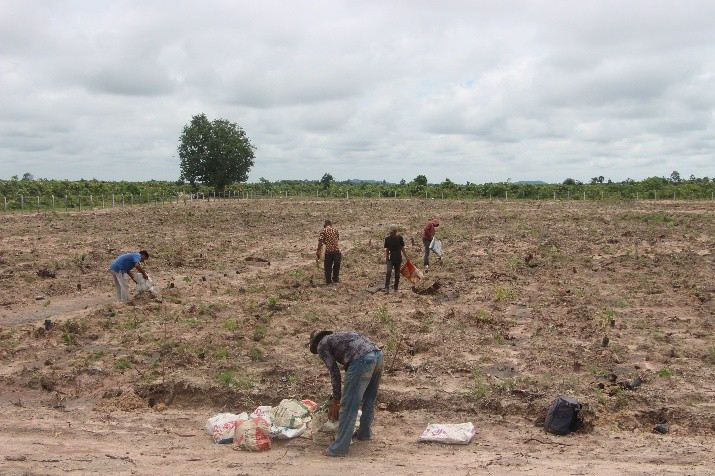
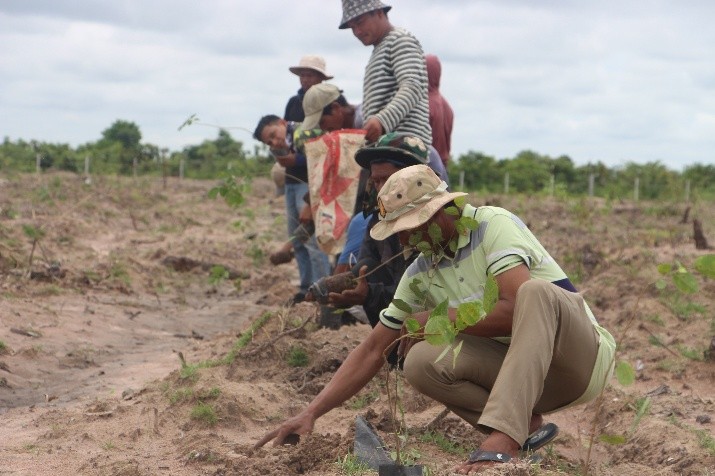
Maintenance the plantation site takes harder efforts than planting the trees. Regular maintenance as well as data collection is being undertaken in order to monitor the growth of the seedlings and to analyze the tree growth performance under different treatment.
In ANR site, data recording is being conducted in every 4 months, subjecting in January, May and October. Three parameters include diameter, height and survival are recorded. Because of all planted seedlings were uneven age, an analysis of the Relative Growth Rates for height and diameter are useful. In tree plantation site, data recording is being conducted in every 3 months, preferably in January, May and October. Data on growth (diameter at 1 cm above ground level, total height) and mortality rate are parameter to be collected regularly after planting. At a certain circumstance, fire would be introduced to some experimental plots to test the fire resilience.
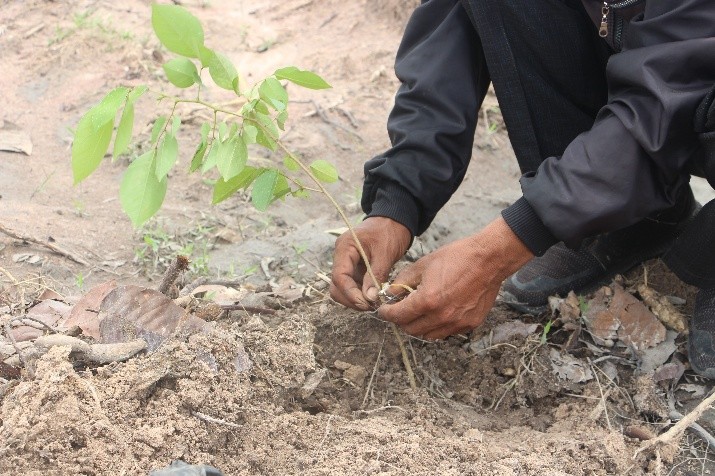
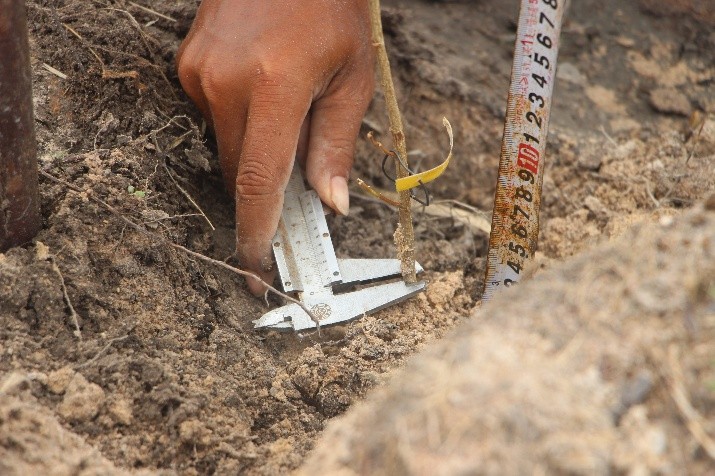
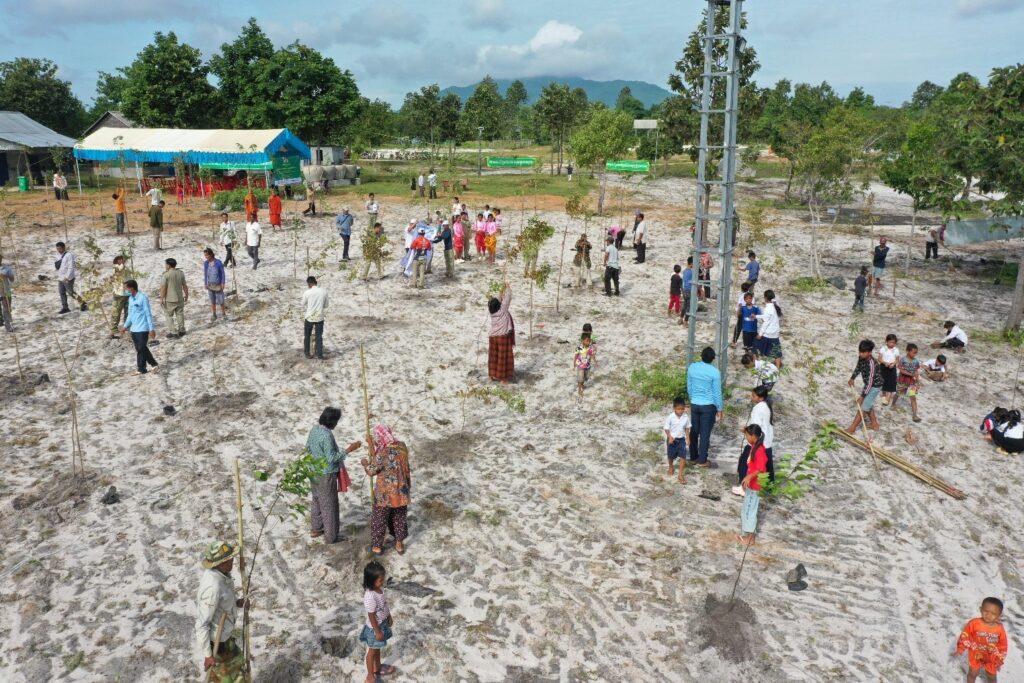
Forest restoration after a fire helps by stabilizing soil to prevent erosion and landslides, protecting water supplies, controlling invasive species, promoting biodiversity by planting native plants, and supporting the recovery of wildlife habitats. These efforts improve forest health, re-establish ecosystem services, such as water regulation and pollination, and build resilience against future fires and other climate-related disasters by sequestering carbon and creating a more diverse, healthy forest structure. Along with these efforts, the Forestry Administration has been promoting and raising awareness to local villagers and communities on forest restoration, while at the same time, sharing technical knowledge on forest restoration and forest fire prevention, and distributing forest tree seedlings to them.
The results and findings from the experience of the forest fire resilience and rehabilitation site establishment would favorably contribute to the development of technical guidelines for forest restoration after fires which are one of the key technical components in the forest fire management.
The endeavor of restoring forest lands that disturbed by fires is of one the main activities under the project “Capacity Building on Enhancing Resilience to Forest Fire, and Local Livelihood and Market Linkages (AFoCO/032/2022)” which is the five-year project piloting in CLMV countries with financially support from the ASEAN-Republic of Korea Cooperation Fund (AKCF) and Korea Forest Service (KFS).
Contributors of this article: Mr. Chhorn Vireak, Mr. Kim Sobon and Ms. Men Sophatry