
Background
Enhancing livelihood of local community contributes to diminishing human-caused wild fires. Livelihood activities, as result of poverty, can be one of the underlying root causes of forest fire for the rural communities residing within and around the forest areas where traditional farming practices and unsustainable resource management have been noticed considerably. In most cases, these activities are associated with using fire for agricultural activities and other purposes such as collecting NTFPs. While fire can benefit livelihoods, unsustainable practices and uncontrolled fires expose to cause severe chronic damage to forests resources and ecology, society and economy, including loss of biodiversity, human health impacts from fine particulate matter (PM 2.5), and deterioration of agricultural productivity, respectively. Promoting alternative farming and agroforestry practices to enhance local livelihood is one of the key actions contributing to address the long-term impacts of forest fires.
The Forestry Administration (FA) of Cambodia in collaboration with the AFoCO Secretariat is implementing a regional project “Capacity Building on Enhancing Resilience to Forest Fire, and Local Livelihood and Market Linkages (AFoCO/032/2022).” At regional scale, the project aims at enhancing capacities of Cambodia, Lao PDR, Myanmar and Viet Nam (CLMV countries) on the integrated management of forest fires for the conservation of natural resources, enhancement of local livelihood and, promotion of NTFP-based MSMEs. In Cambodia, “Revitalization of Local Livelihood and Reduction of Man-made Forest Fires” is one, among other things, of the project’s key outputs, which the FA is undertaking the pilot integrated farming and agroforestry practices to be promoted and replicated elsewhere.
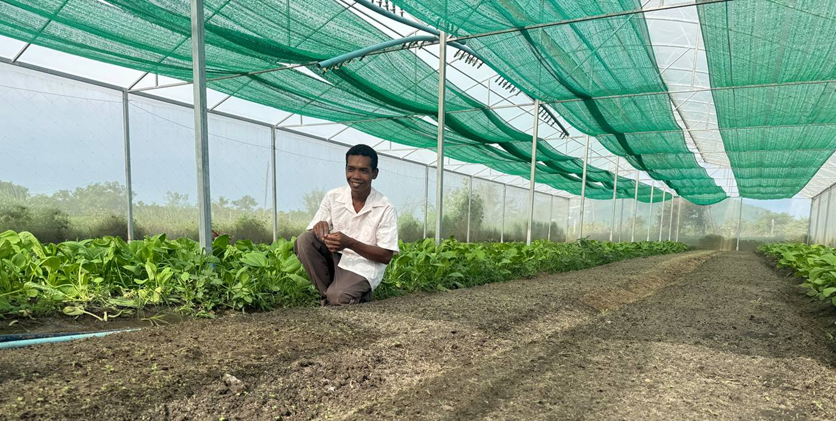
Mr. Meuk Da, one of the selected farmers joining to establish an integrated farming demonstration site, in his greenhouse preparing soil and irrigation system for organic vegetable cultivation
Baseline Survey
The activities have been carried out in villages around the project site namely Hun Sen-Meanok Pulp Tree Planting Station located in Samaki Meanchey District, Kampong Chhnang Province, where the majority of dwellers are farmers. In 2024, a survey on “Enhancing Local Livelihood through the Development of Alternative Farming Practices in Samaki Meanchey District, Kampong Chhnang Province, Cambodia” was carried out to acquire baseline information of the existing livelihood of local communities living around the project sites, and the study also proposed alternative farming practice models for enhancing local livelihood that eventually contribute to the protection of forests from fires. Both primary data and secondary data were collected and analyzed to stock take key information and aspects around the project site. In addition, a consultative discussion was organized to further collect key stakeholders’ inputs pertaining to local livelihood improvement, and a validation meeting was conducted to verify the survey results as well as to assess and select small-scale farmers for piloting alternative farming practices and livelihood enhancement program.
Key highlights of the survey:
- In 2024, the total population was 91,083 people (female, 52%) in Samaki Meanchey district, given 2.91% of annual growth rate between 2020 and 2024;
- A vast majority of local communities cultivated paddy rice and other vegetables for household consumption;
- The main occupations as well as income sources were from cultivation of paddy rice, vegetables, fruit crops, business or self-employed, salary (workers), labor force, collecting NTFPs, animal husbandry and aquatic culture, and other sources;
- Challenges included flood and drought-prone areas, insufficient irrigation system, low soil fertility, threats of crop pests, instability of market supply chain, high cost of agricultural inputs, economy of scale, poor agricultural techniques, and household labor constraint.
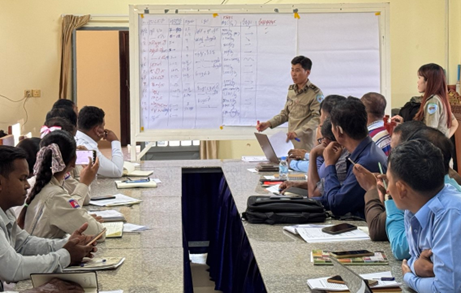
Discussion with key stakeholders on local livelihood improvement program, Samaki Meanchey district
Establishment of Demonstration Sites
Through the consultative approach, in the district a number of recommended farming households were identified, and only eight among which were qualified as role model farmers agreeing to participate with the project, among others, as well as to establish a demonstration site to showcase good agricultural and/or agroforestry practice on their private land.
The integrated farming technique was introduced to the selected farmers by applying a holistic agricultural approach which different production systems, such as crops, livestock, fruit tree, forest tree and aquaculture, are combined and managed to bring about multi-purpose benefits via promoting environmental sound, agricultural diversification and productivity improvement, minimizing input costs, improving sustainability, and enhancing climate change resilient capacity as well as increasing income. Based on the need assessment and interest of each demo farmers, every demonstration site was designed combined with drone photos. A plan map for demonstration site preparation and crop cultivation was developed under close consultation with individual demo farmer.
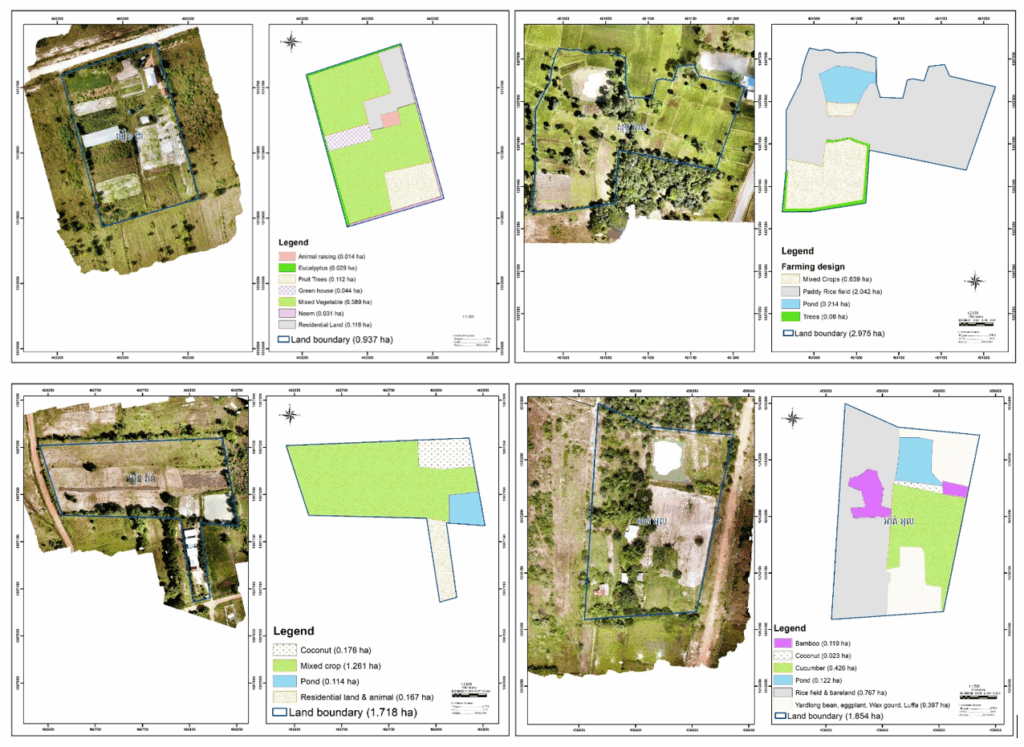
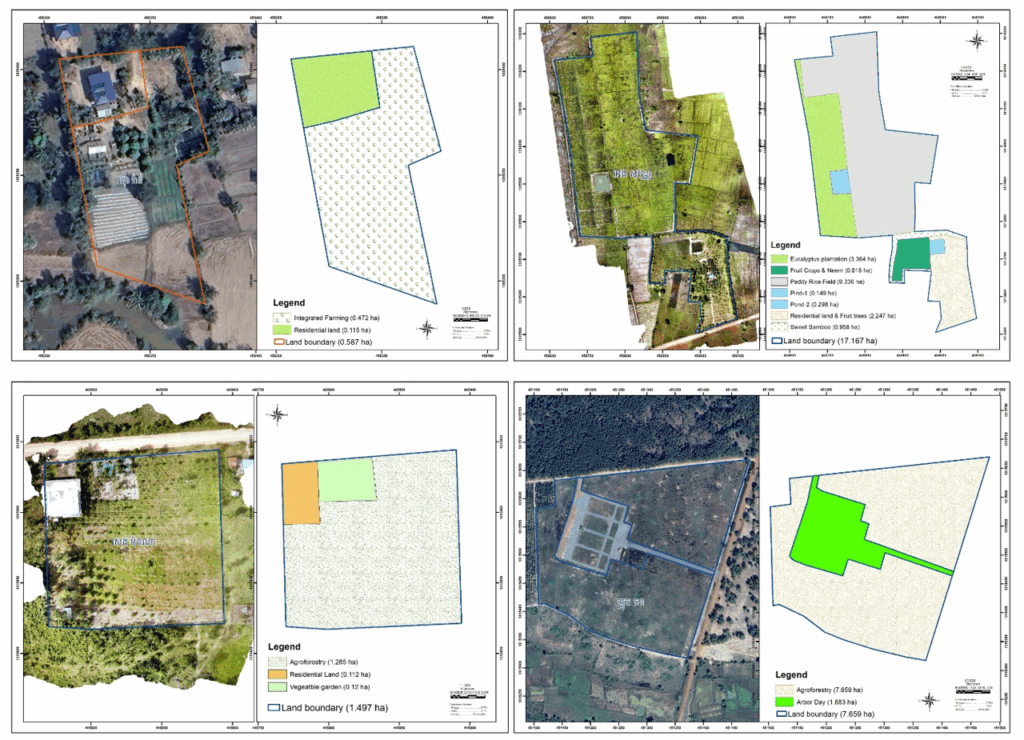
The 8 designed demonstration sites for piloting the integrated farming practices
Project Interventions
Farmers support internally, so does the project externally: While the demo farmers contribute their time, labor and some other resources for the agriculture/agroforestry demonstration activities, the project has partially supported them with financial and technical inputs. Baseline assessment provided to understand their basic income, preferences, and needs preceding the project intervention to ensure their effective involvements with piloting activities. The project supports included agricultural tools, equipment, crop seeds, and tree seedlings.
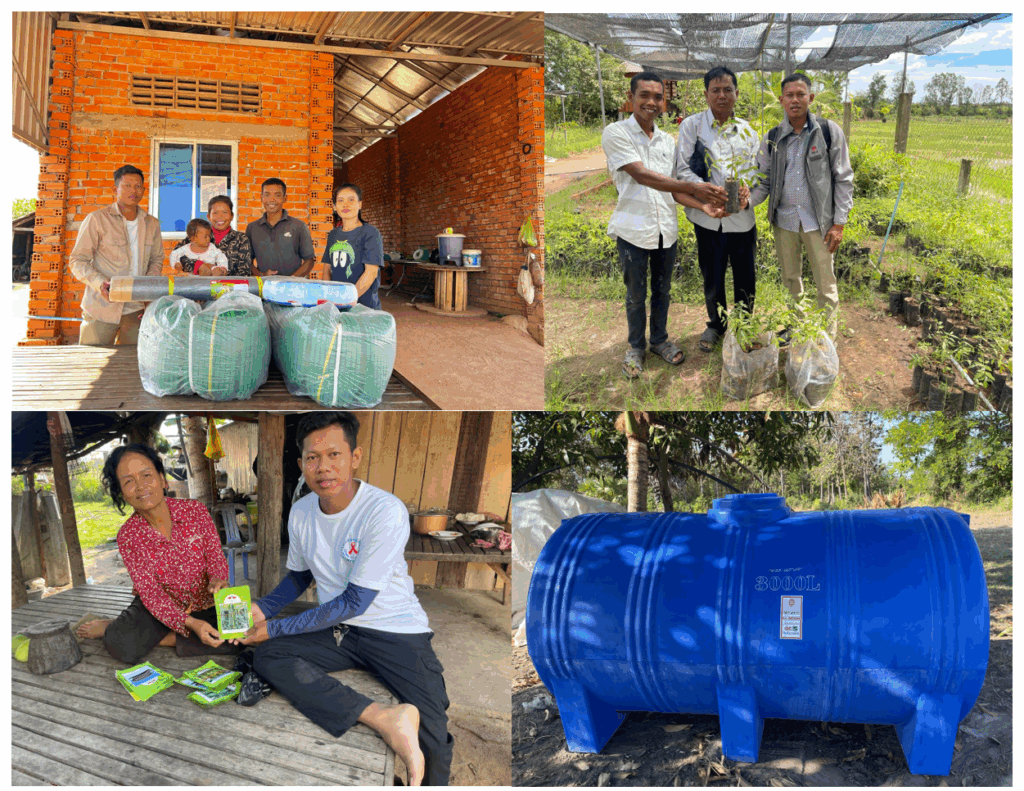
Hand overing some agricultural tools, crop seeds and tree seedlings to demo farmers
Integrated Farming and Agroforestry Trainings
From in-class sessions to field demo practices: Not just financial and tangible needs but also technical trainings to be provided – the project plans to conduct five hand-on trainings to all the demo farmers and the other few famers in the district. It facilitates and engages agricultural and agroforestry specialists to provide technical skills and intensive techniques. A training plan along with a series of relevant topics was developed based on farmers’ needs complimentary to their rudimentary knowledge and experiences.
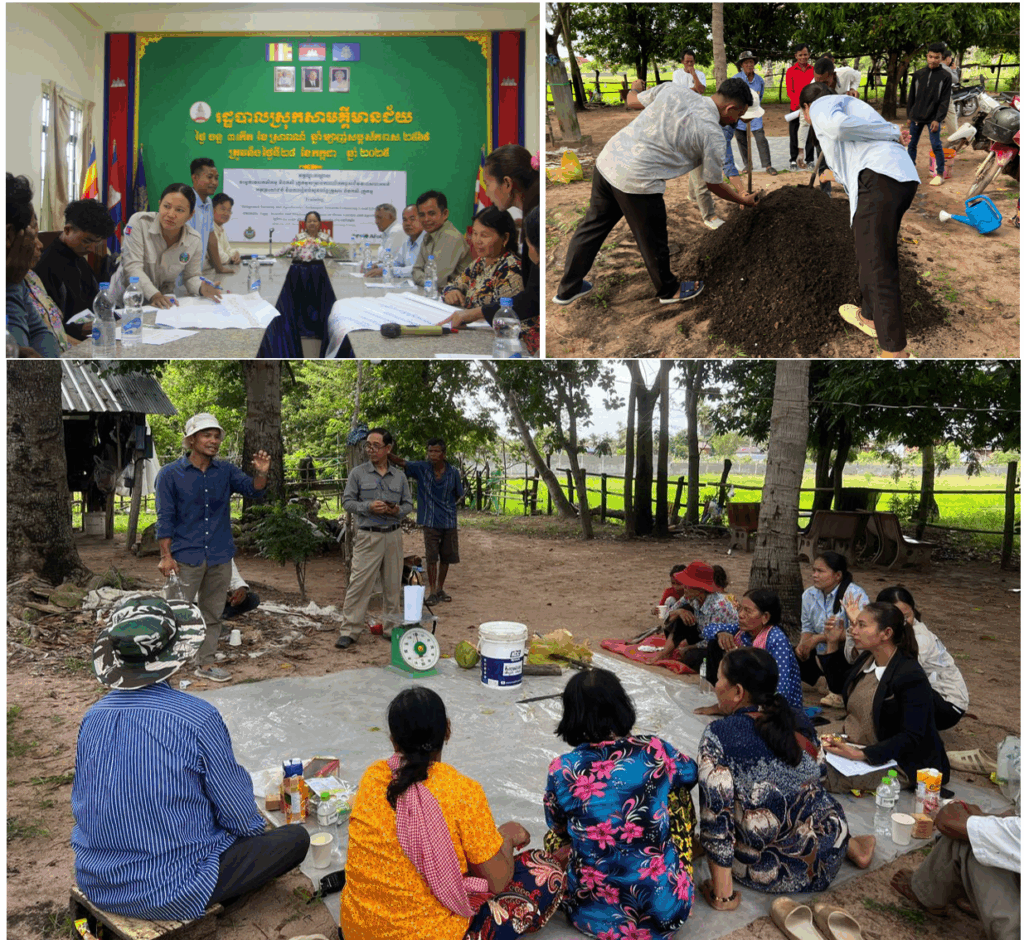
Technical trainings both indoor and outdoor sessions provided by agriculture and agroforestry specialists
Rolling out a monitoring plan: A project team in collaboration with key stakeholders including Kampong Chhnang Provincial Department of Agriculture, Forestry and Fisheries (PDAFF) often conduct monitoring visits at the demonstration sites. The primary objective of the monitoring visit is to collect data, monitor in accordance with plan, review techniques to be applied, and evaluate whether the demonstration sites conduct in line with the design idea or not. Immediate action would be taken if technical issues arise. Notwithstanding, the project leaves a decision for farmers to make for any deviation or modification of crop planting for an acceptable reason, and the plan, thus, should be modified in terms of resources and inputs applied.
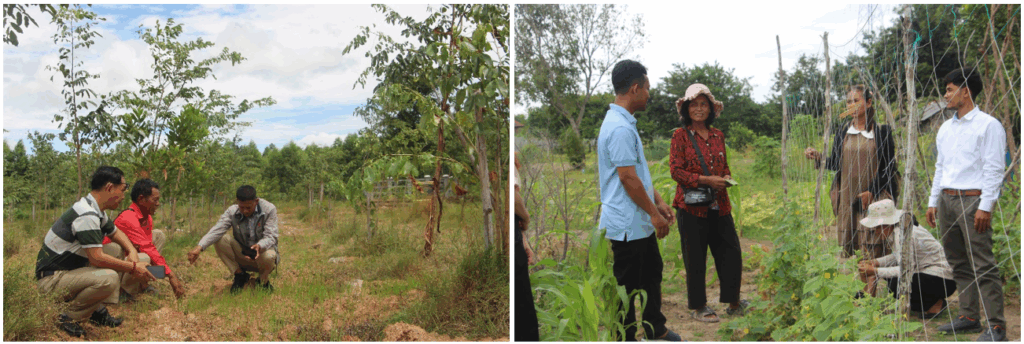
Monitoring visit at the demontration sites
Way Forwards
Development of Guidelines on Integrated Farming and Agroforestry needed: With the experience and lessons learnt derived from the above agriculture and agroforestry activities, the project team of FA plans to develop technical guidelines for exemplifying and disseminating to other farmers in the villages and, at the broader scale, to other areas in the country. When local livelihood is improved, particularly by applying such an intensive integrated farming system which would bring about high profit and sustainability than the traditional farming practices are, the forests would be protected from uncontrolled fires spreading from farming fields and other related human-induced activities in the forest for livelihood.
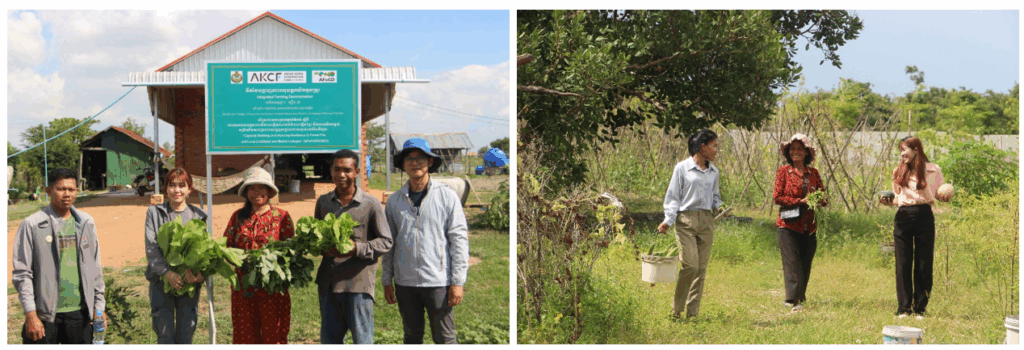
Photos of project team with demo farmer families during the monitoring visit
The endeavor of revitalization of local livelihood and reduction of man-made forest fires is of one the main activities under the project “Capacity Building on Enhancing Resilience to Forest Fire, and Local Livelihood and Market Linkages (AFoCO/032/2022)” which is the five-year project piloting in CLMV countries with financially support from the ASEAN-Republic of Korea Cooperation Fund (AKCF) and Korea Forest Service (KFS).
Contributors of this article and team work: Mr. Chhorn Vireak, Mr. Say Sinly, Ms. Men Sophatry, Ms. Meas Chenda, Mr. Tem Makara, Mr. Kong Kongkea and Mr. As Broden