
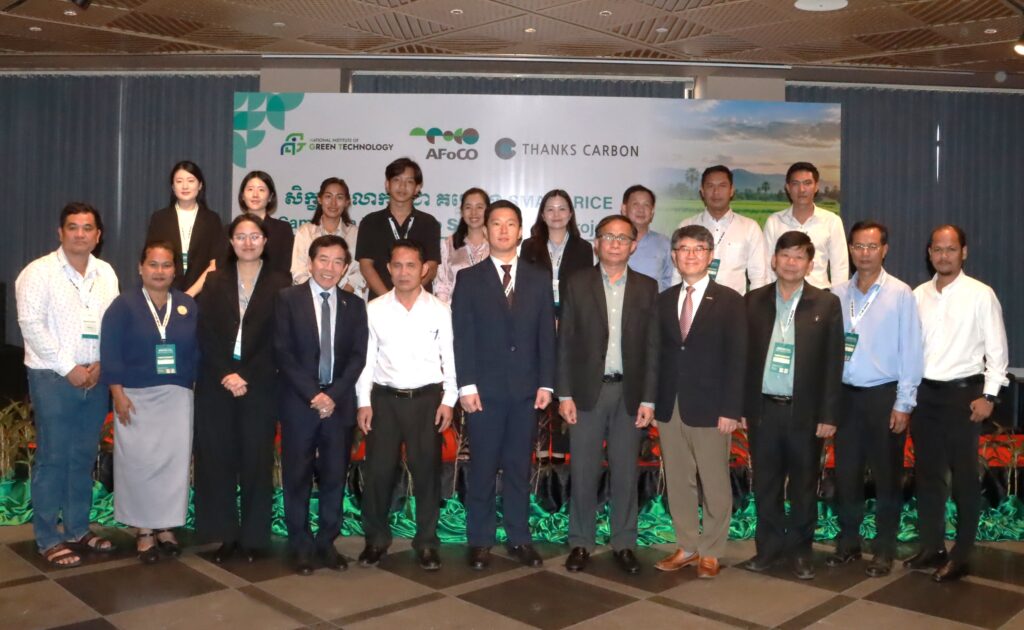
Phnon Penh / Hanoi — In September 2026, the AFoCO convened the 1st Year Implementation Workshops of the SMART-RICE Project, “AI and Satellite-Based MRV for AWD-Enabled Sustainable Rice Cultivation in the Mekong Region.” Supported by the Mekong-ROK Cooperation Fund (MKCF), the workshops took place in Cambodia from 14–16 September and in Viet Nam from 17–19 September.
The workshops brought together project partners, including the National Institute of Green Technology (NIGT) and ThanksCarbon, along with government agencies, research institutions, local stakeholders, and farmer representatives. Discussions focused on the implementation of Alternate Wetting and Drying (AWD) practices and the development and application of AI- and satellite-based MRV systems for sustainable rice cultivation.
Advancing Climate-Smart Rice Cultivation through AWD and MRV
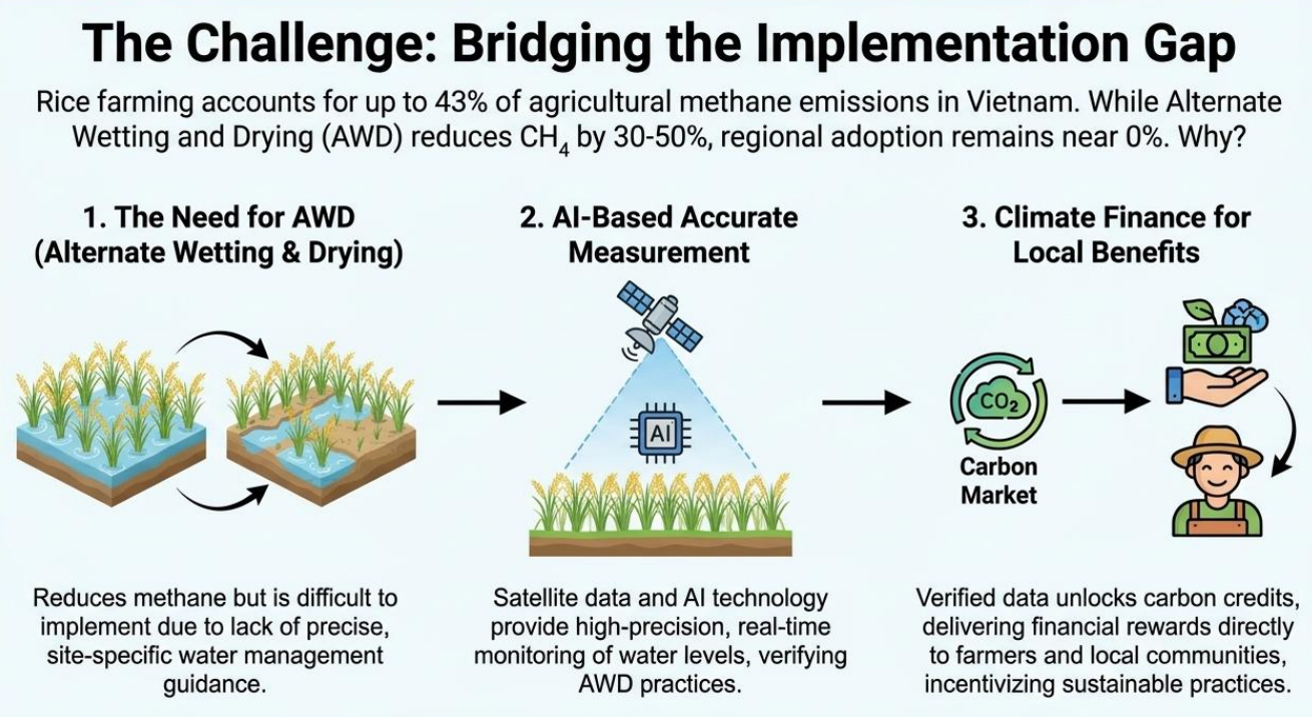
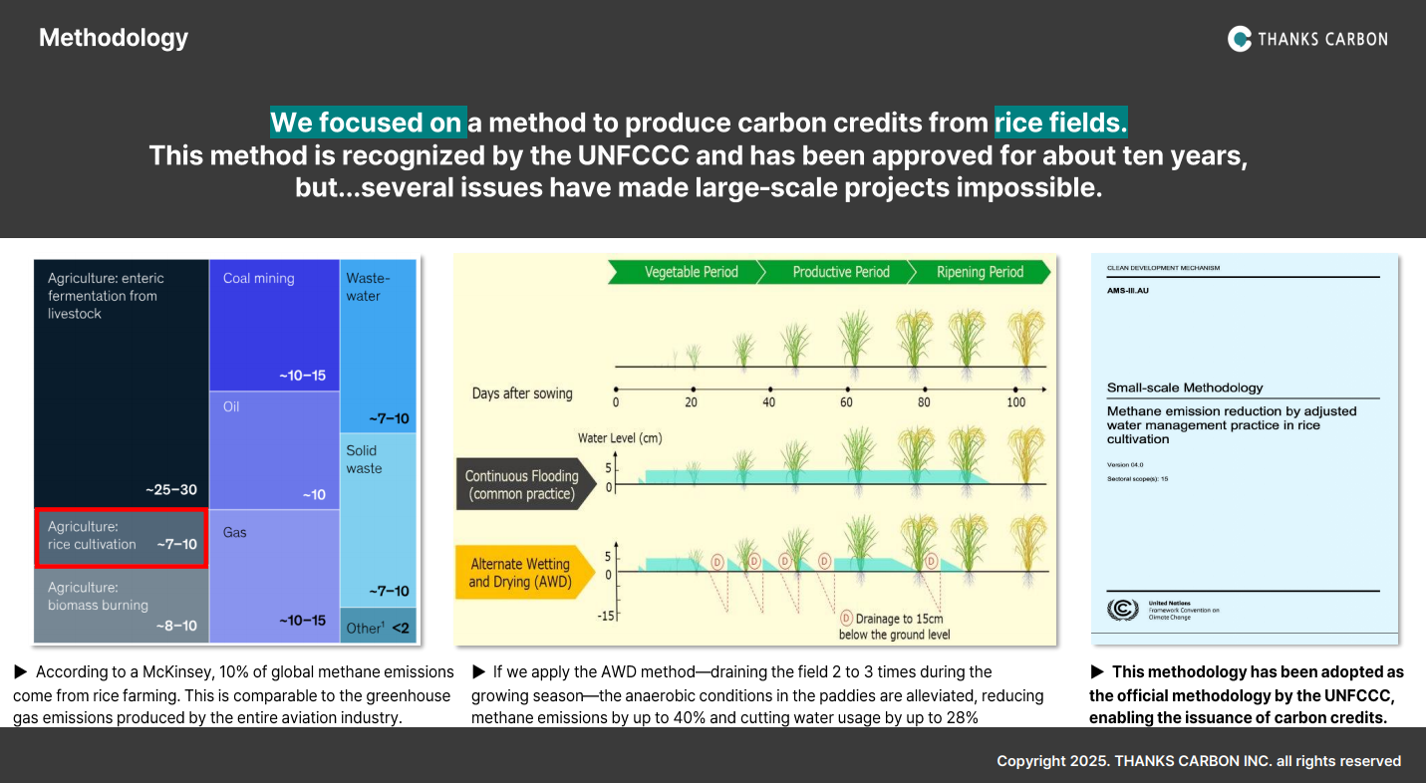
The SMART-RICE Project seeks to promote AWD as a practical water-management approach for reducing methane emissions from rice cultivation, supported by AI- and satellite-based Monitoring, Reporting, and Verification (MRV) technologies.
Building on ThanksCarbon’s initial pilot experiences, the project aims to strengthen water management, improve the measurement and verification of emission reductions, and generate reliable data that can support farmers’ access to climate finance and more sustainable rice value chains.
A Platform for Sharing, Learning, and Collaboration
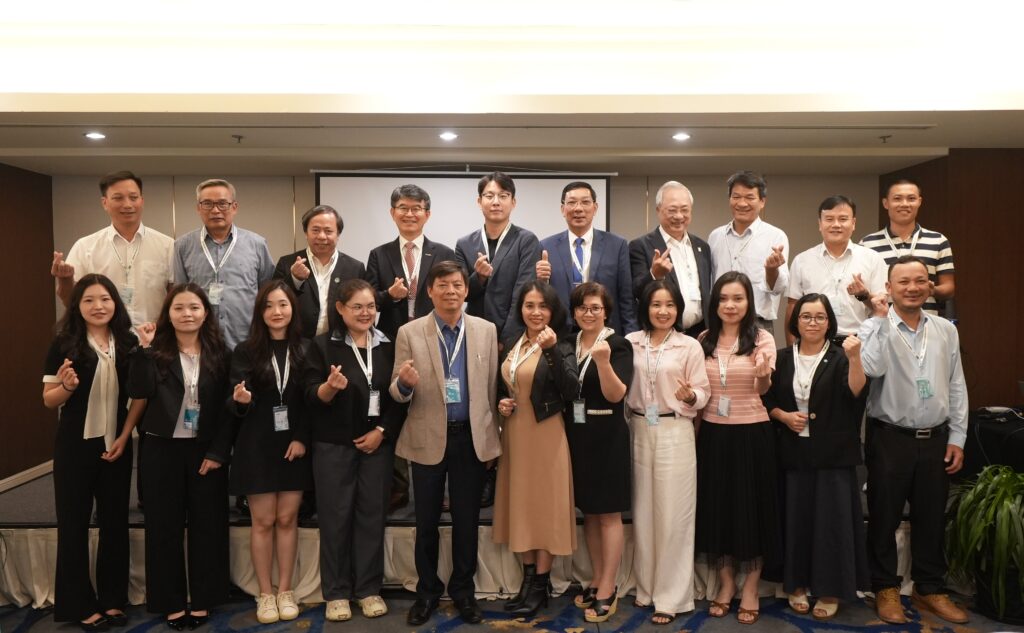
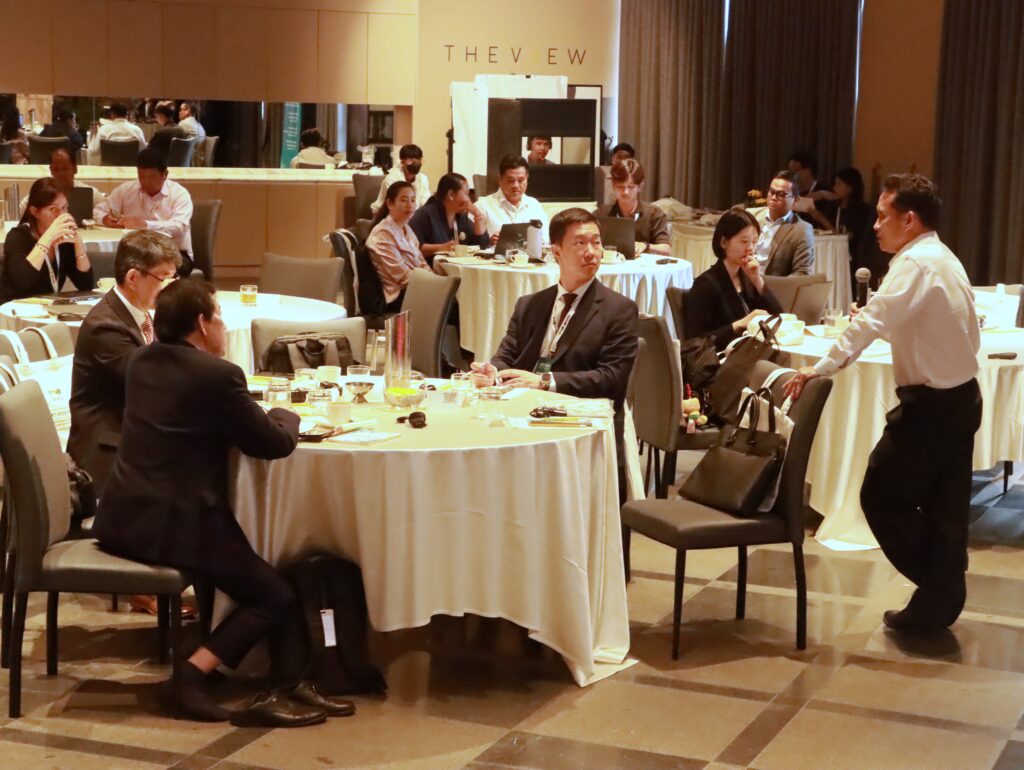
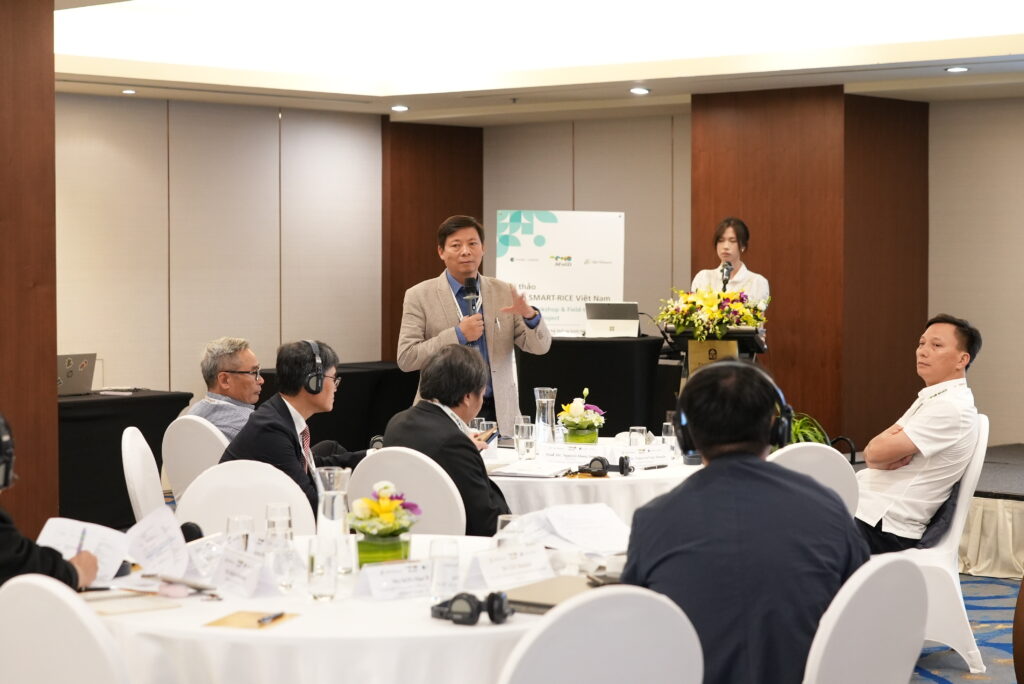
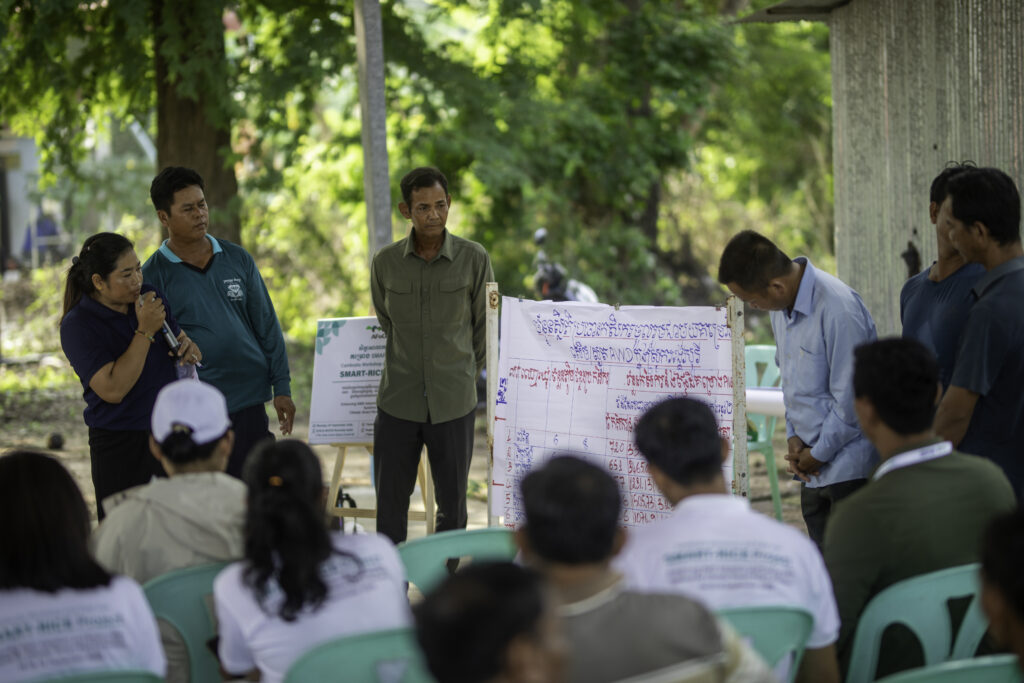
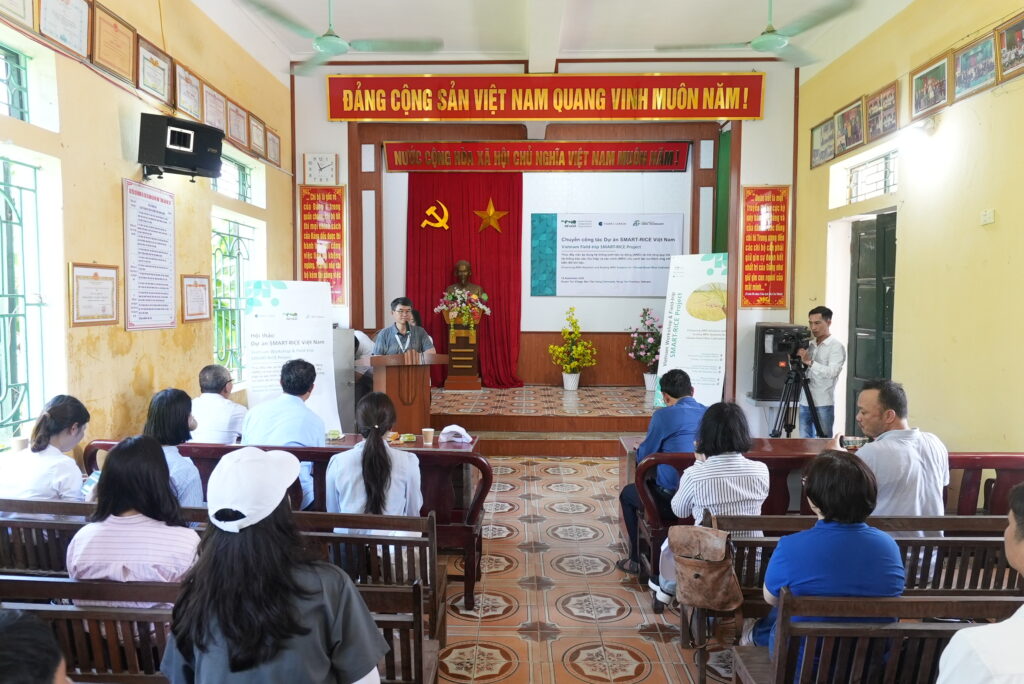
The three-day workshops in Cambodia and Viet Nam provided a common platform for project partners and local stakeholders to share experiences, exchange knowledge, and reflect on progress made during the first year of implementation. The programs combined technical exchanges, field-based learning, and stakeholder discussions, allowing participants to connect project activities with local practices and perspectives.
The workshops opened with an overview of the SMART-RICE Project, followed by presentations on agricultural policies, rice cultivation, and climate-related initiatives from relevant government agencies and local stakeholders. NIGT and ThanksCarbon introduced the project’s technical approaches to AWD practices, carbon emission reduction, and AI- and satellite-based MRV, while participants exchanged views on their application and potential in the local context.
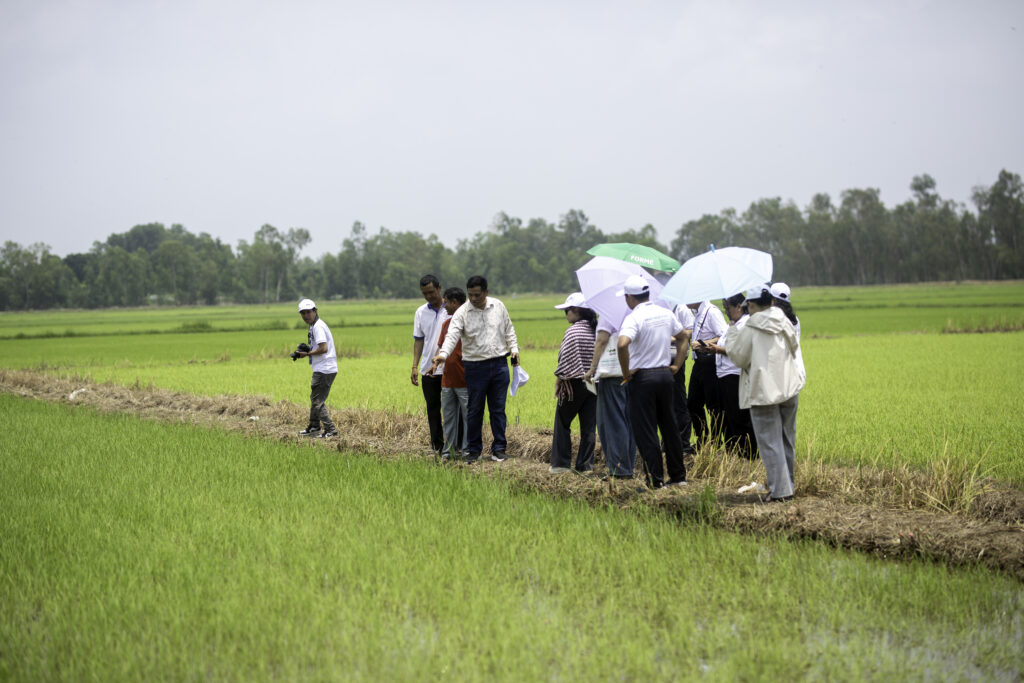
The second day of the workshops provided a platform for field-based discussions on the application of AWD practices under local conditions. In Cambodia, participants visited a SMART-RICE pilot site in Angkor Borei, Takeo Province, where they examined rice cultivation practices and discussed implementation experiences with local farmers and stakeholders. In Viet Nam, the field program took place in Hung Yen Province and provided an opportunity to consider the practical application of project approaches. The exchanges highlighted the importance of farming conditions and participating farmer’s engagement in applying AWD and AI- and satellite-based MRV approaches.
The workshops concluded with discussions among project partners, government representatives, technical experts, local stakeholders, and farmers on implementation experiences, challenges, and priorities for the next phase of the project. The exchanges provided an opportunity to identify practical considerations for the application of AWD practices and AI- and satellite-based MRV under different local conditions.
The first year of SMART-RICE implementation has established a basis for continued technical cooperation and knowledge exchange across the Mekong region. The next year of implementation will build on these experiences through continued collaboration among project partners and stakeholders, with the next implementation workshop scheduled to take place in the Republic of Korea.
Contributed by Ms. Young Kim (Officer) and Ms. Rujira Sassana (Fellowship Official)