
How a community in Preah Vihear Province transformed wild honey from a raw forest product into a nationally registered enterprise, and why it matters for forests, families
High in the Dipterocarpus alatus trees of Preah Vihear’s community forest, some more than 30 meters above the ground, wild bees have been building their colonies for generations. For the community that lives beside these forests, harvesting their honey has always been a way of life. Today, it has become something more: a thriving enterprise, a registered trademark, and a model for what forest communities across Asia can achieve.
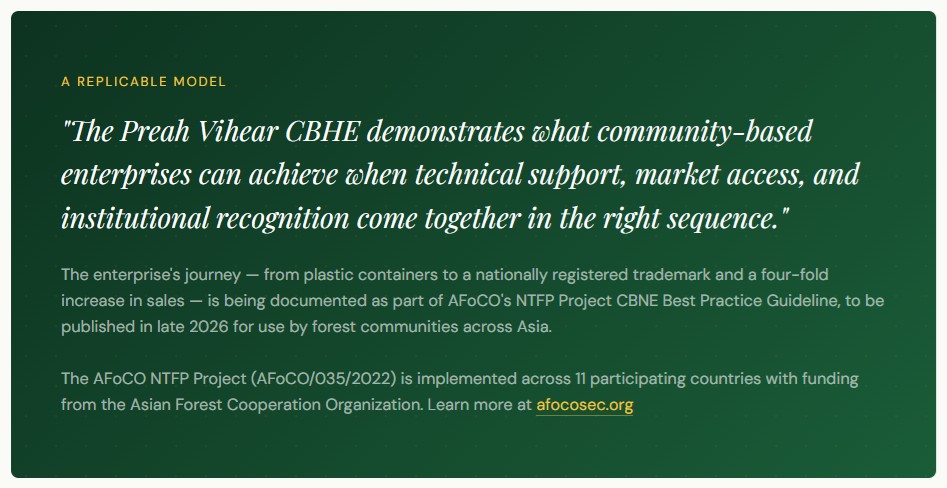
Best Practices of the NTFP project (AFoCO/035/2022) implemented in Cambodia
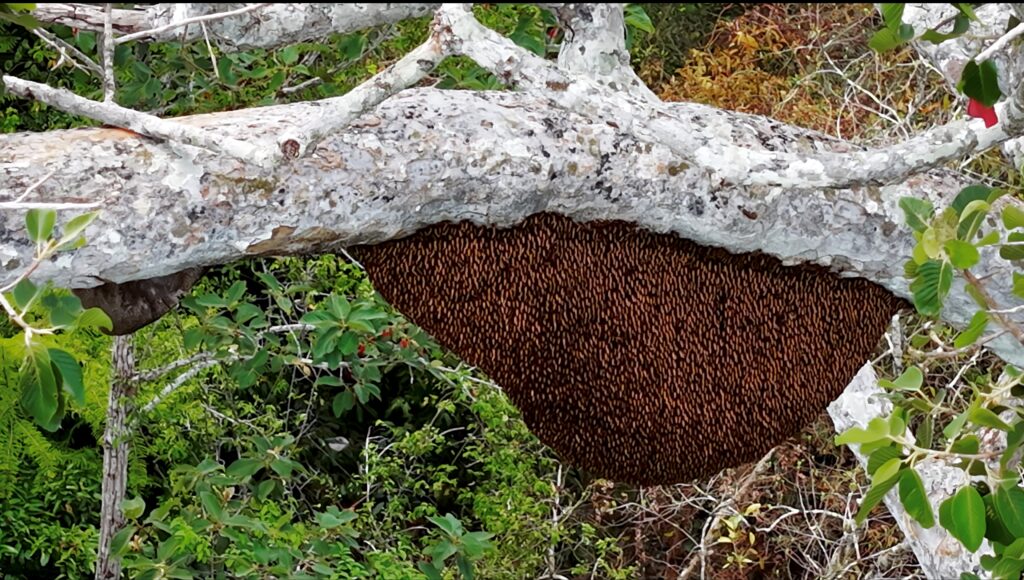
Origin
A Community Enterprise Reborn
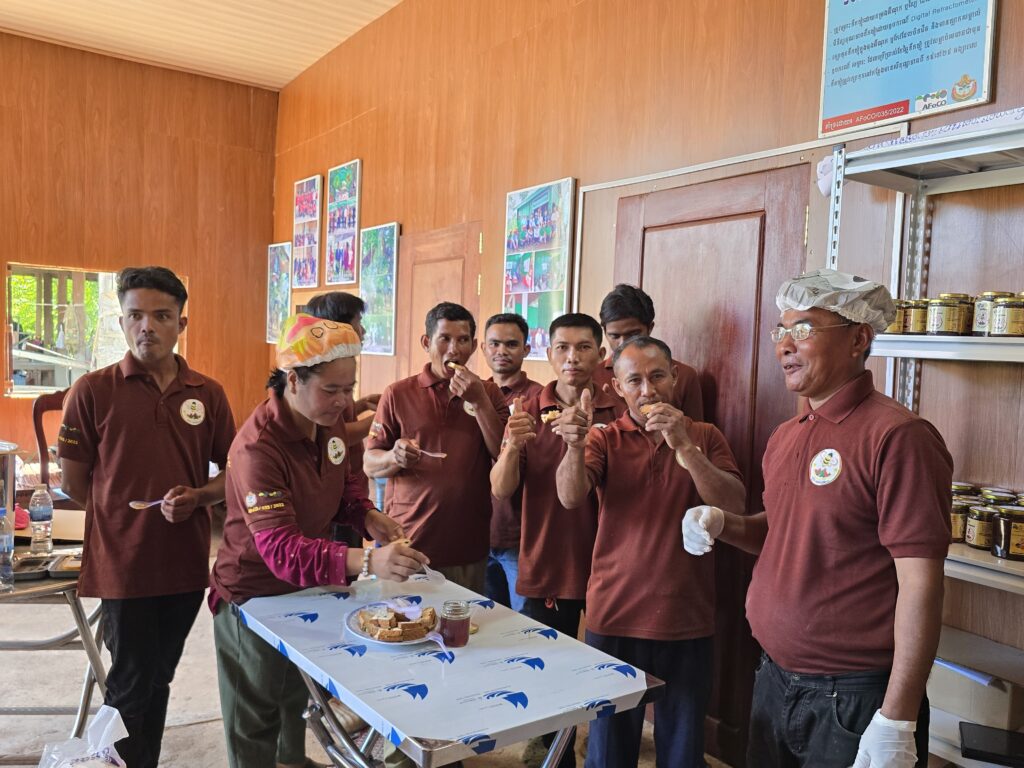
The Phnom Chheur Krahorm Community-Based Wild Honey Enterprise (CBHE) was established in 2018 by the Forestry Administration of Cambodia’s Ministry of Agriculture, Forestry and Fisheries (MAFF), in partnership with NTFP-EP, with 25 founding members committed to sustainable bee management and forest protection. In its early years, however, the enterprise faced a familiar challenge: rich raw material and limited commercial capacity.
Honey was collected, stored in plastic containers, and sold at a raw material price of USD 15 per liter. Products carried no labels, no trademark, and no certified quality assurance. Without an identity, even genuinely good honey struggled to build buyer trust or command the price it deserved.
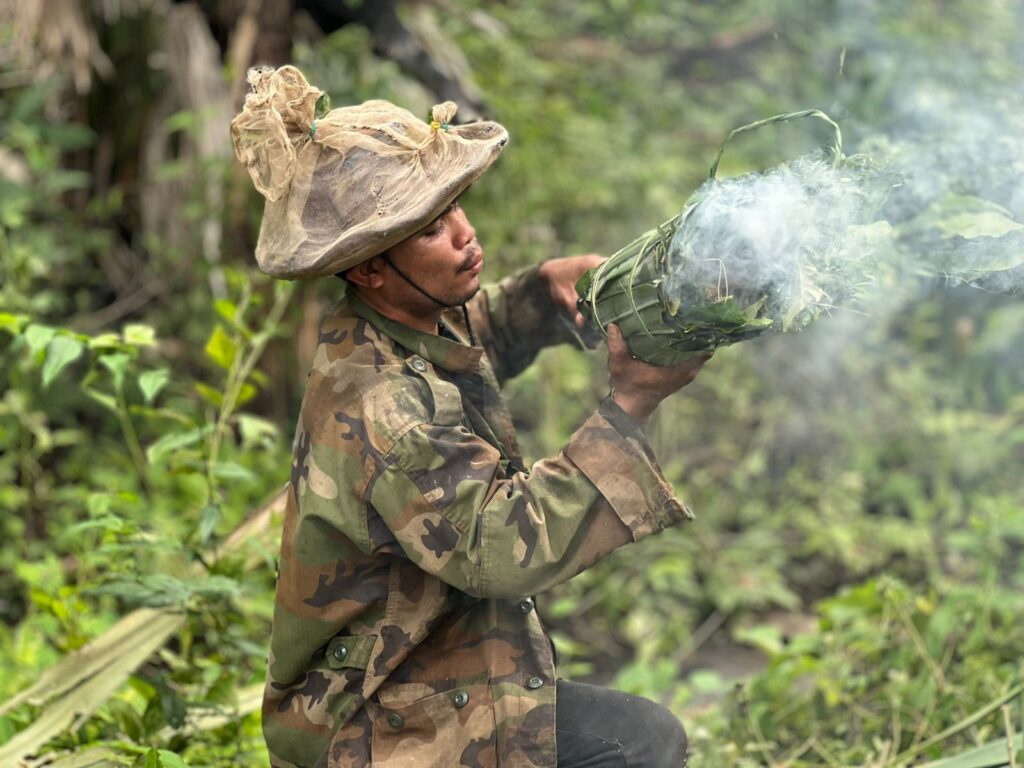
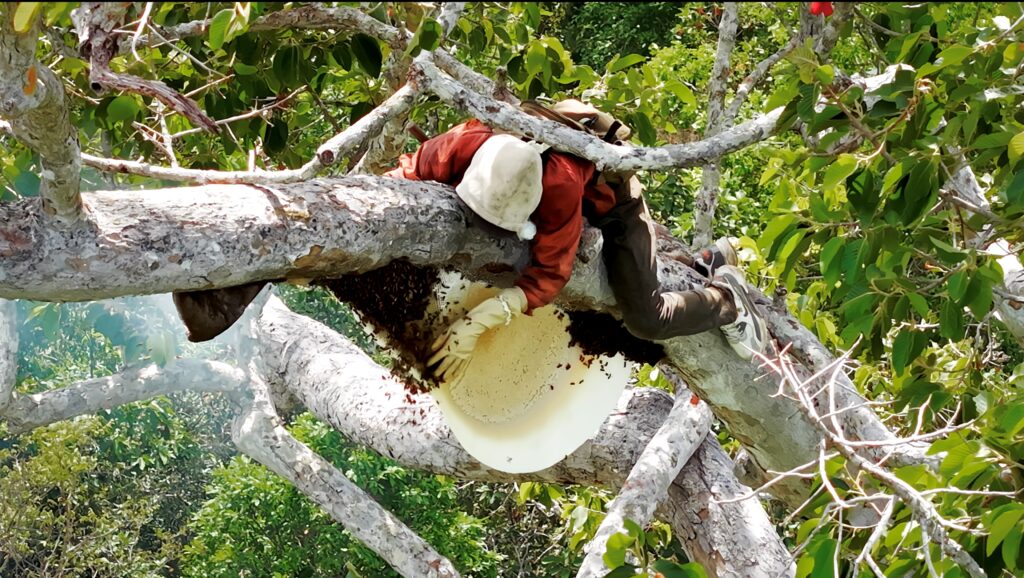
The Turning Point
A New Chapter Under AFoCO/035/2022
In 2022, the project “Improved Local Community Livelihoods Through Increased Income from NTFPs: Modeling Scalable Community-Based Enterprises in Asia” (AFoCO/035/2022), funded by the Asian Forest Cooperation Organization (AFoCO) of the Republic of Korea and implemented through Cambodia’s Forestry Administration, brought a turning point. The enterprise was renamed the Preah Vihear Community-Based Wild Honey Enterprise, expanding its identity and ambition from a single community forest to the entire province.
The project provided not only resources but also a structured pathway from subsistence harvesting to commercial enterprise, equipping the CBHE with modern processing infrastructure and the knowledge to use it.
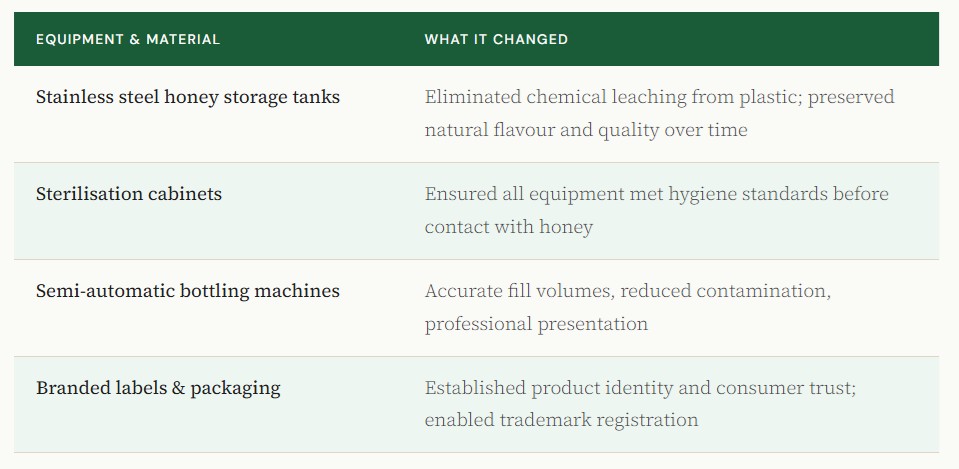
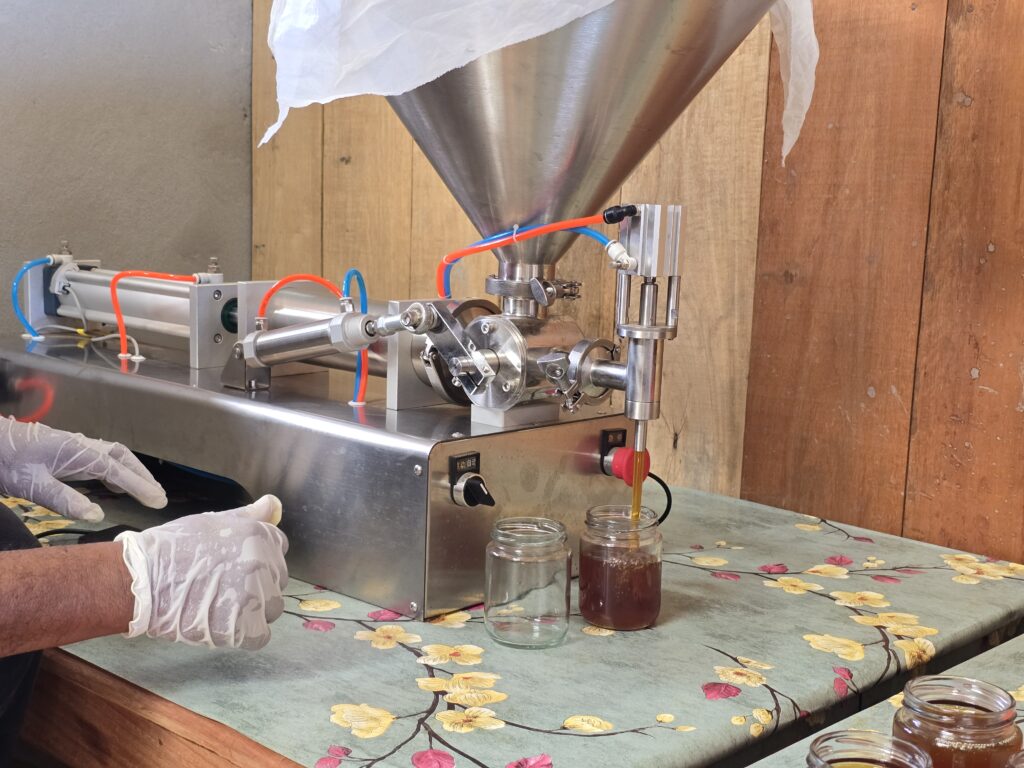
Brand & Market
Khmum Prey Preah Vihear: An Identity of Its Own
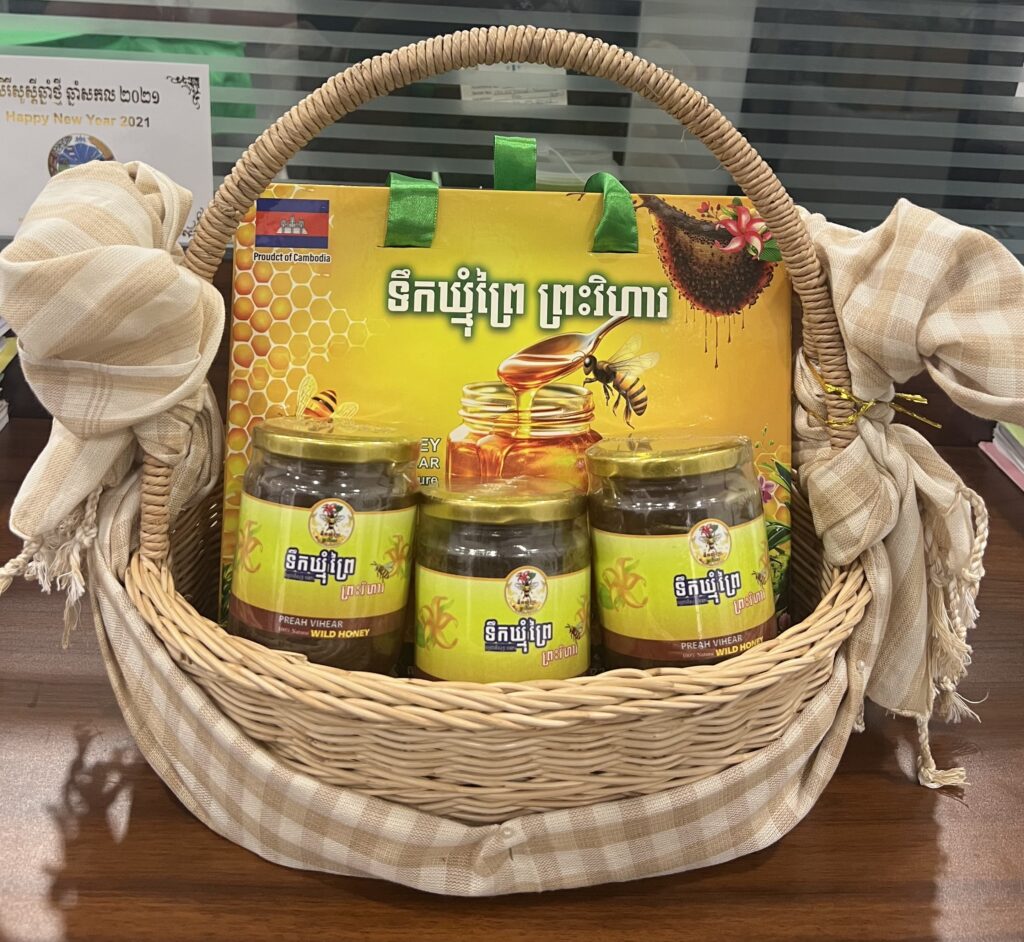
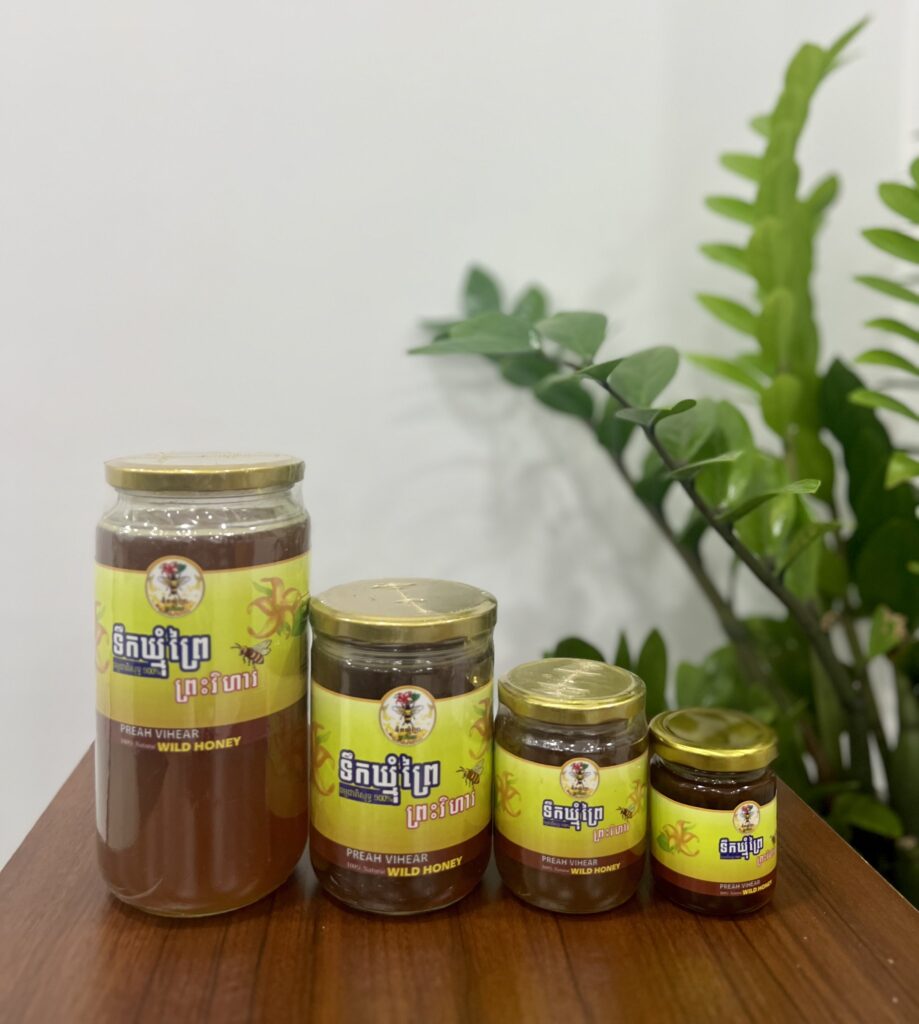
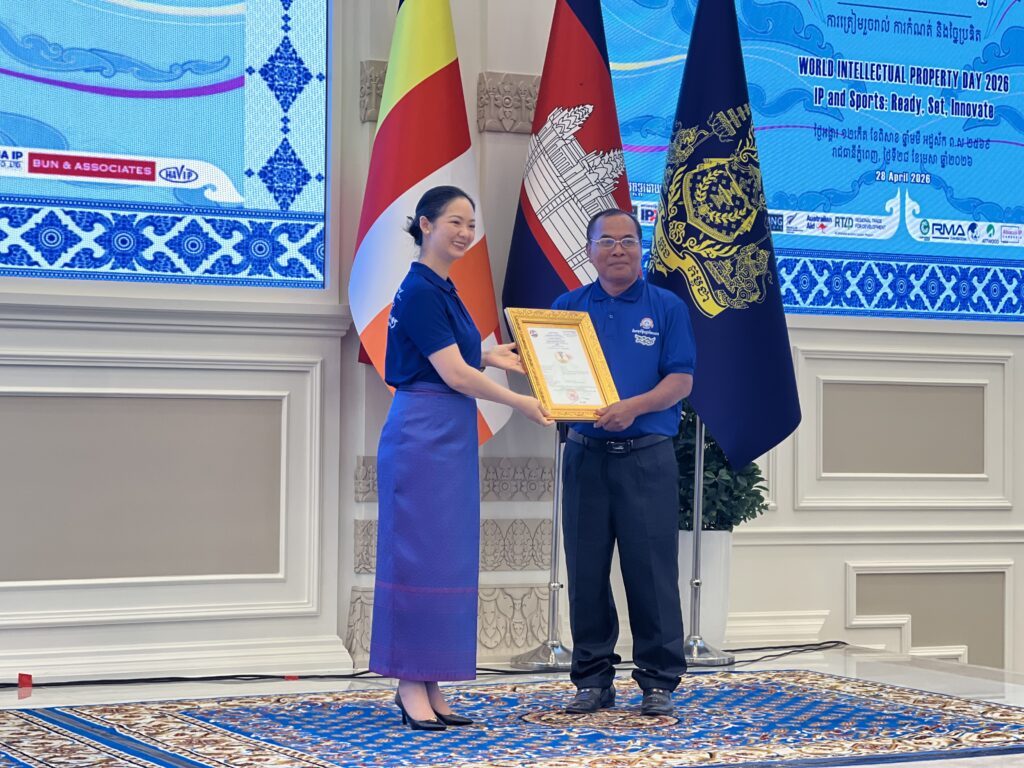
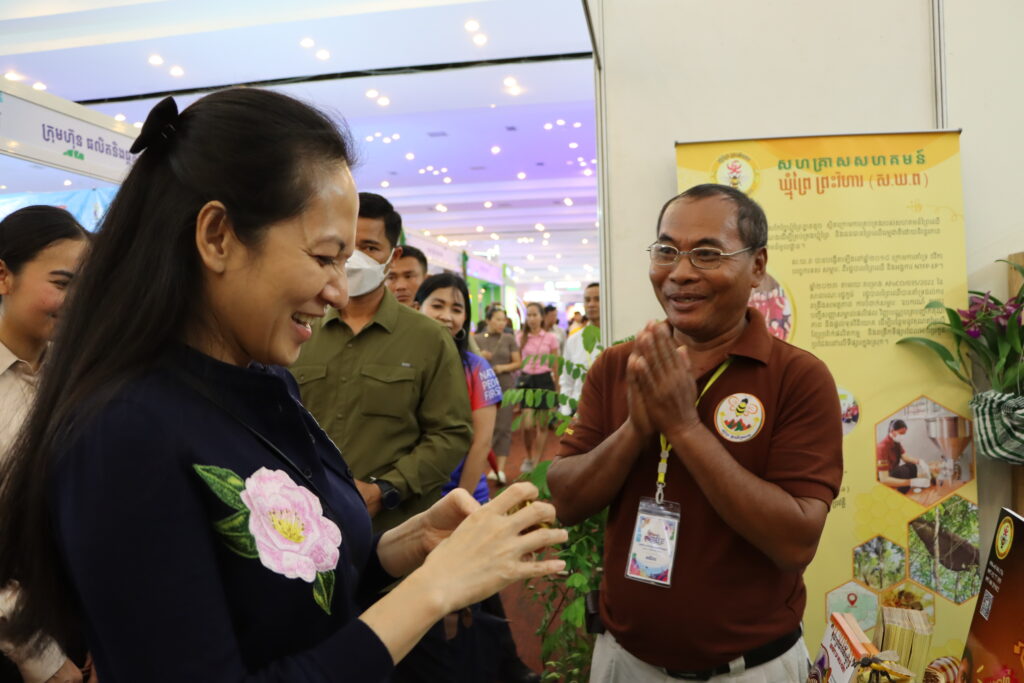
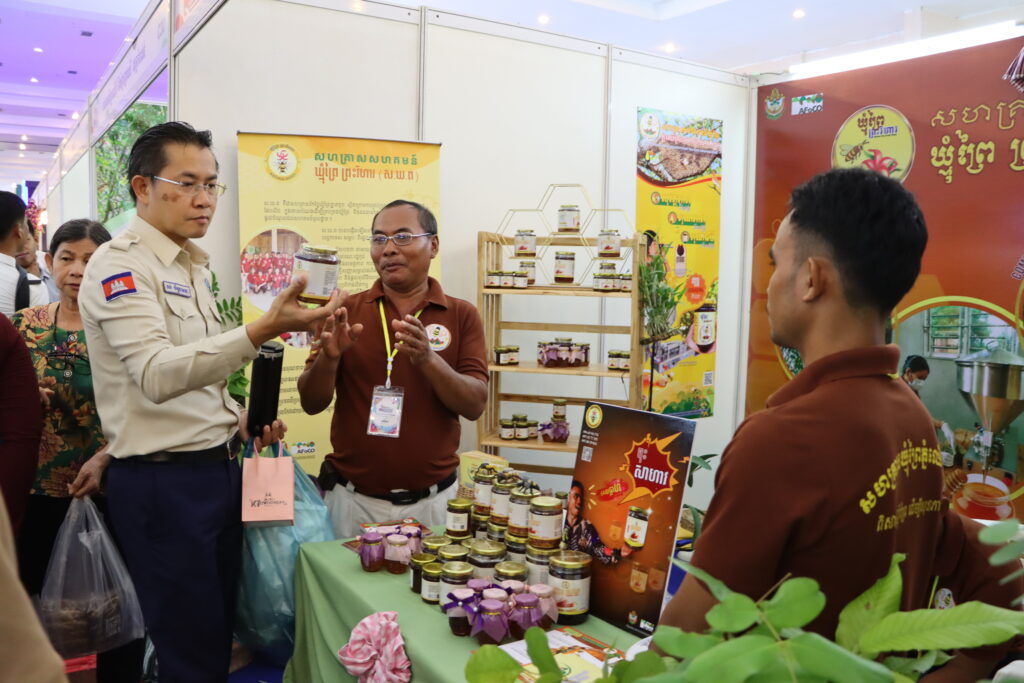
In April 2026, the CBHE registered its trademark “Khmum Prey Preah Vihear,” meaning “Wild Honey of Preah Vihear,” at Cambodia’s Ministry of Commerce. The registration marked a milestone for the enterprise: intellectual property protection, formal market standing, and a brand story that buyers in domestic and international markets can trust.
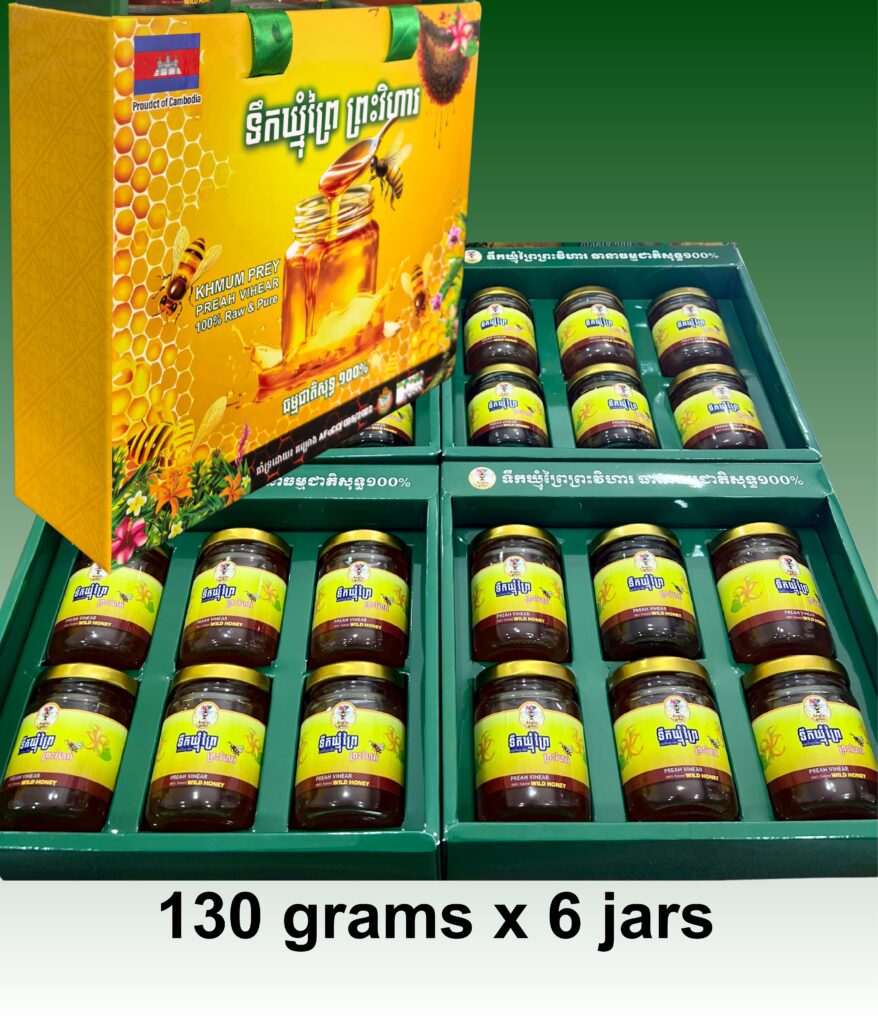
Products are now available in five pack sizes: 130g, 280g, 650g, 1,300g, and a gift box, each carrying the certified mark of origin. The registered trademark is not merely a label; it is a guarantee from the forest to the consumer.
FOREST IMPACT
Why This Honey Matters Beyond the Jar
Every jar of Khmum Prey Preah Vihear honey carries a story that extends far beyond taste. The CBHE’s enterprise model is built on a simple but powerful logic: when wild honey has real commercial value, the community that produces it has a direct economic stake in keeping the forest intact.
Forest Protection
Community members act as active forest guardians, monitoring bee habitats, reporting illegal activity, and managing harvests sustainably, because the forest’s health is now directly linked to their income.
Livelihood Improvement
Rising enterprise income is reducing economic migration from forest communities, enabling families to stay on the land and invest in local livelihoods.
Ecological Sustainability
Sustainable harvesting practices protect bee populations, which in turn support pollination across the community forest ecosystem, a natural cycle that benefits the entire landscape.
Submitted by Haewon Son, Assistant Program Officer, Project Team 3