
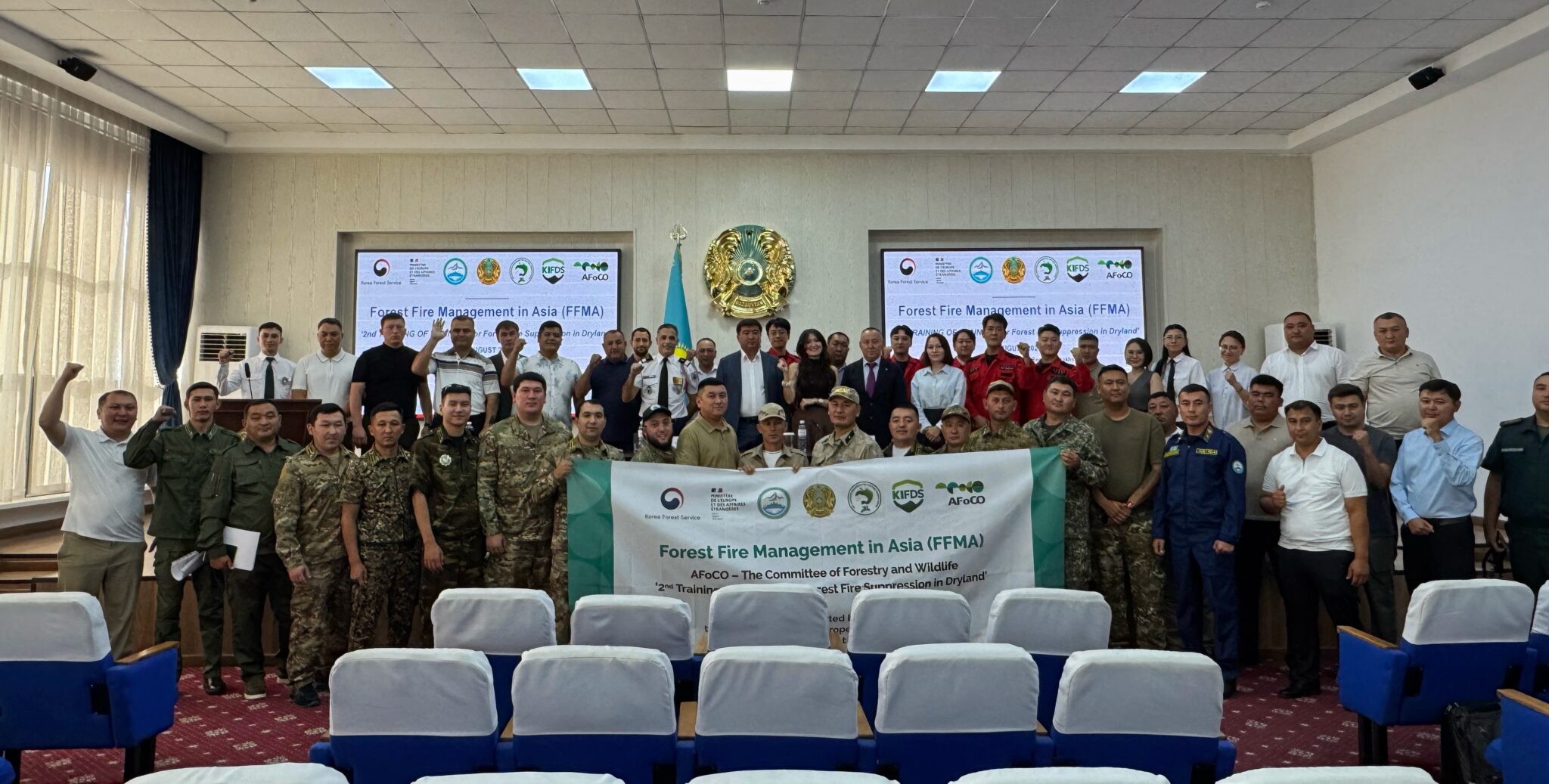
The Asian Forest Cooperation Organization (AFoCO), in collaboration with the Committee of Forestry and Wildlife of the Republic of Kazakhstan, with the support of the French Ministry for Europe and Foreign Affairs (MOEFA) and the Korea Forest Service (KFS), officially launched the 2nd Training of Trainers on Forest Fire Suppression in Dryland on 17 August 2026 at Ile-Alatau National Park in Almaty Region, Kazakhstan.
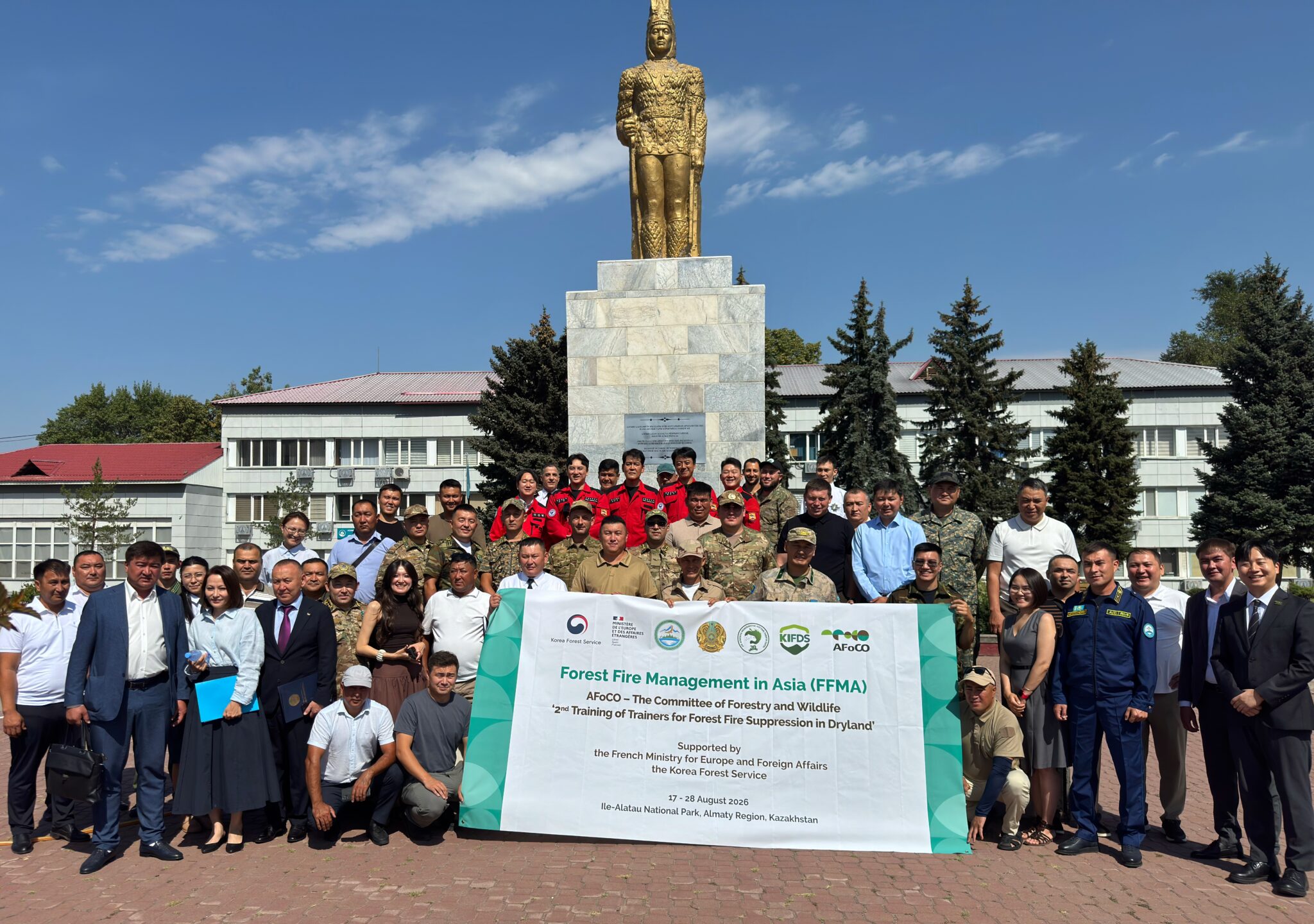
The 2 weeks training program, running from 17 to 28 August, brings together 32 participants from four (4) AFoCO Member Countries — Kazakhstan, the Kyrgyz Republic, Mongolia, and Tajikistan — for an intensive learning experience tailored to the unique challenges of dryland, steppe, and mountainous forest fire suppression. Organized as a core flagship activity under the AFoCO Forest Fire Management in Asia (FFMA) Main Phase (2026–2030), this course builds on the outcomes of the 1st Training held in August 2025 at Kolsai Kolderi National Park, reaffirming AFoCO’s strategic commitment to strengthening fire management capacity across Central Asia. The training provides a comprehensive curriculum that combines theoretical lectures, simulation-based exercises, and hands-on field practice, equipping participants with advanced skills in dryland and steppe fire behavior analysis, suppression tactics, portable pump operations, firebreak construction, and prescribed burning and backfire techniques. It also emphasizes the use of GIS, satellite, and UAV-based fire detection, forest fire cause investigation, and promotes inter-agency coordination to strengthen collective response to forest fires across the region.
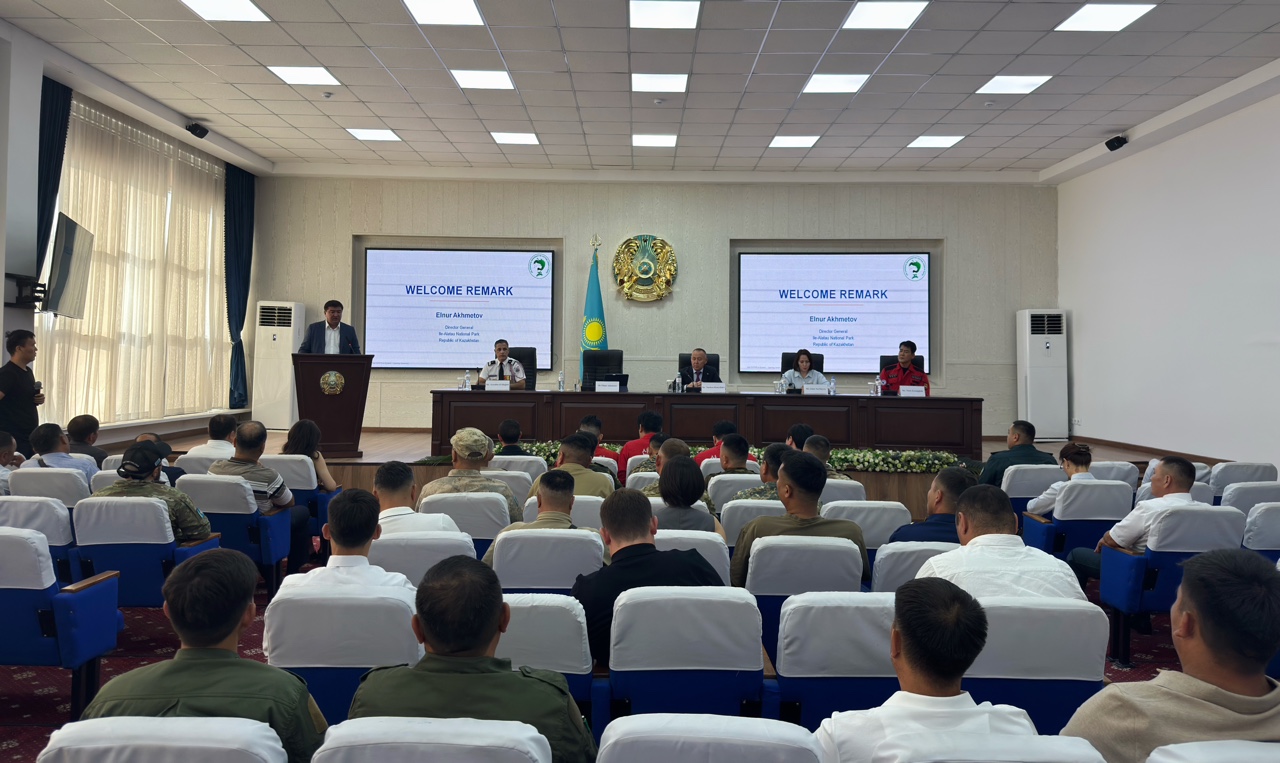
Opening Ceremony: A Strong Commitment to Regional Cooperation
The Opening Ceremony welcomed representatives from Kazakhstan, Republic of Korea, and France, reaffirming the shared vision of building stronger regional capacity in forest fire management.
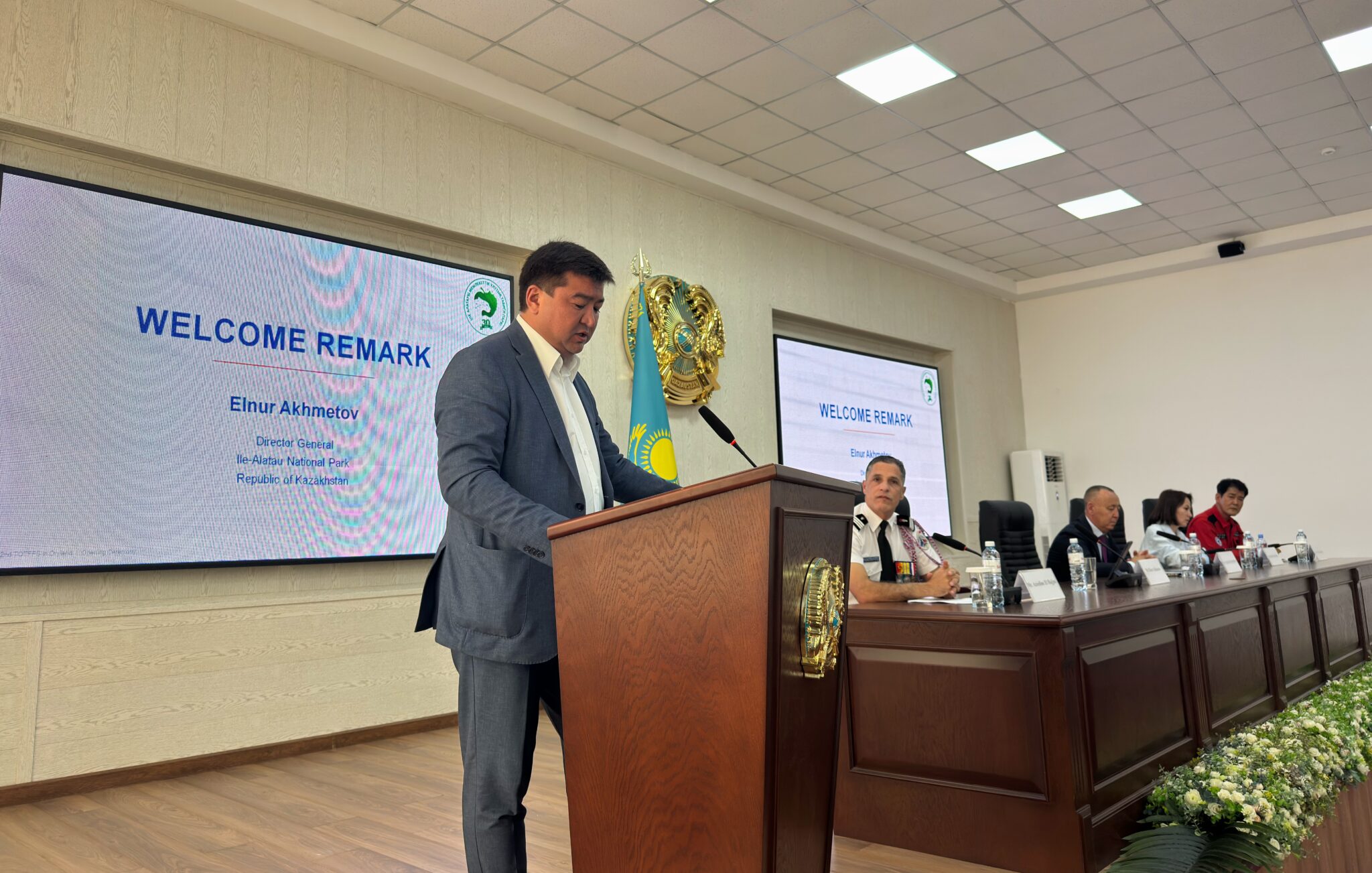
Mr. Elnur Akhmetov, Director General of Ile-Alatau National Park, expressed his genuine honor in hosting this year’s 2nd Training at Ile-Alatau National Park, and pledged the Park’s full support to ensure the program runs as effectively as possible. He also expressed hope that participants who had travelled from various regions across Kazakhstan would gain diverse experiences and learning through the training.
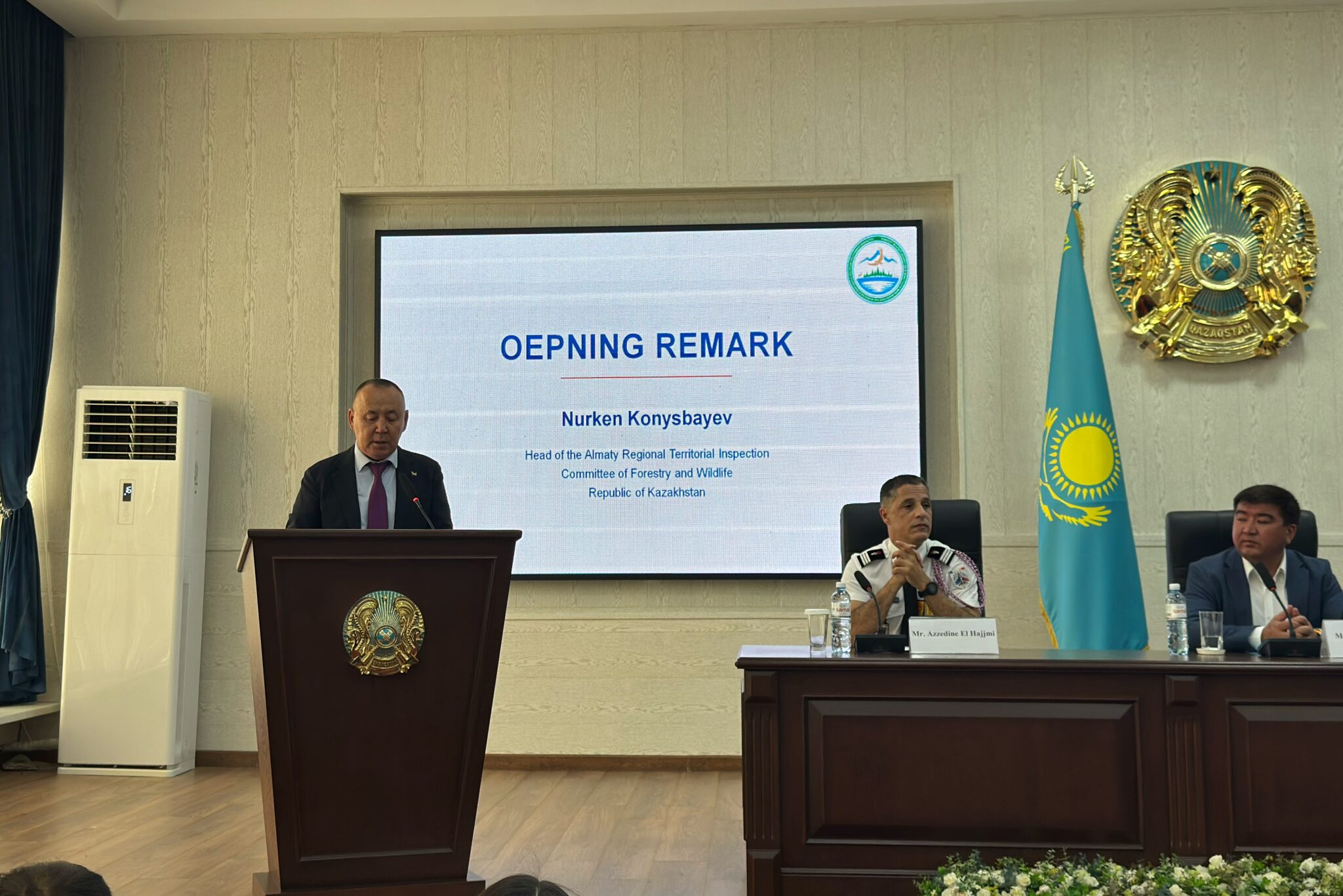
Mr. Nurken Konysbayev, Head of the Almaty Regional Territorial Inspection of Forestry and Wildlife, noted that Kazakhstan, along with the wider Central Asian region, remains highly exposed to the risk of forest fires, underscoring the significant value of this training program. He extended his sincere gratitude to the international participants for joining the course and formally congratulated the opening of the 2nd TOTFFS in Dryland.
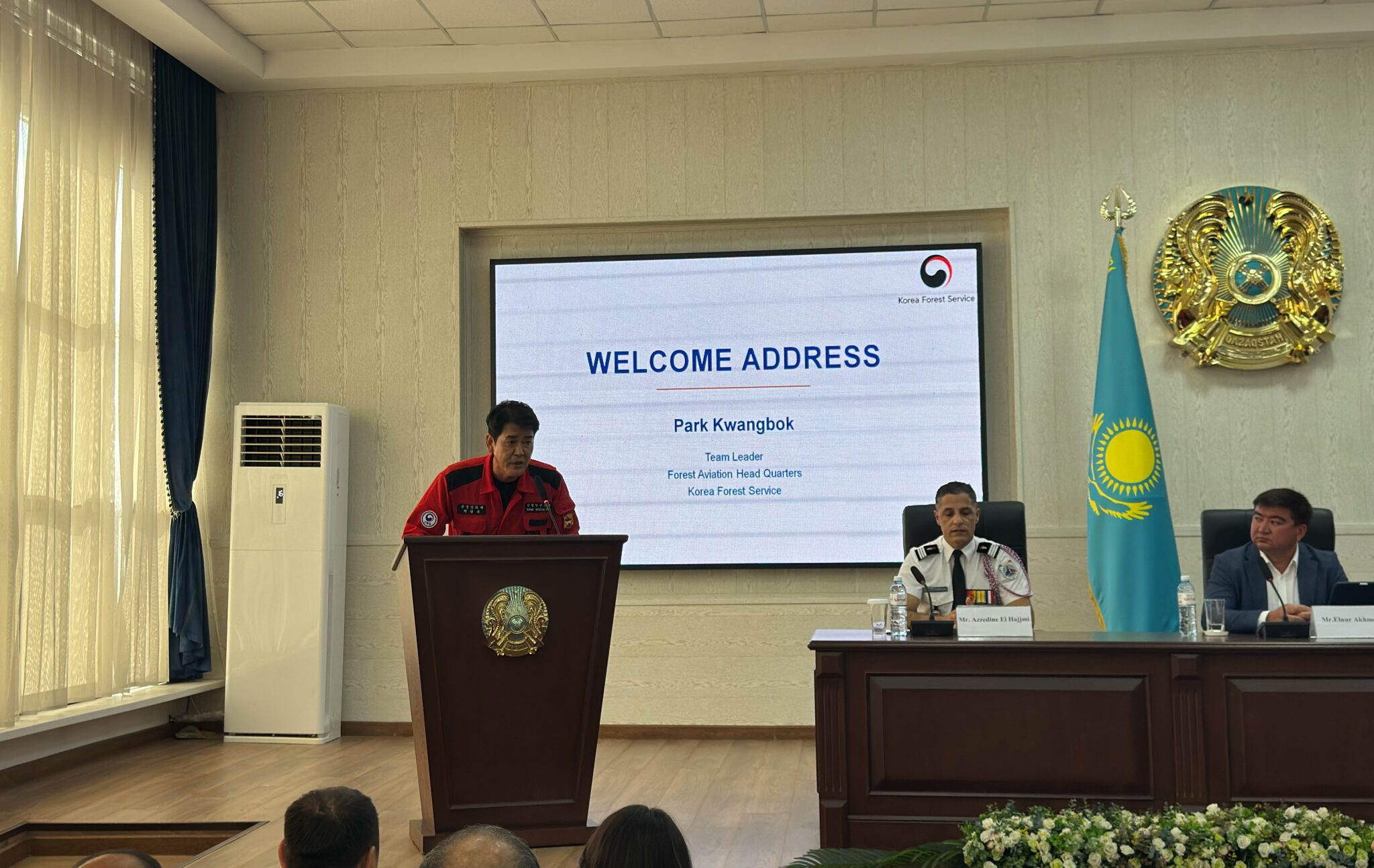
Mr. Park Kwangbok, Team Leader of the Forest Aviation Headquarters, Korea Forest Service, expressed hope that the two-week training would take shape not as one-way instruction, but as a program built together through active interaction between trainers and trainees. He noted that the team carries a strong sense of responsibility for participant safety, and pledged the team’s full commitment to ensuring the program proceeds smoothly and without injury.
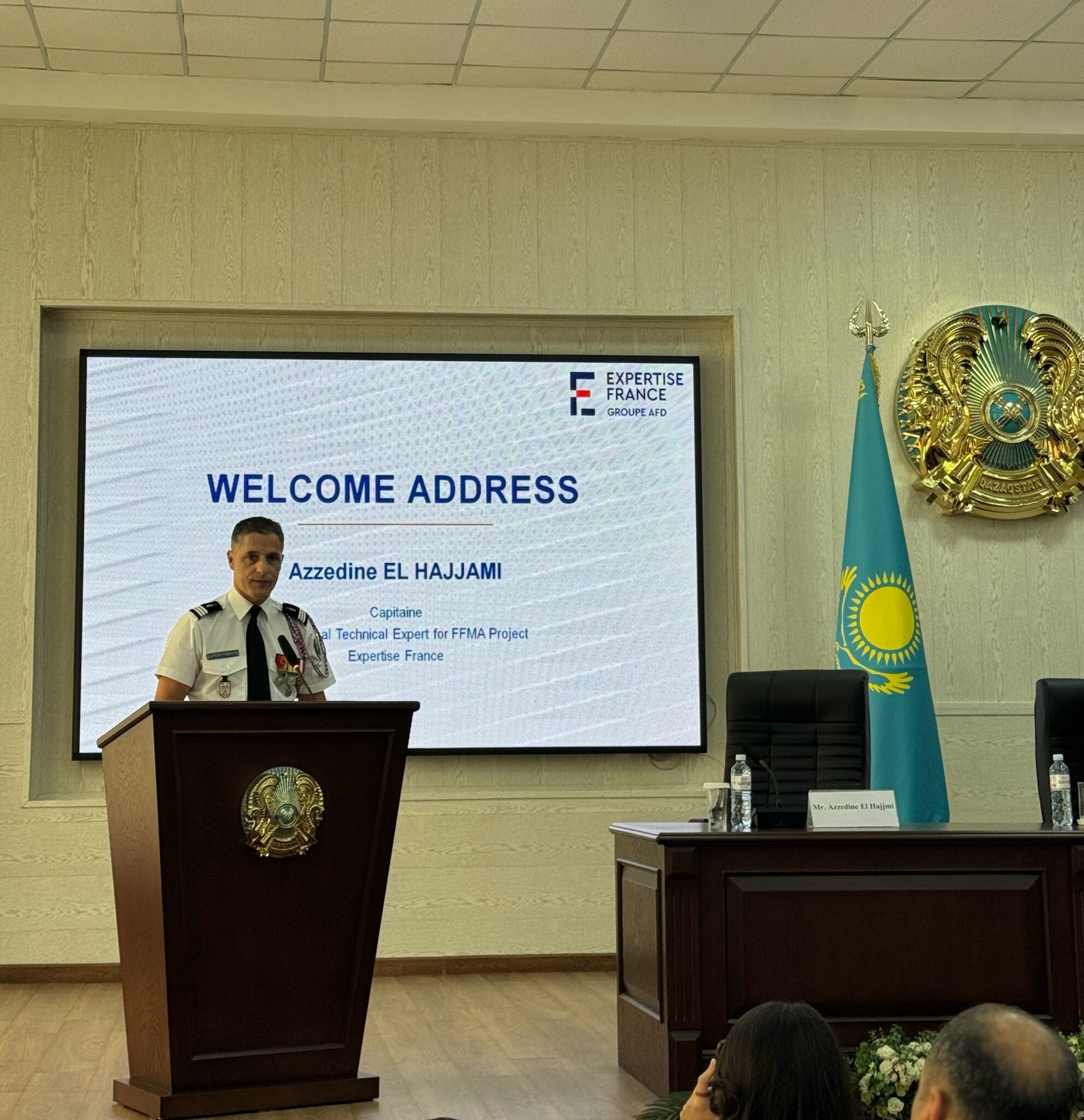
Mr. Azzedine EL Hajjami, International Technical Expert for the FFMA Project with Expertise France, described the training as a meaningful opportunity for expert trainers from France and the Republic of Korea to come together under the FFMA Project and share their knowledge and experience with participants. He noted his particular commitment to ensuring that France’s expertise in fire spread prediction and analysis is effectively conveyed to participants.
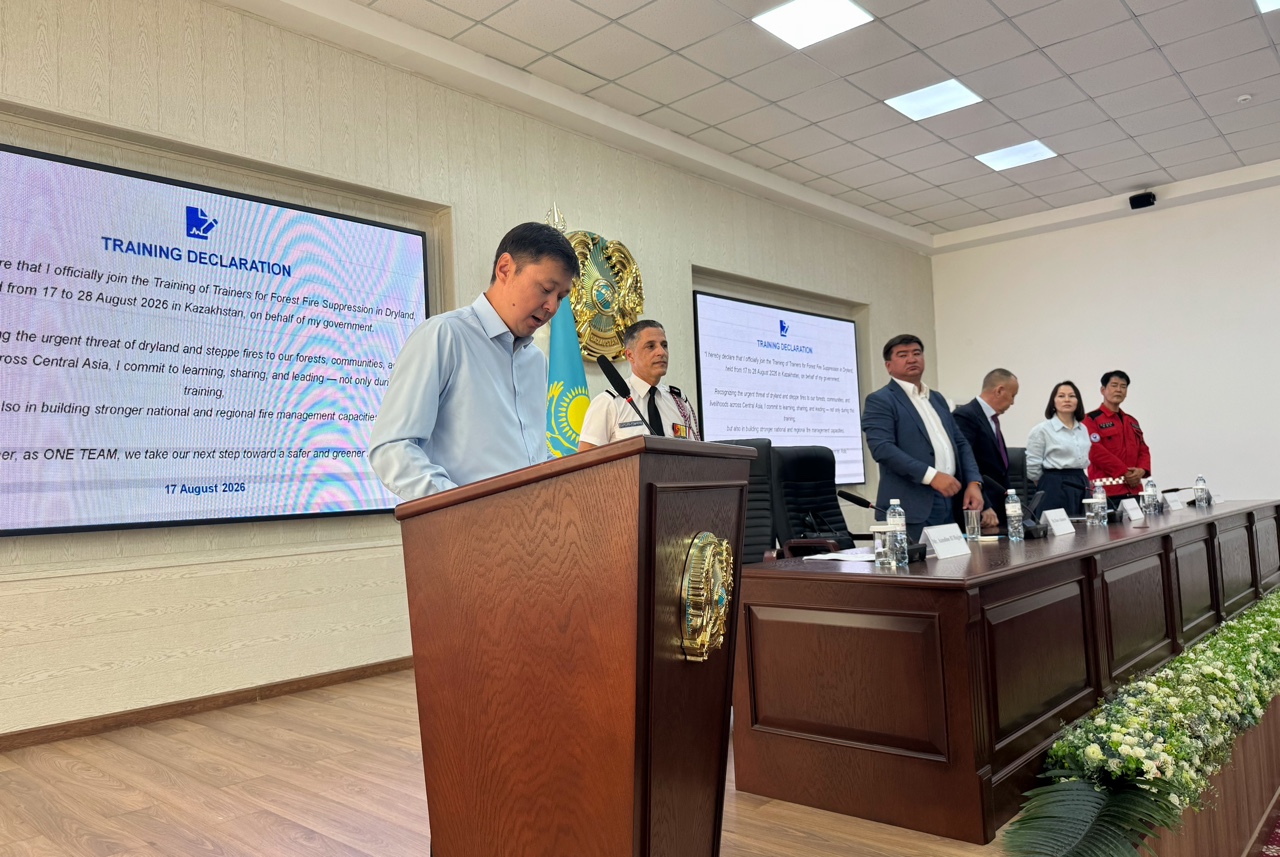
Training Declaration
During the ceremony, a participant representative delivered the Training Declaration, pledging on behalf of all participants to learn, share, and lead forest fire management efforts in their home countries.
Technical Focus and FFMA Alignment
Throughout the two weeks, participants will take part in modules on dryland and steppe fire dynamics, suppression tactics, and simulation-based scenario training — including sand-table and fire-cross exercises — and will engage in intensive field workshops at Ile-Alatau National Park to apply suppression strategies and prescribed burning techniques in real-world mountainous terrain. The program also aims to produce concrete outputs, including a comprehensive training module and standardized field manual for dryland fire suppression, a policy-oriented training report capturing lessons learned, and participant competency assessment records that will serve as a baseline for future national training. By fostering a regional network of trainers, the program directly advances the FFMA Initiative’s goal of building a sustainable and cooperative forest fire response system across Central Asia.
Toward Safer Forests and Stronger Regional Preparedness
Building on the momentum of the 1st Training held at Kolsai Kolderi National Park last year, this 2nd Training of Trainers reaffirms AFoCO’s deepening cooperation with Kazakhstan and its Central Asian partners, reinforcing collective resilience in the face of escalating forest fire risks in dryland and mountainous regions. AFoCO remains committed to delivering targeted, practical, and inclusive training programs under the FFMA Initiative, ensuring that Member Countries are better equipped to safeguard forests, biodiversity, and communities across Asia.
Submitted by Kiwon Kim, Program Officer, Policy Division