
AFoCO has been partnering with the National Forest Agency (NFA) of Mongolia to implement a transformative three-year project titled: “Forest Restoration and Demonstration through High-Capacity Tree Nursery Establishment and Capacity Building to Support the BTNM (AFoCO/039/2023)” from 2023 to 2025. Launched in April 2023 and running through December 2025, the project is being implemented at two strategic locations: Bayan-Uul soum in Dornod aimag, situated in the northeastern Khentii Mountains, and Deendiin Valley near Ulaanbaatar City. It reflects a growing collaboration between Mongolia and the Republic of Korea, building on shared goals of climate action, forest restoration, and sustainable development. Over the last three years, the project successfully achieved the following outputs:
- Established Two High-Capacity Tree Nurseries:
Developed large-scale nurseries in Bayan-Uul soum, Dornod aimag (70 ha) and Ölziit, Khan Uul District, Ulaanbaatar (20 ha) to produce quality seedlings for forest restoration and the BTNM. - Restored 124 ha of Degraded Forests:
Rehabilitated Ereen Mountain (110 ha) with 275,000 Scots pine and Deendiin Valley (14 ha) with 35,000 Siberian larch seedlings, enhancing forest cover and ecosystem resilience in both eastern and peri-urban regions of Mongolia. - Enhanced Community and Institutional Capacity:
Delivered 15 training sessions (10 classroom and 5 field-based) covering over 60 technical topics on nursery management, silviculture, seedling production, and reforestation techniques, empowering citizens, cooperatives, and forestry professionals to sustain restoration efforts.
A benefit-sharing model for community-based forest nurseries
The highlight of the project is the community-based forest nursery initiative being rolled out in Bayan-Uul soum, Dornod aimag. The nursery area spans 70 hectares, of which 20 hectares will be used by the Inter-soum Forest Unit, and the remaining 50 hectares will be utilized by households’ communities. In this model, 53 households are being empowered to produce seedlings through a performance-based contract system. Currently, all 53 households have signed agreements to use 0.5 hectares of land each. If these households participate in seedling production activities for five years, they will be entitled to acquire land-use rights of up to 0.5 hectares within the designated area.
As the lease payment for the use of the infrastructure established through the project, participants are expected to cultivate seedlings in the nursery, contributing to 10% of the total number of seedlings produced in the nursery. On average, it is estimated that at least 5 million seedlings will be sold annually. These seedlings will be used by Dornod Province and mining companies to fulfill their tree-planting commitments under the BTNM. The participating households may sell the remainder of these seedlings on the market at about MNT 1,000 (~0.34 USD) per seedling.
This benefit-sharing mechanism ensures that communities directly gain from forest restoration through secure land tenure, income generation, and market access, while contributing to national restoration goals. To sustain the program financially, the project has conducted consultations and investment workshops to secure seedling purchase agreements with mining companies, linking private sector contributions with national reforestation goals. This integrated, performance-based approach aligns local livelihoods with ecosystem restoration, establishing a replicable model for community-based forestry across the country.
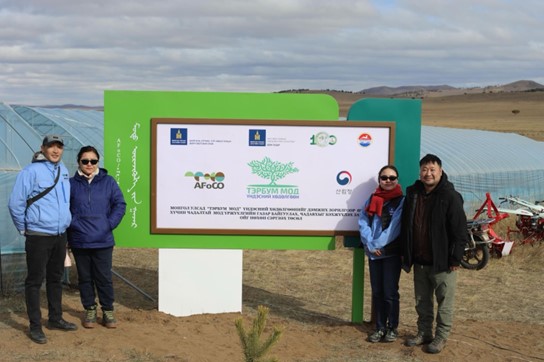
On October 12, 2025, at the nursery opening ceremony, a tripartite Memorandum of Understanding (MoU) was signed among the NFA of Mongolia, residents and forest communities of Bayan-Uul soum, and the local government (governors of Dornod aimag and Bayan-Uul soum). The program included active participation from residents and school groups, who took part in tree planting demonstrations. As part of the “Billion Trees” initiative, a total of 4,000 trees were planted by residents during the event.
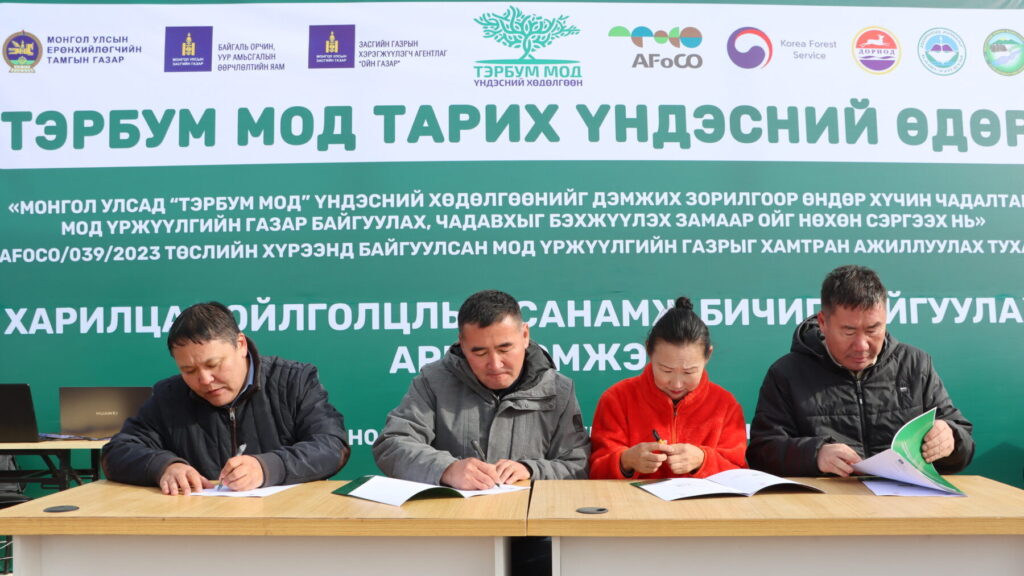
(From left) Mr. Yol Shuher, Governor of Dornod province; Dr. Oyunsanaa Byambasuren, Director General of NFA; Citizen representative of 53 forest communities and residents; and Mr. Battulga Munkh-Erdene, Governor of Bayan-Uul soum
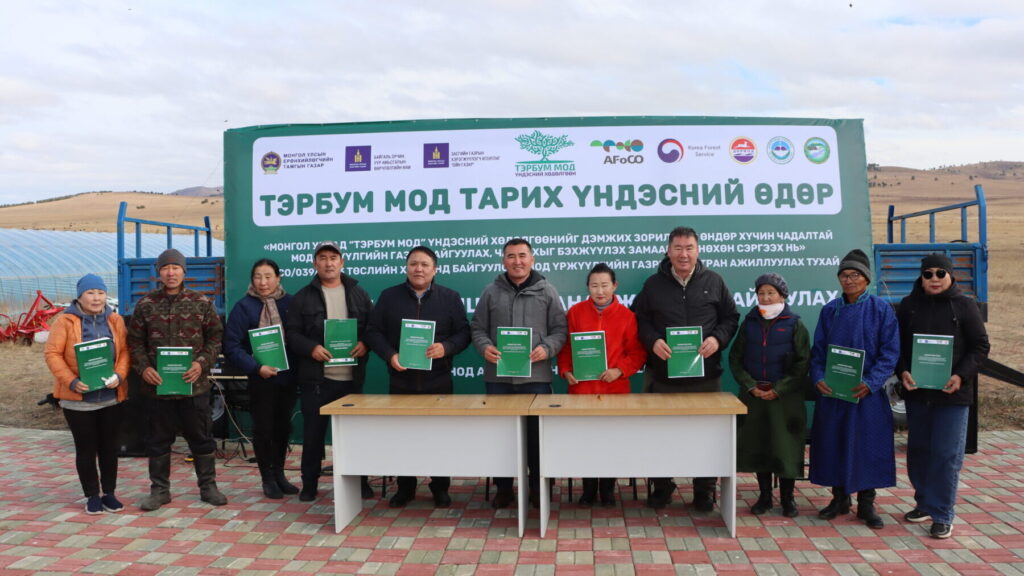
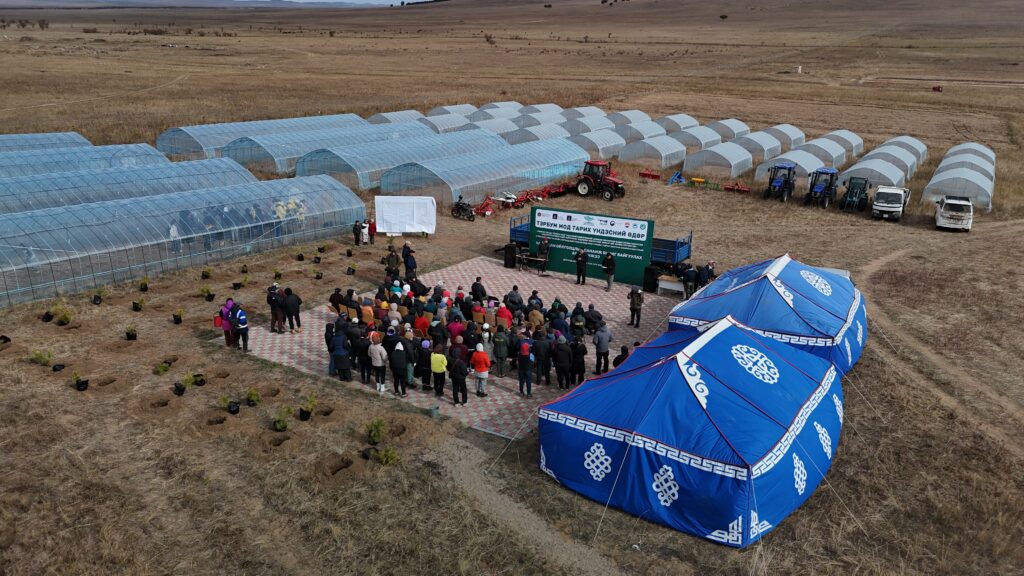
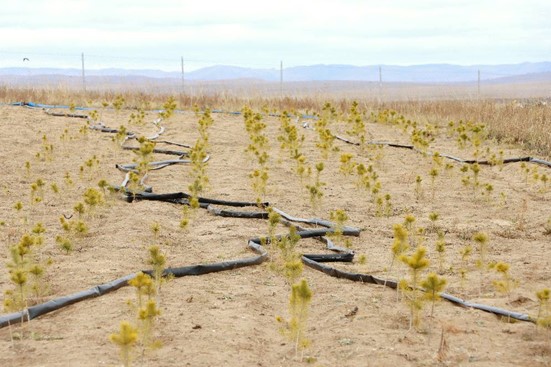
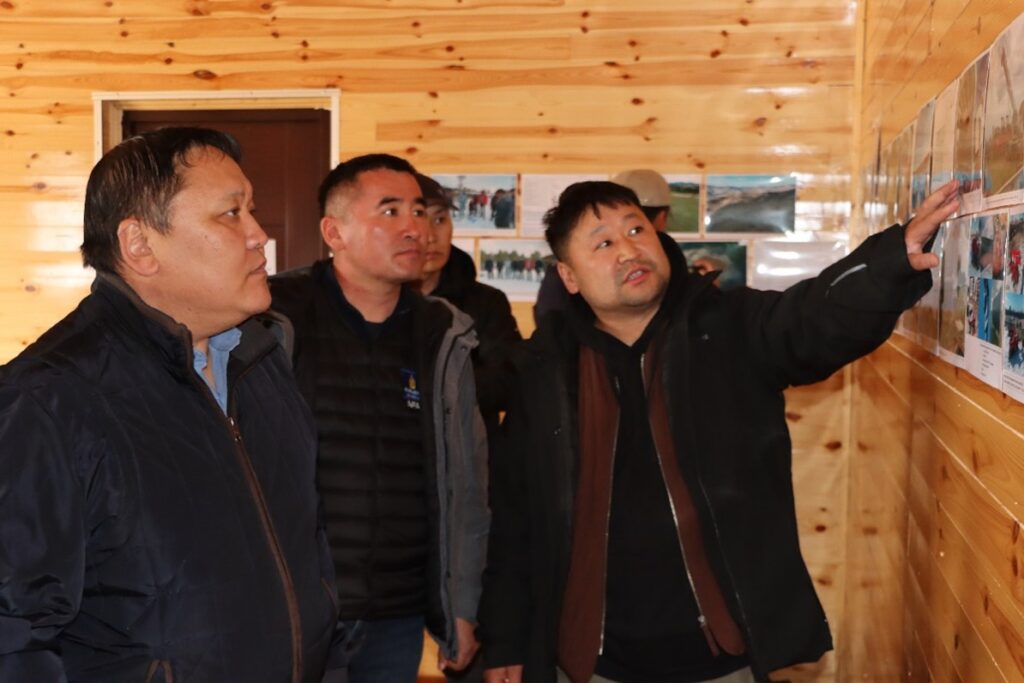
(photo exhibition in nursery staff office)
Restoring degrade forests in Mongolia
Deforestation in this area has not only eroded ecological stability but also undermined household incomes and accelerated greenhouse gas emissions. Despite the urgency, reforestation efforts have been limited due to a chronic shortage of quality seedlings and a lack of modern nurseries and trained personnel. This has resulted in low survival rates of planted trees and missed opportunities for meaningful restoration.The project has restored a total of 124 hectares of degraded forest in Ereen Mountain, Bayan-Uul soum, Dornod aimag (110 ha of Scots pine (Pinus sylvestris)) and in Dendiin Valley (Shiljiriin am, Bayanzürkh district, Ulaanbaatar city (14 ha of Siberian larch (Larix sibirica)) contributing to BTNM.
Building capacities for long-term impact
Complementing the physical infrastructure is a strong emphasis on capacity-building. Forestry staff and community members underwent targeted training to strengthen their technical skills in nursery operations, seedling management, and restoration planning. These efforts are designed to ensure that restoration work is not only technically sound but also community-driven and sustainable over the long term. The project also cooperated with the National University of Mongolia to host a BTNM Student Research Conference, awarding 4 research scholarships to students.
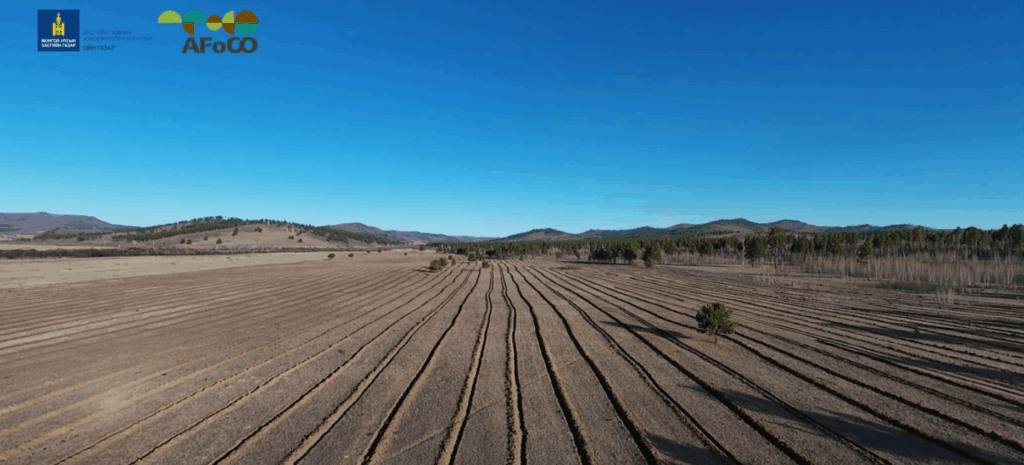
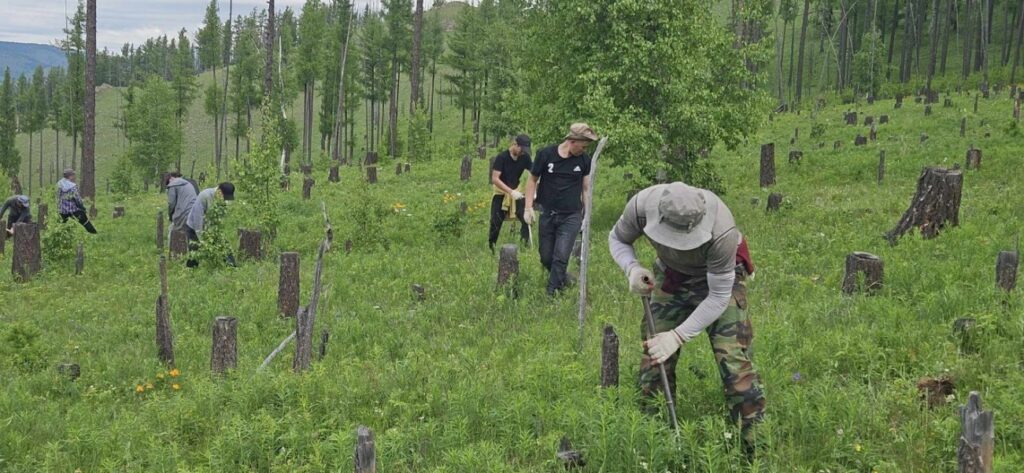
The AFoCO-Mongolia project has achieved notable progress in forest restoration and community engagement, especially through establishing nurseries, restoring degraded forests, and empowering local households. The innovative public-private partnership model with households in Bayan-Uul soum exemplifies a successful approach to integrating community livelihoods with environmental conservation. Additionally, the project has strengthened capacity-building efforts for forestry staff and communities, enabling sustainable forest management. As the project advances toward its conclusion in 2025, these initiatives set a robust foundation for scalable, community-driven forest restoration practices that contribute to Mongolia’s climate commitments and socio-economic development, serving as a replicable model for broader regional and global application
PROJECT OVERVIEW – AFOCO/039/2023
Forest Restoration and Demonstration through High-Capacity Tree Nursery Establishment and Capacity Building to Support the Billion Trees National Movement (BTNM)
Project Duration & Budget: January 2024 – December 2025 / US$ 1,024,623 (AFoCO: US$ 999,656; National: US$ 24,967)
Implementing Agency: National Forest Agency of Mongolia
Project Sites: Ulaanbaatar City and Dornod Province
Drafted by Batsukh Tumur (Project Manager of AFoCO/039) and Emily Marie Lim (Program Officer, AFoCO)